





Getting your jump rope length right can turn a frustrating first session into a smoother, more enjoyable workout. The right fit gives your rope enough clearance without excessive dragging.
You jump. The cable catches your feet. You try again, and it slaps the floor far ahead of you. Soon, you start wondering whether you're simply bad at skipping.
Sometimes your timing needs practice. But sometimes your jump rope length is working against you.
There's no single measurement that suits everyone. Your height, hand position, rope design, and experience all influence the fit. This guide shows you how to measure, test, and adjust your rope before cutting anything.
What You'll Learn
- How to estimate jump rope length for your height
- A simple five-step sizing method
- Five signs your rope is too long or too short
- How to adjust a beaded rope and a PVC speed rope
- Why beginners and advanced jumpers may prefer different settings
- Seven sizing mistakes to avoid
- A three-minute test to confirm your fit
1. How Long Should a Jump Rope Be?
The best jump rope length allows comfortable overhead and underfoot clearance with relaxed hands. Height offers a starting point, not a final answer.
Two people of the same height can use different rope lengths. One may keep their hands close to their hips. Another may hold them wider. Their ropes will travel along different paths.
The beginner starting point
Stand with one foot on the cable midpoint. Pull both handles upward alongside your body. For many beginners, handles reaching around the lower chest to armpit area offer a useful initial reference.
This isn't a fixed rule. Handle shape and your preferred training style can change the ideal setting.
Why slightly longer can feel easier
Beginners often move their hands while searching for rhythm. A little extra clearance may make those early jumps more forgiving. Too much cable, however, can create drag and unpredictable ground contact.
Quick answer: Start at a comfortable handle height, then test basic jumps. Your real movement decides the final jump rope length.
2. Jump Rope Length by Height: Beginner Size Chart
Your height matters when choosing jump rope length online. But a jump rope size chart should guide your first adjustment, not dictate it.
These broad ranges describe an illustrative beginner setup. They are not exact product specifications or guaranteed measurements.
| Your height | Approximate overall rope length | Starting advice |
| 150–160 cm | 230–260 cm | Begin longer and check clearance |
| 160–170 cm | 240–270 cm | Check your hand position |
| 170–180 cm | 250–280 cm | Test several relaxed jumps |
| 180–190 cm | 260–290 cm | Allow comfortable overhead clearance |
| 190–200 cm | 270–300 cm | Confirm the product's maximum length |
Important: Brands do not always measure ropes the same way. Some publish cable length only. Others include the handles in the overall measurement.
The chart is therefore a rough reference, not a universal conversion. Check the manufacturer's sizing method before comparing products.
What if you're between sizes?
Choose an adjustable rope with enough spare length. Start slightly longer, then reduce the usable cable gradually. A permanently cut cable may be difficult to restore.
For Elevate's product-specific guidance, consult our jump rope sizing guide. It includes a separate chart for Elevate models.
3. How to Measure Your Jump Rope in Five Steps
You only need your rope, a clear surface, and a few minutes. This standing test offers a practical jump rope length baseline.
Step 1: Find the cable midpoint
Lay your rope out without twists. Identify the middle of the cord between the handles.
Step 2: Stand on the midpoint
Place one foot gently over the centre. Stand upright and keep your shoulders relaxed.
Step 3: Pull the handles upward
Lift one handle in each hand. Keep both sides even and the cable reasonably straight.
Step 4: Check handle height
For beginner basic jumps, lower-chest to armpit height is a useful starting range. Very long handles can change this reading. Compare the same measuring points each time.
Step 5: Test actual jumps
Perform a few slow single unders. Notice where the cable touches the floor. Keep your elbows relaxed near your sides and use controlled wrist turns.
A standing measurement starts the process. Moving with the rope confirms your jump rope length.

4. Five Signs Your Jump Rope Is Too Long
Excess jump rope length can interrupt the arc and make easy jumps feel awkward. Watch for repeated patterns rather than one mistake.
Sign 1: It hits the floor too far ahead
A light floor tap can be normal. Heavy contact across a long section of rope may indicate excess length.
Sign 2: Every rotation feels like a drag
You feel as though you're pulling the cable through each turn. Also check the rope's weight and construction.
Sign 3: The cable forms an inconsistent arc
Extra length can make the rope feel loose. But uneven wrist movement can create the same symptom.
Sign 4: Faster skipping feels difficult
A longer cable travels farther during every rotation. Shortening it slightly may improve responsiveness once your technique is consistent.
Sign 5: You spread your hands to compensate
Unusual arm movement may signal an awkward fit. First check whether you're simply learning a wide-hand habit.
What to do: Shorten the usable jump rope length in small increments. Retest before trimming the cable permanently.
5. Five Signs Your Jump Rope Is Too Short
Insufficient jump rope length provides less room for natural movement. It can feel fast but difficult to control.
Sign 1: The rope repeatedly catches your toes
Limited clearance may be contributing. Still, late turns and early jumps can cause the same problem.
Sign 2: Your hands rise toward your chest
Comfortable basic skipping usually keeps your hands around hip level. Constantly lifting them suggests a technique or fitting issue.
Sign 3: You jump higher than necessary
You may try to compensate for poor clearance with exaggerated jumps. Check the rope setup and timing first.
Sign 4: The rope catches behind your head
A very short arc can reduce overhead clearance. Hand placement can also change the rope's path.
Sign 5: Your posture feels cramped
You shouldn't need to hunch, pull your elbows tightly inward, or twist your shoulders to complete a jump.
What to do: Increase the usable jump rope length if the design allows it. Return to relaxed single unders before trying faster skills.
6. How to Adjust a Beaded Jump Rope
A beaded rope can make timing easier to feel. Its beads provide visual, tactile, and sometimes audible feedback. Many designs use adjustable cord connections.
The Elevate Beaded Rope collection is designed for rhythm, skill practice, and freestyle movement.
Step 1: Identify the adjustment system
Inspect the connection near each handle. Some beaded ropes use washers or knots to secure the internal cord.
Step 2: Release the cord carefully
Follow your model's instructions. Avoid pulling hard enough to damage the cord or connection.
Step 3: Adjust the usable length
Move the securing component to change the cable between the handles. Depending on the model, redistribute or remove beads as needed.
Step 4: Re-secure and test
Check that both sides are balanced. Try basic rotations and a few gentle jumps. Make sure the connections hold securely.
Step 5: Trim only when confident
Do not cut the cord while you're still experimenting. Leave extra material until the fit works across several sessions.
Remember: Beaded rope sizing and jump rope length depend on the specific design. Use the product instructions rather than applying another model's adjustment method.
7. How to Adjust a PVC Speed Rope
PVC speed ropes are often used for cardio, quick rotations, and skills such as double unders. The correct jump rope length helps the cable follow a repeatable path.
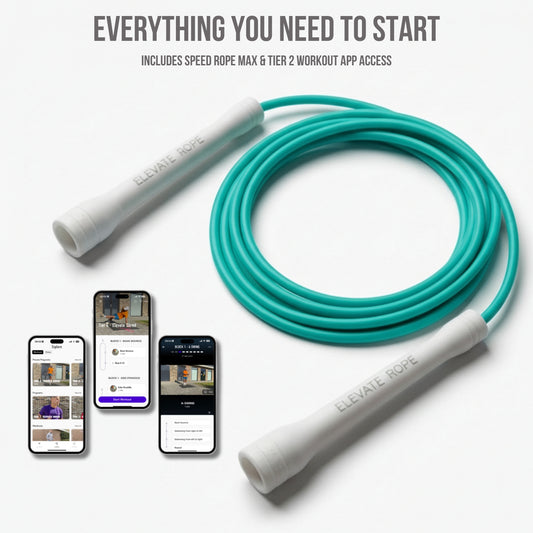
The Elevate Speed Rope MAX uses a flexible PVC cable with a nylon core. Its connection allows you to customise the usable cable length.
- Check the handle connection. Locate the snaplock, clip, screw, or other mechanism.
- Release it gently. Follow the manufacturer's instructions without forcing the cable.
- Make a small adjustment. Change the usable length while keeping both sides balanced.
- Lock both connections. Check that the cable cannot slip during rotation.
- Test basic jumps. Confirm comfortable clearance before attempting faster movements.
- Trim only when necessary. Cutting too much can leave the rope permanently short.
Not every PVC speed rope adjusts jump rope length identically. Use the process for the model you own.
8. Should Beginners Use a Longer Jump Rope?
Often, a little extra clearance helps beginners learn without fighting their equipment. But an oversized rope creates new problems.
More room for developing technique
At first, you might lift your hands, rotate with your shoulders, or jump before the rope arrives. A forgiving jump rope length helps you practise a steadier rhythm.
More jump rope length isn't always more control
Excess cable can slap the ground and interfere with timing. Keep adjusting until basic jumps feel predictable.
Shorten only when there's a reason
Once your technique improves, you might prefer less spare cable. Don't copy an advanced jumper's setting on day one.
For help choosing equipment, see our best jump rope for beginners guide.
9. Do Advanced Jumpers Use Shorter Ropes?
Some do. Advanced jumpers often refine jump rope length for a particular skill, rather than following one fixed measurement.
Speed-focused skipping
A shorter cable can reduce the distance travelled each turn. This may improve rotation efficiency when clearance remains comfortable.
Freestyle tricks
Crosses, releases, and other movements change the rope's path. Some combinations benefit from more clearance or longer handles. Experiment with the setup that suits each technique.
Double unders
A double under requires two rope rotations during one jump. A shorter setting may suit consistent wrist control. But timing and jump height still matter.
The CrossFit coaching guide explains why hand position affects the rope's shape during doubles.
The takeaway: Experience lets you customise rope length. Consistent technique comes before aggressive shortening.
10. Why Hand Position Changes Ideal Jump Rope Length
Hand position changes your effective jump rope length during each rotation. A perfect standing measurement can feel wrong once your hands start moving.
Wide hands reduce clearance
When your hands drift far outward, the cable loses space beneath your feet. A suitable rope can suddenly feel too short.
High hands affect the arc
Raising your hands changes the rope's path. You may compensate with awkward jumps or large shoulder turns.
Find a relaxed starting position
Keep elbows comfortably near your sides and hands around hip level. Rotate through the wrists, not broad arm circles. Look forward and keep your shoulders relaxed.
Before changing jump rope length, correct obvious hand-position problems. Often, a small technique change makes the rope feel right again.
11. Seven Common Jump Rope Sizing Mistakes
Even a good rope becomes frustrating when jump rope length keeps changing. Avoid these mistakes before your next session.
- Cutting too early. Test your jump rope length before permanently trimming anything.
- Treating the height chart as exact. Use it as a baseline and check your movement.
- Ignoring handle length. Cable-only measurements and complete-rope measurements are not interchangeable.
- Making large changes. Adjust in small steps so you can see what improves.
- Blaming every trip on sizing. Timing, tiredness, and arm position also cause misses.
- Copying an advanced athlete. Their preferred length may be unsuitable for your current skills.
- Forgetting to secure the connection. A loose cable can detach during training.
Best practice: Change one variable at a time. You want to know whether rope sizing or technique solved the problem.
12. A Three-Minute Jump Rope Length Test
You don't need a perfect jump rope length measurement before your first workout. Use this short test to check your setup.
| Minute | What to do | What to check |
| 1 | Stand on the midpoint and raise the handles | Even sides and comfortable handle height |
| 2 | Perform easy basic jumps | Ground contact, clearance, and steady hands |
| 3 | Review the result and adjust once | Whether a small change improves control |
Minute 1: Measure your starting fit
Stand on the cord midpoint. Pull the handles upward. Check both sides and use a comfortable beginner reference.
Minute 2: Jump slowly
Try several single unders with breaks. Keep your hands near your hips. Watch the cable's contact with the floor.
Minute 3: Review and adjust
Ask three questions. Does the rope clear my feet and head? Is it dragging excessively? Can I keep my shoulders relaxed?
If a sizing issue is clear, adjust slightly and retest. Don't chase a perfect number in one session.
For a beginner-friendly training progression, Harvard Health suggests short intervals and gradual increases in jump-rope time.
13. Choosing an Adjustable Rope That Grows With Your Skills
An adjustable rope gives you room to refine your jump rope length as your style develops. That flexibility matters when you're learning.
Consider rope construction
A beaded rope provides noticeable feedback for rhythm and freestyle. A PVC speed rope supports lighter, faster rotations for cardio. Neither design is universally better.
What to look for
- Enough usable length for your height
- A secure and understandable adjustment mechanism
- Handles that feel comfortable in your hands
- A cable suited to your chosen training style
- Instructions for measuring, adjusting, and securing the rope
A simple way to try both styles
The Elevate Ascent Bundle combines a Beaded Rope and a Speed Rope MAX. You can practise rhythm on one and faster rotations on the other.
Choose equipment that removes friction between deciding to train and actually getting started.

Final Thoughts: The Right Length Makes Learning Easier
If your rope catches your toes or drags excessively, don't rush to blame your coordination. Check your setup first.
Stand on the midpoint. Check the handles. Jump slowly. Adjust in small steps. Then give yourself time to practise.
The right jump rope length doesn't guarantee perfect technique. It simply gives you a better starting point for progress.
One jump. Then another. Then five in a row. Small wins make consistency possible.
Find your length. Find your rhythm. Together We Elevate.
Frequently Asked Questions
What jump rope length do I need for my height?
Your height is a useful starting point, but it cannot determine the perfect jump rope length alone. Stand on the cable midpoint and raise both handles. Lower-chest to armpit height is a common beginner reference. Test comfortable jumps before cutting. Hand position, handle design, and training style can change your final setting.
Where should jump rope handles reach when measuring?
For many beginners, the handles reach around the lower chest or armpits when standing on the cord midpoint. This gives a starting measurement, not a strict requirement. Rope construction and handle length affect the reading. Always confirm the setup through a few relaxed jumps and comfortable clearance.
Is it better to buy a jump rope that's too long or too short?
If the rope is adjustable, starting slightly longer is usually more practical. You can reduce the usable jump rope length in small steps. Cutting too short may be difficult to reverse. Choose a product with enough length for your height, then test the fit before trimming any material.
Why does my jump rope keep hitting my feet?
Incorrect jump rope length can cause repeated toe catches, but it isn't the only possibility. Early jumps, wide hands, and uneven wrist turns can also interrupt the rope. Check your hand position and timing first. If you still lack clearance, adjust the cable slightly and retest.
How do I shorten a beaded jump rope or speed rope?
Check your model's adjustment system before changing anything. Beaded ropes may use washers or knots, while speed ropes may use snaplocks or clips. Move the connection in small steps, secure it firmly, and test basic jumps. Trim only after confirming the final fit with your product instructions.
Does jump rope length matter for double unders?
Yes. Jump rope length affects the cable's travel path and available clearance. Some experienced jumpers prefer a shorter rope for faster rotations. But going too short makes misses more likely. First develop steady single unders, relaxed hand position, and wrist control. Then make small adjustments for double-under practice.
About Elevate Rope
Elevate Rope helps people make movement part of everyday life. We build ropes for beginners, freestyle jumpers, and athletes improving their skills. Our approach values small, repeatable actions over temporary motivation. Every session is another chance to keep a promise to yourself.