






A five-minute jump rope warm-up can help you ease into exercise without starting at full intensity. You don't need complicated equipment or a lengthy routine. A few minutes of controlled movement can help you feel prepared.
Think about your last workout. Perhaps you walked straight to the weights or started running without warming up. Maybe getting started felt harder than the workout itself.
That's where a simple routine helps.
A jump rope gives you a practical way to begin moving, raise your heart rate, and practise coordination. The goal isn't exhaustion before training.
Your warm-up should prepare you for the workout, not become the workout.
This guide includes a complete five-minute jump rope warm-up for beginners and experienced jumpers. You'll also learn how to adapt it for strength training, running, HIIT, and home workouts.
What You'll Learn
- Why warming up before exercise matters.
- How jump rope fits into an effective warm-up.
- A complete five-minute beginner-friendly routine.
- Ways to prepare for strength training, running, and HIIT.
- Simple alternatives when you're new to skipping.
- Which jump rope works best for warming up.
- Common mistakes that make warm-ups unnecessarily tiring.
- How to turn preparation into a lasting habit.
1. Why Should You Warm Up Before a Workout?
Warming up helps your body transition gradually from rest to exercise. Rather than demanding maximum effort immediately, begin with comfortable movements and build from there.
A useful warm-up also prepares you for your planned exercises.
The American Heart Association recommends gradually increasing activity before exercise. Its general guidance suggests spending around five to ten minutes warming up.
The exact duration depends on your workout.
Gradually increase your heart rate
Light movement raises your breathing and activity level. That's why walking, easy cycling, and gentle skipping often appear in warm-up routines.
Maximum effort isn't necessary from the start. Controlled movements help you settle into exercise before increasing the intensity.
Prepare for the movements ahead
Your warm-up should match what comes next.
Before running, start with easy walking or jogging. If you're lifting, practise lighter versions of the planned exercises. For HIIT, rehearse the movements you'll perform during your intervals.
A jump rope warm-up can provide general movement before these activities. However, it doesn't replace exercise-specific preparation.
Create a mental transition
Sometimes the hardest part of working out is getting started.
You've just finished work. Your mind is occupied with responsibilities and everything demanding your attention. Then you begin moving.
A familiar warm-up creates a clear transition into training. Instead of thinking about starting, you're already taking action.
That small shift can make a routine easier to repeat.
Quick answer: Warm-ups gradually increase your activity and prepare you for your planned workout.
2. Is Jump Rope a Good Warm-Up?
Yes. Jump rope can be a useful general warm-up for people comfortable with basic skipping.
It combines cardiovascular activity with rhythm, coordination, and repeated lower-body movement. But intensity matters.
A controlled jump rope warm-up should leave you ready to train. Burning calves and breathlessness are not the goal.
It involves several muscle groups
Jumping asks your calves, ankles, feet, and legs to coordinate each take-off and landing. Meanwhile, your wrists guide the rope and your core supports posture.
These movements happen together during every rotation. That makes skipping a coordination exercise alongside its cardiovascular demands.
You control the intensity
Fast rotations and complicated footwork aren't necessary. Start with slow, comfortable jumps, taking breaks whenever needed.
If you're learning, try rope-free marching or stepping over the cable first. A successful warm-up isn't measured by total jumps.
What matters is feeling prepared for your workout afterward.
It's convenient almost anywhere
A jump rope requires very little equipment. With suitable space and overhead clearance, you can exercise at home, outdoors, or in a gym.
Your rope fits inside a bag or drawer. This makes a short routine easier to include before different workouts.
It isn't suitable for everyone
Skipping involves repeated impact. With foot, ankle, knee, or other pain, choose a more comfortable activity.
Walking or easy cycling may work better. During injury recovery, follow your healthcare professional's guidance.
The takeaway: A jump rope warm-up works best when it's controlled, comfortable, and appropriate for your experience.
3. Your Complete 5-Minute Jump Rope Warm-Up
Ready to get moving?
This five-minute routine combines gentle mobility, basic jumps, and coordination exercises. It's designed for people who already know the basic bounce.
Complete beginners can replace any jumping interval with marching or rope-free movement. Keep the intensity comfortable throughout.
| Time | Movement | Main Goal |
| 0:00–1:00 | Marching and gentle mobility | Begin moving |
| 1:00–2:00 | Easy basic bounce | Establish rhythm |
| 2:00–3:00 | Alternating-foot steps | Practise coordination |
| 3:00–4:00 | Comfortable bounce intervals | Increase activity gradually |
| 4:00–5:00 | Relaxed skipping and transition | Prepare for your workout |
Minute 1: March and mobilise
Begin without your rope. March in place for approximately 30 seconds and let your arms swing naturally.
Use the remaining 30 seconds for gentle mobility:
- Ankle circles to move your ankles comfortably.
- Shoulder rolls to release unnecessary tension.
- Gentle calf raises to activate your lower legs.
- Relaxed arm movements to prepare for rope rotation.
Avoid forcing deep stretches or uncomfortable positions. Your only task is to start moving.
Minute 2: Find your basic bounce rhythm
Pick up your rope. Begin with 20 seconds of relaxed basic jumps, followed by 10 seconds of marching or rest.
Repeat that sequence once. Keep your jumps small, allowing just enough clearance for the rope to pass beneath your feet.
Focus on posture and control. Let your wrists guide the rope while your elbows stay close to your sides.

Relax your shoulders and land softly. If the cable catches your feet, stop and reset without restarting the timer.
Beginner tip: Practise turning the rope and stepping over it if continuous jumping feels difficult.
Minute 3: Practise alternating-foot steps
Now introduce a simple footwork change. Instead of landing on both feet together, alternate gently between left and right.
Think of a relaxed jogging motion. Keep each movement small and avoid lifting your knees higher than necessary.
Try 15 to 20 seconds of movement, followed by a brief recovery. Steady coordination matters more than speed.
If the steps interrupt your rhythm, return to basic bounce. Our beginner rope skipping guide explains more foundational movements.
Minute 4: Increase movement gradually
Return to comfortable basic jumps. Complete two rounds of these intervals:
- 20 seconds of easy skipping.
- 10 seconds of relaxed marching.
Together, those rounds form one minute of controlled movement. You may increase your pace slightly if comfortable.
Avoid sprinting. Your breathing should remain manageable throughout.
The CDC talk test offers a simple way to judge aerobic intensity. During moderate activity, you should still be able to talk.
Skipping can become vigorous quickly. Slow down when the effort feels too demanding.
Minute 5: Prepare for your main workout
Finish with approximately 30 seconds of gentle skipping or rope-free movement. Then put your rope down.
Use the remaining time to begin preparing for your next exercise:
- Strength training: Start lighter warm-up sets.
- Running: Begin with easy walking or jogging.
- HIIT: Rehearse the planned movements at a comfortable intensity.
That's your five-minute jump rope warm-up. The aim was a practical transition, not a demanding cardio session.
Some workouts need additional preparation. Heavy lifts, fast running, and complex exercises may require longer warm-ups.
Quick answer: Start with mobility, practise easy skipping, add gentle footwork, and transition into your main workout.
4. Should You Jump Rope Before Strength Training?
Yes. Light skipping can be a useful starting point before strength training.
However, jumping doesn't prepare every movement involved in lifting. Your warm-up should also include exercises resembling your upcoming session.
Before an upper-body workout
Begin with easy skipping to increase your activity level. Then prepare your shoulders, elbows, and wrists.
For example, complete lighter pressing sets before bench pressing. Overhead pressing also benefits from manageable practice sets.
Jump rope offers general preparation. The lighter lifts prepare you for the specific exercise.
Before a lower-body workout
Be careful with jumping volume. Squats, lunges, and deadlifts already require substantial lower-body effort.
Tired calves aren't helpful before heavy sets. Use brief rope intervals, then practise controlled squats and hip hinges.
Follow these with progressively heavier warm-up sets. Read our jump rope before leg day guide for more detail.
Before a full-body workout
Start with a manageable amount of skipping. Then rehearse movements from the workout, such as:
- Bodyweight squats.
- Gentle hip hinges.
- Arm circles.
- Controlled lunges.
- Easier versions of planned exercises.
Your jump rope warm-up should begin your preparation, not replace the full process.
5. Can You Jump Rope Before Running?
Yes, if the effort remains appropriate. Running and skipping both involve repeated lower-body impact.
Too much jumping beforehand can create unnecessary fatigue.
Before an easy run
Try gentle skipping if you're already comfortable with it. Then transition into walking and easy jogging.
You may discover that walking and jogging already provide enough preparation. The rope remains optional.
Before a faster run
Keep rope intervals short. Follow them with a progressive running warm-up.
Depending on your session, that might include easy jogging, dynamic movement, and gradually faster strides.
Demanding runs benefit from preparation tailored to running itself.
If you're new to running
Avoid adding large amounts of skipping immediately. Both activities place repeated demands on your calves, ankles, and feet.
Introduce them gradually. When your legs feel unusually tired, reduce the jumping or choose walking instead.
The goal: Reach the start of your run feeling prepared rather than fatigued.
6. Is Jump Rope a Good Warm-Up Before HIIT?
It can be. HIIT involves demanding intervals, often with rapid changes in intensity.
A gradual warm-up helps you approach those movements. But a common mistake is starting too hard.
Some people skip as fast as possible. Others attempt double unders or difficult combinations before training begins.
Their breathing grows heavy. Suddenly, the warm-up has become another HIIT session.
Begin at an easy pace
Use relaxed basic jumps. Keep landings controlled and let your breathing rise gradually.
There's no need to match the intensity of your main workout yet.
Rehearse the movements ahead
Prepare for exercises in your planned session:
- Squats: Complete slow bodyweight repetitions.
- Push-ups: Begin with comfortable upper-body preparation.
- Jumping exercises: Try easier variations before increasing intensity.
Save your energy
The warm-up shouldn't be the hardest part of training. Finish feeling ready to work.
If you're already breathless, slow down before beginning. Five minutes of jump rope should build readiness, not exhaustion.
7. What If You're a Complete Beginner?
Jump rope may initially feel challenging if you've never skipped before. Frequent trips and quickly tired calves are common experiences.
Even one uninterrupted minute can feel difficult. The solution isn't necessarily to push harder.
Instead, simplify your warm-up.
Option 1: March without a rope
Start with marching. Move your arms naturally and increase your pace gradually.
This prepares you for exercise without worrying about rope timing.
Option 2: Practise controlled rope rotations
Hold the handles with a relaxed grip. Turn the rope slowly using your wrists.
Notice the movement and keep your hands near your body. You don't need to jump during every rotation.
Option 3: Step over the cable
Step over the rope instead of jumping when it reaches your feet. That helps you learn timing more slowly.
Keep the movement comfortable.
Option 4: Try individual basic jumps
Start with one controlled jump. Pause, reset, and repeat.
Progress toward two or three consecutive jumps when ready. A continuous minute isn't required immediately.
Our 10-minute beginner jump rope routine offers another way to practise at your own pace.
If learning becomes exhausting, practise separately from your main warm-up.
Remember: Coordination improves through manageable practice. Speed can come later.
8. Which Jump Rope Is Best for Warming Up?
The best rope depends on your experience and intended movements. For general warm-ups, comfort and control matter more than resistance.
Beaded Rope: For learning rhythm
Beaded ropes provide noticeable feedback during rotation. The beads help you feel the rope's movement and understand its timing.
An Elevate Beaded Rope can be useful for learning basic jumps and controlled footwork.
You can also use it for more advanced skill practice outside your warm-up.
Speed Rope: For relaxed, controlled skipping
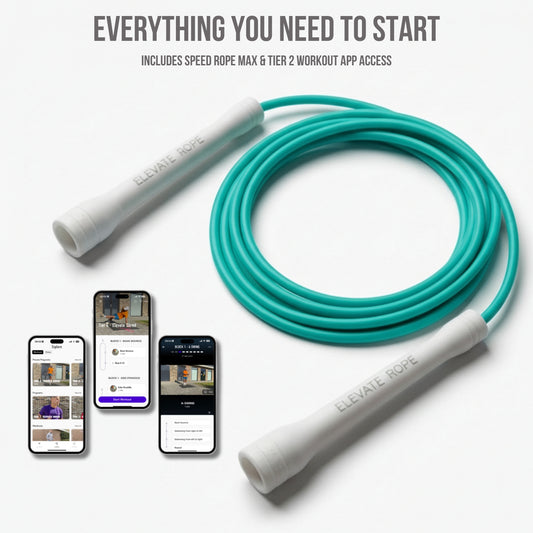
A flexible speed rope is another practical option. The Elevate Speed Rope MAX uses a 5 mm PVC cable with a nylon core.
Although it supports faster rotations, gentle pacing is still possible. Experienced jumpers can save higher intensity for dedicated cardio sessions.
Heavy Rope: For resistance-focused training
A heavy rope adds resistance during rotation. This can increase effort from your shoulders, arms, and grip.
That extra demand may be unnecessary for a gentle warm-up. Consider saving heavy rope work for separate conditioning sessions.
Which should you choose?
Pick a rope that feels comfortable, rotates consistently, and fits your height. Beginners may appreciate beaded-rope feedback.
Experienced jumpers might prefer a flexible speed rope. Our jump rope buying guide explains more options.
Above all, choose equipment you can control.
9. Five Common Jump Rope Warm-Up Mistakes
A warm-up should make training easier. These mistakes can turn preparation into unnecessary work.
Mistake 1: Starting too fast
Maximum speed isn't the goal. Begin slowly and settle into a comfortable rhythm.
Increase the pace only while your movements remain controlled.
Mistake 2: Jumping too high
Large jumps waste effort during basic skipping. Keep your movements small and land softly with relaxed knees.
Mistake 3: Using the wrong rope length
Incorrect sizing can cause repeated trips. Short cables may catch your feet, while long ones can drag across the floor.
Follow the manufacturer's adjustment guidance before cutting anything.
Mistake 4: Ignoring your main workout
Skipping alone won't prepare you for every exercise. Heavy squats, sprinting, and demanding movements need specific preparation.
Include relevant drills after your rope intervals.
Mistake 5: Pushing through pain
Pain isn't part of a successful warm-up. Stop for sharp pain, dizziness, or unusual symptoms.
Choose a suitable alternative and seek professional advice when needed.
The takeaway: Keep your jump rope warm-up controlled, comfortable, and relevant to your workout.
10. How to Make Your Warm-Up a Consistent Habit
The best routine isn't necessarily the most complicated. It's the one you can repeat.
When preparation feels simple, starting becomes less dependent on daily motivation.
Remove unnecessary decisions
Keep your rope somewhere accessible. At home, store it near your exercise space.
Hang your rope where you can see it before your next workout.

For gym sessions, prepare your equipment beforehand. Fewer decisions can make beginning feel easier.
Use a familiar opening sequence
A different warm-up isn't necessary every day. Start with familiar movements, then adjust them to your planned training.
March, mobilise, and begin your jump rope warm-up at a comfortable pace. Over time, the sequence may become automatic.
Make room for different energy levels
Some days, you'll feel ready immediately. At other times, you may feel tired or distracted.
Choose a gentler routine when appropriate. Consistency doesn't mean forcing identical intensity every day.
A sustainable approach matters more than perfect repetition.
Recognise the small wins
You prepared your equipment. The first movements are complete. Your warm-up is done.
Those actions may appear insignificant. Yet small commitments help build a habit of showing up.
That philosophy is central to the Elevate Code.
Progress begins with action you can repeat.
11. When Should You Skip the Jump Rope Warm-Up?
Jump rope isn't always the best option. Another activity may suit your body or training goals better.
When your lower legs hurt
Avoid skipping through foot, ankle, calf, or knee pain. Choose more comfortable movement when appropriate.
Persistent or concerning symptoms deserve professional assessment.
When you're recovering from injury
Follow your healthcare professional's return-to-activity guidance. Repeated jumping may not suit every stage of recovery.
A short session isn't automatically safe.
When you're new to impact exercise
Start with manageable amounts. Walking, marching, or easy cycling can be better initial options.
Introduce jumping gradually as your tolerance improves.
When your training surface is unsuitable
Avoid slippery floors, cluttered areas, and uneven ground. Check for sufficient overhead clearance.
Wear suitable athletic shoes and choose a stable surface. Safety matters more than completing a rope-based routine.
Quick answer: Skip the rope when jumping causes discomfort or doesn't suit your current needs.
12. How to Progress Your Jump Rope Warm-Up Over Time
Once the basic routine feels comfortable, introduce small changes. Just remember its purpose: you're still preparing for exercise.
Improve your control first
Focus on smooth wrist movement, relaxed shoulders, and consistent timing. Try maintaining rhythm without rushing.
Fewer trips and smoother rotations can signal improving coordination.
Add simple footwork
Practise alternating-foot steps or gentle weight shifts. Introduce one new movement at a time.
If the drill becomes tiring, return to basic bounce.
Adjust the duration when needed
Some workouts need longer preparation. Others require only a brief opening before exercise-specific movements.
Adapt the duration to your plan and experience. Don't extend your warm-up merely because you can.
Keep advanced skills separate
Double unders, releases, and complex freestyle combinations require practice. They may demand more energy than a general warm-up should.
Save challenging skills for dedicated sessions when possible.
The Elevate Ascent Bundle combines Beaded and Speed Ropes for varied training. Practise rhythm with the beaded model and dynamic cardio with the speed model.
Progress at a pace that supports your goals.
Final Thoughts: Five Minutes Can Be a Good Start
A perfect routine isn't required to begin exercising. Advanced jump rope skills aren't necessary either.
Your goal is preparation, not exhaustion.
Sometimes, five minutes of intentional movement is enough to get started.
Begin slowly. Find your rhythm. Prepare for what comes next, then get into your workout.
That's the purpose of a good warm-up. It prepares you for the work ahead without proving anything.
Each time you follow through, you're practising a habit worth keeping.
Start small. Move with purpose. Keep showing up.
Together We Elevate.
Ready to build a consistent movement routine? Explore the Elevate26 Challenge.
Frequently Asked Questions
Is five minutes of jump rope enough for a warm-up?
Five minutes of easy jump rope and mobility can provide general preparation for many workouts. However, demanding exercises may need more time. Heavy lifting, sprinting, and intense training benefit from specific warm-up movements. Focus on your readiness rather than treating five minutes as a universal requirement.
Should I jump rope before or after my workout?
Light jump rope can fit before exercise as part of a general warm-up. Harder skipping may belong in your main cardio workout or afterward. The best option depends on your priorities, fitness, and energy. Avoid exhausting muscles you'll need during your planned exercises.
Can beginners use a jump rope warm-up?
Yes, although beginners may need shorter intervals or simpler alternatives. Try marching, rope-free jumps, and controlled step-overs first. Practise individual basic jumps when ready. If learning feels exhausting, use another gentle warm-up before your main workout. Save dedicated rope practice for another time.
Is jump rope a good warm-up before lifting weights?
Jump rope can help you start moving before strength training. However, it shouldn't replace exercise-specific preparation. After easy skipping, rehearse your planned movements with lighter loads. If your calves tire or your legs feel heavy, reduce the jumping or choose another activity before lifting.
Which jump rope is best for a beginner warm-up?
A comfortable beaded rope often helps beginners because its rotation provides noticeable feedback. Flexible speed ropes can also work once basic jumps feel controlled. Choose suitable sizing and manageable weight. Neither an expensive nor a heavy rope is necessary for a simple warm-up.
Can I do a jump rope warm-up every day?
Some experienced jumpers tolerate frequent short sessions comfortably. However, jumping creates repeated impact, so experience and recovery matter. Beginners should increase frequency gradually. Rest or select lower-impact movement when your legs need recovery. A sustainable schedule is more useful than forcing identical routines every day.
About Elevate Rope
Elevate Rope helps people build lasting fitness habits through simple, enjoyable movement.
Our community includes more than 50,000 customers discovering how jump rope training fits into everyday life.
We believe transformation begins with small commitments you can maintain. Perfection isn't the goal; repeatable action is.
That's the Elevate Code: building trust in yourself through consistent effort.