





Jump rope coordination is the skill hiding inside every jump. Not the cardio. Not the calorie burn. The split-second conversation between your eyes, your hands, and your feet that has to fire in the right order, hundreds of times in a row, without you thinking about it. Most people decide early on that they are simply bad at it. They are not.
Here is what nobody tells a beginner. A silent rope gives your brain almost nothing to work with. You cannot feel where the rope is, so you guess, and you trip, and you quit. Coordination was never the problem. Feedback was. Give the brain a clear signal and the same body that "could not jump rope" starts finding the rhythm within a single session.
This guide covers what coordination actually is, how a jump rope trains it at the level of your nervous system, and how that translates into steadier balance, faster reflexes, and sharper focus. It is built for the curious beginner, the athlete chasing footwork, and anyone who has noticed their balance is not what it used to be.
What you will learn
Why coordination is a trainable skill, not a fixed trait you are born with or without
How jumping rope builds new motor pathways in the brain, not just fitness in the legs
What proprioception is, and why it keeps you upright as you age
How rope work sharpens reaction time, agility, and footwork for sport
The research linking rhythmic skipping to attention and focus
Which rope gives your brain the fastest, clearest feedback to learn from
A simple first session to start training coordination today
What Coordination Actually Is, and Why You Were Never Clumsy
Coordination is your nervous system organising movement in time. Every jump is a small act of prediction. Your brain has to know where the rope is, decide when to leave the ground, and tell dozens of muscles to fire in sequence, all faster than conscious thought. When it works, it feels effortless. When the signal is missing, it feels like you have two left feet.
The three systems behind every jump
Three inputs feed your sense of where you are in space. Your eyes track the world around you. Your inner ear reports tilt and motion. And your proprioceptors, the sensors buried in your muscles and joints, report the position of your limbs without you having to look. A jump rope loads all three at once and demands they agree. That is why a few minutes of skipping does more for whole-body awareness than isolated machine work, where the path of movement is fixed for you.
Why a silent rope fails your brain
Cheap ropes give you no feedback. The cable is invisible at speed, makes no sound, and offers nothing to your hands, so your brain is left guessing where the rope is in its arc. A beaded rope changes the equation. The beads strike the floor with a steady tick, an audible metronome that tells your brain when to jump before your eyes can even process the rope's position. You also feel the weight shift through the handles on every rotation. That combination of sound and touch is exactly the feedback the learning brain needs. The → Beaded Rope is built around this idea, which is why it is the rope we point beginners to first.
Once you understand coordination as a feedback problem rather than a talent problem, the path forward is obvious. You do not need to be naturally gifted. You need a tool that talks back to you, and enough repetitions for the pattern to stick.
How Jump Rope Trains Your Brain, Not Just Your Body
Skipping is a cognitive exercise wearing the disguise of cardio. The American Council on Exercise notes that jumping rope involves learning new motor patterns, which strengthens the nervous-system communication between the brain, the wrists, and the lower legs. In plainer terms, you are not just moving. You are wiring.

Motor learning and new neural pathways
When you practise an unfamiliar pattern, the brain builds and reinforces the connections that carry that movement. Each clean repetition makes the next one smoother. This is why a beginner who tripped constantly on day one can string together thirty unbroken jumps by the end of the week. Nothing in the muscle changed that fast. The change happened in the signal. Rope work is unusually good at this because it is rhythmic and repeatable, which gives the brain the consistent practice it needs to lock a pattern in.
The link to focus and attention
The cognitive payoff reaches beyond movement. A 2024 study published in Scientific Reports found that structured rope skipping improved inhibitory control in children, the brain's ability to filter distraction and make quick decisions, measured by the Stroop test. Separate research on long-rope jumping linked the activity to raised norepinephrine, a neurotransmitter tied to attention, alongside better Stroop performance. The demand is the point. Because skipping requires timing, rhythm, and constant small corrections, it keeps the attention system switched on in a way that mindless treadmill time does not.
How does jump rope coordination training compare to other ways of building the same skill? The table below puts it next to common alternatives on the factors that matter for a busy person at home.
| Activity | Coordination demand | Brain feedback | Space and cost | Best for |
| Jump rope (beaded) | High, full-body and rhythmic | Sound and touch on every turn | Two metres, one rope | Coordination, balance, reaction |
| Agility ladder | High, footwork focused | Visual only | Long floor strip | Foot speed for sport |
| Tai chi | Moderate, slow and controlled | Internal, no external cue | Small, no kit | Gentle balance, older adults |
| Treadmill | Low, fixed repetitive path | None | Large, expensive | Steady-state cardio only |
Short answer Yes, jump rope improves coordination, and the effect is rooted in the brain. Skipping trains the timing and motor-pattern systems that govern how your eyes, hands, and feet work together.
Why it matters Coordination is not fixed. It responds to practice at any age, and better coordination underpins everything from sport performance to staying steady on your feet. Rope work is one of the most efficient ways to train it because it loads vision, balance, and limb-awareness at the same time.
Best next step Start with a rope that gives your brain feedback to learn from. The → Beaded Rope provides the sound and touch cues that make the pattern click faster.
Balance, Proprioception, and Staying Steady as You Age
Coordination and balance are two sides of the same system. Both depend on proprioception, your body's sense of where it is without looking. As that sense sharpens, you move with more control. As it fades, the risk of a stumble rises. This is where jump rope quietly earns its place in a longevity routine.

What proprioception is, and how skipping builds it
Proprioception is the steady stream of position data your muscles and joints send to the brain. Every landing on the balls of your feet forces your body to make tiny neuromuscular adjustments to stay balanced. Repeat that hundreds of times and you are training the exact system that keeps you upright on uneven ground, on a curb, or when someone bumps into you. The beaded rope's tactile feedback adds to the effect, because feeling the rope through your hands reinforces the body's awareness of its own movement.
Balance and fall prevention later in life
Balance is not a vanity metric once you pass middle age. Worldwide, between roughly 28 and 35 percent of people aged 65 and over fall at least once a year, and balance deficits are a known risk factor. Coordination training that challenges balance has been shown to reduce that risk. You do not need to be jumping at speed to benefit. Slow, controlled skipping on a forgiving surface trains the same reflexes. If you are training later in life, our guide to jump rope and fall prevention covers how to start safely, and the dedicated piece on jump rope for seniors goes deeper on technique and pacing.
Short answer Jump rope strengthens proprioception and balance by forcing repeated, controlled landings that train your body's position sense.
Why it matters Better balance means fewer stumbles and more confidence on your feet, which matters more with every passing decade. Falls are a leading cause of injury in older adults, and balance training is one of the few proven ways to lower the risk.
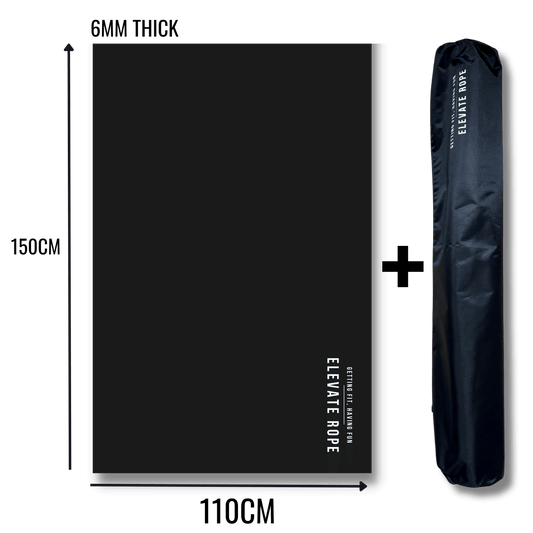
Best next step Jump on a stable, cushioned surface to protect your joints while you build the reflex. A → Jump Rope Mat gives you a consistent landing zone and softens the impact.
Reaction Time, Agility, and Footwork for Sport
There is a reason boxers have skipped rope for a century. The same feedback loop that helps a nervous beginner find their rhythm also sharpens the reflexes of a trained athlete. Coordination at speed is reaction time, and the rope is one of the cleanest tools for training it.
Why athletes skip
A fast rope forces instant corrections. The cable moves quicker than you can consciously track, so your brain learns to respond to rhythm and feel rather than sight. That builds reaction speed and lighter, quicker feet, which transfer directly to sports that reward agility and footwork. Skipping also develops fast-twitch responsiveness and the ability to repeat a precise movement under fatigue, both of which carry over to the field, the court, or the ring.
Training reaction with a faster rope
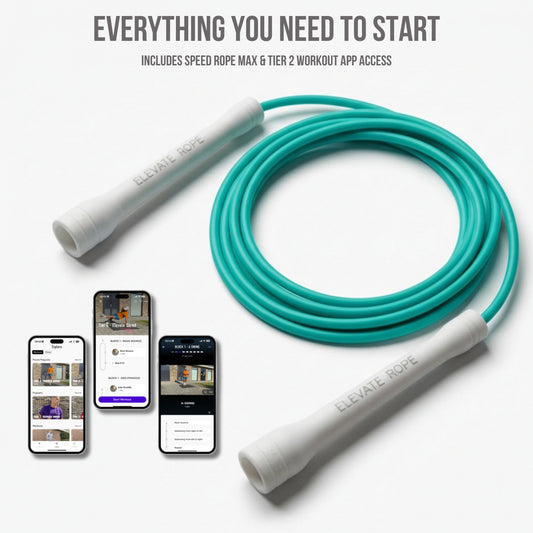
Once your base coordination is solid, a thinner, faster cable raises the demand. The → Speed Rope uses a shape-memory cable that holds its arc as it spins, so your brain always has a sense of where the rope is even at high speed. That lets you push tempo, work on double-unders, and train reaction without the rope collapsing into chaos. The natural progression is to learn the pattern on a beaded rope, then move to a speed rope to sharpen it. Our comparison of the beaded and speed ropes for coordination breaks down exactly when to make the switch.
Short answer Jump rope improves reaction time and agility by training your nervous system to respond to rhythm and feel faster than conscious sight allows.
Why it matters Quicker feet and faster reflexes transfer to almost every sport, and they are trainable with a few minutes of focused rope work a day.
Best next step Build the base pattern first, then raise the demand with the → Speed Rope once your timing is reliable.
How to Start Training Coordination With a Rope
Jump rope coordination is built one clean repetition at a time. You do not need a complicated programme. You need feedback, short focused sessions, and the patience to let the pattern settle. Here is how to begin.
The beginner path
Start with a beaded rope, because the sound and touch tell your brain when to jump. Stand tall, keep your elbows close to your sides, and turn the rope mostly from the wrists rather than the shoulders. Jump just high enough to clear the cord, landing softly on the balls of your feet. Do not chase speed. Chase clean, unbroken rhythm. Speed is a by-product of timing, and timing comes from feedback and repetition.
A simple first session
Keep your first sessions short and frequent. Frequency beats duration when you are wiring a new pattern.
| Block | What to do | Time |
| Warm-up | March in place, then practise the wrist turn with no jump | 2 minutes |
| Skill | Jump in sets of 10, rest, repeat. Focus on rhythm, not count | 5 minutes |
| Balance | Single foot to single foot, slow and controlled | 2 minutes |
| Cooldown | Slow skipping, then a calf and ankle stretch | 1 minute |
Train on a stable, cushioned surface to protect your knees and ankles while the reflex develops. A → Jump Rope Mat gives you a consistent landing zone, which also makes your rhythm more reliable. When ten unbroken jumps feel easy, follow the full progression in our 30-day coordination and balance plan.
Short answer Begin with a beaded rope, short daily sessions, and a focus on clean rhythm over speed. Coordination follows feedback and repetition.
Why it matters Most people quit because they start with the wrong tool and chase speed too early. Get the feedback right and the rest follows.
Best next step Pick up the → Beaded Rope and commit to ten minutes a day for a week. The pattern will start to feel natural faster than you expect.
Frequently Asked Questions
Does jumping rope really improve coordination?
Yes. Jumping rope trains the timing and motor-pattern systems that coordinate your eyes, hands, and feet. Because it loads vision, balance, and limb-awareness at the same time, it is one of the most efficient coordination tools you can use at home, and it works at any age.
How long does it take to get more coordinated with a jump rope?
Many beginners string together their first unbroken set within a week of short daily practice. The early gains are neurological, not muscular, which is why they come quickly. Steady balance and faster reflexes build over several weeks of consistent work.
Is jump rope good for balance as you get older?
It can be. Controlled skipping trains proprioception and the reflexes that keep you steady, both of which support fall prevention. Start slow, jump on a cushioned surface, and check with a doctor first if you have joint or balance concerns.
Which rope is best for building coordination?
A beaded rope is best for learning, because the beads give you sound and touch feedback that tells your brain where the rope is. Once your timing is reliable, a speed rope raises the demand and sharpens reaction time.
Can jump rope help with focus and attention?
Research links rhythmic rope skipping to better performance on attention tests and to raised norepinephrine, a neurotransmitter tied to focus. The constant timing and correction skipping requires keep the attention system engaged in a way passive cardio does not.
Do I need to jump fast to train coordination?
No. Slow, clean, unbroken rhythm trains coordination better than fast, sloppy jumping. Speed is a by-product of good timing. Build the pattern first, then add pace.
Where to Start Based on Where You Are
If you are new to the rope or returning after years away, start with the → Beaded Rope. The sound and touch feedback is what turns "I am uncoordinated" into "I just found my rhythm." It is the rope that teaches, and it is where almost every confident jumper began.
If you already have your timing and want to sharpen reaction speed and footwork, step up to the → Speed Rope. The faster cable raises the demand and trains the reflexes that carry over to sport. Either way, protect your joints and steady your rhythm with a → Jump Rope Mat, which gives you a consistent surface to practise on.
Coordination is a promise you keep to yourself, one clean jump at a time. The body that "could not do this" was always capable. It just needed a rope that talks back.
Sources
- American Council on Exercise: Health Benefits of Jumping Rope
- Scientific Reports (2024): Rope Skipping and Cognitive Function in Children
- Impact of Long-Rope Jumping on Monoamine Levels and Attention in Young Adults
- Cleveland Clinic: Benefits of Jumping Rope
- Systematic Review: Exercise, Balance, and Fall Prevention in Older Adults