





You've developed solid jump rope skills and the basic bounce feels natural. You've strung together minutes of continuous jumping without tripping. The coordination that once seemed impossible has become automatic.
Now what?
This is where most jumpers plateau. They've mastered the fundamentals but don't know what comes next. So they keep doing the same basic bounce, session after session, until boredom sets in and the rope gets hung up indefinitely.
But basic bouncing is just the beginning. Jump rope skills extend far beyond what you've learned so far—a world of footwork, tricks, speed techniques, and freestyle combinations that keep the activity challenging and engaging for years.
This guide covers 10 jump rope skills to learn after you've mastered the basics, organised from accessible to advanced. Each builds on what you already know while adding new challenge and variety to your training.
What you'll learn:
- 10 progressive jump rope skills from intermediate to advanced
- How to learn each technique step by step
- Common mistakes and how to avoid them
- Which skills transfer to specific fitness goals
- How to combine skills into flowing routines
How to Know You're Ready for New Skills
Before diving into advanced jump rope skills, confirm you've genuinely mastered the basics.
You're ready if you can:
- Complete 2-3 minutes of continuous basic bounce without tripping
- Maintain consistent rhythm without conscious effort
- Jump with minimal height (2-3cm clearance)
- Keep hands steady at hip level with wrist-driven rotation
- Recover quickly from occasional trips without frustration
You're not quite ready if:
- You still trip frequently during basic bouncing
- Maintaining rhythm requires constant mental focus
- Your jump height varies significantly
- Arms drift upward or outward during jumping
- Trips cause significant frustration or session abandonment
Attempting advanced jump rope skills before fundamentals are solid creates frustration and can reinforce bad habits. Be honest about your current level. There's no rush—the skills will still be there when you're truly ready.
Answer Block: What Jump Rope Skills Should I Learn After Basic Bounce?
Short answer: Progress through alternating feet (running in place), boxer skip, high knees, side swings, crosses, double-unders, and eventually freestyle combinations. Each skill builds on previous ones, creating a natural learning progression.
Key principle: Master each skill before adding the next. Rushing through jump rope skills creates shaky foundations that limit future progression.
Recommended timeline: Allow 1-2 weeks of focused practice per new skill. Some skills click faster; others take longer. Patience produces better long-term results than impatience.

Skill 1: Alternating Feet (Running in Place)
The first new jump rope skill most people learn after basic bounce.
What it is:
Instead of jumping with both feet together, you alternate feet like running in place. Right foot, left foot, right foot, left foot—one foot landing per rope rotation.
Why learn it:
Alternating feet develops independent leg coordination and feels more natural for many people than the bounce. It's also less fatiguing for longer sessions since each leg gets brief rest periods.
How to learn:
Start without the rope. Run in place with small, quick steps—barely lifting feet off the ground. Find a comfortable rhythm.
Add the rope at slow speed. One rotation per step. Right foot lands, rope passes. Left foot lands, rope passes. The timing is identical to basic bounce; only the footwork changes.
Common mistakes:
- Lifting knees too high (keep steps small)
- Speeding up too quickly (maintain controlled pace initially)
- Losing rhythm when switching from bounce (practice transitions)
Practice benchmark:
60 seconds of alternating feet without tripping. Then practice switching between basic bounce and alternating feet mid-session.
Skill 2: Boxer Skip
The signature jump rope skill of combat athletes worldwide.
What it is:
A rhythmic side-to-side weight shift while jumping. Both feet stay relatively close together, but weight transfers from one foot to the other in a flowing pattern.
Why learn it:
The boxer skip is sustainable for very long durations—professional boxers jump for 20-30 minutes using this technique. It's also lower impact than basic bounce because the lateral weight shift distributes force.
How to learn:
Stand with feet hip-width apart. Shift weight to your right foot while slightly lifting your left. Then shift to left while lifting right. This is the motion—now add small hops.
Without rope, practice the skip rhythm: right-right-left-left or right-left-right-left, whichever feels natural. Keep movements small.
Add the rope slowly. One rotation per weight shift. The rope passes under whichever foot is currently weighted.
Common mistakes:
- Making the side-to-side movement too large
- Jumping too high during weight shifts
- Losing the rope rhythm when focusing on footwork
Practice benchmark:
90 seconds of continuous boxer skip. This becomes your default "rest pace" for longer sessions.

Skill 3: High Knees
An intensity-boosting jump rope skill that adds cardiovascular challenge.
What it is:
Alternating feet with exaggerated knee lift—bringing each knee toward hip height with every rotation.
Why learn it:
High knees transform jumping from moderate to high intensity immediately. It's excellent for HIIT intervals and adds core engagement as hip flexors work harder.
How to learn:
Master alternating feet first. Then gradually increase knee height over multiple sessions. Don't jump straight to maximum height—build progressively.
Focus on one knee at a time initially. Lift right knee high, then normal left step, then high right again. Once comfortable, alternate high knees on both sides.
Common mistakes:
- Leaning backward to lift knees (stay upright)
- Losing rope rhythm due to timing changes
- Trying maximum height before building gradually
Practice benchmark:
30 seconds of high knees at full height, maintaining rope rhythm throughout. This becomes a high-intensity interval option in your workouts.
Skill 4: Side Swing
Your introduction to jump rope skills involving the rope moving beside your body rather than under it.
What it is:
The rope swings alongside your body (left or right) without passing under your feet. One rotation beside you, then a jump, then beside you again—or continuous side swings without jumping.
Why learn it:
Side swings are foundational for many advanced tricks. They also provide active recovery during intense sessions—your heart rate stays elevated while legs rest briefly.
How to learn:
Hold both handles in your right hand. Swing the rope in a circle at your right side. This is the motion and timing for a right-side swing.
Now hold handles normally but bring hands together at your right hip, swinging the rope beside you instead of under you. Practice the transition: swing beside, then separate hands and jump over the rope.
Common mistakes:
- Bringing hands too far across your body
- Losing rope control during the swing
- Rushing the transition from swing to jump
Practice benchmark:
Smooth transition from side swing to jump and back to side swing. Both left and right sides. This opens the door to numerous advanced combinations.
Skill 5: Basic Cross
The jump rope skill that makes people stop and watch.
What it is:
Your arms cross in front of your body while the rope passes under your feet, creating a loop you jump through.
Why learn it:
Crosses look impressive and feel satisfying to execute. They're also a gateway to advanced freestyle jump rope skills that build on the cross motion.
How to learn:
This skill requires patience. Break it into phases:
Phase 1: Practice crossing arms without rope. Right hand goes to left hip, left hand goes to right hip. Find the comfortable crossing depth.
Phase 2: With rope, perform one cross and stop. Don't try to continue jumping. Cross, jump through, catch the rope. Repeat until consistent.
Phase 3: Add a regular bounce after the cross. Cross, jump, open, jump. Two-jump sequence.
Phase 4: String crosses together or alternate with regular bounces as desired.
Common mistakes:
- Not crossing arms deep enough (rope won't form a big enough loop)
- Crossing at chest level instead of hip level
- Trying to go fast before mastering slow
Practice benchmark:
Three consecutive crosses without tripping. Then integrate single crosses into regular bouncing at will.
Skill 6: Double-Under
The jump rope skill that defines advanced jumping.
What it is:
The rope passes under your feet twice during a single jump. One jump, two rotations.
Why learn it:
Double-unders build explosive power, dramatically increase workout intensity, and are required for competitive jump rope and CrossFit. They're a milestone skill that separates intermediate from advanced jumpers.
How to learn:
Prerequisites: You need a faster rope (speed rope recommended) and solid basic bounce with quick wrist rotation. Attempting double-unders with a heavy beaded rope is extremely difficult.
Phase 1: Practice "power jumps"—single jumps with extra height while maintaining normal rope speed. Get comfortable with higher bounces.
Phase 2: Practice fast wrists without extra jump height. Spin the rope as fast as possible during regular bouncing.
Phase 3: Combine. Higher jump + faster rotation. Attempt one double-under followed by several regular bounces. The rope should pass twice before you land.
Phase 4: String consecutive double-unders once singles become consistent.
Common mistakes:
- Jumping too high (height matters less than rotation speed)
- Kicking feet backward (stay vertical)
- Donkey kicks or pike position mid-air
- Tense shoulders limiting wrist speed
Practice benchmark:
5 consecutive double-unders. Then 10. Then 25. Building toward unbroken sets of 50+ marks advanced proficiency.

Skill 7: Criss-Cross Combination
Combining jump rope skills into flowing sequences.
What it is:
Alternating between regular bounce, crosses, and other variations in predetermined or freestyle patterns.
Why learn it:
Combinations keep your brain engaged and transform jumping from exercise into expression. They're also impressive to watch and deeply satisfying to execute smoothly.
How to learn:
Start with simple two-move combinations:
- Bounce, bounce, cross, bounce, bounce, cross
- Cross, open, cross, open (alternating every jump)
- Side swing right, jump, side swing left, jump
Progress to three-move combinations:
- Bounce, cross, side swing, repeat
- Cross, open, open, cross, open, open
Eventually, create your own sequences or follow freestyle tutorials.
Common mistakes:
- Attempting complex combinations before individual skills are solid
- Losing rhythm during transitions
- Getting frustrated when combinations don't click immediately
Practice benchmark:
One signature combination you can perform consistently for 30+ seconds. This becomes "your move" that you can demonstrate confidently.
Skill 8: Backwards Jumping
All your jump rope skills, reversed.
What it is:
The rope rotates backward (from behind you, over your head, down in front) instead of forward. You jump as it passes behind your feet.
Why learn it:
Backwards jumping develops coordination symmetry and works muscles slightly differently. It also expands trick possibilities—many advanced moves combine forward and backward rotation.
How to learn:
Start with the rope behind you, handles at your sides. Swing forward over your head and jump as it approaches your feet from the front.
The timing feels different—you can't see the rope approaching. Trust the rhythm and sound (if using beaded rope) to time your jumps.
Begin with single backward jumps, stopping after each one. Build to consecutive jumps gradually.
Common mistakes:
- Leaning forward (stay upright)
- Jumping too early or late (listen for rope sound)
- Reverting to forward rotation unconsciously
Practice benchmark:
30 seconds of continuous backward jumping. Then practice transitioning from forward to backward mid-session.
Skill 9: Speed Training
Pushing rotation and jump rate to maximum.
What it is:
Jumping as fast as possible—measured in rotations per minute. Competitive speed jumpers exceed 300 rotations per minute.
Why learn it:
Speed training builds explosive power, develops fast-twitch muscle fibres, and creates intense cardiovascular challenge in short intervals. It's also a measurable metric for tracking improvement.
How to learn:
Prerequisites: Light speed rope, solid alternating feet technique, efficient wrist rotation.
Start with timed intervals: 30 seconds at maximum sustainable speed. Count rotations or use an app. Rest and repeat.
Focus on efficiency—wasted motion slows you down. Small jumps, small wrist circles, relaxed everything except effort.
Track your numbers. Beginners might hit 80-100 rotations per 30 seconds. Intermediate jumpers reach 120-140. Advanced jumpers exceed 150.
Common mistakes:
- Tensing shoulders and arms (kills wrist speed)
- Jumping high to create more time (actually slows you down)
- Sacrificing form for speed
Practice benchmark:
Establish your baseline, then work to improve by 10% over the following month. Speed development is gradual but measurable.
Skill 10: Freestyle Flow
The ultimate expression of jump rope skills.
What it is:
Combining multiple techniques in spontaneous, flowing sequences—responding to music, mood, or pure improvisation.
Why learn it:
Freestyle transforms jump rope from exercise into art. It's creative, engaging, and provides endless challenge. No two freestyle sessions are identical.
How to learn:
There's no single method because freestyle is personal. But some principles help:
Build a vocabulary of moves. Each skill you've learned is a word. Freestyle is speaking in sentences.
Practice to music. Let the beat guide your transitions. Certain moves fit certain rhythms.
Watch freestyle videos for inspiration. Note how jumpers transition between moves and create flow.
Accept imperfection. Freestyle involves tripping, experimentation, and evolution. It's a practice, not a performance.
Common mistakes:
- Waiting until all skills are "perfect" before trying freestyle
- Comparing yourself to experts who've trained for years
- Abandoning freestyle because early attempts feel awkward
Practice benchmark:
One minute of freestyle flow where you transition between at least 5 different techniques without stopping. This is your foundation for endless future exploration.
Building a Skills Practice Routine
Learning new jump rope skills requires structured practice alongside regular workouts.
Weekly structure example:
Monday: Regular workout (current skills) Tuesday: Skills practice (10-15 minutes on one new technique) Wednesday: Rest or light activity Thursday: Regular workout with integration of recently learned skills Friday: Skills practice Saturday: Longer workout combining all comfortable skills Sunday: Rest
Skills practice session structure:
Warm-up: 3-5 minutes of basic bounce and current skills
Isolation: 5-7 minutes focused on one new skill, broken into attempts with brief rest
Integration: 5 minutes combining new skill with established skills
Cool-down: 2-3 minutes easy jumping
Progression principles:
One new skill at a time. Don't split attention between multiple new techniques.
Volume over intensity. Many repetitions at moderate quality beat fewer repetitions at maximum effort.
Celebrate small wins. Landing a new skill once is progress. Consistency comes later.
Frequently Asked Questions
How long does it take to learn each skill?
Varies enormously by individual. Alternating feet might click in one session; double-unders might take weeks. Expect 1-3 weeks per skill for comfortable execution. True mastery takes months of ongoing practice.
Do I need different ropes for different skills?
For most skills, any quality rope works. Double-unders benefit significantly from a lighter speed rope. Freestyle is often easier with a slightly longer rope. Advanced jumpers sometimes own 3-4 ropes optimised for different purposes.
What if I can't learn a particular skill?
Move on temporarily. Learn something else, then return. Sometimes skills that seemed impossible click easily after your overall coordination improves from learning other techniques.
Should I learn these skills in order?
Roughly. The progression is organised from accessible to advanced. But if a later skill appeals to you, try it. Jump rope skills don't have strict prerequisites beyond basic competence.
How do I avoid injury when learning new skills?
Warm up thoroughly. Stop when fatigued—most injuries happen when tired. Don't over-practice a single skill to the point of strain. Take rest days.
Can I learn these skills at any age?
Yes. The progression may be slower for older adults, and certain skills (high-impact double-unders) may require modification. But the jump rope skills in this guide are accessible to healthy adults of any age with patience and appropriate progression.
The Journey Continues
These 10 jump rope skills represent months or years of potential progression. Each one adds challenge, variety, and engagement to your training.
But the list isn't exhaustive. Beyond these techniques lie triple-unders, releases, leg-overs, pushups, and combinations that competitive jumpers spend decades perfecting.
The point isn't to learn everything. It's to keep learning something. Jump rope stays interesting when you're always working toward a new skill, always expanding what's possible.
You've mastered the basics. Now explore what else is out there.
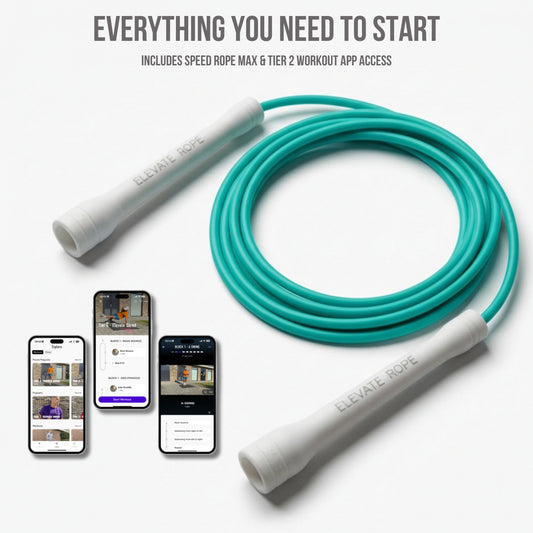
If you're looking for visual guidance on these jump rope skills, the free Elevate App includes video tutorials for each technique covered here. For speed-focused skills like double-unders, the Elevate Speed Rope MAX provides the fast rotation these techniques demand. And for learning new footwork patterns, the Elevate Dignity Beaded Rope offers the rhythmic feedback that helps new movements click.
The basics were just the beginning. Now the real fun starts.
Sources
Skill progression sequences draw from coaching guidelines established by the World Jump Rope Federation and certified competitive jump rope coaches. Motor learning principles reference research on skill acquisition, practice structure, and coordination development. Double-under technique recommendations align with CrossFit coaching standards and competitive speed jumping protocols.