





Learning how to maintain a jump rope comes down to 3 simple habits: clean it, inspect it, and store it properly.
Your jump rope doesn't need expensive cleaning products or complicated maintenance routines. It needs protection from dirt, moisture, sharp bends, and unnecessary friction.
Small habits can make a noticeable difference. They help you spot damage before it interrupts a workout.
Different ropes also need different care. Beaded ropes, speed ropes, and heavy ropes don't wear in exactly the same way.
In this guide, you'll learn 7 practical jump rope maintenance tips for beginners. We'll cover cleaning, storage, training surfaces, equipment inspections, and replacement decisions.
The goal isn't to make your equipment last forever.
It's to keep your rope ready whenever you're ready to train.
Why Jump Rope Maintenance Matters
Your jump rope makes repeated contact with the ground during every workout.
Each rotation creates friction between the rope and your training surface.
Over time, this contact can cause visible wear.
Dust, sweat, improper storage, and damaged connections can create additional problems.
Regular jump rope maintenance helps you notice these issues early.
Normal Wear vs. Damage
Not every mark means your rope needs replacing.
Small scuffs and superficial scratches may be cosmetic.
However, certain problems deserve immediate attention:
- Deep cuts in the cable
- Severe cord fraying
- Cracked or sharp beads
- Exposed internal materials
- Loose handle connections
- Damaged adjustment mechanisms
- Unusual resistance during rotation
If damage could affect safe operation, stop using the rope.
Check the manufacturer's instructions before repairing or replacing components.
Why Beginners Should Check Their Equipment
Beginners are already learning timing, coordination, and hand position.
A tangled or damaged rope adds another problem.
You might assume your technique is wrong when the equipment needs attention.
Inspecting the rope helps separate equipment problems from movement mistakes.
That means less unnecessary frustration.
You can concentrate on building rhythm instead of constantly troubleshooting your gear.
1. How to Clean a Jump Rope Properly
The first maintenance habit is simple: remove dirt before it builds up.
You don't need to wash your rope after every indoor workout.
However, outdoor training often leaves grit on the cable or beads.
That dirt deserves attention.
A Simple Cleaning Routine
Follow these steps unless your product instructions recommend otherwise:
- Place the rope on a clean surface.
- Inspect it for visible dirt or damage.
- Wipe the exterior with a soft cloth.
- Use a slightly damp cloth for stubborn dirt.
- Keep water away from enclosed mechanisms.
- Allow all parts to dry before storage.
Start with a soft, slightly damp cloth and remove visible grit.

For compatible materials, a small amount of mild soap may help remove dirt.
Avoid using solvents, bleach, or strong degreasers without manufacturer approval.
The Canadian Conservation Institute's plastics care guidance explains why cleaners and solvents require caution.
That guidance concerns plastic preservation generally, not a specific jump rope model.
For more detail, read our guide to cleaning a jump rope.
Should You Wash Jump Rope Handles?
Wipe the handles instead of soaking them.
Some handles contain bearings, adjustment systems, or other enclosed components.
Water may reach places that are difficult to dry.
Use a damp cloth to remove sweat from the grip.
Then dry the exterior thoroughly.
Never assume every jump rope handle can be submerged.
2. Clean Different Jump Rope Types Correctly
Not every jump rope has the same construction.
The right care method depends on its materials and components.
Beaded Rope Care
A beaded rope contains individual beads threaded onto a supporting cord.
This construction provides useful feedback during rotation.
However, the beads and cord need separate attention.
For proper beaded rope care:
- Wipe visible dirt from the beads.
- Inspect each section for cracking.
- Check for sharp or broken edges.
- Examine the supporting cord between beads.
- Look at the cord near both handles.
A cracked bead may create a rough contact point.
A worn supporting cord may become difficult to notice beneath the beads.
Inspect both.
If you're unfamiliar with this construction, explore our beaded jump rope collection.
How to Clean a Speed Rope
Speed ropes typically use a relatively thin cable or cord.
Some have PVC exteriors, while others use coated wire.
Their handle mechanisms also vary.
To clean a jump rope designed for speed:
- Wipe along the entire cable.
- Examine the section contacting the ground.
- Check for flat spots or damaged coating.
- Inspect both cable-to-handle connections.
- Test rotation gently before training.
Avoid applying oil without checking the manufacturer's instructions.
Some ropes use serviceable bearings. Others have no bearings at all.
Our bearing maintenance guide explains the difference.
You can also explore the Elevate Speed Rope collection to compare available designs.
Cleaning a Heavy Jump Rope
Heavy ropes experience repeated contact across a thicker outer material.
Their greater resistance can also place different demands on the handles.
Wipe away dust and grit after training.
Check the rope surface for cracks, deep abrasion, or exposed internal materials.
Pay attention to the areas closest to the handles.
Allow the rope to dry before packing it away.
Use product-specific care instructions whenever available.
The cleaning method should match the material, not the workout intensity.
3. How to Store a Jump Rope Correctly
Good jump rope storage can prevent avoidable bends and tangles.
After training, many people simply throw their rope into a bag.
That's convenient.
But tight knots, crushing, and prolonged exposure to heat can create problems.
A better approach takes very little effort.
Store Your Rope in Loose Loops
Follow the rope's natural curve.
Avoid forcing a long cable into a very small coil.
Don't fold it sharply in half.
Instead:
- Hold the handles together.
- Let the cord hang naturally.
- Create relaxed loops without twisting.
- Secure them loosely if necessary.
- Store the rope where it won't be crushed.
The correct loop size depends on the rope material and design.
If the cable resists the curve, make the loops larger.
Our detailed jump rope storage guide explains this technique.
Keep Your Jump Rope Away From Excessive Heat
Avoid leaving your rope beside radiators or other heat sources.
Prolonged direct sunlight may also affect certain plastic components.
The Canadian Conservation Institute's material care recommendations describe how heat and light can contribute to deterioration.
These principles support sensible equipment storage.
A cool, dry indoor location is usually a practical choice.
Don't Store a Damp Rope
Allow the cable and handles to dry before packing them away.
Avoid leaving sweaty equipment in a sealed gym bag for extended periods.
A clean, dry rope is easier to inspect before your next session.
How to Travel With Your Rope
A dedicated pouch can help separate the rope from heavy equipment.
Avoid placing dumbbells, shoes, or sharp objects directly on the cable.
Unwind the rope fully before training.
Check for twists or unusual bends.
Good jump rope storage should make your next workout easier, not more complicated.
4. Choose Training Surfaces That Reduce Rope Wear
Your training surface influences jump rope maintenance.
A rough surface creates more abrasive contact than a smooth one.
Concrete and asphalt vary considerably in texture.
Some areas are relatively smooth. Others contain exposed grit and rough aggregate.
Repeatedly striking abrasive ground can wear down the cable exterior.
Concrete, Asphalt, and Indoor Floors
| Surface | Rope care consideration | What to check |
| Rough concrete | Can create substantial abrasion | Cable surface and flat spots |
| Coarse asphalt | Can scrape beads or coatings | Areas repeatedly hitting the ground |
| Smooth indoor sports floor | Usually less abrasive | Traction and floor suitability |
| Stable rubber mat | Separates the rope from rough ground | Flat edges and adequate width |
| Carpet | May slow or catch certain cables | Pile height and surface stability |
A smoother surface may reduce wear.
However, traction and safe footing always come first.
Don't use a slippery floor simply because it's gentle on your cable.
Should You Use a Jump Rope Mat?
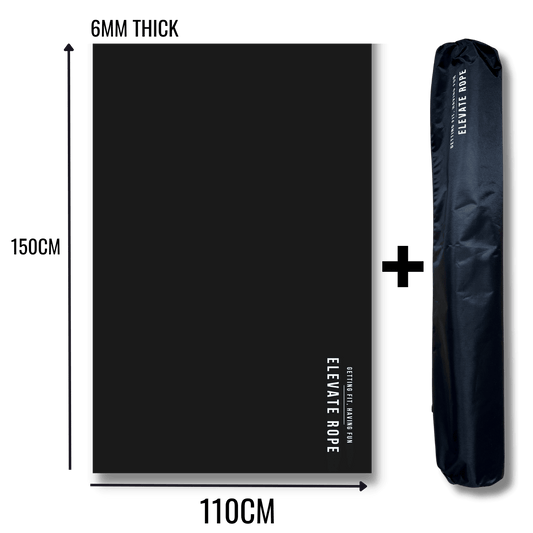
A suitable mat can separate your cable from abrasive ground.
It should be wide enough for the rope's contact path.
It should also remain stable beneath your feet.
A narrow yoga mat may protect your landing area without protecting the entire cable path.
Our article Do You Need a Jump Rope Mat? explains when additional floor protection makes sense.
A mat isn't mandatory for everyone.
It is one option for managing equipment wear.
How Technique Affects Cable Wear
Rope length and hand position influence how the cable contacts the floor.
A rope that is too long may scrape excessively.
Hands held too far apart can change the rope's path.
Check your technique before assuming that you need replacement equipment.
Aim for:
- Relaxed shoulders
- Hands relatively close to your sides
- Controlled wrist movement
- Small, comfortable jumps
- A rope length suited to your technique
The objective is smooth rotation, not avoiding all ground contact.
A jump rope naturally touches the floor during normal skipping.
5. Inspect Your Jump Rope Before Every Workout
Cleaning matters.
But inspection is the habit that helps you identify potential equipment problems.
A jump rope may appear clean while having a loose connection.
Check the full assembly before training.
Your Pre-Workout Equipment Checklist
Use this simple checklist:
- Check the cable for deep cuts or splits.
- Look for fraying or exposed internal material.
- Inspect beads for cracks and sharp edges.
- Confirm that both handles are secure.
- Check adjustment and retention mechanisms.
- Look for severe kinks or unusual bends.
- Test rotation gently.
- Check that your training area is clear.
You don't need a complicated inspection routine.
You need a consistent one.
Cosmetic Wear vs. Structural Damage
Light surface scuffs don't always require replacement.
A deep cut or failing handle connection is different.
The important question is whether the equipment still operates safely.
If you cannot determine that, stop using it.
Ask the manufacturer or an appropriate product specialist.
Do not continue training simply because the rope still rotates.
What If the Rope Keeps Tangling?
First, unwind it completely.
Check for twists and tight bends.
Then inspect the handle connections.
If the cable remains sharply kinked, don't force it straight.
Certain PVC cords may be repositioned using manufacturer-approved methods.
Our PVC jump rope cord guide discusses common approaches.
Avoid using heat or other treatments unless they're suitable for your specific rope.
6. Protect the Handles and Connection Points
Most people inspect the middle of the cable.
But the connections deserve just as much attention.
Handles influence how the rope moves.
If a connection becomes loose, rotation may feel inconsistent.
Handle connections matter as much as the cable itself.
Check Both Handles
Gently inspect the area where the cable enters each handle.
Look for:
- Loose retaining mechanisms
- Fraying near the connection
- Cracked handle material
- Damaged adjustment parts
- Uneven or unusually restricted movement
Some designs use bearings or swivels.
Others use simpler connection systems.
Follow the manufacturer's care instructions.
Should You Oil Jump Rope Handles?
Not automatically.
Some bearing systems may have specific lubrication requirements.
Others are sealed or designed without serviceable bearings.
Adding oil where it doesn't belong may attract dirt or affect components.
If the manufacturer's instructions don't recommend lubrication, don't improvise.
Avoid Unnecessary Modifications
Don't substitute random hardware for a damaged retention mechanism.
Don't use an improvised knot to compensate for a broken connector.
Replacement parts should be compatible with the original design.
If you're uncertain, contact the manufacturer.
A small maintenance mistake isn't worth an unpredictable cable connection during training.
7. Know When to Replace Your Jump Rope
Even with good care, jump ropes experience wear.
That doesn't mean you need to replace the entire rope whenever you notice a scratch.
First, identify which component is damaged.
When Should You Replace a Cable?
Consider replacement when you notice:
- Deep cuts
- Severe fraying
- Exposed internal material
- Significant splitting
- Damage affecting normal rotation
- Wear near a retention point
There is no universal replacement interval.

A rope used daily on concrete may wear differently from one used occasionally indoors.
Your inspection matters more than a fixed calendar.
Can You Replace Just the Cord?
Sometimes.
Some jump rope designs allow individual cables or cords to be replaced.
Others require more extensive repairs or complete replacement.
Check whether compatible components are available.
Never assume that replacing a cable solves a damaged handle connection.
Are Replacement Beads Available?
Some beaded designs allow individual components to be replaced.
Availability depends on the rope construction.
Check the cord as well as the beads.
Replacing a damaged bead won't solve an underlying cord problem.
When Is a New Rope the Better Choice?
Sometimes the entire assembly needs replacing.
This may be necessary when handles, connections, or multiple components are damaged.
If repairing the rope would compromise safety, choose replacement.
A dependable rope is more useful than one you're constantly worried about.
Common Jump Rope Maintenance Mistakes
Most maintenance mistakes are easy to avoid.
They usually happen because we're rushing between workouts.
Leaving the Rope in Tight Knots
Tight knots can create bends and make a rope difficult to unwind.
Store it in relaxed loops instead.
Using Strong Cleaning Chemicals
Don't assume household cleaners are compatible with every cable material.
Begin with gentle cleaning.
Follow the manufacturer's instructions for anything stronger.
Ignoring Handle Connections
A clean cable doesn't guarantee secure handles.
Inspect the connections every time.
Training on Rough Ground Without Checking Wear
Outdoor training isn't automatically a problem.
But rough ground makes cable inspection more important.
Check the contact section after demanding sessions.
Storing Equipment While Wet
Moisture and enclosed storage are a poor combination.
Dry the rope before putting it away.
Continuing to Use Damaged Equipment
Don't wait for a severely worn component to fail.
Stop when structural damage becomes apparent.
A Simple Jump Rope Maintenance Routine
You don't need to spend much time maintaining your equipment.
Use this routine to make jump rope maintenance part of your training habit.
| When | What to do |
| Before each workout | Check cable, beads, handles, and connections |
| After outdoor training | Remove dirt and grit |
| After sweaty sessions | Wipe handles and dry equipment |
| Before storage | Coil loosely and avoid sharp bends |
| When wear appears | Inspect carefully and assess replacement |
| When performance changes | Check rope length, twists, and connections |
Keep the process simple.
Inspect. Train. Clean. Store. Repeat.
Small actions become easier when they're consistent.
That principle applies to equipment care just as much as it applies to fitness.
Final Thoughts: How to Maintain a Jump Rope for Consistent Training
Good jump rope maintenance isn't complicated.
You don't need special tools or elaborate cleaning routines.
You need 7 practical habits:
- Clean dirt and sweat from your equipment.
- Adjust cleaning methods to the rope type.
- Store the cord without tight bends.
- Choose stable surfaces that reduce unnecessary abrasion.
- Inspect the complete rope before training.
- Protect the handles and connection points.
- Replace damaged components when necessary.
These habits cannot guarantee a particular lifespan.
But they can help you avoid preventable problems and recognize damage early.
If you're a beginner, equipment care also makes learning simpler.
A properly maintained rope lets you focus on your timing, movement, and consistency.
That's where progress happens.
Take care of your equipment. Then let your equipment support the habit you're building.
Together We Elevate.
Watch Geraldo Alken explain how to size a jump rope correctly, since excess cable length can increase unwanted ground contact.
Frequently Asked Questions
How often should I clean my jump rope?
Clean your jump rope whenever it becomes dirty or sweaty. Outdoor sessions may require more frequent wiping because of dust and grit. Inspect the equipment before every workout, regardless of cleaning frequency. Different materials have different care requirements, so follow the manufacturer's instructions rather than relying on one universal schedule.
Can I wash a beaded jump rope?
You can generally wipe the exterior beads with a soft, slightly damp cloth. Avoid soaking the supporting cord or handles unless the manufacturer approves it. Check for cracked beads and fraying while cleaning. Dry the components before storage. Remember that beaded rope care includes inspecting the cord beneath the beads.
What is the best way to store a jump rope?
Good jump rope storage starts with a clean, dry cable. Arrange it in loose loops without tight knots or sharp folds. Keep heavy objects from crushing the cord. Store the equipment away from excessive heat and prolonged direct sunlight. Unwind and inspect the rope before your next workout.
Should I use oil for jump rope maintenance?
Only use oil when the manufacturer recommends lubrication for your specific model. Some jump ropes contain serviceable bearings, while others use sealed or bearing-free systems. Applying unnecessary lubricant may attract dirt or interfere with components. If rotation feels unusual, inspect the mechanism and follow product-specific maintenance instructions.
Is jumping on concrete bad for a jump rope?
Rough concrete can increase abrasion on a jump rope cable or its beads. The amount of wear depends on the surface texture, rope material, and training frequency. A suitable stable mat may reduce direct contact with abrasive ground. Inspect the floor-contact section regularly and replace components when significant damage appears.
How long does a jump rope last?
There is no guaranteed lifespan for every jump rope. Durability depends on construction, usage, training surface, and maintenance habits. An occasional indoor jumper may experience different wear than someone training outdoors daily. Inspect your equipment regularly. Replace damaged components when their condition compromises safe operation instead of following a fixed replacement date.
About Elevate Rope
Elevate Rope is a jump rope fitness brand founded by Geraldo Alken.
We help people build consistent fitness habits through jump rope equipment, training guidance, and community.
Our philosophy goes beyond completing individual workouts.
It's about creating routines you can return to again and again.
Taking care of your equipment is one small part of that commitment.
Together We Elevate.