





Choosing the right jump rope depends on what you want to practise. A beaded rope gives noticeable feedback. A speed rope supports quicker rotations. A heavy rope adds resistance.
Yet choosing a jump rope can feel surprisingly complicated. One design promises speed. Another looks perfect for freestyle tricks. A thicker cable seems better for intense cardio workouts.
So which one should you buy?
The answer depends on your current ability, favourite movements, and training goals. None of these three designs is automatically better for everyone.
This guide compares beaded, speed, and heavy ropes. You'll learn each rope's strengths, trade-offs, and how to choose equipment you'll actually use.
What You'll Learn
- How beaded, speed, and heavy jump rope designs differ
- Which rope suits beginners and skill practice
- The best options for cardio workouts and double unders
- What extra resistance changes in heavy-rope training
- When a second rope makes sense
- Five buying checks and three short workout examples
1. Understanding the Three Main Jump Rope Types
Before comparing products, it helps to understand how each jump rope moves.
Beaded rope: feedback and rhythm
A beaded rope has individual plastic beads threaded onto a central cord. The beads give the rope a visible arc and noticeable feedback through your hands.
They may also produce a rhythmic sound when touching the ground. That cue can help you recognise when to jump.
This makes a beaded rope useful for basic timing, footwork, and freestyle tricks. It can also make slower skill practice more engaging.
Speed rope: faster rotations
A speed rope usually uses a continuous PVC or wire cable. Many designs favour quicker turns and lighter handling.
However, speed ropes are not all the same. A flexible PVC cable feels different from a thin competitive wire cable. The amount of feedback varies.
Speed ropes commonly suit cardio workouts, fast footwork, and double unders.
Heavy rope: more resistance
A heavy rope uses a thicker or heavier cable. You must manage more resistance and momentum with each turn.
That increases the demand on your grip, forearms, and shoulders. It may also change your pace and the length of your intervals.
A heavy rope is a conditioning option, not simply an advanced version of every other jump rope.
Quick answer: Choose beads for feedback, speed for fast rotations, and heavy cable for resistance.
2. Beaded vs Speed vs Heavy Jump Rope: Quick Comparison
| Feature | Beaded rope | Speed rope | Heavy rope |
| Main purpose | Rhythm and skills | Cardio and quick rotations | Resistance conditioning |
| Rotation feedback | Noticeable beads and sound | Varies by cable design | Strong cable momentum |
| Beginner suitability | Often very approachable | PVC can work well | Usually better after basic skills |
| Freestyle tricks | Strong fit | Possible, design-dependent | More demanding |
| Double unders | Possible, less specialised | Common choice | Not the usual choice |
| Upper-body effort | Moderate, pace-dependent | Generally lighter handling | More resistance |
These are general patterns, not guarantees. Material, rope length, and handle design affect every category.
The best jump rope for you is one you can control safely and use consistently.
3. Which Jump Rope Is Best for Beginners?
For many new jumpers, a beaded rope is a practical starting point. Learning to skip is mostly about finding timing.
You must recognise when the cable approaches the floor, leave the ground, and repeat the movement.
Why feedback helps
Beads create a noticeable feeling through the handles. They can also make a gentle sound when contacting the ground.
These cues help some beginners understand the rope's position. They do not guarantee immediate progress. Practice still matters.

Can beginners use speed ropes?
Yes. A flexible PVC speed rope can provide enough feedback for basic jumping. You do not need to earn the right to use one.
Very thin wire cables may feel harder to track at first. If you trip repeatedly, try a more noticeable cable.
Should beginners use heavy ropes?
Usually, start with manageable resistance. A heavy rope adds fatigue while you are still learning rhythm.
Once basic jumps feel controlled, experiment with short heavy-rope intervals if they suit your goals.
Best choice: Start with a beaded rope or a flexible PVC speed rope. Choose the one that helps you feel the rotation.
4. Which Jump Rope Works Best for Cardio Workouts?
All three ropes can raise your heart rate. What changes is how they challenge you.
Speed rope for steady cardio
A speed rope makes quicker, repeated rotations practical. You can use basic bounces, alternating feet, boxer steps, and faster intervals.
You do not need maximum speed to get a useful workout. Choose a pace you can repeat with good technique.
Beaded rope for cardio with skills
A beaded rope also supports cardio workouts. Mix basic jumps with side swings, footwork, and simple freestyle tricks.
Learning something new may make training feel less repetitive. Enjoyment can help you return for another session.
Heavy rope for resistance intervals
The heavier cable makes each turn more demanding. You may prefer shorter efforts and more recovery time.
A heavy rope is not guaranteed to burn more calories than a lighter one. Total work, intensity, breaks, and duration matter.
Research on rope-skipping intervals found improvements in cardiorespiratory fitness among young adults. The study did not establish one rope type as superior.
Best choice: A speed rope is versatile for traditional cardio. Beads add skills. Heavy cable adds a resistance challenge.
5. Which Jump Rope Is Best for Freestyle Tricks?
Many freestylers prefer beaded ropes. The beads make the cable's movement easier to see and feel.
Learn to control the arc
A consistent rope shape helps during crosses, side swings, and releases. Clear feedback can make new transitions easier to practise.
You can start with basic footwork before moving into more complex freestyle tricks.
Handle length changes the feel
Some freestyle movements benefit from longer handles. They change reach and leverage during certain crosses and releases.
That does not mean every beginner needs long handles. Start with an ergonomic setup you can control.
Can a speed rope do tricks?
Yes. Speed ropes support many footwork patterns and combinations. Their lighter cable may feel different during releases and complex manipulation.
Choose around the tricks you enjoy rather than assuming one design does everything best.
Best choice: A beaded rope is a useful general starting point for freestyle tricks.
6. Which Jump Rope Is Best for Double Unders?
A double under means the rope passes beneath your feet twice during one jump. You need good timing and two quick rotations.
Why speed ropes are popular
Their cable design supports faster turns. Many athletes use speed ropes for repeated double unders and fitness competitions.
A flexible PVC cable is a reasonable place to learn. You do not need a thin wire cable to perform the skill.
Check technique before upgrading
Misses can come from poor wrist timing, wide hands, jumping height, or incorrect cable length. Buying a faster jump rope will not solve those problems.
The CrossFit double-under coaching guide explains how positioning and timing affect the movement.
Practise consistent singles first. Then try one double under between several easy jumps.
For step-by-step drills, read our double-unders beginner guide.
Best choice: Pick a speed rope when repeated double unders are your main goal.
7. What Makes a Heavy Jump Rope Different?
A heavier jump rope changes the resistance your upper body manages. It does not automatically make every aspect of training better.
More resistance during each rotation
A thicker cable requires extra effort to accelerate and control. Your wrists, grip, forearms, and shoulders contribute.
The exact effort depends on cable mass, speed, and technique. Maintain a smooth motion rather than forcing large shoulder circles.
Slower pacing can still be valuable
You might complete fewer rotations or need more breaks. That is not a failed workout. It is a different training stimulus.
Start with short intervals and allow your shoulders to recover between sets.
Does a heavy rope build muscle?
It may help challenge muscular endurance, but it is not a complete strength programme.
A review of jump rope training found several fitness improvements in mostly young participants. It did not prove that heavier cables produce superior muscle growth.
For balanced fitness, combine cardio with strength training. The CDC adult activity guidelines recommend both aerobic activity and muscle-strengthening work.
Best choice: Add a heavy rope when you already skip comfortably and want resistance-focused conditioning.
8. Which Elevate Jump Rope Matches Your Goal?
Different designs support different movements. Here's how the Elevate range fits this comparison.
Elevate Beaded Rope
Elevate's beaded design uses individual PVC beads on a central polycord. The beads create clear rotation feedback.
Consider it for beginner timing, basic footwork, and freestyle tricks.
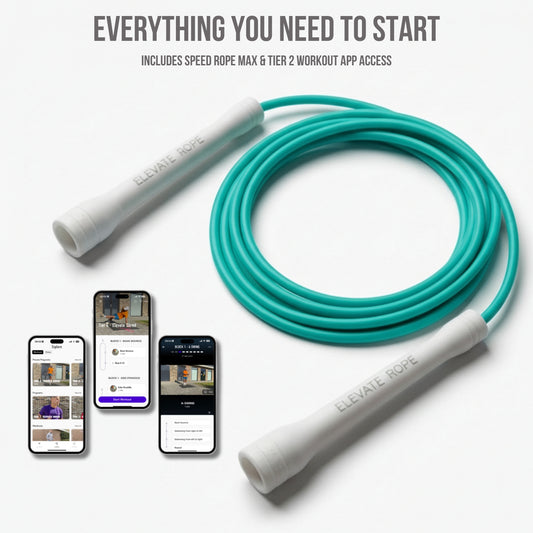
Elevate Speed Rope MAX
The Elevate Speed Rope MAX uses a 5 mm PVC cable with a nylon core.
Its flexible cable suits rhythmic cardio, faster footwork, and double-under practice. Adjust the length to your height and technique.
Elevate Gravity Heavy Rope
The Elevate Gravity Heavy Rope uses a 10 mm PVC cable with approximately 0.5 kg of cable weight.
Its ergonomic handles support resistance-focused rope training. Start with short, controlled intervals.
Want skills and cardio together?
The Elevate Ascent Bundle combines a beaded rope and a speed rope.
Use one for feedback and skills. Use the other for faster cardio workouts. You can add heavier resistance later if it serves a clear goal.
Choose equipment that supports your next session, not equipment that looks impressive on a shelf.
9. Do You Need More Than One Jump Rope?
Not necessarily. One suitable jump rope is enough to start learning and building a routine.
When one rope is enough
If you mainly practise basic jumps, choose a manageable design and stay with it. Changing equipment every session can make progress harder to judge.
When two ropes make sense
If you enjoy both freestyle tricks and fast cardio workouts, two rope types offer flexibility.
Use beaded feedback for technique. Switch to speed for quicker intervals.
When three ropes make sense
Add a heavy rope if resistance training becomes a genuine part of your routine.
More equipment only helps when each item serves a purpose. You do not need to buy everything immediately.
10. Five Things to Check Before Buying a Jump Rope
The category is only one part of the decision. Check these five details before choosing.
- Adjustable length. A correct fit supports reliable clearance and timing.
- Cable material. Beads, flexible PVC, and heavy PVC give different feedback.
- Handle design. Choose comfortable grips and appropriate reach for your skills.
- Training surface. Use stable, non-slip ground with enough overhead clearance.
- Experience level. Buy for the movements you can practise now, not just future goals.
If you are unsure about sizing, begin with an adjustable design. Test the fit before trimming permanently.
11. How to Choose Your Jump Rope in 60 Seconds
Start with one question: What do you want to practise most?
| Main goal | Consider | Why |
| Learning your first jumps | Beaded rope | Clear timing feedback |
| Learning freestyle tricks | Beaded rope | Noticeable shape and control |
| Faster cardio workouts | Speed rope | Quicker rotations |
| Training double unders | Speed rope | Supports repeated fast turns |
| Adding upper-body resistance | Heavy rope | More cable load |
| Combining skills and cardio | Beaded + speed | Different tools for different sessions |
This is a guide, not a rulebook. Your preferences may change as your technique develops.
The right jump rope is the one that makes your preferred training feel manageable and worth repeating.
12. A Simple Workout for Each Jump Rope Type
Once you've chosen a rope, put it to work. These three short examples can be adjusted to your ability.
Beaded rope: 8-minute skills session
- 2 minutes: gentle movement and warm-up
- 2 minutes: single jumps and basic-bounce practice
- 2 minutes: alternating-foot practice with breaks
- 1 minute: repeat your favourite skill
- 1 minute: easy cool-down
Focus on rhythm rather than uninterrupted jumping. Pause whenever you need to reset.
Speed rope: 10-minute cardio introduction
- 2 minutes: warm-up
- 4 minutes: alternate 15 seconds jumping with 45 seconds easy movement or rest
- 2 minutes: relaxed technique practice, with breaks
- 2 minutes: cool-down
Keep your hands relaxed. Build the pace only when your timing stays predictable.
Heavy rope: 8-minute resistance introduction
- 2 minutes: warm-up
- 1 minute: practise controlled rotations
- 3 minutes: short jumping attempts with generous recovery
- 2 minutes: cool-down
Use a heavy rope only when basic skipping already feels comfortable. Stop if you feel pain or lose control.

These are starting examples, not mandatory targets. Build gradually and allow recovery.
Final Verdict: Choose the Jump Rope That Matches Your Goal
The beaded, speed, and heavy jump rope comparison has no universal winner.
Choose beaded for rhythm and freestyle. Choose speed for faster cardio and double unders. Choose heavy for a new resistance challenge.
You do not need the most specialised gear today. You need a rope that suits your ability and a routine you can repeat.
Start with a few comfortable jumps. Learn what makes the movement click. Then practise again.
Choose your rope. Find your rhythm. Together We Elevate.
Frequently Asked Questions
Is a beaded jump rope better than a speed rope?
Neither design is always better. A beaded jump rope provides clear rotation feedback, which can help with timing and freestyle practice. A speed rope generally supports quicker turns and fast cardio. The better choice depends on your experience and goals. Try the design that makes your preferred movements easier to control.
Which jump rope should a complete beginner buy?
A beaded rope is a practical first choice because its beads make the moving cable easier to notice. A flexible PVC speed rope can also work for beginners. Avoid choosing based on maximum speed alone. Focus on comfortable handles, adjustable length, and enough feedback to practise steady basic jumps.
Can you do cardio workouts with a beaded jump rope?
Yes. You can perform basic bounces, alternating steps, boxer steps, and simple combinations using a beaded jump rope. A speed rope is not required for cardiovascular exercise. Your effort, session length, and consistency matter more than the product category. Choose movements you enjoy and increase the difficulty gradually.
Is a heavy jump rope better for burning calories?
Not automatically. A heavy jump rope adds resistance to the rotation, but it may also require more rest. Calories burned depend on many factors, including intensity, body size, session duration, and total work. Choose heavier resistance for the conditioning challenge, not a guaranteed calorie advantage. Keep your technique controlled.
Can you learn freestyle tricks or double unders with a speed rope?
Yes. A speed rope supports many footwork tricks and is commonly used for double unders. Beaded ropes may offer more feedback for freestyle manipulation. Your rope length, hand position, and timing still affect success. Start with basic jumps and progress to more demanding skills once those movements feel consistent.
Should I buy one jump rope or the Ascent Bundle?
One rope is enough if you have one clear training priority. The Ascent Bundle may suit you when you want both beaded feedback and quicker speed-rope rotations. You can practise skills with one and cardio workouts with the other. Buying more equipment helps only when you use it consistently.
About Elevate Rope
Elevate Rope helps people turn movement into a lasting habit. Our ropes support beginners, freestyle jumpers, and people building cardio fitness.
We believe progress starts with small promises kept. You do not need to master everything at once. Start with a rope you enjoy and show up again.