





Jump rope for table tennis is a simple way to practise rhythm, coordination, and controlled foot movement between playing sessions.
Think about the last time a ball caught you out of position. You saw it coming, but your feet didn't move quickly enough. You reached across your body and made an awkward return.
Or perhaps you reached the ball, played a good shot, and couldn't recover for the next one.
These moments show why footwork matters. Table tennis isn't only about quick hands. Your feet create space, support your balance, and prepare you for the next stroke.
A jump rope adds a repeatable timing challenge. Your hands and feet work together while you control each landing. But skipping doesn't teach you to read the ball or make decisions during a rally.
This guide covers five jump rope drills, a practical 10-minute session, and the table-specific movements you should practise alongside them.
What You'll Learn
- Why positioning and recovery matter in table tennis.
- How jump rope training complements table tennis footwork.
- Five drills for rhythm, stepping, and controlled landings.
- A beginner-friendly 10-minute jump rope workout.
- How to practise real table tennis movement patterns.
- Common mistakes and how to choose a suitable rope.
1. Why Is Footwork Important in Table Tennis?
The table is small, but the ball changes direction quickly. A rally may send you from backhand to forehand. You might move forward for a short ball, then recover for a deeper return.
Good footwork puts you in position before the stroke. It isn't about taking the most steps.
Positioning Creates Better Shots
When you're well positioned, you can prepare your body instead of reaching awkwardly. The Table Tennis England footwork guide describes effective movement as essential for arriving at the ball with useful stroke options.
Start with a comfortable ready position. Keep your feet relatively wide, bend your knees, and stay balanced. Your stance can change with your playing style and mobility.
Balance Matters Before and After Contact
Every stroke involves small weight adjustments. After one return, you may need to move immediately toward the opposite side.
A balanced stance helps you recover without getting stuck in an extended position. This is why table tennis footwork includes what happens after you hit the ball.
Recovery Is Part of the Skill
Reaching the ball is only half the job. Recover toward a useful position before the next return.
Short answer: Footwork helps table tennis players reach the ball, prepare their strokes, and recover.
Best next step: Practise controlled positioning and recovery before increasing movement speed.
2. How Can Jump Rope Support Table Tennis Footwork?
Jump rope training introduces a predictable timing challenge. Every rotation asks your feet to clear the cable at the correct moment.
If your rhythm breaks, the rope often catches your shoes. That feedback lets you recognise mistakes without a partner.
Rhythm and Coordination
Start with a basic bounce. Make one low jump for every complete rope rotation. Keep your shoulders relaxed and your hands near your sides.
Once that feels comfortable, try alternating-foot steps. These jump rope drills let you coordinate movement with a repeating beat.
The benefit is general rhythm practice, not guaranteed improvement in match performance.
Controlled Weight Transfers
Alternating feet and boxer-style skipping change which foot supports your weight. Small lateral hops introduce another movement direction.
These patterns can add variety to your coordination work. However, jump rope footwork is not identical to a table tennis side step.
Practise side steps separately with your paddle.
Conditioning Without a Complex Setup
A jump rope can also provide a convenient conditioning session. You can adjust the effort through pace, duration, and rest.
Short intervals may fit into a warm-up. Longer sessions can stand alone when your training week allows.
Keep the total workload appropriate for your experience.
Predictable Rhythm Versus Game Reactions
Skipping is predictable because you know which step comes next. Table tennis requires decisions based on ball placement, spin, and your opponent.
The International Table Tennis Federation's coaching analysis emphasises movement transitions and returning to position during rallies.
Use skipping drills for repeatable coordination. Use partner-led rallies for changing situations.
Key takeaway: Jump rope supports rhythm and controlled stepping. It doesn't replace reactive table tennis footwork.
3. Five Jump Rope Drills for Table Tennis Players
These five exercises progress from simple timing to varied movement patterns.
Start with short attempts. Rest whenever your timing becomes inconsistent.
Use a stable surface, comfortable shoes, and enough room for the rope to rotate.

If you're new to skipping, follow our beginner jump rope guide before adding direction changes.
Drill 1: Basic Bounce
Focus: Consistent timing and controlled landings.
Stand with your feet close together and your shoulders relaxed. Hold the handles comfortably, keeping your elbows near your sides.
Rotate the cable with small wrist movements. Make one low jump for each complete turn. Avoid lifting your knees unnecessarily high.
How to practise:
- Complete five comfortable jumps.
- Pause and reset your posture.
- Repeat another five jumps.
- Gradually build toward a longer controlled sequence.
Table tennis connection: The basic bounce creates a foundation for coordination and movement rhythm. It does not replace your playing stance.
If five jumps feel difficult, start with a single jump and reset.
Drill 2: Alternating-Foot Steps
Focus: Switching support feet without losing rhythm.
Begin with several basic bounces. Then alternate the foot supporting your weight on each rope rotation.
The action resembles gentle jogging in place. Keep the steps compact and your upper body relaxed.
How to practise:
- Complete three basic bounces.
- Switch to alternating feet.
- Perform six controlled steps.
- Return to the basic bounce.
Table tennis connection: This drill introduces weight transfers. Forehand and backhand movement still require different, sport-specific steps.
Drill 3: Small Lateral Hops
Focus: Side-to-side coordination.
Imagine a narrow line beneath your feet. Begin with a comfortable basic bounce.
Hop slightly left on one rotation. Move back toward the right on the next. Keep each shift small enough to maintain control.
How to practise:
- Complete three basic bounces.
- Hop a few centimetres left.
- Hop a few centimetres right.
- Repeat a short sequence without rushing.
Table tennis connection: Lateral movement matters at the table, but these rope hops aren't technical side steps.
Learn the real side-step pattern without the rope.
Drill 4: Forward and Backward Hops
Focus: Maintaining timing while changing position.
Start in the centre of your training area. Complete a few basic bounces.
Move slightly forward for two rotations. Then return toward your starting position. Keep your torso balanced and your jumps low.
How to practise:
- Complete three basic bounces.
- Move slightly forward.
- Move back toward your starting point.
- Pause before repeating.
Table tennis connection: Players move toward short balls and recover afterward. Actual in-and-out footwork uses specific steps and stroke preparation.
Practise that pattern separately with your paddle.
Drill 5: Rhythm Transitions
Focus: Changing movements while keeping a steady rope rhythm.
Start with five basic bounces. Switch to five alternating-foot steps.
Return to the basic bounce. When comfortable, add a brief lateral sequence.
How to practise:
- Perform five basic bounces.
- Complete five alternating-foot steps.
- Return to five basic bounces.
- Repeat without speeding up unnecessarily.
Table tennis connection: This challenges planned coordination. A real rally adds unpredictable ball placement and decision-making.
For more variations, explore our quick feet jump rope drills.
Short answer: Start with basic bounce, alternating feet, lateral hops, forward-back hops, and rhythm transitions.
Best next step: Learn each movement separately before combining them.
4. A 10-Minute Table Tennis Jump Rope Workout
You don't need a long session to practise these patterns.
This jump rope workout uses short work periods and generous time to reset your technique. It's intended for beginners who can already perform basic jumps comfortably.
| Time | Activity | Main focus |
| 0:00–2:00 | Gentle warm-up | Prepare for movement |
| 2:00–3:00 | Basic bounce | Timing |
| 3:00–4:00 | Alternating feet | Coordination |
| 4:00–5:00 | Small lateral hops | Sideways control |
| 5:00–6:00 | Rest | Recovery |
| 6:00–7:00 | Forward-back hops | Position control |
| 7:00–8:00 | Rhythm transitions | Pattern changes |
| 8:00–9:00 | Favourite drill | Technique |
| 9:00–10:00 | Gentle cooldown | Finish comfortably |
During each active minute, alternate 20 seconds of jumping with 40 seconds of rest if needed. You don't have to jump continuously.
Adjust the intervals to your experience and existing table tennis workload. Repeat the session only when your legs and joints have recovered.
Stop if you experience pain, dizziness, or unusual symptoms.
Key takeaway: The goal is clean movement and a repeatable routine, not exhaustion.
5. Connect Skipping With Real Table Tennis Footwork
A jump rope gives you controlled, predictable practice. Actual table tennis asks you to read the ball and move into the correct position.
After your skipping session, put the rope aside. Practise these table-specific footwork drills with a paddle or partner.
Practise the Ready Position
Face the table with your feet comfortably wider than shoulder-width apart. Bend your knees slightly and lean forward from your hips.
Hold your paddle in front of you. Stay balanced without unnecessary tension.
Return to a useful ready position after each stroke.
Practise Side-Step Footwork
Start in your ready position. Move a short distance sideways using small, controlled steps.
Return toward your starting point. Repeat in the opposite direction.
Keep your body oriented toward the table. Ask a coach to check the movement before adding speed.
Practise In-and-Out Movement
Begin in a comfortable position behind the table. Imagine a short ball landing near the net.
Step forward, perform a controlled shadow stroke, and move back.
Then recover toward your ready position after the stroke.

This is different from simply hopping forward and backward with a rope.
Sport Singapore's table tennis footwork guide explains side-to-side, in-and-out, crossover, and one-step patterns.
Add Two-Point Footwork Practice
Ask a partner to feed balls alternately toward two known locations.
Move into position before each return. Focus on balance and recovery instead of hitting harder.
Begin with predictable placement. Once you can repeat the pattern, ask your partner to vary the sequence.
Introduce Unpredictable Ball Placement
During a rally, you cannot always predict the next shot.
Ask your partner to vary placement within a manageable range. Read the ball before moving. Then return to a useful position after each stroke.
This adds visual information and decision-making that skipping alone cannot reproduce.
Short answer: Pair jump rope training with ready-position practice, side steps, in-and-out movement, and partner-led rallies.
Best next step: Follow a short rope session with ten minutes of table-specific footwork practice.
6. Common Mistakes to Avoid
Moving Too Fast Before Learning the Pattern
Speed can make poor coordination harder to notice. If you catch the rope repeatedly, slow down.
Return to the last movement you could repeat comfortably.
Jumping Higher Than Necessary
Large jumps can disrupt timing and increase fatigue.
Use small, controlled movements. Clear the cable without exaggerated knee lifts.
Ignoring Your Total Training Load
Table tennis already involves repeated movement. Adding rope skipping increases your workload.
Begin with short sessions and allow recovery. Stop if you develop sharp or worsening pain.
Treating Jump Rope as Complete Footwork Training
Skipping challenges rhythm and coordination. It doesn't reproduce every table tennis movement.
Practise side steps, crossovers, recovery, and ball-based reactions separately.
Chasing Speed Instead of Clean Technique
Faster rotations aren't automatically better. Watch your posture, hand position, and landing quality.
If your movement becomes inconsistent, reduce the difficulty. You can build speed later.
7. Which Jump Rope Is Best for Table Tennis?
The right rope depends on your experience and training goals.
You don't need several rope types to begin. Choose one that feels manageable and supports controlled practice.
Beaded Rope for Learning Timing
Elevate's beaded ropes use PVC beads around a cord. The beads provide noticeable feedback as the rope rotates.
Some beginners find that useful when recognising the rope's position.
Explore our Beaded Rope collection if you're learning basic timing.
Speed Rope for Conditioning
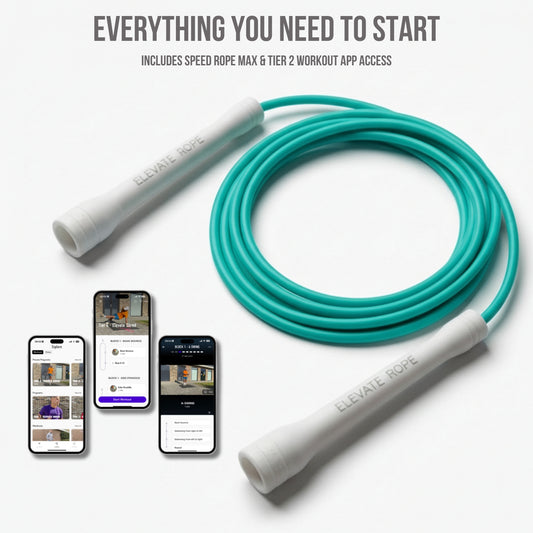
The Elevate Speed Rope MAX uses a flexible PVC cable. It provides a different rotation feel for faster skipping intervals.
Choose it when you can already maintain a consistent rhythm.
Browse our Speed Rope collection if conditioning is your main goal.
Heavy Rope for Resistance
A Heavy Rope makes each turn more demanding. It can create a different resistance-focused conditioning challenge.
It isn't required for learning basic footwork. Start with a manageable rope and progress when appropriate.
Explore our Heavy Rope collection if added resistance fits your training.
Remember: No jump rope guarantees better table tennis performance. Technique, recovery, and sport-specific practice still matter.
Final Thoughts: Build Rhythm, Then Bring It to the Table
Jump rope training gives table tennis players a practical way to practise rhythm and controlled foot movement.
Start with the basic bounce. Add alternating feet and small lateral hops when you're comfortable.
Then practise forward-back movement and rhythm transitions. Keep each session short enough to maintain technique.
Most importantly, connect the practice with real table tennis footwork. Work on your ready position, side steps, recovery, and responses to changing ball placement.
The goal isn't to become the fastest person with a rope. It's to develop movement you can control and a routine you can repeat.
One practice session at a time. Together We Elevate.
Frequently Asked Questions
Is jump rope good for table tennis players?
Yes. Jump rope can provide repeatable rhythm, coordination, and conditioning practice between table tennis sessions. However, jumping doesn't reproduce ball tracking or match decisions. Use the rope for general movement practice, then spend time on ready positions, recovery steps, and partner-led table tennis drills. Both activities have different roles.
Can jump rope improve table tennis footwork?
Jump rope offers planned stepping and timing practice, but it doesn't guarantee better table tennis footwork. Side steps, in-and-out movement, and recovery require sport-specific technique. Practise these with a paddle and, when possible, a partner. Use rope drills as a complement rather than a replacement for training at the table.
Which jump rope drill is easiest for beginners?
The basic bounce is the easiest starting point for many beginners. Keep your elbows near your sides and make one low jump per rotation. Try five comfortable jumps, stop, and repeat. Build control before adding alternating feet or directional hops. If you trip, reset your posture and slow the rope.
How long should table tennis players jump rope?
Start with brief practice intervals that match your fitness and total training workload. A 10-minute session can include warm-up, jumping, rest, and cooldown. You don't need ten minutes of continuous skipping. Increase difficulty only when your technique remains controlled and your calves, feet, and joints recover comfortably.
Do I need an expensive jump rope for table tennis?
No. A comfortable, correctly sized rope is enough to begin. Beaded ropes offer noticeable rotation feedback, while speed ropes feel different during quicker intervals. Neither price nor rope type guarantees better table tennis results. Choose equipment you can control and spend more attention on technique than extra gear.
Can skipping replace table tennis footwork drills?
No. Skipping provides predictable timing and stepping patterns. Table tennis demands positioning, stroke preparation, and reactions to changing ball placement. Use jump rope practice to complement your training. Keep practising side steps, recovery, in-and-out footwork, and unpredictable partner-led exercises to develop skills specific to the game.
About Elevate Rope
Elevate Rope helps people build confidence through jump rope training, practical education, and community.
Our philosophy is simple. Consistency grows through manageable practice and promises you can keep.
We believe movement should support the person you're becoming, not just the workout you're completing.
Together We Elevate.