





A jump rope habit isn't built by finding more motivation. It's built by making exercise simple enough to repeat, even when life gets busy.
You've probably experienced this before.
You discover a new workout. You feel excited. You imagine how different you'll feel after a few months.
For the first week, everything goes well.
Then work gets stressful. Your schedule changes. You miss a workout.
One missed session becomes three. Before you know it, your routine has disappeared.
And you're back to wondering why you can't stay consistent.
Here's something worth remembering: a workout that only happens when you're motivated isn't much of a routine.
You need something that works on an ordinary Tuesday when you're tired, distracted, or short on time.
That's where jump rope can help.
You don't need a gym membership, complicated equipment, or an hour of free time to begin.
But a convenient workout isn't enough by itself.
You also need a plan for making it part of your life.
This guide shows you how to build a jump rope habit through small commitments, realistic scheduling, and gradual progress.
Let's build one.
What You'll Learn
- Why motivation alone doesn't create lasting exercise habits.
- How to make your first jump rope sessions easy to repeat.
- How to schedule a beginner jump rope routine.
- A realistic four-week jump rope habit-building plan.
- What to do when you miss a workout.
- How to track progress without obsessing over results.
- How to build self-trust through consistent action.
1. Why Is It So Hard to Stay Consistent With Exercise?
Most people don't struggle because they don't understand the benefits of exercise.
They already know moving more can support their health and fitness.
The challenge is turning that knowledge into repeated action.
And that becomes harder when every workout requires a fresh decision.
Motivation Changes From Day to Day
Some mornings, you wake up feeling ready to train.
Other mornings, even putting on your shoes feels like work.
That's normal.
Motivation can help you begin, but it's not a dependable scheduling system.
If you wait until you feel inspired, your exercise frequency may change with your mood.
A sustainable jump rope habit needs something more reliable than excitement.
It needs a clear starting point, a manageable commitment, and room for ordinary life.
Big Plans Create Unnecessary Friction
Imagine promising yourself a 45-minute workout every morning.
That might work while you're excited.
But what happens when you only have 15 minutes?
If your plan has no smaller version, skipping the session becomes tempting.
A sustainable routine needs room for imperfect days.
That's one advantage of jump rope training. You can adjust the session without abandoning the activity.
A short technique session can still serve your routine when a longer workout doesn't fit.
Missing a Workout Can Become an Identity Problem
Sometimes the hardest part isn't missing one session.
It's what you tell yourself afterward.
- "I always give up."
- "I'm just not disciplined."
- "I guess I'll start again next Monday."
Those thoughts can make returning feel harder than it needs to be.
But one missed workout doesn't define your fitness journey.
What you do next matters more.
Research on how habits form found that habit development varies considerably between people.
The research also found that one missed opportunity didn't materially disrupt the overall habit-formation process.
Short answer: Consistency becomes harder when workouts depend on motivation, complicated plans, and perfect schedules.
Why it matters: A simpler routine creates more opportunities to follow through.
Best next step: Choose a workout small enough to fit into a normal day.
2. Start Your Jump Rope Habit Smaller Than You Think
When people begin a fitness journey, they often focus on doing more.
More minutes. More intensity. More workouts.
But if your main problem is consistency, doing more isn't necessarily the right first goal.
Repeating the activity is.
Your first jump rope habit should make starting feel achievable, not intimidating.
Create a Two-Minute Starting Ritual
Here's a simple idea.
Commit to two minutes of preparation and movement on your scheduled training days.
That could mean putting on your shoes, picking up your rope, and practising a few controlled jumps.
If you're still learning, practise the movement without jumping continuously.
Two minutes won't replace a complete fitness programme.
But it can make starting feel manageable.
Once you're moving, you can decide whether to continue with your planned session.
This approach gives your jump rope routine a dependable starting point.
Separate Your Minimum From Your Ideal
Your ideal jump rope workout might last 15 minutes.
Your minimum could be two minutes of technique practice.
Both have a purpose.
The ideal session develops your fitness. The minimum helps preserve your routine when time is limited.
For example:
| Situation | Your Minimum | Your Ideal |
| Busy workday | 2 minutes of technique | 10-minute session |
| Normal training day | 5 minutes of easy practice | 15-minute workout |
| Low-energy day | Gentle preparation or recovery | Short, comfortable intervals |
| Planned rest day | Rest | Rest |
Your minimum isn't a punishment or a requirement to exercise when recovery is needed.
Rest days are part of the plan, too.
You don't need to jump every day to build a consistent habit.
Make the First Step Obvious
Where will you train?
What time will you start?
Where will your equipment be?
Answer those questions before your next workout.
For example, place your jump rope beside your training shoes the night before.

That removes one small decision from your morning.
The goal is to make starting easier, not to rely on extraordinary discipline.
3. Attach Your Jump Rope Routine to Something You Already Do
A new habit becomes easier to remember when it has a clear place in your day.
Instead of saying, "I'll exercise sometime tomorrow," connect your workout to an existing routine.
Use a Simple Habit Cue
A habit cue is something that reminds you when to begin.
It might be finishing breakfast, arriving home from work, or changing into comfortable clothes.
For example:
- Morning: "After brushing my teeth, I'll put on my shoes and begin my planned session."
- Afternoon: "After closing my laptop, I'll spend ten minutes practising my rope technique."
- Evening: "After changing clothes, I'll complete my scheduled workout before sitting on the sofa."
Notice how each plan includes a specific starting point.
You're not waiting for the perfect moment.
You've already decided when the workout belongs.
Your jump rope habit now has a place in your day instead of competing with everything else.
Choose a Time You Can Realistically Protect
There's no universally perfect time to exercise.
Some people prefer mornings because fewer things interrupt their schedule.
Others feel better training after work.
Choose a time that fits your energy, responsibilities, and available space.
A realistic schedule is more useful than an impressive one you rarely follow.
Prepare Your Environment
Make sure your training area has enough overhead and surrounding clearance.
Use a suitable surface and supportive shoes.
Keep your rope accessible rather than buried in a cupboard.
Check the surrounding area before each session.
When the equipment is ready, getting started requires less effort.
If you need help with basic technique, read our beginner jump rope guide.
Your environment should make your next session easy to begin.
4. A Four-Week Jump Rope Habit-Building Plan
You don't need to begin with daily workouts.
In fact, beginners may benefit from allowing recovery time between jumping sessions.
This four-week jump rope plan starts with short, manageable sessions and gradually adds structure.
It's designed for adults who are comfortable beginning light physical activity.
Adjust the plan for your fitness, experience, and recovery needs.
Your Four-Week Schedule
| Week | Schedule | Total Session Time | Main Goal |
| 1 | 2 days | 5 minutes | Establish the routine |
| 2 | 2 days | 6–8 minutes | Repeat consistently |
| 3 | 2–3 days | 8–10 minutes | Build confidence |
| 4 | 2–3 days | 10–12 minutes | Create a repeatable schedule |
These are suggested session lengths, not continuous jumping targets.
Include preparation, short jumping intervals, rest, and cooldown time.
If your calves, feet, or joints need more recovery, repeat the previous week's schedule instead of progressing.
These brief sessions support habit building. They don't represent a complete weekly physical activity programme.
The CDC activity guidelines recommend broader weekly activity and muscle-strengthening exercise for adults.
Week 1: Make Showing Up the Goal
Choose two non-consecutive days.
Begin with gentle movement and practise basic rope timing.
You might alternate ten seconds of jumping with generous rest.
If you're new to jump rope, focus on controlled technique instead of speed.
Don't worry about the number of jumps you complete.
Focus on beginning at the time you planned.
Week 1 goal: Complete two manageable practice sessions.
Week 2: Repeat the Same Routine
Keep your training days consistent.
If the first week felt comfortable, add a little more practice time.
Continue working on controlled jumps and relaxed technique.
Avoid changing your entire jump rope workout every session.
Repetition helps make the routine familiar.
The goal isn't to transform your fitness in seven days.
It's to make the routine easier to repeat.
Week 2 goal: Follow the same schedule with less hesitation.
Week 3: Add Variety Carefully
If you're recovering well, consider a third short session.
Try alternating-foot steps or another beginner-friendly movement.
Don't increase frequency, intensity, and duration all at once.
Keep the challenge manageable.
Your jump rope progress can include smoother movement without requiring harder workouts.
Week 3 goal: Practise one new movement while maintaining consistency.
Week 4: Find Your Sustainable Rhythm
By now, you've had several opportunities to practise showing up.
Review which days worked best.
Which sessions felt easiest to begin?
Which times were regularly interrupted?
Use those answers to create your next month's schedule.
Two consistent sessions per week can be better than five sessions you struggle to maintain.
A successful jump rope habit should fit your real life.
Week 4 goal: Choose a schedule you can continue beyond the four-week plan.
Short answer: Begin with two short sessions weekly and progress only when your body is recovering comfortably.
Why it matters: A realistic schedule makes consistency easier without unnecessary training pressure.
Best next step: Put your first two sessions on your calendar now.
5. What Should You Do When You Miss a Jump Rope Workout?
Eventually, you'll miss a planned session.
Maybe you're travelling.
Maybe your child is sick.
Maybe you're simply exhausted.
Missing a workout doesn't mean your habit has failed.
But your response can determine whether the interruption lasts one day or several weeks.
Don't Turn One Missed Session Into a Fresh Start
You don't need to wait until Monday.
You don't need a new challenge.
And you don't need to punish yourself with an extra-hard workout.
Return to your normal schedule when you're able.
Consistency is about returning repeatedly, not maintaining a perfect record.
A jump rope habit is something you practise over time.
It isn't a streak you must protect at any cost.
Create a Backup Plan
Think about the obstacles most likely to interrupt your routine.
Then decide how you'll respond.
| Obstacle | Backup Plan |
| Work runs late | Move the session to your next available training window. |
| You're travelling | Practise a short rope-free coordination routine if space is limited. |
| You're tired | Reduce the intensity or take a recovery day. |
| You're unwell | Prioritise recovery rather than forcing a workout. |
| You miss a week | Restart with an easier session before rebuilding your workload. |
These decisions are easier to make before the obstacle appears.
You don't have to solve the same problem every time it happens.
Avoid the All-or-Nothing Mindset
Exercise doesn't have to be perfect to be worthwhile.
Some sessions will feel great.
Others will feel ordinary.
Both can belong in a sustainable routine.
Learn to distinguish between a day when you can safely do less and a day when you genuinely need rest.
Your jump rope routine should support your health, not become another source of pressure.
6. Track the Actions You Control
When starting a fitness routine, it's tempting to focus entirely on outcomes.
Weight lost. Calories burned. Workout intensity.
Those measurements may have a place, but they aren't always the best way to evaluate a new habit.
Especially during the first month.
Track Completed Sessions
Use a calendar or a simple note on your phone.
After each planned workout, record whether you completed it.
You can also note how the session felt.
This creates a visible record of your actions.
A jump rope habit tracker doesn't need complicated charts or dozens of measurements.
Try recording only:
- Your planned training day.
- Whether you completed the session.
- One observation about how it felt.
- Your next scheduled session.
Keep the process simple enough to repeat.
Measure Technique Progress
Consider recording a few practical milestones.
- Completing five consecutive controlled jumps.
- Maintaining a relaxed basic bounce.
- Learning an alternating-foot step.
- Reducing unnecessarily high jumps.
- Following your planned training schedule.
These milestones help you notice progress beyond appearance or weight.
Your jump rope progress might begin with fewer interruptions rather than longer workouts.
For more ideas, explore five signs your jump rope skills are improving.
Review Your Routine Every Sunday
Ask yourself three questions:
- Which sessions did I complete?
- What made starting easier or harder?
- What one adjustment would improve next week?
Keep your review short.
You aren't grading your worth.
You're learning how to build a routine that fits your life.
A useful habit tracker shows whether you're following through, not whether every workout was impressive.
7. Build Self-Trust Through Small Promises
There's another reason consistency matters.
Every time you follow through on a realistic commitment, you create evidence that you can rely on your decisions.
That idea sits at the centre of The Elevate Code.
The goal isn't only to become someone who exercises.
It's to become someone who makes manageable commitments and follows through.
Focus on Who You're Becoming
Instead of thinking, "I need to force myself to exercise," try a different approach.
"I'm building a routine that helps me take care of myself."
That shift won't remove every obstacle.
But it can help you focus on repeatable behaviour rather than temporary excitement.
A jump rope habit can become one practical way to reinforce that identity.
You planned a session.
You showed up.
You followed through.
Over time, those actions give you something real to look back on.
Make Promises You Can Realistically Keep
Self-trust isn't built by setting impossible standards.
If you promise daily intense workouts while working long hours, you're creating unnecessary pressure.
Choose a commitment that reflects your actual schedule.
Then protect it where possible.
Two planned sessions you complete are more useful than an unrealistic schedule that leaves you discouraged.
A completed session gives you a small piece of evidence that you followed through.

And when life interrupts your plans, returning becomes another opportunity to practise that commitment.
Remember Why You Started
Maybe you want more energy.
Maybe you want to feel stronger.
Or maybe you're tired of constantly starting and stopping.
Whatever your reason, write it down.
Keep it somewhere you'll see before training.
Your reason doesn't need to impress anyone else.
It only needs to matter to you.
Motivation gets you started. Small promises give you something to return to.
Build a routine that helps you follow through, one manageable session at a time.
8. Make Your Jump Rope Routine Enjoyable Enough to Repeat
Discipline matters, but your workout doesn't need to feel like punishment.
Enjoyment can make it easier to return.
A sustainable jump rope routine should offer something you look forward to practising.
Add Music
Choose a playlist that makes you want to move.
Begin at a comfortable pace rather than trying to match every beat.
As your coordination develops, experiment with different rhythms.
Music can give your jump rope workout a different feel without making it more complicated.
Learn One New Skill at a Time
Once the basic bounce feels comfortable, introduce a simple variation.
Try alternating feet or small side-to-side movements.
Practise the new skill without rushing.
Learning something new can give you another reason to look forward to training.
The goal isn't to collect tricks as quickly as possible.
It's to make practice interesting enough that you want to return.
Find a Community
Training with other people can provide encouragement, ideas, and accountability.
You might share your progress with a friend or join a jump rope community.
Don't compare your first month with someone's fifth year.
Use other people's progress as inspiration, not a standard you must immediately reach.
The right community can make consistency feel less like a solo effort.
Together We Elevate.
Keep Your Equipment Simple
You don't need a large collection of fitness products to begin.
Choose a suitable rope that you can control comfortably.
A beaded rope provides noticeable feedback during rotation.
Some beginners find this helpful when learning timing.
A speed rope can support faster rotations as your coordination develops.
The right starting equipment is equipment that supports your current ability.
Make Getting Started Easier
Looking for a simple setup?
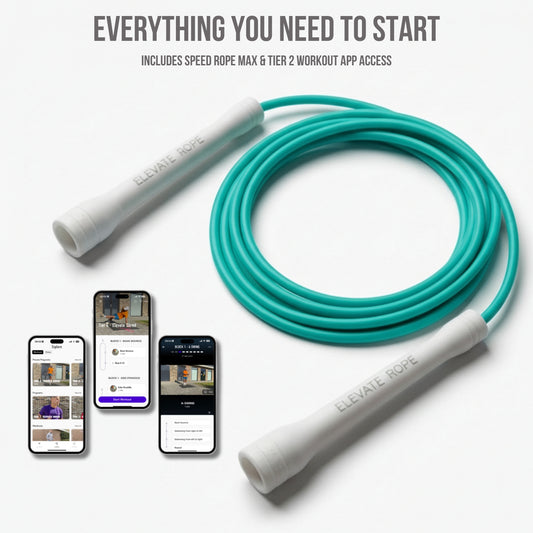
The Elevate Ascent Bundle combines a Beaded Rope and Speed Rope MAX.
The beaded option supports early rhythm practice. The speed option gives you another training style as your skills develop.
Choose the equipment that fits your current goals.
Equipment can make practice more convenient, but consistency comes from the routine you build.
The World Health Organization's physical activity guidance also reinforces a useful principle.
Some physical activity is better than none.
Your first priority is finding movement you can practise safely and regularly.
9. How Do You Know When Your Jump Rope Habit Is Working?
Don't expect a magical moment when exercise suddenly becomes effortless.
Habits develop at different rates.
Your schedule, environment, experience, and the difficulty of the activity all matter.
Instead, look for practical signs of progress.
Signs Your Routine Is Becoming More Consistent
- You know when your next workout is scheduled.
- You spend less time deciding whether to begin.
- You prepare your equipment without much thought.
- You can return after missing a session.
- You adjust your routine instead of abandoning it.
- You notice improvements in basic jump rope technique.
Those changes might seem small.
But they show you're creating a more repeatable approach to exercise.
Progress Doesn't Always Mean Doing More
A good week isn't necessarily one with more jumps or longer intervals.
Sometimes progress means keeping the same realistic schedule.
Sometimes it means recognising when you need recovery.
And sometimes it means returning after a difficult week.
Your jump rope habit is working when your routine becomes easier to maintain alongside your responsibilities.
That matters more than chasing a perfect calendar.
Your First Step Starts Today
You don't need to completely change your life to build a fitness habit.
You need a realistic place to begin.
Choose two days this week.
Decide when you'll train.
Prepare your equipment.
And make your first jump rope session manageable enough to complete.
Some days, you'll feel excited.
Other days, you'll simply follow the plan.
That's okay.
The goal isn't to prove how hard you can push yourself for one week.
It's to build a relationship with movement that you can maintain.
Start small. Keep showing up. Build from there.
That's how a jump rope habit becomes part of your life.
Watch Geraldo Alken's beginner jump rope workout to practise a follow-along session with guided movement and recovery.
Frequently Asked Questions
How long does it take to build a jump rope habit?
There's no fixed number of days. Habit formation varies by person, behaviour, and environment. A four-week plan can help establish a routine, but automatic behaviour may take longer to develop. Focus on realistic repetition instead of expecting your jump rope habit to become effortless by a specific deadline.
Should beginners jump rope every day?
Not necessarily. Beginners may benefit from starting with two or three short sessions weekly. Allow recovery between jumping days, especially while adapting to repeated impact. Increase your training gradually as your technique and comfort improve. A sustainable jump rope routine includes both practice and appropriate rest.
Is five minutes of jump rope enough to start?
Yes. Five minutes can be a practical starting session, including preparation, short jumping intervals, and rest. You don't need to jump continuously. A brief session can help establish your routine, but it doesn't replace broader physical activity recommendations. Increase your training gradually as your fitness develops.
What if I keep losing motivation or miss a week?
Make your routine smaller and easier to restart. Choose a consistent training time and prepare your equipment beforehand. If you miss a week, return with a manageable session instead of trying to compensate. Focus on the next realistic commitment. One interruption doesn't erase the work you've already done.
Do I need an expensive jump rope to build a habit?
No. You need a suitable rope that matches your experience and feels comfortable to use. Beginners may appreciate the feedback of a beaded model, but expensive equipment isn't essential. Your routine matters more than the price of your gear. Start with what supports safe, controlled practice.
How can I track jump rope progress and make workouts enjoyable?
Record completed sessions, basic technique milestones, and how your body feels. Review your routine weekly and make small adjustments. Music, simple footwork variations, and community support can keep practice interesting. Track progress without turning every jump rope workout into a performance test.
About Elevate Rope
Elevate Rope was founded by Geraldo Alken after discovering how jump rope could transform his relationship with fitness.
Our philosophy, The Elevate Code, focuses on building self-trust through small promises and consistent action.
We help people bridge the gap between motivation and lasting habits through practical movement, learning, and community.
Because lasting change isn't only about what you achieve. It's also about who you become along the way.
Together We Elevate.