





For years, training had a purpose for athletes. There was always a season to prepare for, a time to beat, a rival to outwork. You woke up with structure — and even the soreness had meaning.
Then the final whistle blew.
Suddenly, the motivation that used to come naturally for athletes turned into something you had to chase. Workouts started feeling like chores. You still want to move, but the spark that once drove you seems buried under everyday life.
If that sounds familiar, you’re not alone. Thousands of former athletes experience this quiet disconnect once the competition ends. The body remembers what it means to perform, but the mind no longer knows why.
So how do you fall back in love with training — not for medals or validation — but simply because it feels good again?
Let’s rebuild that rhythm.

1. Redefine What “Training” Means Now For Athletes
When you spent years as an athlete, training was your identity. It meant discipline, structure, and measurable progress.
But that mindset — while powerful — can also trap you when the external motivators disappear. You might think, “If I’m not training for something, what’s the point?”The truth is:
training doesn’t need a scoreboard to matter. → (link to American Psychological Association: The Benefits of Exercise on Mental Health)
It’s no longer about performance — it’s about presence.
Think of your workouts as movement practice rather than performance prep.
Each session is a chance to reconnect with your body — not to test it.
This shift in perspective is small but transformative. When training becomes something you get to do, not something you have to do, the pressure dissolves. What’s left is curiosity — and that’s where joy lives.
2. Find Flow, Not Force
Remember the zone? That state where everything clicked — your timing, your breathing, your focus. You weren’t thinking, just moving. That’s the flow state, and it’s what made competition addictive.
You don’t need a field or court to find it again. You just need rhythm.
That’s why tools like a jump rope work so well for ex-athletes.
The rhythm of the rope forces your body and mind to sync. Each rotation creates instant feedback — too fast, too slow, too high, too low — until movement becomes effortless.
You’re not lifting for numbers or grinding through sets; you’re chasing that feeling of smooth, coordinated motion.
Start small.
Five minutes of jump rope can trigger the same flow you used to feel in a full game or race. Over time, that sense of connection — movement without overthinking — becomes the new addiction.
That’s the secret: fall in love with the feeling again, not the finish line.
3. Let Go of the “All or Nothing” Mindset
Many former athletes struggle with inconsistency not because they’re lazy — but because they still approach fitness like a pro. If they can’t give 100%, they give nothing.
That perfectionism might have fueled you during your career, but it’s poison for longevity.
Consistency doesn’t mean intensity. It means showing up — even when it’s light, short, or imperfect.
A 10-minute jump rope session in your backyard counts. So does stretching while watching a game. Movement is movement.
Here’s a simple framework that helps many ex-athletes restart:
- Minimum: 10 minutes of movement per day
- Target: 30 minutes, 3–4 times per week
- Stretch goal: One longer session that challenges endurance or skill
You don’t need to “train like before.” You just need to rebuild the ritual — one small win at a time.
4. Reconnect With Your Body’s Language
During competition years, pain was data. Fatigue meant growth. You learned to override discomfort — to push through.
But now, that same habit can backfire.
Falling back in love with training means listening again.
Your body speaks through signals — stiffness, energy, breath, tension — and every one of them tells a story.
Instead of chasing exhaustion, chase awareness. Notice how your balance shifts, how your shoulders move, how your breath changes with tempo.
Jump rope training is incredible for this because it’s instant feedback.
Miss a rhythm? You trip. Find it again? You flow. It’s not punishment — it’s conversation. You begin to feel athletic again without the burnout.
5. Make It Play Again
When was the last time you trained just for fun with athletes?
Not for progress. Not for a plan. Just because movement felt good.
That sense of play — exploration, laughter, light competition — is what keeps ex-athletes coming back to training long after retirement.
Try this:
- Turn your workout into a challenge with a friend.
- Learn a new jump rope trick every week.
- Track how many double unders you can do in a row.
- Mix jump rope intervals with shadowboxing or bodyweight moves.
The moment training feels playful, it stops being a task and becomes something you look forward to.
Remember, mastery wasn’t built from pressure — it was built from curiosity. You practiced for hours because you enjoyed the process, not because someone told you to.
Bring that energy back.
6. Build a System Around Your Lifestyle
You don’t have to train like athletes to feel like one.
But you do need a system that fits your life — family, work, travel, and all.
Rigid programs rarely survive real life. Flexible systems do.
Start with simple building blocks:
- 2–3 short jump rope workouts a week
- 1 mobility or recovery day
- 1 active hobby (basketball, running, hiking, etc.)
- 1 rest day without guilt
Each session reconnects you to the structure you once thrived in — without stealing time or joy.
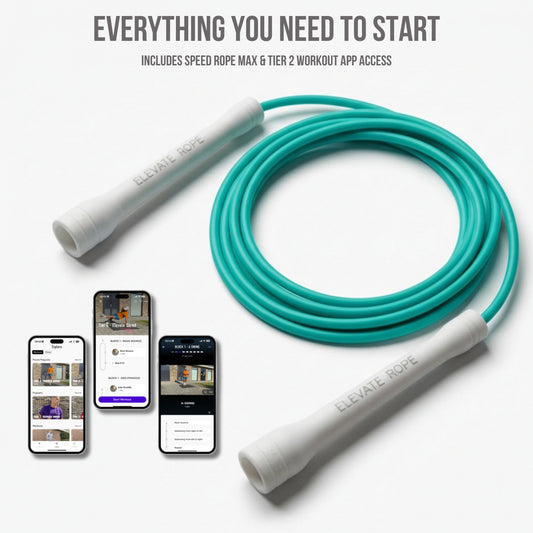
The Ascent MAX Bundle was designed with exactly this in mind: an all-in-one jump rope system that makes training portable, efficient, and satisfying.
You can train anywhere — garage, park, or hotel room — and instantly feel that athletic spark return.
7. Reignite the Competitive Fire — On Your Terms
Here’s the truth: the athletes in you never disappeared.
You’ve just been waiting for a new arena.
You don’t need trophies anymore. You need targets — small, meaningful goals that challenge without consuming you.
Maybe it’s mastering a 5-minute flow without a miss.
Maybe it’s improving endurance with weighted handles.
Or maybe it’s joining a global jump rope challenge and connecting with others who share the same spark.
When progress becomes personal again, the drive reignites naturally.

8. The Joy of Rediscovery
Falling back in love with training isn’t about chasing your past — it’s about integrating it.
The discipline, the focus, the resilience — they’re all still there. You’re just applying them to a new chapter.
And that’s what makes jump rope training so powerful for ex-athletes: it merges performance, rhythm, and freedom in one simple tool.
It doesn’t demand perfection. It rewards presence.
Every skip becomes a reminder of who you are — and who you still can be.
Ready to Rebuild the Rhythm?
If you’ve been missing that fire — that feeling of moving with purpose — it’s still in you.
You just need the right spark to bring it back.
Reignite your athletic rhythm — train with the Ascent MAX Bundle.
Lightweight, durable, and built for flow — it’s everything you need to rebuild strength, endurance, and coordination without the pressure of performance.
Your next chapter doesn’t start with a finish line.
It starts with one jump.