






Fitness for busy parents is not about finding an extra hour in your day. It's about letting go of the idea that you need one. A 2023 U.S. fitness survey found that 27% of adults cite time constraints as their primary barrier to exercise, and for parents juggling school runs, meal prep, work deadlines, and bedtime routines, that number climbs even higher. Research from the University of Houston confirms that adults with multiple young children engage in significantly less vigorous physical activity than those without kids.
If you're reading this thinking "I genuinely cannot find the time," you're not making excuses. You're describing reality. But here's what the research also shows: you don't need 45 minutes. You don't even need 30. The belief that exercise must be a dedicated, gym-length commitment is the exact thing keeping most parents sedentary. What if staying fit required 10 minutes, zero commute, and could happen while your toddler naps or your kids jump alongside you?
This article is built for the parent who has tried and failed to maintain a fitness routine, not because of laziness, but because traditional fitness advice was never designed for people who have tiny humans depending on them 16 hours a day.
What you'll learn in this article:
Why the "no time" barrier is really a framing problem, not a scheduling one
How 10-minute workouts deliver measurable cardiovascular results (backed by research)
A Parent's Weekly Schedule template showing where sessions actually fit
Exercises you can do with your kids, not just near them
Why jump rope is the single best fitness tool for time-starved parents
How to beat the parental guilt that keeps you on the couch

The Real Problem Isn't Time. It's the 45-Minute Myth.
Most parents grew up with the idea that a "real" workout takes 45 minutes to an hour. Warm up, drive to the gym, change clothes, exercise, shower, drive home. By the time you account for the full time cost, a 45-minute gym session becomes a 90-minute commitment. For a working parent with young children, that's not a fitness plan. That's a fantasy.
The research tells a different story. Harvard Health Publishing data shows that a 70kg (154lb) person burns approximately 370 calories in 30 minutes of jump rope versus 300 calories in 30 minutes of running. Scaled down, that means 10 minutes of jump rope delivers cardiovascular benefits comparable to 30 minutes of jogging. That's not a compromise. That's efficiency. And it requires zero commute, zero gym fees, and zero childcare arrangements.
The shift that makes fitness for busy parents actually work isn't doing more. It's accepting that short, consistent sessions beat long, inconsistent ones every time. Three 10-minute sessions per week is 30 minutes total. That's achievable. That's sustainable. And according to physical activity guidelines from the World Health Organisation and the American Heart Association, that's enough to produce meaningful cardiovascular improvements.
If you want the full breakdown of why short workouts outperform long ones for consistency, our article on the 10-minute rule covers the science in detail.
Short answer:You don't need 45 minutes. Research shows 10 minutes of high-efficiency exercise like jump rope delivers cardiovascular benefits equivalent to 30 minutes of jogging.
Why it matters:The biggest barrier for parents isn't laziness or motivation. It's the false belief that anything under 30 minutes doesn't count. Letting go of that belief is the first step to actually getting fit.
Best next step:Start with just 10 minutes, three times per week. That's a realistic target even during the busiest parenting weeks. For a deeper look at time-efficient home cardio options, see our home cardio guide for busy schedules.

The Parental Guilt Problem (And Why Fitness Actually Solves It)
There's a specific type of guilt that hits parents who try to exercise: the feeling that any minute spent on yourself is a minute stolen from your kids. Research published in BMC Public Health found that both working mothers and fathers identify guilt as a significant psychological barrier to physical activity, with parents describing exercise time as feeling "selfish".
Here's the reframe that matters: parents who exercise regularly are more patient, more present, and more energetic with their children. The same study found that active parents described fitness as the thing that made them better at every other part of their life, including parenting. Active fathers explained that staying fit gave them energy to actually play with their kids instead of collapsing on the couch after work. Active mothers described exercise as the reset that helped them stay calm through long parenting days.
The role-modelling angle is equally powerful. The University of Houston study found that parents serve as the primary role models of health behaviours for their children [2], and increasing parental activity could shape children's long-term health trajectories. When your kids see you grab a rope and jump in the garden, you're not taking time from them. You're teaching them that health matters.
Two Approaches That Eliminate Guilt
The "with them" approach. Exercise becomes family time, not a replacement for it. Jump rope is one of the rare fitness tools that works here because kids genuinely love it. A 2025 study published in the Journal of Teaching in Physical Education found that structured jump rope activities improved agility, balance, coordination, and cognitive function in children aged 8-10. When you jump rope with your kids, everyone benefits. Games like "Snake" (wiggling the rope on the ground while kids jump over it), counting challenges, and follow-the-leader routines turn your workout into play. Your children don't see exercise. They see fun with a parent who is present, active, and laughing alongside them.
The "nap time" approach. Ten minutes while they sleep. No guilt required because they literally don't know you're doing it. The rope goes back in the drawer before they wake up. This works especially well for parents of very young children, and it's where the time-efficiency of jump rope becomes its most valuable feature.

The Busy Parent's Weekly Schedule (Where 10 Minutes Actually Fits)
Theory is nice. But parents need specifics. Here's a realistic weekly schedule showing where 10-minute workout sessions fit for different family structures. The goal isn't to fill every slot. It's to find three that work for your life this week.
| Day | Working Parent (Office) | Working Parent (Remote) | Stay-at-Home Parent |
| Monday | Before kids wake (6:15am) | Lunch break (12:30pm) | Morning nap time (10:00am) |
| Tuesday | Rest | Rest | Rest |
| Wednesday | After bedtime (8:30pm) | Before first meeting (8:45am) | Afternoon nap (2:00pm) |
| Thursday | Rest | Rest | Rest |
| Friday | Before kids wake (6:15am) | End of workday (5:15pm) | Morning nap (10:00am) |
| Saturday | Family jump rope session in the garden (15-20 min together) | ||
| Sunday | Rest or active family walk |
Total commitment: 30-40 minutes across the entire week, spread into slots that already exist in your schedule. No gym commute. No childcare logistics. No 90-minute blocks that don't exist in a parent's day.
The Saturday family session is optional but powerful. It's where the "with them" approach comes alive. Kids as young as five can learn basic jump rope skills, and the shared activity creates a positive association between exercise and family time rather than exercise and absence.
Short answer:Three 10-minute sessions per week is enough for measurable fitness improvements. The key is using gaps that already exist in your schedule, like nap time, early mornings, or lunch breaks, rather than trying to create new ones.
Why it matters:Parents fail at fitness when the plan requires time that doesn't exist. A realistic schedule built around your actual life is the only plan that survives contact with reality.
Best next step:Pick three slots from the schedule above that match your situation. Commit to just one week. If jump rope is your chosen exercise, a beaded rope is the fastest way to get started because the auditory feedback teaches timing naturally. → Elevate Dignity Beaded Rope

Why Jump Rope Is Built for Parents
Not every exercise works within the constraints of the parenting lifestyle. When you evaluate options through the lens of what actually matters to a parent, setup time, total time cost, kid-compatibility, and cost, the field narrows quickly. Here's how the most common at-home fitness options compare:
| Exercise | Time Needed | Setup Time | Can Kids Join? | Equipment Cost | Parent Score |
| Jump Rope | 10 min | 30 seconds | Yes (ages 5+) | €25-35 | ★★★★★ |
| Running | 30 min | 5-10 min | Jogging stroller only | Free (or €500+ treadmill) | ★★★☆☆ |
| Gym Workout | 45-60 min | 30-45 min (commute) | No | €40-80/month | ★★☆☆☆ |
| Bodyweight HIIT | 15-20 min | 2 min | Partially | Free | ★★★★☆ |
| Yoga (video) | 20-30 min | 2 min | Toddler chaos | €10-20 (mat) | ★★★☆☆ |
| Stationary Bike | 30 min | 1 min | No | €300-2,000 | ★★☆☆☆ |
Jump rope scores highest for parents because it addresses the three things that matter most: time efficiency (10 minutes is genuinely enough), zero setup friction (grab rope, start jumping), and kid-compatibility (children naturally love it). The fact that it costs less than two months of gym membership is a bonus.
The Numbers Behind the Score
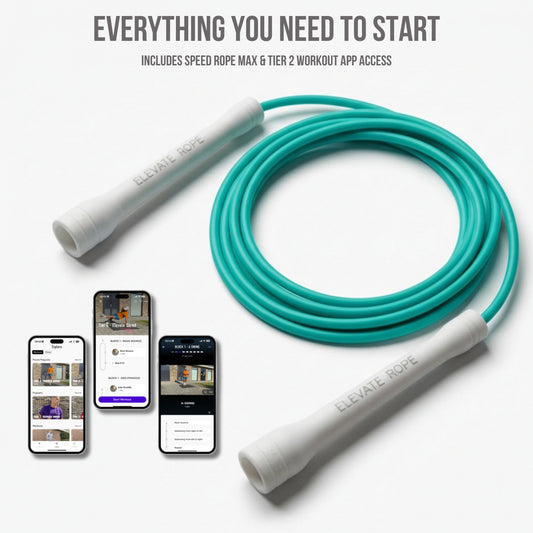
A gym membership at €50/month costs €600 per year. A treadmill starts at €500 and takes up permanent floor space. A stationary bike runs €300-2,000 and becomes a clothes rack in most households within six months. The → Ascent Max Bundle costs less than a single month of most gym memberships, comes with a beaded rope for learning, a speed rope for progression, the free Elevate App with 100+ guided workouts, and stores in a single drawer when you're done. No monthly fees. No subscription. No equipment taking up space in your already-cramped house.
For parents, the cost calculation matters because every euro spent on something that doesn't get used regularly is a euro wasted, and research consistently shows that the more friction involved in exercising (driving to a gym, setting up equipment, finding childcare), the less likely parents are to follow through consistently.

A 10-Minute Parent Workout You Can Do During Nap Time
No warm-up lecture. No complicated program. Just a workout that works when you have 10 minutes and a jump rope:
Minutes 1-2: Light warm-up. 30 seconds of basic bounce at an easy pace, then 30 seconds of rest. Repeat once. Your goal here is just getting your body moving and finding your rhythm. If you're new to jumping, trip-ups are normal. Keep going.
Minutes 3-7: Work intervals. 30 seconds of jumping followed by 15 seconds of rest. That's one round. Complete 7 rounds. If you can't manage the full 30 seconds yet, do 20 seconds of jumping and 10 seconds of rest instead. Both work. The key is keeping your heart rate elevated across the full block.
Minutes 8-9: Bodyweight strength. 10 push-ups (modified is perfectly fine), 10 alternating lunges, 30-second plank. No rope needed for this section. This adds the strength component that pure cardio misses, and it takes less than two minutes.
Minute 10: Cool-down. 60 seconds of light stretching. Hamstrings, calves, shoulders. Done.
Total calorie burn: approximately 130-170 calories depending on your weight and intensity. That's comparable to a 30-minute jog, compressed into a third of the time. Do this three times a week, and you're getting more effective cardiovascular training than most gym-goers who show up twice a month.
The free Elevate App includes guided versions of workouts like this, with audio coaching that tells you when to jump and when to rest, so you don't need to watch your phone or count intervals while you're trying to concentrate on your form.
Short answer:A 10-minute jump rope workout burns 130-170 calories, improves cardiovascular fitness, and includes both cardio and strength components. It's enough to produce real results when done consistently three times per week.
Why it matters:Complex fitness plans fail for parents because complexity requires time and mental energy that are already maxed out. The simpler the start, the more likely you'll still be doing it in month two.
Best next step:Try this workout once this week during nap time or after bedtime. If you want guided audio coaching through every interval, the free Elevate App walks you through it. → Ascent Max Bundle(includes beaded rope for learning + speed rope for when you're ready to progress)

How to Start (The Parent-Proof 4-Week Plan)
Overthinking the start is how parents stay stuck. Here's the simplest possible entry point with a clear progression path:
Week 1: Just show up. Jump rope for 10 minutes on three separate days. Don't worry about technique, speed, or how many times you trip. Rest whenever you need to, and you will need to, which is completely normal. The only goal this week is proving to yourself that you can find 10 minutes three times.
Week 2: Extend your intervals. Same three days, but try to push your jumping intervals slightly longer. If you rested every 20 seconds last week, aim for 30 seconds. If you managed 30 seconds, push for 45. You'll notice your endurance improving faster than you expect.
Week 3: Add the family session. Keep your three solo sessions, and add one weekend session where your kids jump with you. Play games. Let them try the rope. Keep it light and fun. This is where exercise stops being something you do alone and starts being something your family does together.
Week 4: You have a habit. Three solo sessions and one family session per week. Total weekly time investment: about 40 minutes. That's less time than most people spend scrolling social media in a single evening.
For beginners, a beaded rope is the best starting point. The weighted beads create an audible tick-tick-tick rhythm on each rotation that teaches your timing naturally. This matters for parents specifically because you need to learn quickly and efficiently, not through weeks of frustrating trips and tangles that eat into your already-limited time. Beaded ropes are also easier for kids to use because the slower rotation speed gives their developing coordination more time to react. If you're brand new to jump rope, a beaded rope will cut your learning curve in half.
Frequently Asked Questions
How can busy parents find time to exercise?
Stop looking for 45-minute blocks and start using 10-minute gaps that already exist: before kids wake up, during nap time, or after bedtime. Three 10-minute sessions per week of high-efficiency exercise like jump rope is enough for measurable cardiovascular improvement. The key is consistency over duration.
Is 10 minutes of exercise really enough for parents?
For high-intensity formats, yes. Harvard Health data shows that 10 minutes of jump rope provides similar cardiovascular benefits to 30 minutes of jogging. When you're a parent, 10 focused minutes three times a week beats a 60-minute session you never actually do.
Can I jump rope with my kids?
Absolutely. Children can start learning basic jump rope skills from age five. A 2025 study found that jump rope improved agility, balance, and even cognitive function in children. Games like Snake, counting challenges, and follow-the-leader make it genuinely fun for the whole family.
What is the best workout for busy moms and dads?
The best workout for busy parents is one that takes minimal time, requires zero commute, costs almost nothing, and can include your children. Jump rope checks every box. It's the most time-efficient cardio available, fits in a drawer, and kids naturally love it. For a full comparison of options, see our home cardio guide.
How do I stop feeling guilty about exercising as a parent?
Reframe it. Research shows active parents are more patient, more present, and more energetic with their children. You're not taking time from your kids. You're investing in the energy and health that lets you show up better for them. You're also modelling healthy behaviour that shapes their long-term relationship with fitness.
What jump rope is best for beginners who are parents?
A beaded rope. The weighted beads create auditory feedback that teaches your timing naturally, so you spend less time tripping and more time getting an actual workout. The → Elevate Dignity Beaded Rope is specifically designed for beginners and works well for kids too.
How do I stay consistent with exercise as a parent?
Remove friction. The more steps between you and your workout, the more likely you are to skip it. Keep your rope somewhere visible, tie sessions to existing routines (after school drop-off, during nap time), and start with 10 minutes so the commitment feels manageable. The beginner jump rope guide covers the full consistency framework.
Next Steps: Start Training This Week
You don't need to overhaul your schedule. You don't need a gym membership. You don't need to find 45 minutes that don't exist. You need 10 minutes, a rope, and the willingness to try three times this week.
Here's where to go based on your situation:
If you're brand new to jump rope and want the simplest start: A single beaded rope gets you going immediately. The auditory feedback from the beads teaches timing faster than any other rope type, and it works on any surface. → Elevate Dignity Beaded Rope
If you want the complete system from day one: The bundle includes a beaded rope for learning, a speed rope for when you're ready to progress to HIIT, the free Elevate App with 100+ guided workouts, and the Elevate Code nutrition and mindset guide. Everything you need, nothing you don't. → Ascent Max Bundle
If you're still exploring options: Our pillar guide compares every home cardio alternative side by side, including time efficiency, cost, space requirements, and results, so you can make an informed decision. → The Complete Guide to Home Cardio
Being a parent is the hardest job there is. But staying fit doesn't have to make it harder. Ten minutes. Three times a week. That's the whole plan. And it works.
Sources:
- Most Common Barriers to Fitness in the U.S. 2023, Statista
- Study: Juggling Multiple Young Children Hinders Vigorous Physical Activity for Parents, University of Houston
- Calories Burned in 30 Minutes for People of Three Different Weights, Harvard Health Publishing
- Breaking Down Barriers to Fitness, American Heart Association
- Physical Activity Barriers and Facilitators Among Working Mothers and Fathers, BMC Public Health (PMC)
- New Research Shows Jump Rope Benefits for Kids' Fitness, Agility, and Cognitive Function, Elite Jumps
- Overcoming Barriers to Exercise Among Parents: A Social Cognitive Theory Perspective, PMC (NIH)
You May Also Like
→ The Complete Guide to Home Cardio: How to Get Fit Without a Gym in 2026 (Pillar Page)
→ The 10-Minute Rule: Why Short Workouts Beat Long Gym Sessions
→ How to Start Jump Rope as a Complete Beginner (Without Getting Frustrated)
→ Cardio Without Running: 7 Alternatives That Actually Work
→ Jump Rope vs. Gym Membership: The Full Cost, Time, and Results Comparison
→ How to Build a Fitness Habit That Actually Sticks