






You're Not Lazy — Running Just Isn't For Everyone
You don't hate cardio. You hate boring cardio.
Let's get something straight.
If you hate running, there's nothing wrong with you.
You're not undisciplined. You're not making excuses. You're not "bad at fitness."
You just haven't found your cardio yet.
Running gets treated like the default — the thing everyone "should" do for heart health and fat loss. But here's what nobody tells you: running is one option among dozens. And for many people, it's actually one of the worst options.
Why? Because the best cardio is the cardio you'll actually do. Consistently. Week after week. Month after month.
If running makes you miserable, you won't do it consistently. Simple as that.
So let's find something better.
Why Running Doesn't Work for Most People
Before we look at alternatives, it helps to understand why running fails so many people. This isn't about running being "bad" — it's about fit.
It's time-intensive. A "good" run takes 30-45 minutes minimum, plus warm-up, cool-down, changing clothes, and potentially travelling somewhere to do it. That's easily an hour of your day, several times per week.
It's hard on your body. Research shows that up to 50% of regular runners experience an injury each year. Knees, ankles, hips, shins — running puts repetitive stress on joints that many bodies simply can't handle long-term.
It's monotonous. There's no skill progression, no variety, no sense of mastery. Just one foot in front of the other until you're done. For people who need mental engagement, this is torture.
It's weather and location dependent. Too hot, too cold, too dark, too rainy, too far from a safe route — the excuses pile up because the barriers are real.
It requires a baseline fitness level. If you're starting from zero, running for even 10 minutes can feel impossible. That's demoralizing, not motivating.
If any of this resonates, you're not alone. And you don't need to force yourself to love something you hate.
You need alternatives.
The 7 Best Cardio Alternatives for People Who Hate Running
These options deliver real cardiovascular benefits — improved heart health, calorie burn, endurance — without the downsides that make running miserable for so many people.
1. Jump Rope
Best for: Time efficiency, home workouts, full-body cardio Calories burned: 200-300 per 15 minutes Equipment needed: A rope (€20-50) Space required: 2m × 2m
If running is the most overrated cardio, jump rope is the most underrated.
Here's the headline stat: 10 minutes of jumping rope provides roughly the same cardiovascular benefit as 30 minutes of jogging. That's not marketing — that's research.
Why it works for running-haters:
- It's fast. Effective workouts take 10-20 minutes, not 45-60.
- It's skill-based. There's always a new technique to learn — boxer step, crossovers, double unders — which keeps your brain engaged instead of watching the clock.
- It's portable. A rope fits in your bag. Do it in your living room, hotel room, or office car park.
- It's lower impact than running. When done correctly (small jumps, soft landings), jump rope creates less joint stress than pounding pavement.
- It's a full-body workout. Your arms, shoulders, core, and legs all work together. Running only hits your lower body.
The catch? There's a small learning curve. You'll trip over the rope for the first few sessions. But most people find their rhythm within a week, and from there it becomes genuinely fun.
Ready to learn more? Check out our [Complete Guide to Jump Rope for Home Cardio]

2. Swimming
Best for: Zero-impact cardio, joint issues, full-body workout Calories burned: 220-370 per 30 minutes Equipment needed: Pool access Space required: Pool
If your main issue with running is joint pain, swimming is the answer.
Water eliminates impact entirely. Your joints float while your cardiovascular system works hard. It's why physical therapists recommend swimming for injury recovery and why older athletes often transition to the pool.
Swimming also engages your entire body — arms, legs, core, back — making it more complete than running.
The downside? Access. You need a pool, which means either a gym membership, public pool schedule, or your own backyard oasis. You also need to know how to swim properly, which isn't universal.
If you have access and ability, swimming is fantastic cardio. If not, keep reading.

3. Cycling (Outdoor or Stationary)
Best for: Low-impact cardio, leg strength, longer sessions Calories burned: 210-420 per 30 minutes Equipment needed: Bike or stationary bike (€300-2,000+) Space required: Road/path or room for stationary bike
Cycling gives you the outdoor experience without the joint punishment.
Because your feet stay on the pedals (no impact), cycling is far gentler on your knees, ankles, and hips than running. You can also cover more ground, see more scenery, and genuinely enjoy the experience.
Indoor cycling (spin bikes, Peloton-style setups) removes weather barriers and adds structured workouts, music, and sometimes community.
The downside? Cost. A decent bike isn't cheap, and a quality stationary setup can cost €500-2,000+. You also need storage space and, for outdoor cycling, safe routes.
If budget and space allow, cycling is excellent. If not, there are more accessible options.

4. Rowing Machine
Best for: Full-body cardio, low-impact, strength and endurance combined Calories burned: 250-370 per 30 minutes Equipment needed: Rowing machine (€200-2,000+) Space required: 2.5m × 1m
Rowing is the hidden gem of cardio machines.
It works 86% of your muscles — legs, core, back, arms, shoulders — while keeping impact near zero. The pushing motion is smooth and controlled, nothing like the jarring repetition of running.
Rowing also teaches rhythm and technique, which keeps your mind engaged. And because you're using so much muscle mass, the calorie burn is substantial.
The downside? Rowing machines are expensive and bulky. If your gym has one, great. If you're building a home gym and have space, a rower is worth considering. Otherwise, look for something more portable.

5. HIIT Workouts (No Running Required)
Best for: Time efficiency, variety, no equipment needed Calories burned: 200-400 per 20 minutes Equipment needed: None (or minimal) Space required: 2m × 2m
HIIT — High-Intensity Interval Training — is a format, not a specific exercise. The structure: short bursts of maximum effort followed by brief rest periods.
You can do HIIT with bodyweight movements alone:
- Burpees
- Mountain climbers
- Squat jumps
- High knees
- Jumping jacks
- Plank variations
No running required. Just effort.
The beauty of HIIT is time efficiency. Twenty minutes of properly structured HIIT can deliver cardio benefits that match or exceed 45 minutes of steady jogging. You also get the "afterburn effect" (EPOC), where your body continues burning calories after the workout ends.
The downside? It's hard. HIIT done properly is intense, and the bodyweight movements can become repetitive over time. Adding equipment — like a jump rope — makes HIIT more varied and sustainable.

6. Dance-Based Workouts
Best for: Fun factor, coordination, social exercise Calories burned: 180-350 per 30 minutes Equipment needed: None (or streaming subscription) Space required: 2m × 2m
If exercise feels like a chore, maybe you need to dance instead.
Zumba, dance , hip-hop fitness classes — these turn cardio into play. You're so focused on learning moves and keeping up with the music that you forget you're exercising.
Dance workouts also improve coordination and rhythm, which has cognitive benefits beyond pure fitness.
The downside? Results depend heavily on intensity. A casual dance session might not elevate your heart rate enough to count as real cardio. And some people feel self-conscious dancing, even alone at home.
If you're someone who used to dance or enjoys music-driven movement, this is worth trying.

7. Walking (Yes, Really)
Best for: Beginners, recovery, sustainability Calories burned: 100-200 per 30 minutes Equipment needed: Shoes Space required: Anywhere
Walking gets dismissed as "not real exercise." That's nonsense.
Brisk walking — 5-6 km/h — is legitimate cardio. It improves heart health, burns calories, reduces stress, and strengthens bones. It's also the most sustainable form of cardio because it's so low-barrier.
Research consistently shows that people who walk regularly maintain their habit longer than people who take up running.
The downside? It's not efficient. You need more time to get the same cardiovascular benefit as higher-intensity options. But if the choice is between walking for 45 minutes or doing nothing, walking wins every time.
Walking is also an excellent starting point. Build a walking habit, then layer in higher-intensity options like jump rope as your fitness improves.

Comparison Table: At a Glance
| Activity | Calories/30 min | Equipment Cost | Impact Level | Time Efficiency | Home-Friendly |
| Jump Rope | 300-440 | €20-50 | Low-Moderate | Excellent | Yes |
| Swimming | 220-370 | Pool access | Zero | Good | No |
| Cycling | 210-420 | €300-2,000+ | Low | Good | Depends |
| Rowing | 250-370 | €200-2,000+ | Very Low | Good | Needs space |
| HIIT | 200-400 | €0 | Moderate-High | Excellent | Yes |
| Dance | 180-350 | €0-20/mo | Low | Moderate | Yes |
| Walking | 100-200 | €0 | Very Low | Low | Yes |
How to Choose Your Running Alternative
There's no universally "best" option. The right choice depends on your situation:
If time is your biggest constraint: Jump rope or HIIT. Both deliver results in 15-20 minutes.
If joint pain is your main concern: Swimming or rowing. Both are near-zero impact.
If you get bored easily: Jump rope or dance. Both involve skill development and variety.
If budget is tight: Walking, HIIT, or jump rope. All cost little or nothing.
If you want the best overall value: Jump rope. It's cheap, fast, portable, full-body, and works anywhere.
The Bottom Line
You don't have to run.
You don't have to suffer through cardio you hate.
You don't have to feel guilty for not being a "runner."
You just have to find the cardio that fits your life, your body, and your preferences.
For most people — especially those short on time, working out at home, or sick of boring exercise — jump rope is the option that checks the most boxes. It's efficient, engaging, portable, and actually enjoyable once you get past the first week of learning.
But the best cardio is the one you'll actually do. So pick something from this list, try it for two weeks, and see how it feels.
Your heart doesn't care whether you're running, jumping, swimming, or dancing. It just cares that you're moving.
Ready to Try Jump Rope?
If jump rope sounds like the right fit, here's where to start:
[READ: Jump Rope for Home Cardio: The Complete Guide] — Everything you need to know about technique, equipment, and your first workouts.
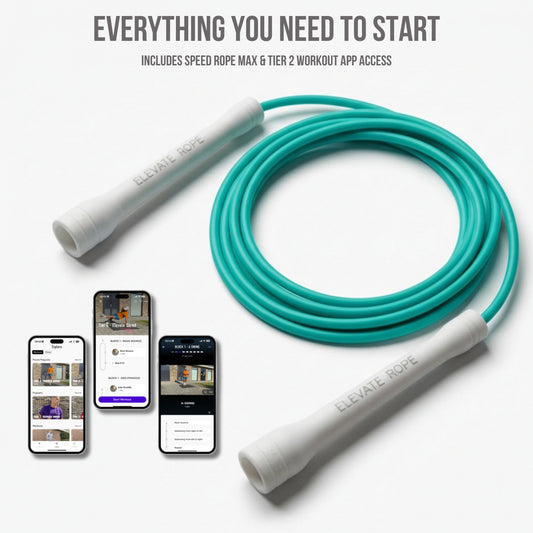
[SHOP: Elevate Beginner Rope Collection] — Properly weighted, adjustable ropes that make learning easier.
Still not sure which cardio is right for you? Send us a message — we're happy to help you find your fit.
External Links Included: