





Wondering if jump rope is safe during menopause is a smart question to ask first. The honest answer has two sides. For most women moving through menopause, jump rope is safe when you start gently and build slowly. For a smaller group, it needs a clear sign-off from a doctor before the first jump.
This guide is the safety gate for our wider resource on jump rope for menopause. Read it before you buy anything or start any routine. It exists so you can decide with confidence, not fear.
A quick note before we begin. This article is educational and is not medical advice. Your body and your history are unique. If you have any doubt, speak to your doctor or a physiotherapist first.
What You'll Learn
→ Who can usually start jump rope during menopause without a doctor's sign-off → Which conditions make impact risky, and why a past fracture changes everything → How oestrogen loss affects your bones, joints, and pelvic floor → Why a gentle jump rope start beats a heavy rope every time → Signs that tell you to stop and reassess straight away → Smart ways to protect your knees, spine, and bladder as you build
The Short Answer: Safe for Most, Not for Everyone
Most women in perimenopause and early postmenopause can jump rope safely. The key is a slow, controlled start. Healthy bones respond well to gentle impact, and that response is exactly what protects them.
The picture changes if you have a diagnosed bone condition. Established osteoporosis, a recent fracture, or a spinal fracture all move you into a different category. So does a weak pelvic floor or a history of falls.
This does not mean jump rope is off the table for you. It means the order of steps changes. You get assessed first, then you start, often with a modified approach.
Short answer: Jump rope is safe for most women during menopause when introduced gradually, but not for everyone without medical clearance.
Why it matters: Menopause speeds up bone loss, so the right impact helps while the wrong dose can harm. Getting this order right protects you and builds the habit on solid ground.
Best next step: If you are cleared and ready, read our gentle guide on how to start jump rope after 50 first.
Why Menopause Changes the Safety Question
Menopause is not just a hot-flush story. It is a structural shift in your skeleton, your joints, and the muscles that hold everything in place. Understanding that shift is how you train with a jump rope safely.

Bone density and the years around menopause
Oestrogen helps protect bone. As levels fall during perimenopause and after, that protection fades. Bone loss can speed up sharply in the years either side of your final period.
This is why the menopause years matter so much for bone health. You can read the full picture in our deep dive on bone loss during menopause. The short version is simple. Bones thrive on the right kind of load, and they fade without it.
Weight-bearing impact is one of the strongest non-drug tools you have. The Royal Osteoporosis Society notes that bones stay strong when you give them work to do. A single jump counts as one useful impact through the skeleton.
Oestrogen, the pelvic floor, and impact
Oestrogen also supports the tissues around your bladder and pelvic floor. As it declines, those muscles can weaken. That is why some women notice small leaks when they sneeze, laugh, or jump.
This is common and rarely talked about. Up to half of adult women experience some bladder leakage, yet few seek help. Menopause raises the odds because of that drop in oestrogen.
The good news is that this is often very treatable. A pelvic health physiotherapist can assess you and build your strength. You do not have to choose between jumping and staying dry.
Short answer: Lower oestrogen weakens both bone and pelvic-floor tissue, so menopause raises the stakes on how you approach impact.
Why it matters: The same change that thins your bones can also affect your bladder control. Training the pelvic floor alongside any jumping keeps both protected.
Best next step: Pair impact work with balance and coordination using our guide to balance and bone health for women over 50.
Who Can Usually Skip Safely
You are likely in the clear if you are generally healthy and active. No diagnosed bone disease. No recent fracture. Steady balance and no falls in the past year.
If that sounds like you, jump rope during menopause is a strong choice. You still start low and build, but you do not need a referral to begin. Gentle impact is working for you, not against you.
The table below sorts the main groups. Find your row, then take the matching step. When in doubt, always move up a tier toward more caution.
| Risk tier | Who this includes | Sensible next step |
| Green | Healthy and active, no bone diagnosis, no recent fracture, steady balance | Start with short, low sets and build slowly |
| Amber | Osteopenia, mild joint pain, pelvic-floor symptoms, years of sitting | Get a doctor or physio to confirm before impact |
| Red | Diagnosed osteoporosis, recent or spinal fracture, poor balance, prolapse | Avoid impact until a specialist clears and guides you |
Notice that the green tier still starts gently. That is the whole point of this brand's approach. A controllable jump rope and short sets beat a heavy rope and big goals.
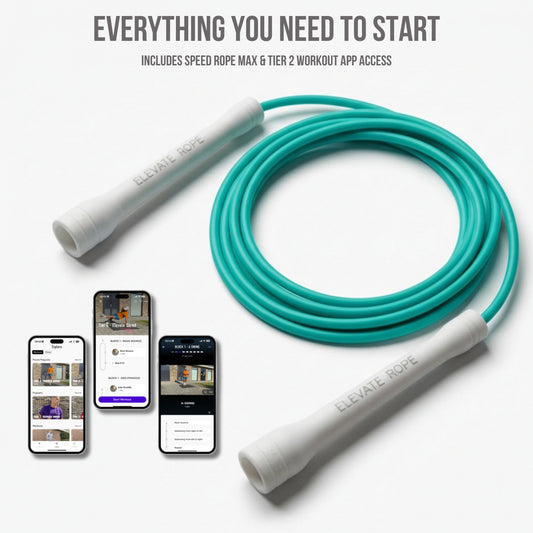
Tactile feedback through your hands and arms helps here. A beaded rope tells you when your timing is smooth, so you build clean technique before you build volume. We compare your options in detail in our piece on beaded versus weighted rope for bone health.
Who Should Check With a Doctor or Physiotherapist First
Some situations call for a professional opinion before any impact. This is not about gatekeeping your fitness. It is about matching the load to your bones.
You should seek clearance if you have diagnosed osteoporosis or osteopenia. The same applies after any fragility fracture, meaning a break from a low-level fall. A past spinal or vertebral fracture is a particularly important flag.
UK expert consensus is clear on this point. People with a vertebral fracture or several low-trauma fractures should usually keep impact no higher than brisk walking. High-impact jumping may not suit them at all.
Pelvic floor symptoms deserve the same care. If you leak urine, feel heaviness, or notice any bulge, see a pelvic health physiotherapist first. They can guide you on whether and how to add impact.
Other reasons to check in include poor balance, recent joint replacement, painful arthritis, or dizziness. Any uncontrolled heart or blood-pressure condition belongs on this list too. A short conversation now prevents a setback later.
If your doctor says no to high impact, you still have options. Moderate impact, resistance work, and balance training all support bone health. Our overview of high-impact versus low-impact exercise for bones walks through the trade-offs.
Short answer: Diagnosed osteoporosis, a past fracture, pelvic-floor symptoms, or poor balance all mean you should get clearance before jumping.
Why it matters: Impact that strengthens a healthy skeleton can stress a fragile one. A quick assessment tells you which side of that line you are on.
Best next step: Take this list to your GP or physio. Then visit the jump rope for menopause hub to plan.
How to Start Low and Build Slowly
Once you are cleared, the jump rope method is gentle by design. You are not chasing speed or numbers. You are teaching your bones to handle controlled load.
Begin each jump rope session with very short sets. Ten easy jumps, a rest, then ten more is a sensible starting block. Research on bone health often centres on short, low-volume jumping rather than long sessions.
One small feasibility study had postmenopausal women do ten countermovement jumps, three times a week. The jumps were well tolerated, and the group completed most of the prescribed sessions. Short and consistent beat long and occasional for bones.
Keep your landings soft and quiet. Bend your knees, stay light, and land through the whole foot. Wear supportive shoes, and jump on a forgiving surface rather than hard concrete.
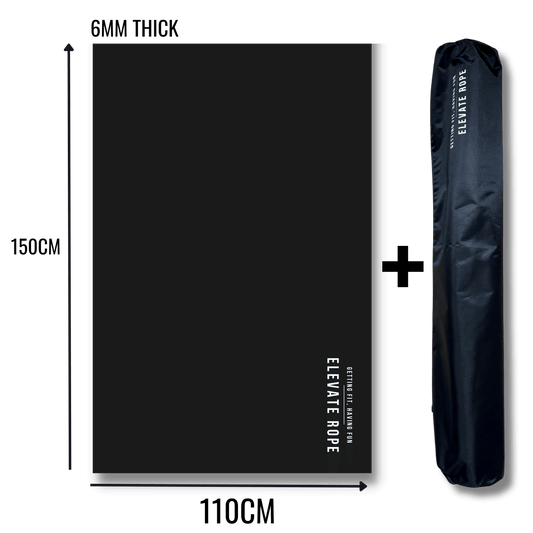
A cushioned mat takes some sting out of each landing. It also marks a clear training space, which helps the habit stick. Comfort underfoot makes a slow build far easier to sustain.
Train your pelvic floor in the same season you start jumping. Daily pelvic-floor contractions support continence as you add impact. If anything feels off, a pelvic health physio can fine-tune your plan.
Progress by feel, not by force. Add a little volume only when the current level feels easy. Our structured 10-jump bone-building routine lays out a simple, repeatable path.
This is identity work as much as fitness. You are becoming a woman who keeps a small promise to her own body each day. That promise, kept often, is what protects you for decades.

Signs to Stop and Reassess
Listen to your body, because it will tell you when to pause. Some sensations are normal. Mild muscle soreness a day or two later is nothing to worry about.
Other signs mean stop now. Sharp or sudden pain, especially in your back, is a reason to halt. New or worsening joint pain, swelling, or any "give way" feeling counts too.
Pay attention to your bladder and your balance. Leaking that starts or worsens deserves a physio's input. Dizziness, chest tightness, or breathlessness means stop and seek advice promptly.
None of this should scare you off. These are simply the guardrails of a smart jump rope programme. Stopping early to check a niggle is how you keep training for years.
Frequently Asked Questions
Is jump rope safe if I have osteoporosis?
Not without specialist guidance. High-impact jumping can be unsafe with diagnosed osteoporosis, particularly if you have had a spinal fracture. Speak to your doctor or a physiotherapist, who may suggest moderate-impact or resistance options instead.
Can I jump rope during perimenopause?
For most healthy women in perimenopause, yes. Gentle impact during these years can help protect bone as oestrogen starts to fall. Start with short, low sets and build slowly, and check first if you have any bone or joint concern.
Will jumping rope make me leak urine?
It can, if your pelvic floor is weak, which is common during menopause. This does not mean you must avoid jumping forever. Train your pelvic floor alongside, and see a pelvic health physiotherapist if leaking continues.
How many jumps a day are safe to start?
Begin with small blocks, such as ten easy jumps followed by a rest. Bone-health research often uses short, low-volume jumping rather than long sessions. Add more only when your current level feels comfortable and pain-free.
Is jump rope bad for your knees after 50?
It does not have to be. Soft landings, supportive shoes, and a cushioned surface reduce the load on your joints. If you have painful arthritis, get advice first and consider lower-impact options.
Do I need a doctor's clearance before starting?
Healthy, active women without a bone diagnosis usually do not. Get clearance if you have osteoporosis, a past fracture, pelvic-floor symptoms, poor balance, or an uncontrolled condition. When unsure, a quick check is always worth it.
What surface should I jump on?
Choose a firm but forgiving surface over hard concrete. A dedicated mat softens each jump rope landing and protects your joints. Avoid very soft or unstable surfaces, which can throw off your balance.
Your Next Step, Based on Where You Are
If you are healthy and cleared, you are ready to jump rope with confidence. Start gently, keep your sets short, and let consistency do the heavy lifting. Our guide on how to start jump rope after 50 gives you a calm, step-by-step entry.
If you have a bone diagnosis, a past fracture, or pelvic-floor symptoms, your first move is a conversation. Take the red and amber flags from this article to your doctor or physiotherapist. Once you know your limits, you can jump rope inside them safely.
Either way, you do not have to figure this out alone. Return to the jump rope for menopause hub to map your path, from understanding bones to building your routine. The goal is not a perfect month. It is a kept promise, repeated, that protects the body you live in.
Sources
- Royal Osteoporosis Society, Exercise for bone health: https://theros.org.uk/information-and-support/bone-health/exercise-for-bones/
- Brooke-Wavell K, et al. Strong, Steady and Straight: UK consensus statement on physical activity and exercise for osteoporosis, British Journal of Sports Medicine, 2022: https://pmc.ncbi.nlm.nih.gov/articles/PMC9304091/
- Montgomery G, et al. Feasibility of a jumping intervention for postmenopausal women, randomized controlled study: https://pmc.ncbi.nlm.nih.gov/articles/PMC10664055/
- Kato T, et al. Effect of low-repetition jump training on bone mineral density in young women, Journal of Applied Physiology: https://journals.physiology.org/doi/full/10.1152/japplphysiol.00666.2005
- International Osteoporosis Foundation, Exercise for individuals with osteoporosis: https://www.osteoporosis.foundation/health-professionals/prevention/exercise/exercise-individuals-with-osteoporosis
- The Menopause Charity, Menopause and urine incontinence: https://themenopausecharity.org/information-and-support/symptoms/menopause-and-urine-incontinence/
- Pelvic floor muscle exercises for urinary incontinence in postmenopausal women, systematic review: https://pmc.ncbi.nlm.nih.gov/articles/PMC9859482/
- Hospital for Special Surgery, Why jumping rope is the ideal post-menopausal workout for your bones: https://news.hss.edu/why-jumping-rope-is-the-ideal-post-menopausal-workout-for-your-bones-according-to-an-exercise-scientist/
You May Also Like
→ How to Start Jump Rope After 50 Without Hurting Your Joints
→ The 10-Jump Method: A Gentle Bone-Building Routine
→ Beaded vs Weighted Rope for Bone Health After Menopause