





A bone building jump rope routine does not need to be long, loud, or exhausting. It can start with ten gentle jumps. That small dose is the whole idea behind the method in this guide.
Bones respond to brief, well-timed impact more than to endless repetition. Research on short jumping bouts supports this. You will see those studies below, framed honestly, with their limits included.
This article sits inside our wider hub on jump rope for menopause. Read it as a practical next step, once you understand why impact helps bone. The aim is simple. Build a routine your skeleton can actually use.
What You'll Learn
→ Why ten jumps can matter more than an hour of steady cardio → What the research shows about short bouts and hip bone density → How to perform the method step by step, at your own pace → Which surface and rope keep the load gentle on your joints → Common mistakes that turn a safe routine into a risky one → Ways to turn ten daily jumps into a habit that holds
Why Ten Jumps Beat an Hour of Repetition
Your skeleton is not a machine that rewards volume. It is living tissue that adapts to signals. The strongest signal is a brief, higher-force load it does not expect.
Bone cells respond fast to impact, then they stop listening. After a handful of jumps, the signal flattens out. More jumps in the same set add fatigue, not much extra benefit.
This is why rest sits inside the method. A short pause lets the bone reset its sensitivity. Studies on loaded bone show that recovery periods restore this response.
So ten to twenty good jumps carry the useful part of the signal. Everything past that is mostly repetition your bones ignore. That is welcome news if you are short on time or new to impact.
A brief bout also keeps your joints fresher. Fewer landings mean less cumulative load on knees and ankles. You gain the bone stimulus without grinding yourself down over the week.
Think of it as quality over quantity, applied to your frame. Ten focused jumps beat three hundred sloppy ones. The skeleton reads the peak force, not the tally.
Novelty helps too. Bones adapt to loads they see often, so the same jump grows familiar. Changing your footwork now and then keeps the stimulus fresh. A simple jump rope offers plenty of gentle variations to rotate through.
Still weighing impact against gentler options? Our guide on high-impact versus low-impact exercise for your bones lays out the trade-offs.
What the Research Actually Shows
The clearest study behind this method is a controlled trial by Tucker and colleagues. Sixty women, aged 25 to 50, took part over 16 weeks. They jumped either 10 or 20 times, twice a day, with 30 seconds of rest between jumps.
Both jumping groups improved bone density at the hip and the trochanter. The women who did nothing lost bone over the same period. So even ten jumps, done twice daily, moved the needle in the right direction.
One caveat matters, and we will not hide it. Those women were premenopausal, so the direct evidence is strongest before menopause. After menopause, oestrogen loss changes how bone responds to load.
The picture after 50 is still encouraging, though more cautious. A feasibility trial found that a jumping programme is realistic and well tolerated for postmenopausal women. UK expert consensus also backs impact and resistance work for bone, within sensible limits.
| Study | Who took part | What they did | What changed |
| Tucker et al. (2015) | 60 premenopausal women, 25 to 50 | 10 or 20 jumps, twice daily, 16 weeks | Hip and trochanter bone density rose; controls lost bone |
| Montgomery et al. (feasibility) | Postmenopausal women | Supervised jumping programme | Programme proved realistic and well tolerated |
| UK consensus (2022) | Guidance for clinicians | Reviewed impact and resistance training | Impact plus resistance supported for bone health |
One honest point sits underneath all of this. Impact alone is not a complete bone plan. Pair your jump rope work with resistance training, protein, and vitamin D for the best support. Treat the ten-jump habit as one useful piece, not the whole answer.
Short answer: Short, repeated jumping bouts have improved hip bone density in trials, most clearly in premenopausal women.
Why it matters: Menopause speeds bone loss, so any safe stimulus that slows it is worth understanding. The dose is small, which makes it easier to keep up for years.
Best next step: Before you begin, confirm you are cleared with our jump rope safety guide for menopause.

The 10-Jump Method, Step by Step
The method is deliberately plain. You are not chasing a workout high. You are giving your bones a clean, repeatable signal.
Start with a short warm-up. March or bounce softly for one to two minutes. Loosen your ankles, knees, and hips before any real impact.
Then perform your first bout. Do ten slow, controlled single jumps with the rope. Keep the hops low, land softly, and let the whole foot meet the floor.
Rest for 30 seconds between jumps or between bouts, as the research did. Repeat for two to three bouts when you begin. Do the whole thing twice a day, once in the morning and once later.
Progress by small steps, never by leaps. Add a few jumps per bout, or one extra bout, every week or two. Your body sets the pace, not the calendar.
Keep your posture tall throughout. A long spine and relaxed shoulders help you absorb each landing well. Breathe steadily, and let your calves and feet do the soft, springy work.
Here is a gentle onramp toward the researched dose. Treat it as a guide, not a rule. Repeat any week for longer if it feels right.
| Weeks | Jumps per bout | Bouts per session | Sessions per day |
| 1 to 2 | 10 | 1 | 1 to 2 |
| 3 to 4 | 10 | 2 | 2 |
| 5 to 8 | 10 to 15 | 2 | 2 |
| 9 onward | 10 to 20 | 2 to 3 | 2 |
Landing quality carries this method. Soft knees absorb the shock, not stiff legs. Stop for the day if any jump brings sharp pain, dizziness, or leaking.
Short answer: Do ten easy jumps, rest, and repeat a couple of times, twice daily, then build slowly.
Why it matters: Small, kept promises beat heroic sessions you abandon by week two. Consistency is what earns the bone benefit over months.
Best next step: For a calm, joint-first introduction to impact, read how to start jump rope after 50.
Why the Beaded Jump Rope Is the Gentle Entry Point
Not every rope suits a careful, low-volume routine. A thin racing cable moves too fast to control. For learning impact after 50, you want feedback and a forgiving pace.
The beaded rope gives you exactly that. Its beads add gentle weight, so you feel the rope through your hands and arms as it travels. That tactile signal tells you where the rope is, without relying on sound.
This matters more than it sounds. Many jumpers train with earphones in, so an audio cue is useless. A rope you can feel keeps your timing honest and your jumps controlled.
The beads also slow the rotation to a learnable speed. You are less likely to rush, trip, or over-jump. Slower turns mean softer, more deliberate landings for your knees.
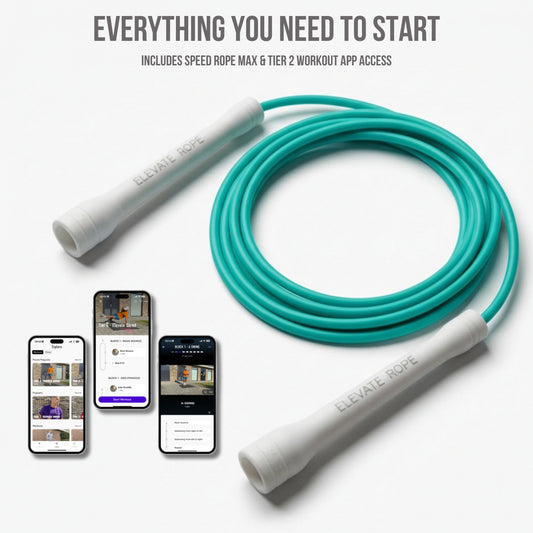
Once you are cleared to start, you can explore the beaded jump rope range as your gentle first tool. It is adjustable to 3 metres, so it fits your height in about a minute with scissors. The free app adds guided sessions, with no subscription, unlike rivals charging around 150 euros a year.
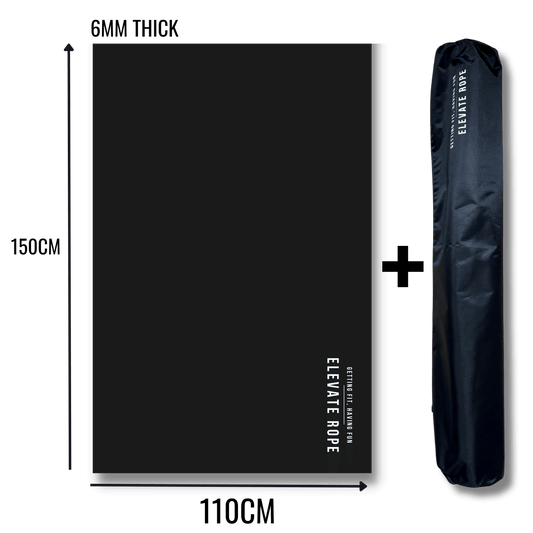
Pair the rope with a forgiving surface. A dedicated jump rope training mat softens each landing and protects your floor. It also extends the life of the rope, which saves you money over time.
Still torn between rope types? Our honest comparison of beaded versus weighted rope for bone health favours the gentler choice at 55.

Mistakes That Turn a Safe Routine Risky
Most problems come from doing too much, too soon. The method works because it is small. Piling on hundreds of jumps in week one undoes its main advantage.
Surface is the next common trap. Bare concrete punishes ankles and knees with every landing. Choose a firm but cushioned floor, or use a mat, and your joints will thank you.
Pelvic floor health deserves real attention here. Oestrogen loss can weaken those muscles during menopause. Small leaks when you jump are common, treatable, and worth raising with a pelvic health physiotherapist.
Pain is a signal, not a hurdle to push through. Stop and reassess if a jump hurts your hips, spine, or knees. Sharp or lasting pain means the method is not right for you today.
The biggest risk is skipping medical clearance when you need it. Established osteoporosis, a recent fracture, or a spinal fracture change the rules entirely. Get assessed first, then adapt the plan around your limits.
Short answer: Overtraining, hard surfaces, ignored pelvic-floor symptoms, and skipped clearance are the four routine-wreckers to avoid.
Why it matters: A gentle method only stays gentle if you respect its dose and your own body. The right caution keeps you jumping for years, not days.
Best next step: Work through the full eligibility checklist in our jump rope safety guide.
Turning Ten Jumps Into a Habit
Ten jumps take under a minute. That is the point. A tiny routine survives busy weeks, bad moods, and low energy far better than a long one.
Anchor it to something you already do. Jump after you brush your teeth, or before your morning coffee. Habits stick when they lean on an existing cue rather than willpower.
Track the streak, not the intensity. Ten jumps done today beats a perfect session you keep postponing. Your bones reward the woman who shows up, not the one who plans.
This is identity work as much as fitness. You are becoming someone who keeps a small promise to her own skeleton daily. That self-trust, repeated, is what carries you past the first month.
Keep the bar low on hard days. Ten jumps still count when motivation is thin. A habit that survives your worst weeks is the one that protects your bones for years.
When you want more structure, our balance and coordination guide pairs neatly with impact. See balance and bone health for women over 50 for gentle additions.
Frequently Asked Questions
How many jumps a day do I need for bone density?
Research used as few as ten jumps, twice daily, with rest between each jump. That small dose improved hip bone density over 16 weeks in premenopausal women. Start there, build slowly, and never chase big numbers for their own sake.
Is the 10-jump method safe after menopause?
For many healthy women, yes, when introduced gently. The strongest direct evidence is premenopausal, so check with your doctor if you have any bone concern. Read our jump rope safety guide for menopause before you begin.
Do I need a special rope for this routine?
A beaded rope suits it best. The beads give feedback through your hands and slow the rotation to a controlled speed. That makes soft, deliberate landings easier while you learn the method.
How long before I might see any bone benefit?
Bone adapts slowly, over months rather than weeks. The main trial ran for 16 weeks before measuring change. Consistency across that window matters far more than any single hard session.
Can I use the 10-jump method with osteopenia or osteoporosis?
Not without medical guidance. High-impact jumping can be unsafe with established osteoporosis or a past spinal fracture. Speak to your doctor or physiotherapist, who may suggest a modified or lower-impact plan instead.
What surface should I jump on?
Choose a firm but forgiving floor over bare concrete. A cushioned mat absorbs each landing and protects your joints and the rope. Avoid very soft or unstable surfaces, which upset your balance.
Is jumping better than walking for bones?
They do different jobs. Walking is gentle and useful, but its low impact gives a weaker bone signal. Short, controlled jumps deliver a stronger stimulus, which is why they feature in bone research.
Your Next Step, Based on Where You Are
If you are new to impact and cleared to start, begin gentle. Ten slow jumps on a soft surface is enough for week one. A beaded rope and a training mat give you control and cushioning from day one.
If you already move with confidence, the method still serves you well as a daily bone anchor. Keep the jumps low and the landings soft, then layer variety on top once the habit holds. Our guide on the best jump rope for women over 50 helps you match a rope to your stage.
Whatever your starting point, return to the jump rope for menopause hub to map the full path. The goal is not a perfect month or a big number. It is a kept promise, repeated, that protects the body you live in. Keep the promise. Elevate the rest.
Sources
- Tucker LA, Strong JE, LeCheminant JD, Bailey BW. Effect of two jumping programs on hip bone mineral density in premenopausal women, American Journal of Health Promotion, 2015: https://pubmed.ncbi.nlm.nih.gov/24460005/
- Robling AG, Burr DB, Turner CH. Recovery periods restore mechanosensitivity to dynamically loaded bone, Journal of Experimental Biology, 2001: https://pubmed.ncbi.nlm.nih.gov/11606612/
- Montgomery G, et al. Feasibility of a jumping intervention for postmenopausal women, randomized controlled study: https://pmc.ncbi.nlm.nih.gov/articles/PMC10664055/
- Brooke-Wavell K, et al. Strong, Steady and Straight: UK consensus statement on physical activity and exercise for osteoporosis, British Journal of Sports Medicine, 2022: https://pmc.ncbi.nlm.nih.gov/articles/PMC9304091/
- Royal Osteoporosis Society, Exercise for bone health: https://theros.org.uk/information-and-support/bone-health/exercise-for-bones/
- International Osteoporosis Foundation, Exercise for individuals with osteoporosis: https://www.osteoporosis.foundation/health-professionals/prevention/exercise/exercise-individuals-with-osteoporosis
- Hospital for Special Surgery, Why jumping rope is the ideal post-menopausal workout for your bones: https://news.hss.edu/why-jumping-rope-is-the-ideal-post-menopausal-workout-for-your-bones-according-to-an-exercise-scientist/
- Kato T, et al. Effect of low-repetition jump training on bone mineral density in young women, Journal of Applied Physiology: https://journals.physiology.org/doi/full/10.1152/japplphysiol.00666.2005
You May Also Like
→ Is Jump Rope Safe During Menopause? Who Should and Should Not
→ How to Start Jump Rope After 50 Without Hurting Your Joints
→Beaded vs Weighted Rope for Bone Health After Menopause
→ High-Impact vs Low-Impact Exercise for Your Bones