





Few topics in fitness are as clear as the high impact exercise bone density link. In one research review, triple jumpers had greater bone density than long-distance runners. The lesson is blunt. Bone responds to force, not just effort.
But force has a cost. The same impact that builds bone can strain a fragile skeleton. So the real question is not high versus low. It is how much impact your bones can safely use right now. Our jump rope for menopause guide frames that balance.
This guide compares the two honestly. It shows what each does for your bones. It also shows where a jump rope fits, as impact you can control.
In this guide
Why bone responds to impact and not gentle movement
What high-impact exercise does for bone density
How low-impact options compare, and where they fall short
Where a jump rope sits between the two
Who should be cautious with impact after menopause
Simple ways to add impact your body can trust
What actually makes bone grow
Bone is not a fixed structure. It adapts to the loads you place on it. This idea has a name. Wolff's law says bone remodels in response to mechanical stress. Push on it, and it builds. Leave it idle, and it slowly fades.
The trigger is ground reaction force. That is the push back from the floor when you land. Bigger, faster forces send a stronger signal to bone. Researchers describe a loading threshold for this. Below it, bone maintains or even loses mass. Above it, bone is prompted to build.
Muscle plays a second role here. Strong muscles pull hard on bone as they work. That pull is another load bone can respond to. This is why strength training supports the skeleton too. Impact and muscle work are partners, not rivals. A jump rope happens to combine light strength with real impact.
Why impact beats effort
This is why the intensity of impact matters more than time spent. A gentle hour can sit below the threshold. A few hard landings can cross it. Higher speed and sudden direction changes raise the force further. A jump rope delivers many small, repeatable landings. That is exactly the kind of signal bone reads well.
High-impact exercise and bone density
Here the evidence is strong and consistent. High-impact, weight-bearing exercise helps build bone and keep it strong. Reviews link jumping and impact sports to higher bone density, especially at the hip. Athletes in high-impact sports tend to have denser bones than non-athletes.
Examples of high-impact work include jumping, running, and skipping. In each, both feet can leave the ground at once. That airborne moment, and the landing after it, is the point. A jump rope is a simple way to repeat that pattern. You get controlled impact without sprinting or heavy gear.
Controlled trials back this up. In one study, women jumped just 10 to 20 times, twice a day. After 16 weeks, their hip density improved. A group that did not jump lost density instead. Most of this research used younger women, so treat it as direction, not a promise. Still, a jump rope is a practical way to apply it.
Why the hip responds most
Bone gains from impact are site-specific. The loaded bones adapt, not the whole skeleton at once. The hip and femoral neck respond well to jumping. That matters, because the hip is a common fracture site. A jump rope loads the hip and lower leg with each landing.
Short answer: High-impact exercise builds bone density better than low-impact movement, especially at the hip.
Why it matters: The hip is a common fracture site, so protecting it helps protect your independence.
Best next step: Check whether impact is safe for you first. → Is jump rope safe during menopause
Low-impact exercise: good for you, quiet for your bones
Low-impact exercise keeps one foot on the ground at all times. Walking, swimming, cycling, and yoga all fit here. They are kind to joints and good for your heart. For bone, though, the signal is weaker.
Swimming and cycling are the clearest example. They are not weight-bearing, so bone sees little load. Reviews find swimmers and cyclists often have bone density similar to non-exercisers. Some studies even show lower values. This is not a reason to stop. It is a reason to add impact alongside them.
Where walking fits
Walking is weight-bearing, so it beats swimming for bone. Still, the force is low and steady. It helps general health more than it builds density. Pairing a walk with a few jumps gives bone the stronger signal it wants. Our guide to weight-bearing exercise goes deeper here.
Low-impact work still earns a place for another reason. Good balance prevents falls, and falls cause fractures. Yoga, tai chi, and steady walking train that balance. They protect you even when they do little for density. The smart plan pairs them with controlled impact from a jump rope.

High-impact vs low-impact, side by side
The table sums up the trade-offs. Read it as a map, not a verdict. The best plan often blends both, in the right order.
| Factor | High-impact exercise | Low-impact exercise |
| Examples | Jumping, running, jump rope | Walking, swimming, cycling, yoga |
| Effect on bone density | Strong, especially at the hip | Weak to neutral, sometimes lower |
| Joint stress | Higher | Lower |
| Heart and general health | Good | Good |
| Suits established osteoporosis | Often not suitable | Usually safer |
| Controllable for beginners | Yes, with a jump rope | Yes |
Notice where a jump rope lands. It is high-impact, so it carries the bone benefit. Yet it is controllable, so you can scale the force down. You choose the height of each jump. The count is yours to set. Few high-impact options flex that way.
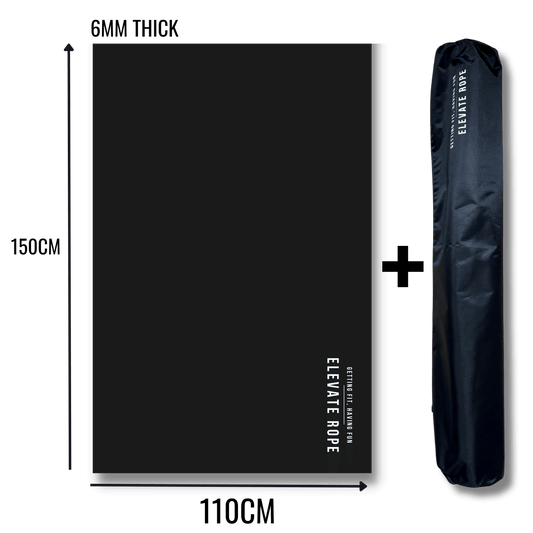
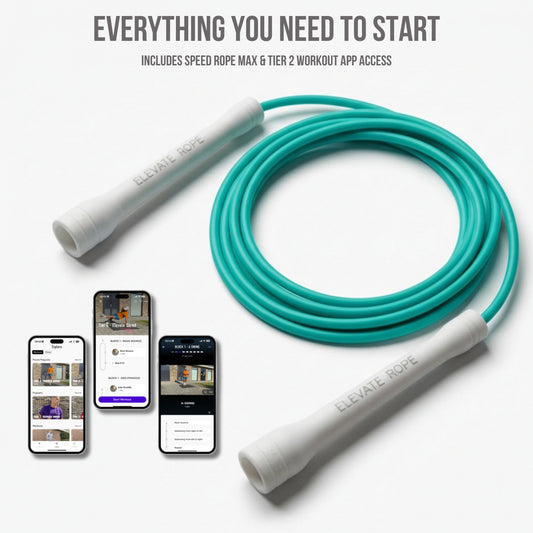
The beaded version suits cautious beginners. The beads give tactile feedback through your hands and arms. You feel the rope without watching it. Most jumpers train with earphones, so sound is not the goal. The feel is. A training mat under your feet softens each landing and spares your joints.
This is the gap the brand was built to fill. Weighted and ropeless options can feel advanced and risky at 55. A simple beaded jump rope asks less of you on day one. You keep full control of speed, height, and count. That control is what makes impact approachable.
Short answer: Low-impact exercise protects your joints, but high-impact work does more for bone density.
Why it matters: After menopause you need both, joint care and a real bone signal, in the right balance.
Best next step: Start gentle and learn the safe progression. → How to start jump rope after 50
What this means after menopause
After menopause, the calculation changes. Estrogen drops, and bone loss speeds up. High-impact exercise becomes more useful and more risky at once. With healthy bones, controlled impact is often a smart addition. With established osteoporosis, it can be unsafe.
This is why screening comes first. Talk to a doctor or physiotherapist before adding impact. Ask what your bones can handle today. If high-impact is off the table, low-impact and strength work still help. Our full safety guide on jump rope during menopause covers who should and should not jump.
The strongest plan rarely relies on one thing. Bone responds best to impact, strength, and balance combined. Impact sends the load signal. Strength builds the muscle that pulls on bone. Balance keeps you upright and fracture-free. A jump rope can cover the impact piece once you are cleared.
How to add impact without overdoing it
You do not need big jumps to start. Begin with low, soft hops. Land through the whole foot, knees easy. Add a few rope turns when you feel ready. Build the count slowly across weeks, not days.
Frequency matters more than long sessions. Short, regular bouts beat one hard effort a week. Two or three minutes a day is a real start. Rest days are fine, and sore joints are a signal to ease off. Let the habit grow before the volume does.
Identity carries this further than motivation does. You are not chasing a number on a scan. You are becoming a woman who loads her bones on purpose. A jump rope is simply where that habit lives. Our 10-jump method turns the research into a gentle routine.
Frequently asked questions
Is high-impact or low-impact exercise better for bone density?
High-impact wins for bone density, especially at the hip. Low-impact is gentler on joints but sends a weaker bone signal. The best plan blends both, once impact is safe for you.
Does jumping rope count as high-impact exercise?
Yes, a jump rope is high-impact because both feet leave the ground. The landing is what loads your bones. It is also controllable, so you can keep the force low while you learn.
Is low-impact exercise useless for bones?
No, low-impact exercise still supports your heart and joints. It just does less for bone density than impact work. Adding a few jumps gives your bones the stronger signal they need.
Can high-impact exercise be dangerous after menopause?
It can be, especially with established osteoporosis or a recent fracture. High-impact may be unsafe in those cases, so get cleared first. Read our jump rope safety guide before any impact.
How much high-impact exercise do bones need?
Bone responds to brief, repeated impact above its usual load. Short daily bouts of jumping are a research starting point. Your doctor and your body set the real limit. Build the volume slowly.
Why do swimmers have lower bone density?
Swimming is not weight-bearing, so bone sees very little load. Reviews find swimmers often match non-exercisers for bone density. Adding land-based impact helps protect their bones over time.
What is the easiest way to add impact safely?
A jump rope is one of the simplest, since you control height and count. Start on a training mat with low hops. Progress slowly and stop if anything hurts. See our guide to starting after 50.
Where to go next
Start with where your bones are today. If you are new to impact, get cleared, then begin gentle. The Beaded Rope with a training mat is the calm, controllable way in. It lets you add real impact in small doses.
For the full picture, the pillar guide ties bone density, balance, and strength together. → Jump Rope for Menopause. For a wider list of options, see our best exercises for bone density guide.
Then read the safety guide before your first session. → Is jump rope safe during menopause. Keep the promise to your bones. Build the impact slowly.
Sources
- Bone Health and Osteoporosis Foundation, Exercise for Strong Bones
- Harvard Health, The Best Exercises for Your Bones
- The Effect of High- and Low-Impact Physical Activity on Bone Mineral Density, a Literature Review
- Effects of Moderate- to High-Impact Exercise Training on Bone Structure Across the Lifespan, Journal of Bone and Mineral Research
- Exercise Interventions to Improve Bone Mineral Density in Low-Impact Sports, a Scoping Review
- The Association Between Different Impact Exercises and Osteoporosis, Taiwan Biobank
- High-Impact vs Low-Impact Exercise Definitions, ClinicalTrials.gov
- Tucker et al., Effect of Two Jumping Programs on Hip Bone Mineral Density, American Journal of Health Promotion
You May Also Like
→ Best Exercises for Bone Density After Menopause
→ Is Jump Rope Safe During Menopause? Who Should and Should Not
→ How to Start Jump Rope After 50 Without Hurting Your Joints