





A jump rope cable thickness guide starts with your training goal, not the largest number on a label. A thin cable may turn quickly. A thicker cable can feel more substantial. Beaded designs work differently because their plastic segments change drag and feedback.
Your rope should match your skill, rhythm, and preferred session. A 3 mm inner cord surrounded by beads behaves differently from a bare 3 mm cable. A 7 mm weighted cable also feels different from a 10 mm heavy option.
Diameter matters, but it never tells the whole story. Material, total mass, length, handles, and construction all change the experience.
What you will learn
- What cable diameter actually measures
- Why beaded cords need a separate comparison
- Where 5 mm speed and 7 mm weighted cables fit
- When 10 mm heavy training makes sense
- How to test equipment before buying
What Does Jump Rope Cable Thickness Actually Mean?
Cable thickness means the diameter of the moving cord or cable, usually measured in millimetres. On a plain PVC rope, that figure describes the cable itself. On a beaded rope, it usually describes the inner cord rather than the outside of the beads.
That difference matters when comparing jump rope specifications. Two products can have the same listed diameter and still move very differently.
Diameter is not the same as weight
A thicker cable may carry more mass, but diameter alone cannot prove that. Density, construction, and length affect total weight. A hollow cable and a solid cable can share a diameter without sharing the same feel.
Weight location also changes the experience. Mass in the moving cable feels different from mass in the handles. Ask where the weight sits before choosing a weighted rope.
Why material changes the answer
Flexible PVC, coated wire, and segmented beads have different shapes and properties. Cable thickness is only one part of their behaviour. The NASA drag equation explains why size, shape, and speed influence air resistance.
This does not mean a specific diameter guarantees a certain speed. Your turning technique and the complete build still matter.
Short answer: Jump rope thickness is a measurement, not a performance rating.
Why it matters: Two ropes with equal diameters can have different weight distribution, drag, and feedback.
Best next step: Compare material, construction, and length before trusting a millimetre number.
Around 3 mm With Beads: Control Before Speed
A beaded rope contains a flexible inner cord threaded through plastic segments. Some designs use an inner cord around 3 mm. Exact inner-cord specifications vary by model, and the visible beads create a much larger profile.
That is why a beaded rope should not be classified as a thin speed cable.
Why beads change the rotation
The beads increase the moving rope's profile. They create drag and give your hands a more noticeable sense of the rotation. Many beginners find this feedback useful while developing basic rhythm.

Beads can also make floor contact audible. The sound becomes another cue for timing, especially during controlled single jumps.
A study of jump rope training and coordination examined motor coordination in young soccer players. It supports practising rope skills, not claims that a particular bead size guarantees faster learning.
Who should choose a beaded design?
Choose a beaded rope when you want to learn the basic bounce, controlled side swings, or early freestyle. You can feel the rope position without chasing maximum speed.
If you keep catching your feet, also inspect your length and hand position. Beads help provide feedback, but they cannot correct every technique problem.
For the cord beneath the beads, read our 3.5 mm versus 3 mm polycord guide. Check your specific product page before treating either measurement as universal.
Explore Elevate beaded ropes for rhythm and tactile control.
5 mm PVC: Faster Cardio With a Clear Purpose
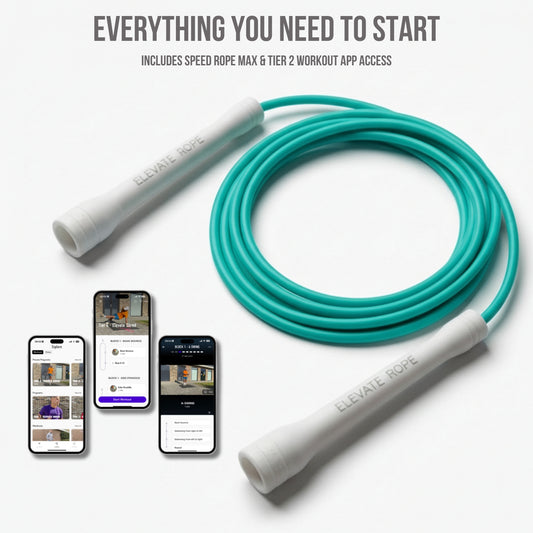
A 5 mm model uses a continuous cable instead of bead segments. Elevate Speed Rope MAX uses a flexible PVC cable with a nylon core. That construction is designed for repeatable turns and cardio sessions.
Compared with a segmented rope, the 5 mm cable usually feels less pronounced in motion.
What changes when you choose speed?
A speed rope suits repeated turns, conditioning intervals, and double-under practice. It can also reveal timing mistakes more quickly because the cable offers less obvious feedback.
Moving away from beads is not a required milestone. Some jumpers stay with freestyle and prefer beaded feedback. Others want faster conditioning and select a continuous cable.
When should you consider 5 mm?
Consider this cable once your single jumps feel controlled. Start with short intervals rather than immediately chasing higher speeds. Let consistent technique determine how much pace you add.
Check the handle mechanism too. Elevate uses bearing-free construction, while other designs include bearings. Neither approach guarantees better performance for every jumper.
A 5 mm speed rope should be chosen for its overall feel, not one feature alone. Browse Elevate speed ropes if faster cardio matches your current goal.
Short answer: A 5 mm cable can suit faster conditioning when your timing is already reliable.
Why it matters: The feel differs from beaded equipment during continuous rotation.
Best next step: Check cable length, grip, and intended drills before buying.
7 mm Weighted Cable: The Middle Option
A 7 mm weighted rope sits between a 5 mm speed cable and a 10 mm heavy cable. Elevate's TITAN 7MM places its added mass in the cable rather than the handles.
That makes it a distinct choice for people who want more resistance without immediately moving into heavy intervals.
Who benefits from moderate resistance?
A 7 mm weighted rope can suit experienced jumpers who enjoy a more noticeable cable during conditioning. It may also support controlled footwork sessions where feedback matters.
It is not automatically better than a lighter speed cable. Someone practising fast double unders may prefer less cable resistance. Someone seeking a stronger sense of each rotation may prefer the 7 mm feel.
Why handle length matters
The TITAN product information specifies 15 cm handles and bearing-free construction. Grip comfort and handle control still matter alongside thickness.
Begin with modest sets if the cable feels unfamiliar. Relax your shoulders and turn from your wrists. Stop when movement quality deteriorates.
Explore the TITAN 7MM weighted range for a moderate-resistance option.
10 mm Heavy Cable: Resistance Through Short Sets
A 10 mm heavy rope is a resistance tool, not a faster version of a speed cable. Elevate's Gravity Heavy range uses a thick PVC cable for more demanding conditioning.
The additional load can make upper-body fatigue noticeable sooner. This changes how you should structure a session.
Why intervals make sense
Start with controlled sets and enough rest to preserve technique. For example, try 30 seconds of movement followed by recovery. This is an illustration, not a universal training prescription.
The CDC's advice on starting small supports building activity gradually and choosing manageable effort. That principle matters when introducing heavier equipment.
Who should avoid starting heavy?
A first-time jumper should usually learn basic rhythm with less demanding equipment. A heavy rope adds resistance before timing feels predictable.
Heavy equipment also should not replace strength training. Use it to vary conditioning, not as proof that a thicker cable always creates a better session.
See Elevate heavy ropes for short resistance-focused sets.
Short answer: A heavy rope is generally better suited to controlled intervals than first-time technique practice.
Why it matters: Extra resistance can change fatigue and movement quality.
Best next step: Keep early heavy sessions brief and return to lighter equipment for technique work.
How to Choose Your Jump Rope Diameter Without Guessing
Choose according to the movement you want to repeat. Then inspect the feel, sizing, and training space. A simple decision process avoids buying equipment for a future version of yourself.
Step 1: Match the cable to your goal
| Main goal | Starting point | Main advantage |
| Learn rhythm | Beaded design with inner cord around 3 mm | Clear tactile feedback |
| Faster cardio | 5 mm PVC speed cable | Quicker repeated turns |
| Moderate resistance | 7 mm weighted cable | More noticeable cable load |
| Short resistance sets | 10 mm heavy cable | Higher-demand intervals |
These are starting points, not laboratory rankings. Two brands can use the same diameter with different materials and weights.
Step 2: Check length and rotation
An incorrectly sized rope can feel awkward at any thickness. Follow the manufacturer's sizing method before cutting. Begin slightly longer when unsure, since a trimmed cable cannot be restored.
Keep your elbows near your sides and your hands close to hip height. For step-by-step fitting, use our jump rope sizing guide.
Check the floor and overhead clearance too. Smooth, stable surfaces can support controlled practice. Rough ground may accelerate cable wear.
Step 3: Test without chasing a record
Try calm single jumps first. Notice whether you can sense the cable travelling around your body. Keep your wrists relaxed.
Record a short side-view clip if needed. Compare rope position, hand movement, and landing rhythm. Repeat in similar shoes and conditions.

If you trip repeatedly, correct length and timing before switching cable thickness. If your arms tire immediately, reduce the effort.
Step 4: Plan progression around your needs
You may keep one beaded rope for years. You may later add a speed cable for conditioning. Moderate resistance and heavy intervals remain optional tools.
A bigger number is not a badge of progress. Your best equipment is what supports the session you will actually complete.
Common Cable Thickness Mistakes
Jump rope specification charts can make diameter look like a universal skill ranking. It is not. These four errors cause unnecessary purchases and frustrating sessions.
Mistake 1: Comparing inner beaded cord with bare PVC
A cord beneath beads does not behave like a bare cable of the same diameter. The beads change its profile, drag, and floor contact. Compare complete designs, not isolated cord figures.
Mistake 2: Using heavy equipment every day
A heavy rope can make fatigue rise quickly. Save it for planned resistance intervals when your technique stays controlled. Use lighter equipment for easy practice when appropriate.
Mistake 3: Treating long handles as a beginner fix
Long handles support many freestyle crosses and releases. They do not automatically fix poor sizing or timing. Standard handles may feel simpler while learning the basics.
Mistake 4: Believing one specification predicts results
No diameter guarantees fewer trips or better fitness. Skill, practice, and construction all contribute. Judge a rope by the movement it supports.
Choose the Cable You Can Use Well
The practical answer is simple. Beaded designs support early control. Five-millimetre speed cables suit faster conditioning. Seven-millimetre cables offer moderate resistance. Ten-millimetre heavy cables belong in more demanding, shorter sessions.
You do not need the largest cable or the fastest handles. You need equipment that matches what you practise today.
For a broader purchase checklist, explore our complete jump rope buying guide. Choose the tool you can return to consistently. Each controlled session becomes another promise kept.
Watch Geraldo Alken practise beginner jump rope combinations and controlled timing before moving into faster rope work.
Frequently Asked Questions
Is a thicker jump rope better for beginners?
Not automatically. Beaded equipment can help beginners feel where the rope is during each turn. A thicker plain cable does not provide exactly the same experience. Begin with a jump rope offering manageable feedback and correct sizing. Then use short practice sessions to develop rhythm before adding more resistance or speed.
What does 5 mm mean on a speed cable?
It usually describes the outside diameter of the moving cable. It does not identify total rope weight, cable density, or handle construction. Two 5 mm designs can feel different because their materials and lengths differ. Check the complete jump rope specifications before deciding whether either model suits your cardio or skill goals.
Is a 7 mm weighted rope too heavy for cardio?
Not necessarily. The answer depends on cable construction, your current fitness, and your experience. A moderate-weight rope can be useful for controlled conditioning, but it is not essential for cardio. Start with manageable sets and watch your movement quality. Choose a lighter cable if resistance disrupts your timing.
Can I learn double unders with a beaded rope?
You can practise basic rhythm, coordination, and the movement pattern with beads. A lighter speed-focused cable may feel more practical for repeated fast rotations. There is no fixed deadline for switching equipment. Build consistent single jumps first, then introduce double-under attempts when your technique and confidence support them.
Should I use a 10 mm heavy cable every day?
A 10 mm heavy cable is usually better treated as a resistance-focused training option. For many jumpers, short intervals are more manageable than long continuous sets. Keep enough recovery between efforts and stop when your form declines. Everyday technique work may feel better with lighter, easier-to-control equipment.
Does jump rope cable thickness affect tripping?
It can change the cable's feel, but tripping has several possible causes. Rope length, wrist timing, hand position, and jump height also matter. Check those details before buying something thicker. A different diameter may improve feedback, but it cannot replace a repeatable rhythm and a well-fitted rope.
About Elevate Rope
Elevate Rope helps people build movement habits through simple, repeatable practice. Founder Geraldo Alken creates tutorials and works with jumpers across skill levels. Our philosophy is that progress starts with small promises you can keep. Together We Elevate.