





Effective weight loss management isn't built on a single dramatic change — it's built on small, repeatable habits you barely notice after a few weeks. The people who lose weight and keep it off aren't grinding through extreme diets. They've quietly installed daily routines that make healthy choices the default instead of the exception.
A 2024 review from the Harvard T.H. Chan School of Public Health found that regular meal timing helps regulate blood sugar, curb late-day hunger, and create predictable appetite signals — three foundations of long-term weight loss management. When those signals become consistent, your body starts working with you instead of against you.
This guide walks through seven daily habits that support real, lasting weight loss management — the kind that doesn't unravel the moment life gets busy.
What You'll Learn
- Why daily routines outperform willpower for long-term weight loss management
- The role of meal timing, hydration, and sleep in managing your weight
- How much physical activity actually moves the needle
- When GLP-1 medications fit into a weight management plan
- How to build habits that survive stress, travel, and busy weeks
Why Small Daily Habits Beat Big Dramatic Changes
Most people approach weight loss management like a sprint — aggressive calorie cuts, two-hour gym sessions, eliminating entire food groups overnight. It works for a few weeks. Then life happens, and the whole system collapses.
The World Obesity Federation has reported that people who maintain consistent daily routines are significantly more likely to keep weight off for five years or longer. Why? Because routines remove the constant decision-making that drains willpower. When your breakfast is automatic, your walk is scheduled, and your bedtime is non-negotiable, there's nothing left to "decide." The healthy choice is just what you do.
This is the core insight behind sustainable weight management: you're not trying to willpower your way to a smaller body. You're designing a daily life that naturally produces one.
Short answer: Daily routines outperform motivation because they remove decision fatigue.
Why it matters: Willpower is a limited resource; habits are infinite. Weight loss management only works long-term when healthy choices stop requiring effort.
Best next step:Pick one habit from this list. Install it for 14 days before adding another.
Habit 1: Eat on a Schedule, Not an Impulse
Meal timing is one of the most underrated tools in weight loss management. Your body doesn't just respond to what you eat — it responds to when you eat it. Research in Cell Metabolism has shown that people who eat their meals within a consistent 10–12 hour window tend to have better insulin sensitivity, lower body fat percentages, and fewer late-night cravings than those who graze unpredictably from morning to midnight.
You don't need a rigid military schedule. But aiming for breakfast, lunch, and dinner within the same two-hour windows each day trains your hunger hormones to fire predictably. That predictability is the backbone of sustainable weight loss management — it's what kills the 9 PM pantry raid.

Habit 2: Drink Water Before You Reach for Food
Thirst and hunger share the same brain signal. A European Journal of Clinical Nutrition study found that drinking 500 ml of water 30 minutes before meals led to roughly 2 kg (4.4 lb) more weight loss over 12 weeks compared to groups that didn't.
The habit is simple: glass of water first thing in the morning, glass before each meal, and a bottle within arm's reach during work hours. It's not magic. It's a small weight loss management lever that removes the false hunger signals pushing people into unnecessary snacking.
Habit 3: Move Every Single Day — Even a Little
Daily movement is non-negotiable for weight loss management, but it doesn't have to mean a gym session. A study published in Nature Medicine found that frequent moderate-intensity activity improves insulin sensitivity and energy balance — even when the total volume is modest.
Health authorities recommend 150 minutes of moderate activity per week — that's about 22 minutes per day. Brisk walking counts. Cycling counts. Ten minutes of jump rope counts for more than you'd think: Arizona State University research shows 10 minutes of rope work delivers cardiovascular benefits comparable to 30 minutes of jogging.
If you're looking for a low-barrier way to hit daily movement, a jump rope sits by your door and takes no setup. Our → Beaded Ropes Collection is built specifically for beginners who want steady, reliable spin and faster rhythm development.
Habit 4: Sleep Like Your Waistline Depends on It (Because It Does)
Sleep deprivation wrecks weight management more thoroughly than almost any other single factor. When you sleep fewer than 7 hours, ghrelin (the hunger hormone) rises and leptin (the fullness hormone) drops. The result: you wake up hungrier, crave higher-calorie foods, and have less energy to move.
Research from the American Journal of Clinical Nutrition has consistently shown that adults who sleep 7–9 hours per night lose more fat and retain more lean muscle during weight loss programs than those who sleep less. Protecting your sleep isn't self-care theatre — it's arguably the highest-leverage habit in any weight loss management plan.
Habit 5: Build Protein Into Every Meal
Protein does three useful things at once for weight loss management: it keeps you full longer, it protects muscle mass during a calorie deficit, and it has the highest thermic effect of food (meaning your body burns more calories digesting it).
Aim for 25–35 g of protein at each main meal — eggs, Greek yogurt, chicken, fish, tofu, legumes. This single habit reduces snacking more than almost any restriction-based rule because your body simply doesn't demand food as often.
Short answer: Protein + water + consistent meal timing kills most cravings before they start.
Why it matters: Most "willpower failures" are actually hunger-hormone failures. Fix the inputs, and the urges shrink.
Best next step:Add 25 g of protein to breakfast tomorrow and track how your 3 PM cravings change by Friday.
Habit 6: Manage Stress Before It Manages Your Plate
Chronic stress elevates cortisol, which drives visceral fat storage and triggers cravings for high-sugar, high-fat foods. You can eat perfectly and still struggle with weight loss management if your stress levels are running at red-line for months on end.
Daily stress-management doesn't require a meditation retreat. Ten minutes of breathwork, a walk outside without your phone, journaling for five minutes before bed — any of these consistently applied will lower cortisol enough to matter for your weight loss management progress.
Habit 7: Know When to Consider Medical Support
Sometimes lifestyle changes alone aren't enough — especially for people with significant weight to lose or underlying metabolic conditions. GLP-1 medications (like semaglutide and tirzepatide) mimic a natural hormone that regulates appetite, slows gastric emptying, and stabilizes blood sugar, giving weight loss management a chemical assist when willpower and habits hit a ceiling.
A 2024 review published in JAMA Network Open found that GLP-1 therapies meaningfully reduce calorie intake by increasing satiety. These medications aren't a shortcut — they're most effective when combined with the lifestyle habits in this article, not as a replacement for them.
If you're considering medical options, have the conversation with your GP rather than self-directing. Combining a prescribed GLP-1 with consistent daily habits is where most of the long-term success stories come from.
How to Actually Install These Habits (Without Burning Out)
The mistake nearly everyone makes with weight loss management is trying to change seven things at once. Two weeks in, they're exhausted, and the whole plan falls apart.
Instead, stack habits one at a time. Start with sleep or water — the lowest-friction ones. Let it become automatic for two weeks. Then add movement. Then meal timing. Within 3–4 months, all seven habits are quietly running in the background, and your weight management stops feeling like a project and starts feeling like your life.
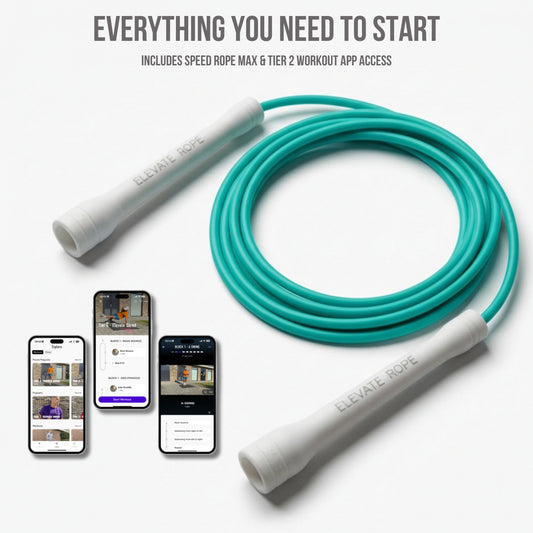
For anyone building out the movement piece, a structured starting point helps. Our → Bundles Collection pairs a beginner rope with a progression rope so you're never stuck at one skill level. The Elevate Rope app also includes 100+ free workouts, so "what do I do today?" is never a reason to skip.

Frequently Asked Questions
How long does it take to see results from daily weight loss management habits?
Most people notice changes in energy, sleep quality, and cravings within 2–3 weeks. Visible weight changes typically start around week 4–6 with consistent daily routines. The slower the loss, the more likely it stays off.
Is walking enough exercise for weight loss management?
For many people, yes — especially when combined with dietary habits. 30–45 minutes of daily brisk walking creates a meaningful calorie deficit. Adding short bursts of higher-intensity work like jump rope accelerates results without requiring hours more time.
Do I need to count calories for effective weight loss management?
Not necessarily. Most people achieve sustainable weight loss management through habit-based changes (meal timing, protein, hydration, sleep) rather than strict tracking. Counting can help for 2–4 weeks early on to build awareness, but long-term success usually comes from structure, not spreadsheets.
Can I combine GLP-1 medications with daily lifestyle habits?
Yes — and most clinicians recommend it. GLP-1 medications work best alongside consistent nutrition, movement, and sleep habits. The medication handles appetite; the habits handle the rest.
What's the single most important habit for weight loss management?
Sleep. It's the habit people most often skip and the one with the biggest downstream impact on hunger hormones, energy, cravings, and recovery. Fix sleep first, and every other habit gets easier.
How do I stay consistent when life gets busy?
Shrink the habit, don't skip it. A 10-minute walk beats a skipped workout. A glass of water beats "I'll hydrate tomorrow." Consistency at 70% beats perfection at 0% every single time.
Your Next Step
Weight loss management isn't a 12-week program — it's a way of living that you gradually install and never uninstall. Pick one habit from this list. Not three. One. Run it for two weeks. Then add the next.
If daily movement is your missing piece, start with something low-friction and sustainable. Our → Beaded Ropes Collection is built for beginners who want consistent rhythm without tripping every third swing. If you're further along and want to break a plateau, the → TITAN 7MM Weighted Rope adds resistance that compounds your calorie burn in the same 10-minute window.
Whatever you pick — just start. The habit compounds faster than you expect.
Sources
- Harvard T.H. Chan School of Public Health — Healthy Weight and Meal Timing Research (2024)
- World Obesity Federation — Long-Term Weight Maintenance and Daily Routine Data
- Nature Medicine — Moderate-Intensity Activity, Insulin Sensitivity, and Energy Balance
- JAMA Network Open — GLP-1 Therapies and Caloric Intake Review (2024)
- Cell Metabolism — Time-Restricted Eating and Metabolic Health Studies
- American Journal of Clinical Nutrition — Sleep Duration and Fat Loss Research
You May Also Like
- Jump Rope Calories Burned: The Complete Guide
- 10-Minute Workouts: The Science Behind Why Short Sessions Work Better
- Cardio at Home: The Ultimate No-Gym Workout Guide for Weight Loss
- Why You're Not Losing Weight: The Exercise Consistency Problem
- How to Lose Weight Without Running: 7 Proven Cardio Alternatives