





This 30 day jump rope challenge for women in menopause is not about weight. It is about one promise, kept daily, to the body you live in. That shift changes everything.
Most challenges fail because they chase a number on a scale. This one chases something steadier. You are not trying to shrink. You are becoming a woman who shows up for her own bones.
The plan is gentle by design, and it fits inside our hub on jump rope for menopause. Thirty days is not a finish line. It is long enough to prove to yourself that the habit is yours. Thirty days of a daily jump rope habit is a real foundation.
What You'll Learn
→ Why a 30-day challenge beats a vague intention to move more → How an identity-first approach changes what success means → What each week of the challenge looks like, step by step → Which rope and setup keep the month gentle on your joints → How the free Elevate26 programme gives you a daily plan → Where to go on day 31, so the habit outlives the challenge
Why 30 Days, and Why It Is Not About Weight
A month is a useful unit. It is long enough to build a rhythm, and short enough to feel possible. Thirty days gives you a clear start, a middle, and a finish to aim at. A short jump rope session each day is enough to anchor the promise.
Research on habit formation is honest about the timeline. A well-known study found that new habits took a median of 66 days to feel automatic. So treat 30 days as a strong beginning, not a magic cure.
The point is not to transform your body in a month. The point is to prove you can keep a daily promise. That proof is what carries the habit into month two and beyond.
Weight is the wrong target here, for good reasons. Menopause changes your body in ways a scale cannot capture fairly. Chasing a number often ends in frustration and quitting.
Bones respond to a different measure entirely. They reward repeated, gentle impact over months, not crash efforts over days. A daily jump rope habit speaks their language far better than any diet sprint.
So we measure success by attendance, not appearance. Did you show up and jump today? That is the only scoreboard this challenge uses.
This framing is kinder, and it is also more effective. When you stop policing your body, you free up energy to simply keep going. Consistency, not intensity, is what protects your skeleton.
The Jump Rope Challenge, Week by Week
The plan starts small on purpose. You are teaching your body a new signal, gently. Each week adds a little, guided by how you feel, never by force.
Week one is about landings and the daily cue. You do a few short sets of ten soft jumps. The goal is to show up, not to sweat.
Week two builds rhythm. You add a set or two, and maybe a second short session. Your timing steadies, and the movement starts to feel familiar.
Week three grows your confidence and total time. Rests shorten a little, and the sets add up. You are jumping longer, still landing softly.
Week four consolidates the habit. By now the daily jump rope session feels like part of your routine. You celebrate the streak, not a number on a scale.
| Week | Daily jumping (guide) | Focus |
| 1 | 2 to 3 sets of 10 gentle jumps | Soft landings and the daily cue |
| 2 | 3 to 4 sets of 10 to 15 jumps | Steady rhythm, optional second session |
| 3 | 4 to 5 sets, shorter rests | Confidence and longer total time |
| 4 | 5+ sets, or 8 to 10 minutes total | Consolidate the habit, mark the streak |
Treat every number as a guide, not a rule. Repeat a week if you need to. The pace that lasts is the one you set yourself.
Short answer: The challenge starts with a few sets of ten gentle jumps, then builds slowly across four weeks.
Why it matters: A gentle onramp protects your joints and your confidence at once. Small daily wins are what turn a challenge into a habit.
Best next step: Learn the core move first with our gentle 10-jump bone-building routine.

Your Setup for the Month
Before day one, make sure impact suits you. Our jump rope safety guide for menopause explains who should check with a doctor first. Clear that step, then set up with confidence.
Your kit for the month is refreshingly simple. You need a rope you can control and a soft place to land. Nothing else is essential.
For the rope, choose a beaded one. Its beads add gentle weight, so you feel the rope through your hands and arms. That tactile signal keeps your timing steady, without relying on sound.
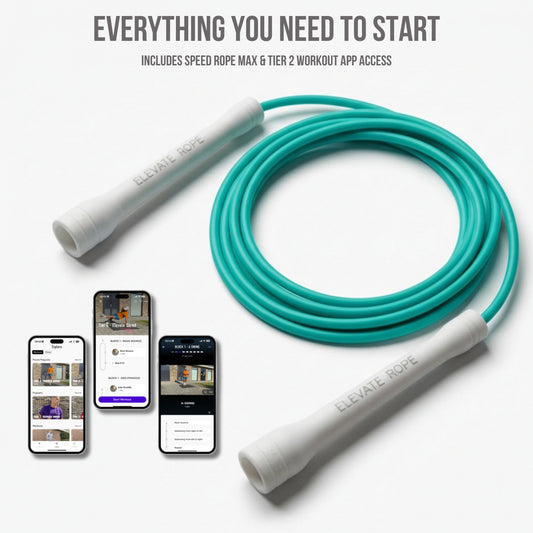
The beaded jump rope range adjusts to 3 metres and sizes with scissors in about a minute. The slower, controllable swing is ideal for a careful start. It forgives the wobbles of week one.
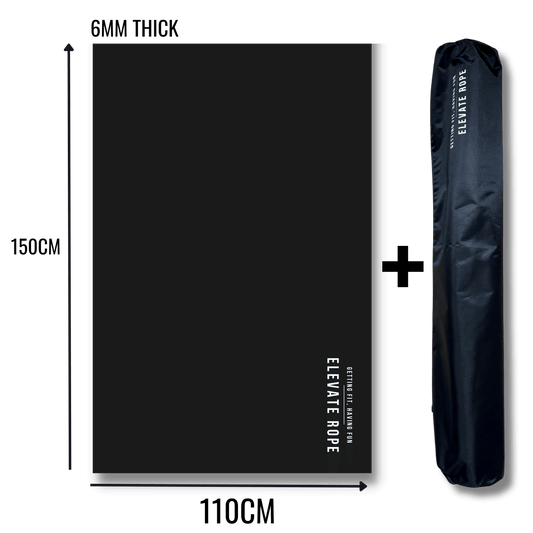
Add a soft surface next. A jump rope training mat cushions each landing and protects your knees. It also guards your floor and helps the rope last longer.
That is the whole setup. A beaded rope, a mat, and a clear place to stand. Simple kit removes excuses, which is exactly what a 30-day promise needs.
Short answer: You need only a beaded jump rope and a cushioned mat to run the full challenge.
Why it matters: A simple, joint-friendly setup keeps the focus on showing up. Fewer moving parts means fewer reasons to skip a day.
Best next step: Still choosing gear? See our guide on the best jump rope for women over 50.
How Elevate26 Carries You Day by Day
Willpower fades, so structure has to carry the load. This is where a guided plan earns its place. You should never have to guess what today's session is.
Our free Elevate26 programme gives you exactly that. It is a guided, follow-along plan that anchors your daily jump rope habit. Every session includes gentle, low-impact options you can lean on.
The programme is built around habits, not weight targets. It tracks your streak and keeps the daily promise visible. That visible momentum is often what gets you onto the mat. Each day's jump rope session is short, guided, and clearly laid out.
You are not doing this alone either. Elevate26 connects you to a community on the same path. Shared wins and quiet accountability make hard days easier.
It costs nothing to join, which matters more than it sounds. A rival app charges around 150 euros a year for similar structure. The free plan removes one more reason to hesitate.
As the programme itself advises, check with your doctor before starting any new exercise. Use the low-impact modifications freely, and the recovery days when you need them. Listening to your body is part of the plan, not a detour from it.
Short answer: Elevate26 is a free, guided daily plan that removes the guesswork from your 30-day challenge.
Why it matters: Structure beats motivation, especially on tired days. A plan you can simply press play on keeps the streak alive.
Best next step: Join the free Elevate26 challenge and let it guide your first month.
Staying on Track When Motivation Dips
Every challenge has a wall, usually somewhere around week two or three. Knowing it is coming helps you plan for it. The trick is to lower the bar, not abandon it.
On hard days, shrink the session, do not skip it. Ten jumps still count and still keep the streak alive. A tiny promise kept beats a big one broken.
Talk to yourself the way you would a friend. A missed day is a data point, not a verdict on your character. You simply begin again tomorrow, without the guilt tax.
Anchor the habit to something you already do. Jump after your morning tea, or before your evening shower. Habits stick when they lean on an existing cue rather than willpower.
Keep your jump rope somewhere you cannot miss it. A rope left by the door is a nudge you see daily. Out of sight is too often out of mind.
Remember why you started, on the days it feels dull. You are protecting the body that carries you through the next decades. That is a promise worth keeping, even in ten-jump doses.

Day 31 and Beyond
Day 31 is the real test, and it is a simple one. You jump again. The challenge exists to build the habit, not to end it.
Keep the same gentle rhythm you have earned. Your jump rope stays part of the day, the same as brushing your teeth. There is no need to chase bigger numbers now. Steady, repeated impact is what keeps supporting your bones.
When you want variety, add it slowly. A little new footwork keeps the sessions fresh. Our guide on staying consistent through menopause shows how to grow without losing the habit.
You have proven something these 30 days. You are a woman who keeps promises to her own body. That identity, not any single month, is what protects you for the long run.
Short answer: On day 31, you jump again, because the challenge was always about building a lasting habit.
Why it matters: The bone benefit comes from months and years, not a single month. Continuing is the whole point of starting.
Best next step: Plan your next phase with our guide on staying consistent through menopause.
Frequently Asked Questions
Is a 30-day jump rope challenge safe during menopause?
For many healthy women, yes, when it starts gently and builds slowly. The main caution is a bone diagnosis, so check with your doctor if you have one. Read our jump rope safety guide before day one.
How long should I jump each day during the challenge?
Start with just a few sets of ten gentle jumps in week one. Build toward roughly eight to ten minutes total by week four. Let how you feel set the pace, not the calendar.
Will 30 days of jump rope change my bone density?
Not on its own, and no honest plan would promise that. Bone responds to gentle impact over months, so 30 days is a strong start. The real value is the daily habit you build for the long term.
Do I need to follow a strict diet for this challenge?
No, and this challenge deliberately avoids diet rules and numbers. The goal is a movement habit, not restriction. Focus on showing up daily, and treat food as fuel, not punishment.
What if I miss a day?
You simply begin again the next day, without guilt. One missed session does not undo your progress. Consistency over the month matters far more than a perfect streak.
Is the Elevate26 programme really free?
Yes, the digital Elevate26 plan is free to join. It gives you guided daily sessions, tracking, and a community. You can start it with any rope you already own.
Can complete beginners do this challenge?
Yes, the plan is built for beginners over 50. Week one uses short, gentle sessions with soft landings. Every step includes lower-impact options you can adjust to your body.
Your Next Step, Based on Where You Are
If you are ready to begin, keep it simple and gentle. A beaded rope and a soft mat are all you need for the full month. Size the rope, unroll the mat, and jump ten times today.
If you want structure to carry you, lean on the free plan. The Elevate26 programme hands you a guided daily session and a community for the whole challenge. You press play, and the guesswork disappears.
When you reach day 31, do not stop. Keep the promise, and let the habit become simply what you do. Our guide on staying consistent through menopause shows the way forward. The goal is a kept promise, repeated, that protects the body you live in. Keep the promise. Elevate the rest.
Sources
- Lally P, et al. How are habits formed: Modelling habit formation in the real world, European Journal of Social Psychology, 2010: https://onlinelibrary.wiley.com/doi/10.1002/ejsp.674
- Tucker LA, et al. Effect of two jumping programs on hip bone mineral density in premenopausal women, American Journal of Health Promotion, 2015: https://pubmed.ncbi.nlm.nih.gov/24460005/
- Montgomery G, et al. Feasibility of a jumping intervention for postmenopausal women, randomized controlled study: https://pmc.ncbi.nlm.nih.gov/articles/PMC10664055/
- Brooke-Wavell K, et al. Strong, Steady and Straight: UK consensus statement on physical activity and exercise for osteoporosis, British Journal of Sports Medicine, 2022: https://pmc.ncbi.nlm.nih.gov/articles/PMC9304091/
- Royal Osteoporosis Society, Exercise for bone health: https://theros.org.uk/information-and-support/bone-health/exercise-for-bones/
- International Osteoporosis Foundation, Exercise for individuals with osteoporosis: https://www.osteoporosis.foundation/health-professionals/prevention/exercise/exercise-individuals-with-osteoporosis
- Hospital for Special Surgery, Why jumping rope is the ideal post-menopausal workout for your bones: https://news.hss.edu/why-jumping-rope-is-the-ideal-post-menopausal-workout-for-your-bones-according-to-an-exercise-scientist/
You May Also Like
→ The 10-Jump Method: A Gentle Bone-Building Routine
→ How to Start Jump Rope After 50 Without Hurting Your Joints
→ Is Jump Rope Safe During Menopause? Who Should and Should Not
→ The Best Jump Rope for Women Over 50