





Jump rope for menopause sounds like the last thing your body wants. Yet a jump rope may be one of the few exercises your bones are asking for. After 45, estrogen falls, and bone loss can speed up fast. The years right around menopause are often the steepest decline a woman ever faces.
Here is the part nobody tells you. Bone responds to load. Gentle, controlled impact is a signal that tells your skeleton to hold on to what it has. A jump rope delivers that signal in a small, repeatable dose you can do at home. No gym, no class, just a jump rope and a few minutes.
This guide is the hub for our full menopause and bone health series. It covers what menopause does to your bones, and what the research on jumping shows. It also covers who should check with a doctor first, and how to start safely. No hype. Just what is true, and what you can do with it.
What you will learn
→ Why bone loss accelerates around menopause, and what estrogen has to do with it→ How weight-bearing impact tells your bones to stay strong→ What controlled trials found when women jumped a small amount each day→ How jump rope compares with walking, jogging, and swimming for bone health→ Who should speak to a doctor before starting any impact exercise→ A gentle, identity-first way to begin without hurting your joints
What menopause does to your bones
Estrogen does more than regulate your cycle. It helps protect bone by keeping the breakdown of old bone in balance with the building of new bone. When estrogen drops through menopause, that balance tips. Breakdown starts to outpace formation.
The result is a faster loss of bone mineral density. Bone-health research indicates women can lose a meaningful share of their bone density in the years following menopause. That loss is quiet. You cannot feel it happening. That is why many women only learn of it after a scan or fracture.
Lower bone density matters because it raises the risk of breaks. A fall that once meant a bruise can later mean a fractured hip or wrist. The hip and femoral neck are common sites of concern. The femoral neck is the narrow part near the top of the thigh bone.
The encouraging part is that bone is living tissue. It rebuilds in response to what you ask of it. The Hospital for Special Surgery notes a hopeful point. Strength and jump training in midlife can support bone density and muscle mass. Your skeleton can still adapt. It just needs the right kind of stress.
Short answer: Estrogen protects bone, and its decline after menopause speeds up bone loss.
Why it matters: Weaker bones raise fracture risk. The years right after menopause are often the fastest loss.
Best next step: Add a small dose of weight-bearing impact your body can adapt to. Do it once your doctor has cleared you.
Why impact is the signal your bones need
Bones grow stronger the way muscles do. They adapt to load. When your feet strike the ground, the impact sends force up through your skeleton. Cells called osteoblasts read that force as a cue to build.
This is why weight-bearing movement matters more for bone than gentle, non-impact activity. Swimming and cycling are wonderful for the heart. They do not load the skeleton the same way, because your body weight is supported. For bone, the ground contact is the point.
Jump rope sits in a useful spot here. Each small hop is a controlled impact, repeated in a steady rhythm. You are not leaping high. You are clearing a thin cord by a few centimetres. That keeps the load meaningful for bone while staying gentle on the body.

Controlled, not chaotic
The word impact can sound alarming after 45. It helps to separate two things. Uncontrolled impact, like an awkward landing, is a risk. Controlled, low-height impact that you can repeat with good form is the kind of signal bone responds to well.
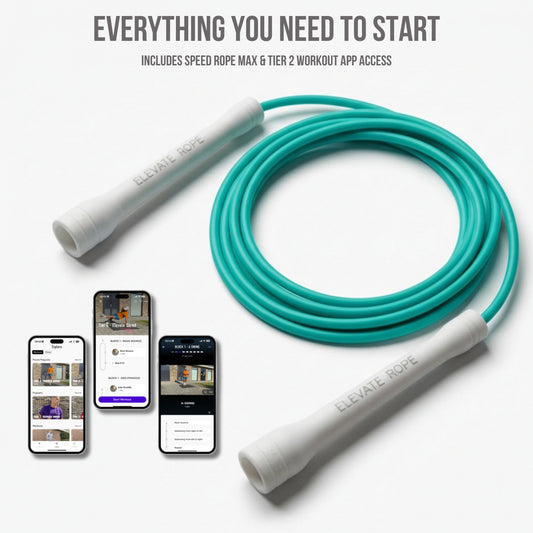
A beaded jump rope makes that control easier. The beads give steady tactile feedback through your hands and arms. You feel where the rope is, and you keep a slow, learnable pace. That feedback is why many beginners stop tripping within days. You can explore a beaded rope built for control as your starting point.
What the research actually says about jumping and bone
This is where honesty matters more than marketing. The evidence for jumping and bone is real, and it is also specific. Most of the strongest trials studied premenopausal women. The gains were site-specific, showing up mainly at the hip.
One randomized controlled trial followed 60 women aged 25 to 50. They jumped either 10 or 20 times, twice a day, with 30 seconds of rest between jumps. After 16 weeks, both jumping groups improved hip bone density. The women who did not jump lost bone density over the same period.
A 2014 meta-analysis reached a similar conclusion. Jumping exercise improved bone density in premenopausal women, with the clearest benefit at the hip. A later review looked at brief jump protocols, often 10 to 100 jumps a day. It found femoral neck gains of roughly 0.6 to 3.4 percent.
For women past menopause, the picture is more modest. Bone responds less readily once estrogen has declined, so the gains tend to be smaller. The value shifts toward protection and slowing loss. That is strongest when impact work is paired with resistance training, protein, and calcium. This is a realistic promise, not a miracle one.
Short answer: Brief daily jumping has been shown to support hip bone density in controlled trials.
Why it matters: The strongest evidence is in premenopausal women. Gains after menopause are smaller but still protective.
Best next step: Start with a gentle beaded rope and a handful of low jumps, not a long workout.
How jump rope compares for bone health
No single exercise is the whole answer. Still, it helps to see where a jump rope fits among the options women reach for after 45. The table below is a general guide, not a prescription.
| Activity | Bone stimulus | Joint load | Learning curve | Fit after 45 |
| Walking | Low | Low | None | Gentle baseline, limited for bone |
| Jogging | Moderate to high | Higher on knees | None | Good stimulus, watch the joints |
| Swimming | Minimal | Very low | Low | Great cardio, little for bone |
| Cycling | Minimal | Low | Low | Heart yes, bone no |
| Jump rope | High, controlled | Moderate, adjustable | Short with a beaded rope | Strong fit when started gently |
Jump rope also gives you a cardio return for a small time cost. Research has shown rope can deliver meaningful cardiovascular gains in a fraction of the time of steady jogging. For a busy week, a few short sessions can do real work.
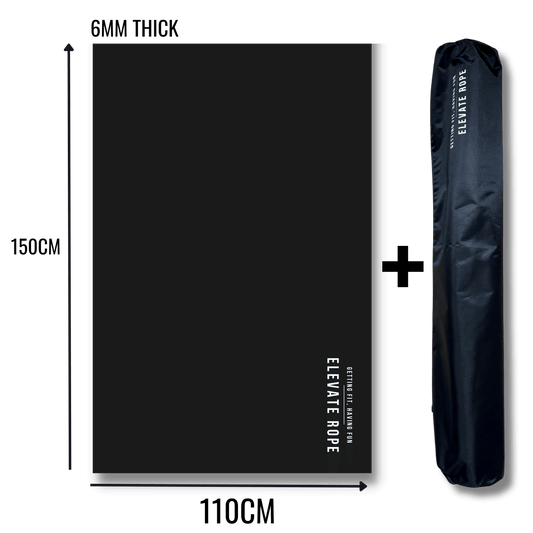
One simple way to protect your knees and floor is a cushioned surface. A jump rope mat for joint support softens each landing and keeps the rope in good shape for longer.
Beyond bone: balance, coordination, and staying steady
Bone density is only half of fracture risk. The other half is falling in the first place. This is where rope quietly earns its place in a midlife routine.
Skipping trains timing, rhythm, and foot placement. You learn to react, land softly, and stay coordinated under a light, repeated demand. Those are the same skills that help you catch yourself on an uneven kerb or a wet floor.
There is a focus benefit too. A jump rope asks for your attention in the present moment. Many women describe the rhythm as a short mental reset, a few minutes where the to-do list goes quiet. Stronger bones and steadier balance, built in ten minutes a day, is a fair trade.

Is jump rope right for you? Read this first
Jump rope suits many women in midlife. It does not suit everyone, and that honesty is the point. This guide is educational, and it is not medical advice. Please treat the next paragraph as a real gate, not a formality.
Speak to a doctor or physiotherapist before you start impact exercise if any of these apply to you:
A diagnosis of osteoporosis or osteopenia, a recent fracture, ongoing back or joint pain, balance problems, or pelvic floor concerns. High-impact movement can be unwise with established osteoporosis, so personalised guidance comes first. If you are cleared to jump, start lower and slower than you think you need to.
For most women without those flags, the safest path is a gentle start. A few low jumps, good shoes, a cushioned surface, and patience. Our full eligibility guide walks through who should and should not jump in detail. Read is jump rope safe during menopause before your first session.
Short answer: Jump rope works for many women in midlife, but some conditions need a doctor's sign-off first.
Why it matters: Established osteoporosis, recent fractures, or pelvic floor issues can make high impact unwise without guidance.
Best next step: Read the full eligibility guide, then begin with a small, gentle dose.
How to start: small, steady, and yours
The goal is not to become a person who jumps for an hour. The goal is to become a woman who keeps a small promise to her own body, most days. That identity is what makes the habit stick long after motivation fades.
Begin with the rope and the surface. A beaded rope gives you the feedback to learn quickly, and a mat protects your joints from the floor. You can see the full range in the beaded rope collection if you want to compare colours and lengths.
Then start tiny. Think in the language of the research. A handful of low jumps, a short rest, and a second small set later in the day. Build from there only when it feels easy. Our gentle bone-building routine lays out a simple ten-jump method you can follow from day one.
Consistency beats intensity here. Ten honest minutes, repeated, does more for your bones and your balance than a hard session you dread and skip. Small and kept is the whole strategy.
Frequently asked questions
Is jump rope safe after menopause?
For many women it is, when started gently and built up slowly. It is not safe for everyone. If you have osteoporosis, a recent fracture, or pelvic floor concerns, speak to a doctor or physiotherapist first. Read our full safety guide before you begin.
Can jump rope really help bone density?
Controlled trials show brief daily jumping can support hip bone density, with the strongest evidence in premenopausal women. After menopause the gains are smaller, so the main value is protecting bone and slowing loss. It works best alongside resistance training and good nutrition.
How many jumps a day do I need for bone health?
In the research, women saw hip benefits from as few as 10 to 20 jumps, twice a day. The point is a small, repeated impact, not a long workout. Start lower than that if you are new, and build slowly.
Will jumping hurt my knees?
Controlled, low-height jumps are gentle on the joints for most people. A cushioned mat and supportive shoes lower the load further. If you have ongoing knee pain, clear it with a professional before starting.
What is the best jump rope for a beginner over 50?
A beaded jump rope is the kindest place to start. The beads give tactile feedback through your hands and arms. You feel the rhythm and keep a slow, learnable pace. See our buyer's guide for women over 50.
How long until I see results?
Bone changes are slow and measured over months, not weeks. Coordination, balance, and cardio fitness improve sooner, often within the first few weeks. A short jump rope session most days is what turns small efforts into lasting change.
Explore the full Menopause & Bone Health series
Where to go from here
If you are brand new to a jump rope, start with a beaded rope and a mat. The beaded rope teaches your body the rhythm with steady feedback. The mat keeps your knees and floor protected. That pairing removes the two things that make most beginners quit.
If you want a plan, not a rope alone, follow the gentle routine first. Look at the 30-day challenge once jumping feels natural. The series above moves in order. It runs from understanding the changes to building a steady habit you can keep.
Your bones have decades of work left in them. The aim is not a dramatic transformation. It is a small, repeatable promise you keep to your own body, on the ordinary days. That is where strength is built.
Keep the promise. Elevate the rest.
Sources
- Hospital for Special Surgery. Why Jumping Rope Is the Ideal Post-Menopausal Workout for Your Bones. news.hss.edu
- Tucker LA, Strong JE, LeCheminant JD, Bailey BW. Effect of Two Jumping Programs on Hip Bone Mineral Density in Premenopausal Women: A Randomized Controlled Trial. American Journal of Health Promotion, 2015. journals.sagepub.com
- Zhao R, et al. Efficiency of jumping exercise in improving bone mineral density among premenopausal women: a meta-analysis. PubMed, 2014. pubmed.ncbi.nlm.nih.gov
- Effect of low-repetition jump training on bone mineral density in young women. Journal of Applied Physiology. journals.physiology.org
- Program design considerations for bone health in premenopausal women (review of jump-landing protocols). medsciencegroup.us
- MelioGuide. Jump Training for Osteoporosis: Does It Increase Bone Mineral Density? (2024 meta-analysis summary). melioguide.com
You May Also Like
→ What Happens to Your Bones During Menopause
→ Is Jump Rope Safe During Menopause? Who Should and Should Not
→ Best Exercises for Bone Density After Menopause
→ The 10-Jump Method: A Gentle Bone-Building Routine