





Yes, you can jump rope in an apartment, and do it without a knock from the neighbours downstairs. The worry is fair. Thin floors, close walls, and a hard surface make skipping feel risky. The good news is that noise is a technique problem, and technique is fixable.
This guide is the quiet, small-space version of skipping. You will learn what actually travels through a floor, how to soften it, and which rope suits a flat. It sits inside our hub on training anywhere. Read it, then test one change tonight.
The goal is simple. Train hard, stay considerate, and keep the habit alive where you live.
What You'll Learn
→ Whether you can really jump rope in an apartment without complaints → What makes the noise, and why it is not the rope itself → The surface, rope, and shoe setup that keeps things quiet → Low-impact technique that protects the room below → How much space and ceiling height you actually need → When a ropeless option makes more sense than a real rope
Can You Jump Rope in an Apartment?
Yes, with a few sensible conditions. You need a surface that absorbs impact. You need a low, controlled technique. Considerate timing matters too. Meet those three and a flat is a fine place to train.
The rope itself is quiet. A cable turning through the air barely makes a sound. What your neighbours notice is the landing, repeated many times a minute. Solve the landing and you solve the problem.
It also helps to know the activity is gentler than it looks. A controlled jump rope bounce is lower impact than running, because you land softly on both feet. That same softness is what keeps it quiet indoors.
Short answer: Yes, you can jump rope in an apartment if you use a soft surface, a low technique, and considerate timing. Why it matters: The noise comes from impact through the floor, not the rope, so small changes make a big difference. Best next step:Lay down a mat, keep your jumps low, and read on for the full quiet setup.
What Actually Makes the Noise

Sound travels two ways in a building. Airborne noise moves through the air. Impact noise moves through the structure itself. Skipping is almost entirely the second kind.
Picture a neighbour dropping a book above you. You do not hear the book, you feel the thud. A jump rope landing works the same way through the floor.
Impact, not the rope
Every landing sends a small shock into the floor. That shock becomes a thud in the flat below. Studies on rope-skipping landings show a low, two-footed landing with soft knees lowers the force reaching the floor. Manage the landing and you manage the noise.
Why hard floors are worse
Bare concrete or tile reflects impact with almost no give. Wood over a joist can amplify it like a drum. A cushioned layer breaks that path. This is why the surface matters more than almost anything else.
Walls and the flat next door
Neighbours to the side hear far less than those below. Walls block airborne sound well, and skipping makes little of it. If a shared wall is very thin, stay centred in the room and keep the rope clear of it. Rugs and soft furnishings absorb what little airborne sound remains.
The Quiet Setup: Surface, Rope, and Shoes

Three pieces of kit turn a risky flat into a quiet gym. Get these right and good technique becomes far easier to hold.
The surface
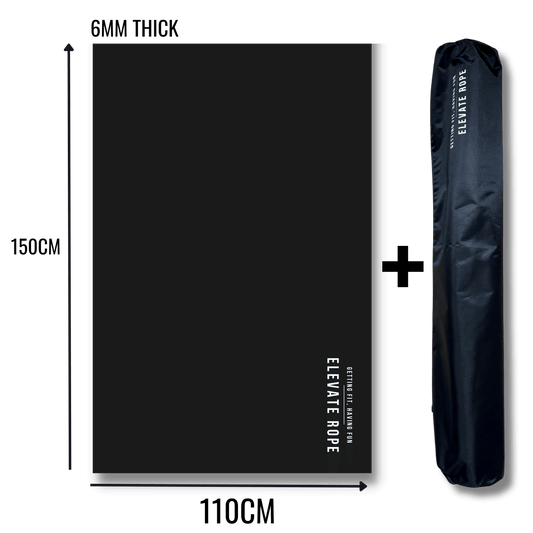
A dedicated jump rope mat is the biggest single upgrade. It absorbs impact and protects both your joints and the floor. A thick rug over carpet works in a pinch. Avoid skipping straight onto tile, laminate, or bare concrete. Those surfaces send the most impact downstairs. A proper jump rope mat also stops the cable wearing on rough ground. Our home cardio guide goes deeper on surfaces if you want the detail.
The rope
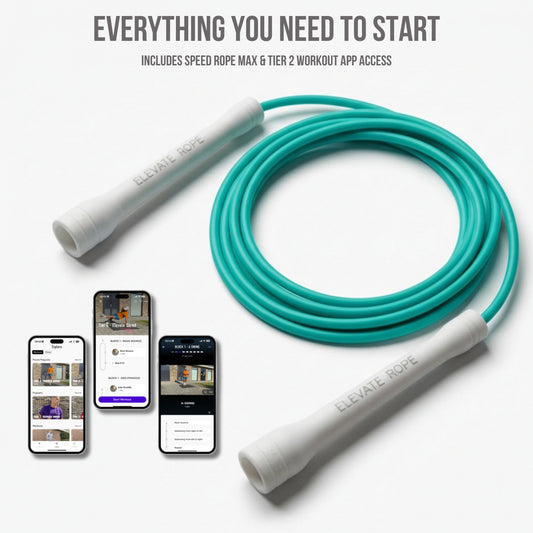
For a flat, control beats raw speed. A beaded rope like the Dignity Beaded Rope turns slowly and gives feedback you feel through your hands and arms. That feedback keeps your rhythm steady and your jumps low. A light speed rope also works once your timing is reliable. Either way, keep the jump rope length correct. A rope that is too long forces bigger, louder jumps. Standing on the middle, the handles should reach your armpits.
The shoes
Cushioned trainers soften every landing and quieten the room below. Bare feet on a hard floor do the opposite. Keep a supportive pair by the mat so you never skip barefoot. Thin socks on a hard floor are almost as loud as bare feet. Treat shoes as part of your quiet jump rope kit, not an afterthought.
Quiet Technique That Protects the Room Below
Kit gets you halfway. Technique carries the rest. The core idea is simple. Stay low, stay soft, and let your ankles and knees absorb each landing.
Barely leave the floor, so your feet clear the rope by a centimetre or two. Land through the whole foot with soft knees. Keep a steady, unhurried cadence rather than hammering the ground. When the hour is sensitive, swap full jumps for fast feet.
Build the habit with a short drill. Skip for twenty seconds and listen to your own landings. If you can hear a thud, jump lower and softer. A quiet jump rope session is one you can barely hear yourself.
| Move | Noise level | Space needed | Intensity | Best for |
| Basic bounce | Moderate | Small | High | Learning and open daytime hours |
| Low bounce | Low | Small | Moderate to high | Most flats, most of the time |
| Fast feet, no full jump | Very low | Tiny | Moderate | Thin floors and late hours |
| Ropeless swings | Near silent | Tiny | Moderate | Zero-noise situations |
Short answer: Stay low, land softly through the whole foot, and keep a steady cadence to protect the room below.
Why it matters: Landing force is the main source of impact noise, so soft low technique quiets your session directly.
Best next step:Practise a low bounce over a mat, then switch to fast feet whenever the timing is sensitive.
A Quiet 10-Minute Apartment Session

Here is a simple session built for a flat. It stays low, stays soft, and keeps the noise down from start to finish. Run it on a mat in cushioned trainers.
→ Two minutes of easy low bounce to warm up
→ Thirty seconds of fast feet, then thirty seconds of rest, four times
→ One minute of slow, controlled jump rope to reset your rhythm
→ Thirty seconds of fast feet, then thirty seconds of rest, three times
→ Two minutes of gentle bouncing and stretching to cool down
That is ten quiet minutes of real training. Every move keeps your feet close to the mat. The session suits any quiet jump rope setup, beaded or speed. Either way you get a genuine jump rope workout, with no thud reaching the flat below.
Space, Ceilings, and Timing
How much room
You need less floor than you expect. About one and a half metres square is enough for a basic bounce. For ceilings, aim for clearance above your raised hand plus a little more. A low ceiling is easy to work around by keeping the rope short and the jumps small. Our guide on how much space you need has the exact figures.
Picking your hours
Timing is simple courtesy. Avoid early mornings and late evenings, when sound carries most. Mid-morning, lunch, or early evening are safer windows. A quick word with the neighbour below also goes a long way. Most complaints come from surprise, not the activity itself. Tell them you do short, low sessions on a mat, and a possible problem becomes a non-issue. The same tight-space rules power our hotel-room routine, which solves the same problem on the road.
Is Ropeless a Better Fit for Some Flats?
For a few situations, a ropeless option makes sense. Very thin floors, sleeping babies, or strict quiet hours can tip the balance. Ropeless handles let you keep the movement without the cable or the ceiling clearance.
The trade-off is feel and skill. A real rope builds timing that a ropeless version cannot fully replace. It trains coordination, rhythm, and wrist control together, and those skills carry into every future session. For pure noise control, though, ropeless still has a real place in a flat. The choice comes down to your floor, your hours, and your goals.
Short answer: Ropeless suits extreme quiet or very low ceilings, while a real rope builds better timing and skill.
Why it matters: The right pick depends on your floor, your hours, and how much you value technique.
Best next step: Weigh both honestly in our ropeless versus real rope comparisonbefore you decide.
Frequently Asked Questions
Can you really jump rope in an apartment without annoying neighbours?
Yes. Use a mat, keep your jumps low, and pick considerate hours. The impact through the floor is what neighbours hear, and soft technique brings it right down.
Will a mat make skipping quiet enough for downstairs?
A good mat is the single biggest help. It absorbs the landing before it reaches the floor. Pair it with soft, low jumps and most flats become workable.
What is the quietest way to jump rope indoors?
Fast feet with almost no height is the quietest style. Your feet barely leave the mat, so very little force reaches the floor. It still raises your heart rate well.
How much space do I need to jump rope in a small flat?
Roughly one and a half metres square of clear floor is enough. You also want clearance above your raised hand for the rope. Our space guide has the exact numbers.
Is a beaded or speed rope better for apartment training?
A beaded rope suits beginners because it turns slowly and keeps your rhythm controlled. A light speed rope works once your timing is steady. Both fit a small space easily.
What times of day are safest for skipping in a flat?
Mid-morning, lunchtime, and early evening carry the least risk. Avoid early mornings and late nights. A friendly heads-up to the flat below removes most tension.
Should I go ropeless instead of using a real rope?
Only for extreme quiet needs or very low ceilings. A real rope builds better timing and skill. Compare both fairly in our ropeless versus real rope guide.
Your Next Step, Based on Where You Are
New to skipping? Start on a mat with a beaded rope and a low bounce. That control makes quiet technique far easier while your timing settles. A short, low session most days beats a loud one you have to stop. Build the wider habit with our home cardio guide.
Torn between a real rope and a ropeless option? Let your floor and your hours decide. Then compare both in our ropeless versus real rope guide before you buy anything.
Whichever you choose, the rules stay the same. Stay low, land soft, and pick your hours. Return to the train anywhere hub to map the rest. Train hard, stay considerate, and keep the habit alive where you live.
Sources
- Frontiers in Bioengineering and Biotechnology, on how soft, low rope-skipping landings buffer force through the knees and hips
- Study on jump-rope footwear and landing, showing two-footed landings and cushioned shoes lower ground reaction force
- European Journal of Clinical Nutrition, on interval rope skipping as time-efficient cardio training
- World Health Organization, guidelines on physical activity and sedentary behaviour