





You can jump rope anywhere, and that is the quiet advantage no gym membership can match. A hotel room works. A small flat works. A layover, an empty car park, a patch of grass in a strange city. Most fitness routines fall apart the moment your surroundings change. This one packs into a jacket pocket and comes with you.
The problem with staying fit on the road was never willpower. It was friction. A new city removes the gym you like, the class you booked, and the time slot you protected. A rope removes that friction in return. It needs a few square metres and ten minutes, and it asks nothing of the place you happen to be standing in.
This guide is the hub for training away from home. If you already train indoors, our complete home cardio guide covers that ground. Here we handle everywhere else: the hotel, the cramped flat, the plane, and the space that was never meant for exercise.
What you'll learn
→ Why your routine breaks the moment you travel, and the simple fix
→ What makes a jump rope the most portable workout you can own
→ Five ways to train in different spaces, from a hotel room to a layover
→ Packing tips for your rope, plus whether you can take it on a plane
→ Quiet training techniques for flats, shared walls, and neighbours below
→ When a ropeless set makes sense, and when a real rope is better
→ Which rope to pack, plus a 15-minute session you can do anywhere
Why your fitness routine collapses the moment you leave home
Travel does not ruin your fitness. Disruption does. A routine is a set of cues stacked together. A time of day, a place, a piece of kit, a familiar order of events. Take away the place and the whole stack quietly falls over.
This is why people who train hard at home still stop the moment they pack a bag. Hotels rarely have a gym you would choose. Time zones shove your morning session into the middle of the night. Meetings swallow the evening you set aside. Each small change asks you to decide again, and decisions are exactly what a habit exists to remove.
The cue is the habit, and travel deletes the cue
Your brain does not run on motivation. It runs on triggers. When the trigger disappears, the behaviour disappears with it, even when you still want the result. That is not weakness. It is how habits are built and how they break.
So the answer is not to summon more discipline in a foreign hotel at six in the morning. The answer is a routine that survives without any of its usual props. A jump rope is close to the perfect tool for that, because it carries the trigger with you. The rope in your bag is the cue.
The fix is a workout that needs almost nothing
A rope needs a small patch of floor and a handful of minutes. That is a promise you can keep in almost any room on earth. The Elevate Code is simple here. You keep the promise, especially when the setting changes. The version of you that trains on a hard travel day is the one worth building, because that is the version that proves the habit is real.
What makes a jump rope the ideal portable workout

Three qualities make the jump rope hard to beat when you are away from home. It weighs almost nothing. It turns small time into real training. And it works on nearly any flat surface, indoors or out. No single other tool does all three at once.
Short sessions that actually count
Research suggests jump rope can deliver cardiovascular benefits in a fraction of the time of steady jogging. A randomised trial comparing jogging and rope skipping in college students found rope work improved strength, coordination, and endurance alongside cardiovascular fitness. A separate high-intensity interval study, published in a clinical nutrition journal, confirmed short rope skipping sessions improved cardiorespiratory fitness and body composition in young adults. The direction is consistent, even where sample sizes are small.
What that means in practice is simple. When your workout is measured in minutes rather than hours, the excuse of having no time quietly disappears. Ten focused minutes with a rope beats a forty-minute session you keep postponing until the trip is over.
Intensity is what makes the short session work. A jump rope pushes your heart rate up quickly, so a brief burst does real work rather than gentle movement. That is why a rope suits travel days that leave only a narrow window between a flight and a meeting.
It works when nothing else will
A rope is weather proof. Rain cancels a run, but it does not cancel a rope, because you simply step indoors and carry on. It is also private. There is no front desk, no class schedule, and no audience watching your first clumsy minutes. You train in your own room, at your own pace. For many people that removes the real reason they skip a session on the road.
There is a cost angle too. A rope is one purchase, not a daily fee in a city you are only visiting for two nights. Below is how it stacks up against the usual travel options.
| Travel workout option | Space needed | Packability | Cardio load | Cost |
| Jump rope | About 1.5 x 1.5 m | Fits a pocket | High | One purchase |
| Bodyweight HIIT | Mat-sized | Nothing to carry | Medium to high | Free |
| Resistance bands | Mat-sized | Very packable | Low to medium | One purchase |
| Hotel gym | Not portable | None | Varies | Depends on hotel |
| Outdoor running | Streets or a park | Shoes only | High | Free, weather dependent |
Short answer: A jump rope is the most portable serious cardio tool you can own, because it weighs almost nothing and needs only a small patch of floor.
Why it matters: On the road, the tool that fits your bag and your schedule is the one you will actually use. A rope removes the two biggest travel excuses, which are space and time.
Best next step: Pack a light, tangle-resistant rope such as a → Speed Rope MAX and treat ten minutes as your non-negotiable minimum.
How to jump rope anywhere: five spaces, five setups
The trick is matching the space to the setup. The same rope behaves differently in a carpeted hotel room than it does on a car park surface, so a few small adjustments keep every session smooth. Here is how to jump rope anywhere you land.
The hotel room

Move the rug and check the ceiling before your first swing. Keep jumps low and land softly. A clear gap of roughly 1.5 by 1.5 metres is plenty for a full session. For a ready-made routine sized to a small room, follow our hotel room jump rope workout.
The small flat or apartment
Here the neighbours below matter more than the floor space. Use a mat, land quietly, and keep the session short and off the early morning slot. There is more on quiet training further down, and a full breakdown in can you jump rope in an apartment.
Outdoors, the office, and in transit
A park, a driveway, or a quiet corner all work, and a beaded rope copes well with concrete and tarmac. Look for a flat, dry surface and give yourself a metre of clearance on every side. A lunch break and a car park make a complete session, and ten minutes rarely needs a shower afterwards. Even a long layover has space near the empty gates, where a few minutes of skipping resets a stiff body after a flight. One rope covers all of it, which is the entire point of building the habit around the tool rather than the place.
Packing a jump rope, and taking it on a plane
A good travel rope packs down without a fight. The wrong one warps in your bag and turns the next session into a wrestling match. A little care in how you choose and coil it saves you that frustration.
What makes a rope travel-friendly
Choose a PVC or coated cable that resists kinking. Avoid bare steel wire, which can take a permanent bend when it is coiled tight in a packed bag. Coil the rope loosely and clip it so it does not knot itself around your chargers. Weight is never the problem. A rope adds a few ounces, not kilos, so it survives even strict cabin allowances and slides into a shoe or a side pocket.
Can you take a jump rope on a plane?
Yes. According to the TSA guidance on rope, a rope is allowed in both carry-on and checked bags. Rules can still vary by airline and by country, and very long ropes are occasionally queried, so a quick check before you fly is wise. For the full carry-on breakdown, see can you bring a jump rope on a plane. If you want help choosing the right rope for the bag in the first place, our guide to the best jump rope for travel walks through the criteria.
Short answer: Yes, you can bring a jump rope on a plane. TSA lists rope as allowed in both carry-on and checked luggage.
Why it matters: Keeping the rope in your carry-on means you can train during a layover or the moment you reach the hotel, before the trip erodes your routine.
Best next step: Pack a coated cable rope in your carry-on, coiled loosely, and confirm your specific airline's rules for anything unusually long.
Quiet training for apartments and small spaces

In a flat, noise is the real barrier, not space. Most people quit indoor skipping because they worry about the neighbours, not because the room is too small. A few habits solve almost all of it.
How to keep it quiet
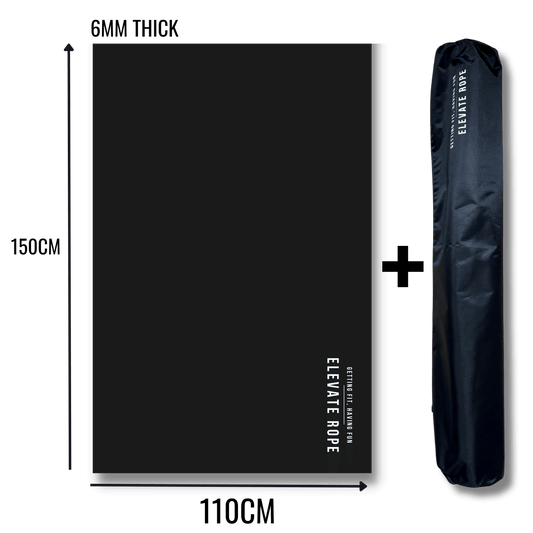
Land on the balls of your feet with soft knees, and keep the jump small. Power comes from the wrists, not from leaping higher, so a tighter jump is quieter and more efficient at once. Use a mat to absorb impact and protect the floor, and add a folded towel underneath for extra cushioning. Timing helps too. A mid morning or early evening session avoids the hours neighbours mind most, and a friendly heads up to the flat below buys real goodwill.
Why a beaded rope helps here
A beaded rope earns its place in small spaces in a way people often miss. You feel each rotation through your hands and arms, and that tactile feedback keeps your timing honest. Better timing means fewer trips and fewer heavy landings on the floor. Most jumpers train with earphones in, so the feel of the rope matters far more than any sound it makes. If your indoor setup needs work, our home cardio guide covers space, surface, and clearance in more depth.
Ropeless or a real rope for travel?
Ropeless handles look like the obvious travel pick, and for a very low ceiling they can be the right call. For most travellers, though, one real rope is the simpler and more honest tool. The reason comes down to what you are actually training.
What each option really gives you
Ropeless weighted ball ends mimic the feel of a rope while removing ceiling worries and neighbour noise. What they cannot do is build true timing, because there is no cable passing under your feet to react to. A real rope teaches that timing, works outdoors, and never asks for a subscription. The table below lays out the trade-off.
| Factor | Ropeless set | Real jump rope |
| Ceiling and space | Works under very low ceilings | Needs about 2.5 m of clearance |
| Noise | Very quiet | Quiet with a mat and soft landings |
| Skill and timing | Limited transfer | Builds real rope timing |
| Outdoor use | Fine, but pointless | Works anywhere flat |
| Long-term value | Single purpose | Grows with your skill |
Short answer: For most travellers a real rope wins, because it builds timing, works outdoors, and grows with your skill. Ropeless suits only very low ceilings.
Why it matters: A travel tool you outgrow in a month is a poor investment. A real rope earns its place in the bag for years.
Best next step: Read the full comparison in our guide to ropeless versus a real jump rope for travel before you decide.
Which jump rope should you pack?
For most travellers, one rope does the whole job, and there is no need to carry a kit. The right pick depends only on where you are in your skipping journey.
Speed Rope MAX for most travellers
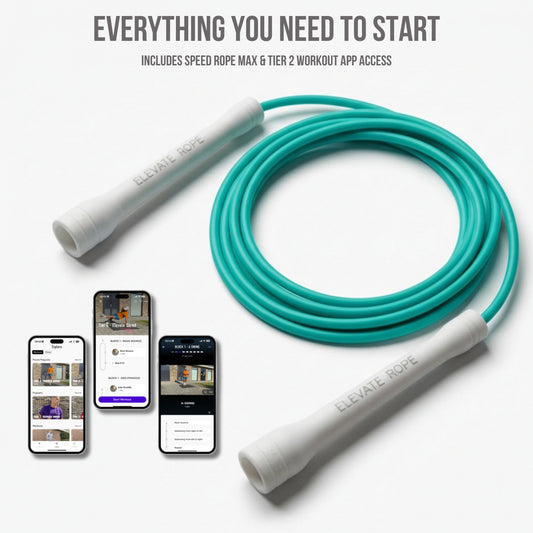
The → Speed Rope MAX is the primary pick. It is light, fast, and packs flat into any bag. The 5mm dual-core cable gives you speed for cardio and enough feel to hold your rhythm, and the bearing-free design means no ball bearings spinning faster than your body can follow. That is what stops the tangling and tripping that makes cheap ropes so frustrating. It handles concrete and tarmac, adjusts to your height, and suits hotel sessions, park intervals, and double unders on the road.
Dignity Beaded Rope for beginners
If you are new to skipping, start gentler with a beaded rope. Our Dignity Beaded Rope gives you feedback through your hands, so your timing clicks faster and you trip less in your first weeks. It also copes well with rough outdoor surfaces, which makes it a forgiving travel companion while you learn. Every Elevate rope ships with the free Elevate app and its library of guided workouts, while other brands lock similar programming behind a subscription of around 150 euro a year. More than 1,200 verified reviews back the ropes, and every buyer joins the Elevate Family, a community of over 50,000 jumpers.
A simple 15-minute session for anywhere
This session needs a rope and a small gap, nothing else. Warm up with two minutes of easy bounce. Then work through five rounds of thirty seconds on and thirty seconds off. Finish with two minutes of slow skipping to cool down. Keep the jumps low, breathe steady, and stop each round before your form breaks, because tired form is where trips and shin knocks come from. On a hard day, shorten it, because even five minutes protects the habit. For interval structure and progressions, see our jump rope HIIT workouts, and if fat loss is the goal on the road, our jump rope weight loss guide sets the framework.
Building the habit when you travel often

Consistency on the road is a system, not a burst of motivation. Frequent travellers who keep training have usually removed every decision from the process before the trip begins. A jump rope makes that easy, because the whole system fits in a side pocket.
Make the rope the first thing you pack
Pack the rope before the clothes, so it is never the item left behind on the bed. Keep it in the same pocket every trip, so your hand finds it without thinking. A tool you can locate in seconds is a tool you will actually use, and a jump rope that lives permanently in your carry-on removes the most common reason people skip travel workouts entirely.
Anchor the session to something fixed
Tie the session to a cue that travels with you, like the first coffee of the day or the walk back from a meeting. The cue matters more than the clock, because time zones move but a routine can ride on events instead of hours. Track each session in the free Elevate app, so a growing streak becomes its own quiet reason to keep going.
Plan for the bad days, not the good ones
Lower the bar when the day falls apart. A cancelled flight or a tiny room is not a reason to stop, it is the exact moment the habit earns its keep. Do the minimum, protect the streak, and let a five-minute session count as a win. That is how a jump rope habit survives a full year of travel rather than a single good week.
Frequently Asked Questions
Can you jump rope in a hotel room?
Yes. Most rooms have a clear gap of about 1.5 metres and enough ceiling height for a low, controlled jump. Move the rug, keep the jumps small, and land softly on the balls of your feet. A folded towel under a travel mat keeps the noise down for guests below.
Can you bring a jump rope on a plane?
Yes. TSA lists rope as allowed in both carry-on and checked bags, and a jump rope is treated as ordinary sporting equipment. Keep it in your carry-on if you want to train during a layover or as soon as you arrive. Check your airline for any rules on unusually long ropes.
How much space do you need to jump rope?
About 1.5 by 1.5 metres of clear floor and roughly 2.5 metres of ceiling. That is enough for a basic bounce and most intervals. If the ceiling is lower than that, keep the jump very small or switch to a ropeless option for that session.
Is jump rope ok for an apartment with neighbours below?
Yes, with a little care. Use a mat, land softly, keep the jumps small, and avoid the early morning and late evening. Small controlled jumps are far quieter than big leaps, and a quick word with the flat below usually settles any concern.
Which jump rope is best for travel?
A light, tangle-resistant rope with a coated cable, such as the Speed Rope MAX. Beginners are better served by a beaded rope while they build timing. Both pack flat and weigh almost nothing, so they slide into any bag.
How long should you jump rope when travelling?
Ten to fifteen minutes is plenty for a full session on the road. Because the intensity is high, short sessions still improve cardiovascular fitness. On a busy day, five focused minutes is enough to protect the habit.
Where to start
The right first move depends on where you are. If you have never skipped before, begin with a beaded rope so your timing settles before you chase speed. Our beaded ropes are built for exactly that first month, and they travel just as well as anything faster.
If you already jump and simply want a rope that lives in your bag, pack a Speed Rope MAX. It is fast enough for real cardio, forgiving enough for a hotel floor, and durable enough for a car park. One rope, every trip, no excuses left behind.
Your surroundings will keep changing. Your training does not have to. The gym closes, the schedule slips, the city is new, and the rope does not care. Pack it, keep the promise, and elevate the rest.
Sources
1. Transportation Security Administration, What Can I Bring? Rope (carry-on and checked bags allowed)
2. Cleveland Clinic, Six Benefits of Jumping Rope for Your Overall Health
You may also like
→ Hotel Room Jump Rope Workout: A 15-Minute Session for Any Space
→ Can You Jump Rope in an Apartment? Quiet Training for Small Spaces
→ Can You Bring a Jump Rope on a Plane? Carry-On Rules Explained
→ Ropeless vs Real Jump Rope for Travel: Which Keeps You Consistent?
→ The Best Jump Rope for Travel: What to Look For in a Carry-On Rope
→ How to Stay Fit While Traveling Without a Gym or Bulky Gear