





Choosing the best jump rope for kids in 2026 is harder than it should be. The €5 plastic rope at the supermarket looks fine. The €30 beaded rope online claims to be premium. The €200 connected rope on Instagram says it has an app. They all promise the same thing, and almost none of them tell you what actually matters when a child is learning to skip for the first time.
This guide cuts through it. After analysing more than 1,200 verified parent reviews, the most common reasons kids quit their first rope, and the seven product specifications that genuinely matter for children, here is what to look for, what to avoid, and what to spend.
The short version: if your child has never jumped before, you want an adjustable beaded rope around 3 metres long, with weight in the rope rather than the handles, and audible click feedback on every rotation. Below is the full breakdown, the comparison against the cheap and premium alternatives, and the specific recommendation for your situation.
What you'll learn in this guide
The 7 product specs that decide if a child sticks with jump rope or quits
Why fixed-length kids' ropes are the number one cause of beginner frustration
Beaded vs PVC vs wire vs weighted: what works for which age
The hidden cost of "premium" connected ropes (and what you actually get)
True 12-month cost comparison: cheap rope, premium rope, and Elevate
The single rope that covers ages 4 through adult and handles full-family use
Sizing without a measuring tape (the armpit method works in 30 seconds)
The 7 specs that actually matter for a child's first jump rope
Most jump rope listings throw 20 features at you and let you sort them out. Five minutes of review reading reveals that only seven of them genuinely affect whether a child becomes a regular jumper or abandons the rope in week one. Here they are, ranked by what reviews say drove the buying decision and the post-purchase satisfaction.
1. Audible feedback (beaded vs silent)
This is the single most predictive feature for beginners. Plastic beads strung along a cord produce a clear tick on every rotation as they hit the floor. The child's brain locks onto the rhythm and starts timing the jump to the sound, which is exactly how skip rope timing is supposed to be learned. Silent ropes (PVC, wire, leather) leave the child guessing. They miss the rotation, trip, get frustrated, and quit.
One verified Amazon reviewer of the Elevate beaded rope put it directly: "Beads are heavier and the sound makes it easier to anticipate timing. MUST for beginners." This pattern repeats across hundreds of reviews. A beaded rope is not a stylistic choice for a beginner child. It is a learning aid.
2. Adjustable length
A child grows. A rope does not. Fixed-length kids' ropes (the kind sold in supermarkets and most toy shops) are sized to one height, which means within 12 to 18 months the rope is wrong again and you are buying another. Adjustable ropes solve this in two ways: by sliding bead segments to a knot, or by trimming the cord with scissors. Either method takes about 60 seconds.
The Elevate Dignity Beaded Rope adjusts to 3 metres maximum, which covers children from age 4 through to adults of any height in a single product.
3. Handle weight and grip
Children's hands are smaller and weaker than adults' but the temptation to buy adult-sized handles is real because the child will grow into them. Don't. Heavy handles make wrist rotation tiring within two minutes, which kills practice sessions before any real learning happens. Look for handles around 12 to 14 cm long with a knurled or rubberised grip surface for sweat-resistance. Cheap smooth plastic handles slip in sweaty hands and the rope flies across the room.
4. Bearing-free swivel design
Many premium adult ropes use ball-bearing connectors at the handle. They look impressive but they introduce two problems for kids: they fail eventually (a few hundred hours of use), and they create extreme rotation speeds that beginners cannot control. A simple bearing-free swivel rotates smoothly enough for any child while being more durable. There is no "kid-friendly" benefit to bearings.
5. Cord material and weight distribution
This is where price differences often come from. Cheap PVC cords kink, hold their bend, and feel dead. Quality polycord (like the 3.5mm material in the Dignity Beaded) stays round, holds momentum through the swing, and survives concrete. The weight should sit in the rope itself (the beads do this automatically), not the handles. Weighted handles are an advanced training tool that makes learning harder, not easier.
6. Surface tolerance
Kids practise wherever they are: garage, garden, driveway, kitchen, gymnasium. Concrete and asphalt destroy thin PVC ropes within weeks. Beaded ropes wear visibly faster on concrete (one of the most common complaints in reviews) but the beads can take it for months before performance drops. If the child will mostly jump indoors or on a mat, almost any decent rope survives. If the daily practice is the driveway, plan for the bead wear or invest in a basic mat.
7. Real warranty (not "lifetime guarantee" small print)
Read the warranty before buying. Cheap ropes have no warranty at all. Mid-range ropes often warranty the handle but not the cord (the part that wears). Premium ropes sometimes warranty parts but not labour. The Elevate handle warranty covers the lifetime of the product on the part that breaks first in cheap ropes (the handle assembly), which is the warranty that actually matters when a child uses it daily.
Short answer: The seven specs that determine whether a kid's jump rope succeeds are audible bead feedback, adjustable length, lightweight knurled handles, bearing-free swivel, quality polycord, surface tolerance, and a real warranty on the failure-prone handle assembly.
Why it matters: Most parent regret with kids' ropes traces back to one or two of these specs being wrong. A €5 supermarket rope misses five. A €200 connected rope nails some but adds complexity that makes it worse for first-time learners.
Best next step: Start with a rope that meets all seven criteria. The → Elevate Dignity Beaded Rope is built specifically against this checklist for beginner children and full-family use.

What to avoid: the three rope types that make kids quit
Half of getting the right rope is not buying the wrong one. These are the three categories that show up most often in "my kid quit jump rope" reviews and forum posts.
The €5 supermarket plastic rope
Fixed length, hollow plastic handles, thin PVC cord. The cord kinks within a week, the rope refuses to swing through a full rotation, and the handles slip in sweaty hands. The child trips repeatedly, blames themselves, and stops. This is the rope that has put more children off skipping than any other product in the category.
The price seems irresistible until you account for the fact that a frustrated child does not just quit jump rope, they often conclude they are "uncoordinated" and stop trying physical skills entirely. The €5 saving is a false economy.
The €200 connected smart rope
Bluetooth handles, an app subscription, jump counters, leaderboards, AI coaching. These ropes are built for adult fitness enthusiasts who want quantified data, not beginner children who need rhythm feedback. The handles are heavy, the app gates 90 percent of features behind a paid subscription, and the sensor accuracy depends on the surface and form. Crossrope's full subscription runs around $99 USD for the first year and $119 per year afterwards, which over five years is more than €500 in subscription fees alone.
For a child, this is overengineered to the point of working against them. The very metric the device is best at (jump count) is the metric that matters least early on. The metric that matters most (rhythm) is something a beaded rope teaches for free.
The "kids' character" themed rope
Branded with cartoon characters, sold at toy shops, often shorter than necessary. These are toys first and ropes second. The cord is usually decorative quality, the handles are oversized for grip strength, and the length is wrong for most children old enough to actually skip. They are fine for a 4-year-old who wants to wave a rope around. They are not fine for a 7-year-old who wants to learn to jump.

Beaded vs PVC vs wire vs weighted: which type is right for your child
The four common rope types serve different purposes. For first-time child users, the answer is almost always beaded. Here is when each type makes sense and when it doesn't.
| Rope type | Best for child age | Skill level | Audible feedback | Concrete tolerance | Beginner verdict |
| Beaded | 4 to adult | Total beginner to intermediate | Yes (loud click) | Good (visible wear, full function) | Best choice for any first rope |
| PVC (coated wire or plain) | 9 plus | Intermediate | No | Poor (kinks, breaks) | Skip for beginners |
| Wire (speed rope) | 10 plus | Advanced (after 6+ months) | Minimal | Very poor (snaps) | Wrong tool for first rope |
| Weighted (cord-weighted) | 12 plus | Intermediate plus | No | Variable | For training, not learning |
The pattern across hundreds of parent reviews is consistent. Children who start on beaded ropes graduate naturally to faster ropes once they have rhythm and timing locked in (usually 6 to 12 months later). Children who start on speed or wire ropes often never get to that graduation point because they quit before they ever build a rhythm.
Short answer: Start beginner children on a beaded rope. Move to a speed rope only after 6 to 12 months of consistent practice and confident basic-bounce skills. Save weighted ropes for adolescents who want strength-cardio crossover.
Why it matters: The wrong starting rope makes coordination feel impossible. The right starting rope makes coordination feel learnable. That difference is the entire game.
Best next step: If your child is brand new to skipping, start with the → Elevate Dignity Beaded Rope. If your child has 6 plus months of basic-bounce experience and wants to chase speed, look at the → Titan 7mm Weighted Speed Rope as the next step.

True 12-month cost: cheap, premium, and Elevate compared
The "best jump rope for kids 2026" question is partly about features and partly about what the rope actually costs to own across a typical first year of use. Many parents only see the upfront price and miss what the cheap rope or premium rope ends up costing once you account for replacements, subscriptions, and add-ons.
| Cost item | €5 supermarket rope | Premium connected rope | Elevate Dignity Beaded |
| Initial purchase | €5 | €180 to €220 (set + handles) | €31 |
| Replacements in year 1 | €10 to €20 (2 to 4 ropes) | €0 | €0 (lifetime handle warranty) |
| App subscription year 1 | €0 (no app) | €55 to €99 (depending on tier) | €0 (free Elevate App) |
| App subscription year 2 onwards | €0 | €55 to €119 per year | €0 |
| Mat (if jumping on concrete) | €20 to €40 | €40 to €60 | €20 to €40 |
| Sport club alternative comparison | n/a | n/a | €360 to €720 per year saved |
| Total year 1 | €35 to €65 | €275 to €379 | €51 to €71 |
| Total year 5 | €85 to €165 plus replacements | €495 to €855 | €51 to €71 (one-time) |
Across five years of consistent use, the cheap rope ends up costing more than the Elevate rope (because of repeated replacements) and the premium connected rope ends up costing 7 to 12 times more (because of stacked annual subscriptions). The mid-tier purpose-built option ends up being the most economical and the most fit-for-purpose at the same time.
For families who want a complete household setup, the Ascent Bundle pairs the beaded rope with complementary ropes for parents and the jump rope mat. It is the household-system version of the same value calculation: one investment that covers parents and children together, no subscription wall, and tools that grow with the family.

How to size a jump rope for a child in 30 seconds
The standard sizing rule works for any age. Stand on the middle of the rope with one foot. Pull the handles up tight against the rope. The handles should reach roughly to the child's armpits. Higher than the armpits means the rope is too long and the child will whip themselves; lower means too short and the rope will catch on their feet.
Adjustable beaded ropes solve sizing in 60 seconds: slide the excess beads to one end of the cord and tie a knot to lock the length. As the child grows, untie, slide more beads back, retie. One rope, multiple years.
For a quick reference: most children aged 6 to 8 use a rope length of about 2.4 to 2.6 metres. Most children aged 9 to 12 use 2.6 to 2.8 metres. Adolescents and adults use 2.8 to 3.0 metres. The Elevate Dignity Beaded ships at 3 metres adjustable, which means it can be sized down for any child and re-sized up as they grow.
The simple recommendation
If your child is between ages 4 and 14 and brand new to jump rope, the answer is the Elevate Dignity Beaded Rope. It meets every spec on the seven-point checklist, adjusts from child to adult, includes the lifetime handle warranty, and pairs with the free Elevate App's 100 plus follow-along sessions. It is the rope that produces the fewest "my kid quit" stories and the most "my whole family uses it now" reviews.
If you want everything for the household in one go (parents jumping too, mat for indoor use), the Ascent Bundle bundles the beaded rope with complementary ropes and a mat at a household discount. It is the cheapest path to a complete family jump rope setup that lasts.

What about the cheap option for a kid who might not stick with it?
This is the most common parent question and it is worth answering honestly. The instinct to buy cheap "in case they quit" is completely understandable. The problem is that cheap is also the strongest predictor of quitting. The €5 rope creates the bad first experience that makes the child decide they are "not a jump rope kid."
The maths actually works the other way. If you buy a €5 rope and the child quits, you have spent €5 and reinforced a "quit" outcome. If you buy a €31 beaded rope and the child quits, you have spent €31, the rope is still useful for a parent, and the family can re-attempt the activity later with the same equipment. The €31 rope keeps optionality. The €5 rope closes it.
For families on tight budgets who genuinely cannot stretch to €31, a second-hand beaded rope from a marketplace platform is a much better option than a new supermarket rope. The bead-and-cord design wears slowly enough that a used rope is almost always still functional. Look for one that adjusts and has the audible click intact.

Frequently asked questions
What's the best jump rope for kids in 2026?
The best jump rope for kids in 2026 is an adjustable beaded rope around 3 metres long with audible click feedback, lightweight knurled handles, a bearing-free swivel, and a real warranty on the handle assembly. The Elevate Dignity Beaded Rope meets all of these specs and works from age 4 through to adults of any height in a single product.
What age can a child start using a jump rope?
Most children develop the bilateral coordination needed for actual skipping between ages 6 and 8. Children aged 4 to 5 can start with rope-awareness drills (hopping over a flat rope, swinging the rope along the ground in waves) which build the prerequisite skills without the frustration of failed jumping attempts. By age 7 to 9, most children can complete a chain of consecutive bounces with the right rope.
Are beaded jump ropes better than speed ropes for children?
For beginner children, beaded ropes are significantly better than speed ropes. The audible click on each rotation provides rhythm feedback that silent speed ropes lack, which is what beginners need most. Speed ropes are designed for advanced jumpers chasing maximum rotation speed and require timing skills the child has to learn first. Most children move from beaded to speed rope around 6 to 12 months into consistent practice.
How long should a kid's jump rope be?
The standard sizing test: stand on the middle of the rope with one foot, pull the handles up tight against the cord, and the handles should reach the armpits. Most 6 to 8 year olds need 2.4 to 2.6 metres, most 9 to 12 year olds need 2.6 to 2.8 metres, and adolescents need 2.8 to 3.0 metres. Adjustable beaded ropes solve this by allowing length changes in under a minute.
Are weighted jump ropes safe for children?
Lightly weighted ropes (cord-weighted, not handle-weighted) are generally safe for adolescents from age 12 plus, but they are not recommended for younger children or beginners of any age. The added rope weight makes timing harder to learn and increases the risk of self-strikes during the learning phase. Save weighted ropes for adolescents who already have solid basic-bounce technique.
Do I need to buy a jump rope mat for my child?
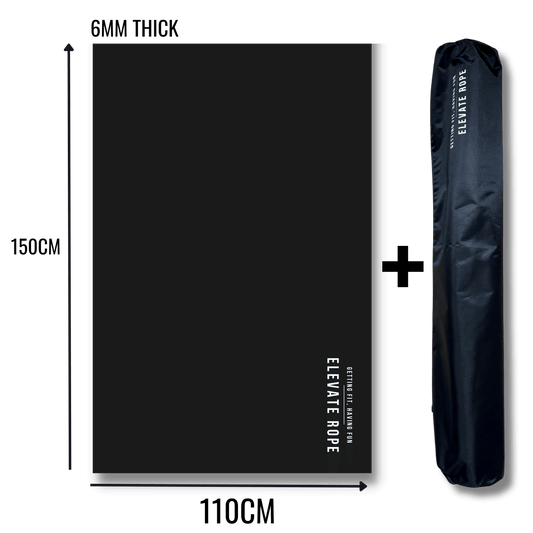
If the child will mostly jump on grass, wood floors, or rubber gym flooring, no mat is needed. If the child will jump on concrete, asphalt, or tiles, a mat protects both the rope (beads wear visibly faster on rough surfaces) and the joints (concrete is harsh on knees and ankles even for children). A basic 6mm fitness mat or a dedicated jump rope mat both work.
Can the same jump rope work for both my child and me?
Yes, if the rope is adjustable and the maximum length covers your height. A 3-metre adjustable beaded rope (like the Dignity Beaded) covers children from age 4 through to adults around 1.95 metres tall. The rope is sized down for the child and resized up for the parent in under a minute. This is one of the strongest reasons to choose adjustable over fixed-length when buying for a household.
Is a Crossrope worth it for my child?
Crossrope is built for adult fitness enthusiasts who want quantified data and connected workouts, not for children learning to skip. The handles are heavier than ideal for kids, the app subscription gates most features behind $55 to $119 per year, and the smart features (jump counting, AI coaching) target metrics that matter much less than rhythm for a beginner. A purpose-built beaded rope plus a free app is a better fit for almost every child under 14.
Where to go from here
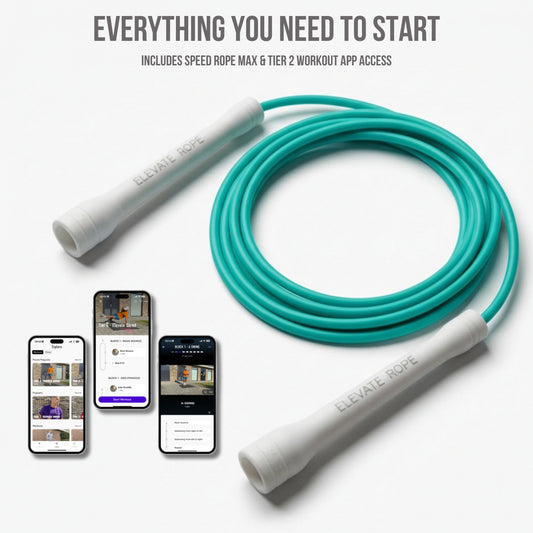
If your child is brand new to jump rope, start with the → Elevate Dignity Beaded Rope. It is the single product that meets the full seven-point checklist for beginner children, adjusts from child to adult height, and ships with the free Elevate App's 100 plus follow-along sessions. The lifetime handle warranty covers the part that breaks first in cheap ropes.
If you want a complete household setup with parent ropes and a mat, the Ascent Bundle packages everything at a discount versus buying separately. It is the right purchase for families running the 30-day family challenge or building a long-term family habit.
If your child has had a beaded rope for 6 plus months and is asking for "a faster rope," the → Titan 7mm Weighted Speed Rope is the natural next step. It graduates them from rhythm-and-timing into the speed-and-tricks phase without re-buying the underlying skill.
For the bigger picture on raising children with jump rope, including age-specific routines, teaching methods, and family workout structures, see the complete parent's guide to jump rope for kids.
Sources
1. Crossrope Help Center. App Features and FAQs (subscription pricing). https://help.crossrope.com/hc/en-us/articles/360056306194-App-Features-and-FAQs
2. Crossrope. AMP Jump Rope Set membership pricing. https://www.crossrope.com/products/amp-jump-rope-set/
3. GearJunkie. Crossrope Review: Is a $200 Jump Rope Worth It? (independent product testing). https://gearjunkie.com/health-fitness/crossrope-jump-rope-review
4. Sun H, Soh KG, Mohammadi A, et al. Effects of fancy rope-skipping on motor coordination and selective attention in children aged 7 to 9 years. Frontiers in Psychology, 2024. https://www.frontiersin.org/journals/psychology/articles/10.3389/fpsyg.2024.1383397/full
5. Chen C, Sun H, Lemon S, et al. Physical fitness promotion among adolescents: effects of a jump rope-based physical activity afterschool program. Children, 2020. https://pmc.ncbi.nlm.nih.gov/articles/PMC7463663/
6. GymBird. Crossrope for Beginners: Start Your Jump Rope Journey Here. https://www.gymbird.com/fitness-apps/crossrope-for-beginners
7. Elevate Rope. Verified customer reviews intelligence (1,200 plus reviews across Amazon EU, Bol.com, and direct). https://elevaterope.com