





Can you start jump rope after 50? For many healthy adults, yes. Your age alone does not decide whether skipping suits you. Current fitness, balance, joint health, and experience with impact matter much more.
But perhaps another question sits underneath that one. Am I too old to learn something new?
You might remember skipping as a child. Perhaps you have not touched a rope in thirty years. Or maybe you never learned.
Then you see someone moving to music and smiling through a workout. It looks fun. But doubts appear.
What about my knees? Will I trip? Can I still coordinate my hands and feet? What if thirty seconds feels impossible?
Here is something worth remembering. Someone else's progress does not set your starting point. Find a beginning that works for you.
This guide explores jump rope after 50, including benefits, equipment, five beginner steps, and a flexible four-week plan. The aim is repeatable movement, not exhaustion. If repeated impact is unsuitable, lower-impact alternatives are equally valid.
What You'll Learn
- Whether jumping rope after 50 is appropriate for your health
- How skipping differs from walking and cycling
- Ways to approach sensitive knees, balance concerns, and bone health
- Which ropes are easiest to control as a beginner
- Five steps for learning basic skipping
- A short starter workout and four-week practice plan
- Lower-impact alternatives, suitable shoes, and training surfaces
- Considerations for women over 50 and ways to stay motivated
1. Are You Too Old to Start Jump Rope?
Fifty is not an expiration date for learning new skills. Neither is sixty. Or seventy.
People begin new activities throughout their lives. But not every exercise is suitable for everyone.
Jumping rope after 50 is a choice, not a requirement.
Jump rope involves repeated landings, coordination, and balance. Some adults over 50 tolerate those demands comfortably. Others need modifications or another activity.
The useful question is whether your body can manage the movement now.
Think about balance, comfort, and the impact of each landing. With suitable preparation, jump rope can be a learnable skill.
Consider your current activity level
Do you walk regularly? What other exercise do you enjoy? Can you balance comfortably? Have you done small hops recently?
Someone who runs or plays recreational sports may adapt differently from someone returning after years without exercise.
No performance test is required. These questions help identify a sensible starting point and reveal how your balance feels today.
Consider your health history
Existing knee pain, significant balance difficulties, osteoporosis, previous fractures, or cardiovascular concerns may affect your options.
If you have relevant conditions or uncertainty about impact, seek guidance from a qualified healthcare professional before jumping.
Remember that starting small still counts
Forget counting a hundred jumps. Tricks can wait. At first, you might not even use a rope.
Try basic stepping and wrist movements first. Build confidence through manageable actions instead of copying advanced jumpers.
Short answer: Many adults can learn jump rope after 50. Individual health and physical ability determine whether it is appropriate.
Best next step: Explore comfortable coordination drills, then seek individual advice before impact if you have relevant concerns.
2. What Are the Benefits of Jump Rope for Adults Over 50?
There is a reason people enjoy skipping at different ages. It is portable, relatively simple to start, and offers variety.
The benefits matter most when jump rope fits your ability and broader activity routine.
Cardiovascular activity
Jump rope can raise your heart rate and contribute to aerobic fitness at a suitable intensity. You can divide practice into short attempts with recovery.
You do not need ten uninterrupted minutes to learn the movement. Walking and cycling remain valuable aerobic options too.
Coordination and timing
Your hands guide the rope while your feet respond. Learning that timing is a skill in itself.
Coordination develops when both movements become more predictable. There is no need to hurry that process.
For many beginners, the coordination challenge makes practice mentally engaging. Start slowly enough to understand each movement.
Enjoyable movement can make those early sessions easier to repeat.
Convenience
A rope takes little storage space. You do not need a room full of equipment.
You still need clear space, a safe surface, and enough overhead clearance. Convenience should never come at the expense of stability.
A sense of achievement
One clean jump. Then two. Perhaps five in a row when you are ready.
Those small milestones can feel rewarding. Progress is about improved control, not how quickly you reach a number.
Small coordination wins matter just as much as longer sets.
Variety in your routine
Walking and strength training do not need replacing. Jump rope can become an additional option if it suits you.
For those 65 and older, the NHS older-adult guidelines also highlight strength, balance, and staying active.
3. Is Jump Rope Bad for Your Knees After 50?
This is one of the most common concerns. And it deserves a careful answer.
Jump rope creates repeated forces through the feet, ankles, knees, and hips. Impact is not automatically an injury. But it differs from walking or cycling.
Impact is not the same as injury
Many healthy adults tolerate jumping. Your response depends on fitness, strength, previous injuries, medical conditions, and training history.
Age alone does not mean you must avoid impact. However, being active does not guarantee skipping suits every joint condition.
Avoid unnecessarily high jumps
For a basic bounce, you need only enough clearance for the rope beneath your feet.
Excessively high jumps add demands without helping basic timing. Start with small, controlled jumps when hopping feels comfortable.
Balance and comfort matter more than jump height.
Keep the jump rope close to the floor, and let your wrists guide its rotation.
For basic jump rope technique, consistent control matters more than height or speed.
Choose a suitable surface
A flat, stable, non-slip surface helps you practise consistently. Avoid uneven or slippery ground.
A suitable mat can protect the floor and rope. It cannot remove impact or guarantee comfort for painful joints.
A lower jump is not automatically a safer jump for every body.

Do not push through knee pain
If jumping causes pain, stop. Do not assume that discomfort is something you must tolerate.
Persistent or recurring joint pain deserves appropriate assessment. If you already have knee problems, discuss whether jumping is suitable first.
4. What If You Have Balance Problems or Osteoporosis?
Jump rope combines repeated takeoffs and landings with a moving cord. That adds a balance challenge.
When jump rope feels unsuitable, another activity can be the better choice. Balance practice without a rope may help some beginners prepare.
If you have significant balance difficulties, previous falls, osteoporosis, or fragility fractures, do not assume jumping is appropriate.
The Royal Osteoporosis Society's exercise safety advice explains how bone health and fracture history affect exercise choices.
A qualified clinician may suggest preparation drills, modifications, or lower-impact activities. There is no need to take unnecessary risks for a workout trend.
The right movement depends on your needs, not someone else's routine.
The goal is to stay active in a way that supports your wellbeing.
5. What Is the Best Jump Rope for Beginners Over 50?
Begin with control. Speed and advanced tricks can wait. Aim for a comfortable, predictable rope rotation.
Why a beaded rope can help
A beaded rope has individual PVC beads threaded along a cord. They create noticeable feedback during rotation.
That feedback can help you sense the rope's position and develop timing. Clear feedback may simplify coordination practice.
The Elevate Beaded Rope uses 2.5 cm beads around a 3.5 mm polycord.
It is adjustable to suit your height and technique. Explore our Berry Breeze Beaded Rope as one beginner option.
You do not need to purchase a rope before practising basic stepping and wrist movements.
What about a speed rope?
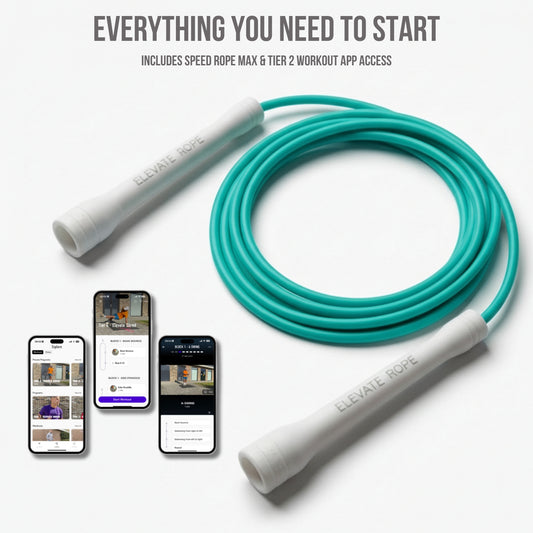
The Elevate Speed Rope uses a flexible 5 mm PVC cable with a nylon core. It can suit controlled basic jumping and cardio sessions.
If you are completely new, you may prefer the feedback of a beaded rope while learning the rhythm.
Should you start with a heavy rope?
A heavy rope adds resistance. That makes movement more demanding, especially for your arms and shoulders.
For early coordination practice, a standard beaded rope may be a simpler option. Add resistance only when appropriate to your goals.
Check your jump rope length
A short rope can catch your shoes. Excess length can also make the rope harder to control.
Follow the manufacturer's instructions and test the length before cutting. Our jump rope sizing guide explains the beginner setup.
Short answer: A properly adjusted beaded rope is a practical option for learning rhythm and timing.
Best next step: Choose an easy-to-control rope and start with comfortable coordination practice.
6. How to Start Jump Rope After 50: Five Simple Steps
Ready to try? These five steps offer a gradual introduction when repeated jumping suits your health and ability.
Step 1: Practise without a rope
Stand on a stable, level surface. March gently in place. Then shift your weight slowly between your feet.
Notice your balance before attempting a hop.
If comfortable, try one small two-foot hop without a rope. Land softly and pause.
If hopping causes pain or instability, stop. Do not progress to rope jumping.
Step 2: Learn the wrist movement
Hold the handles with relaxed hands and keep your elbows relatively close to your body.
Make small circles with your wrists. You can rehearse the motion without swinging the rope or jumping.
The goal is control, not large arm movements or speed. Focus on coordination before adding repeated jumps.
Step 3: Try one jump at a time
Place the rope behind you. Rotate it forward with your wrists. Make one small jump as it approaches your feet.
Land. Stop. Reset. Then repeat only if comfortable.
One controlled jump rope repetition is a perfectly good starting point.
Step 4: Connect a few jumps
Once one repetition feels manageable, try linking two or three. Keep the pace relaxed and your shoulders loose.
Trips are normal while learning rope timing. Pause, check your setup, and reset. These resets are part of coordination practice.
Balance should stay steady between attempts. Pause before the movement becomes rushed.
Step 5: Practise short intervals
When several jumps feel comfortable, experiment with a short interval. For example, ten seconds of gentle skipping followed by longer recovery.
Only repeat while your movement remains controlled. The goal is familiarity, not exhaustion.
7. A Beginner Jump Rope Workout for Adults Over 50
Here is an optional starter session for people who already tolerate small jumps comfortably.
It is not a universal prescription. If you are uncertain about jumping, seek individual guidance first.
| Time | Activity | Focus |
| 0:00–2:00 | Gentle marching and warm-up | Comfortable movement |
| 2:00–3:00 | 10 seconds jumping, 50 seconds recovery | Basic timing |
| 3:00–4:00 | 10 seconds jumping, 50 seconds recovery | Relaxed shoulders |
| 4:00–5:00 | 10 seconds jumping, 50 seconds recovery | Small jumps |
| 5:00–6:00 | 10 seconds jumping, 50 seconds recovery | Consistent rhythm |
| 6:00–8:00 | Slow walking and cooldown | Gradual recovery |
That is an eight-minute session with just 40 seconds of jumping. The rest is preparation and recovery.
Good recovery matters more than completing every planned interval.
This approach makes jump rope practice more approachable than an uninterrupted workout.
When learning jump rope after 50, a short session can feel more manageable than continuous exercise.
If ten seconds feels too demanding, shorten the interval or practise without jumping. Stop if you experience pain, dizziness, or unusual symptoms.
8. A Four-Week Jump Rope Starting Plan
Want a simple progression? Use this example only if your first workout feels comfortable and repeated impact is appropriate.
The four-week plan provides options, not deadlines. Repeat a week whenever necessary and allow recovery days.
| Week | Jump | Recover | Rounds |
| 1 | 10 seconds | 50 seconds | 3–4 |
| 2 | 10 seconds | 50 seconds | 4–5 |
| 3 | 15 seconds | 45 seconds | 4 |
| 4 | 15 seconds | 45 seconds | 5 |
Add a comfortable warm-up and cooldown to every session. Some adults may begin with two short sessions weekly, separated by recovery days.
Others need fewer sessions or a slower introduction. Your body, not the calendar, determines the pace.
Your recovery between sessions may change from week to week.
Week 1: Learn the basics
Focus on rope timing and relaxed movement. Avoid speed and tricks.
The first goal is becoming comfortable with one small jump and a calm reset. Control and balance come before longer sets.
Week 2: Repeat with confidence
If the first week felt manageable, add one short round. Keep the jumping duration unchanged. Allow recovery before the next session.
Progress one variable at a time. A few more comfortable attempts are enough.
Week 3: Try slightly longer intervals
If technique and recovery stay comfortable, consider 15-second sets. Otherwise, repeat Week 2.
Longer jump rope intervals are optional. There is no benefit in forcing progression through pain or instability.
Week 4: Build consistency
Add another short round if it feels appropriate. Or simply repeat the previous session.
The habit is easier to return to when the next step feels manageable.

Four perfect weeks are unnecessary. What matters is an approach you can comfortably repeat.
9. What If You Cannot Jump? Lower-Impact Alternatives
There are still ways to practise rhythm, coordination, and movement without repeated landings.
You can build jump rope coordination without performing any jumps.
Gentle jump rope practice may begin with movements that keep both feet on the floor.
Marching in place
Stand comfortably and march at an easy pace. Focus on controlled steps and relaxed shoulders.
Alternating step-overs
If safe, place the rope flat on the ground and step over it one foot at a time.
Make sure it cannot roll or catch your shoes. Use an imaginary line instead if the rope creates a hazard.
Keep your balance steady while stepping. Movement without jumping still counts.
Rope-free coordination practice
Practise small wrist circles while marching gently. Seated wrist movements can also build coordination without jumping.
These drills do not reproduce the demands of actual skipping. They simply offer a lower-impact way to explore the pattern.
Walking or cycling
Walking and cycling are other ways to stay active when jumping is unsuitable. Choose an activity that fits your health and goals.
Professional guidance can help you find suitable modifications when needed.
10. What Shoes and Surface Should You Use?
Your training setup matters, especially during repeated takeoffs and landings.
Wear comfortable athletic shoes
Choose secure footwear with suitable support for your feet and activity. Avoid loose shoes that make you feel unstable.
There is no single shoe that works for everyone.
Choose flat, stable ground
Look for a level, dry, uncluttered surface. Avoid slippery flooring, uneven ground, or obstacles near the rope's path.
A stable setup supports balance during repeated landings.
Make enough room
Check the space around and above you. The rope should rotate without catching furniture, walls, or nearby people.
Be cautious with mats
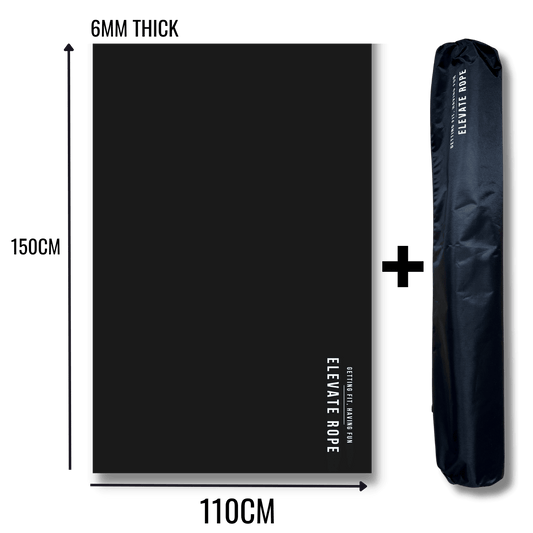
A suitable exercise mat can protect your rope and floor. It must remain flat and stable.
A mat that slips or bunches up can create another hazard. It cannot guarantee joint comfort.
11. What About Jump Rope for Women Over 50?
Jump rope can be an enjoyable addition to an active routine for women who tolerate it comfortably.
Some considerations deserve individual attention.
Pelvic floor symptoms
Repeated jumping can trigger urinary leakage or pelvic heaviness in some people. These symptoms should not be ignored.
Pelvic floor concerns can change what type of exercise feels appropriate.
The NHS urinary incontinence advice explains how high-impact activity may worsen leakage.
If symptoms occur, stop or modify the activity and consider professional pelvic-health guidance.
Bone health
Bone health deserves attention with age, particularly after menopause. Weight-bearing activity can matter, but impact is not suitable for everyone.
If you have osteoporosis, previous fragility fractures, or concerns about bone strength, seek individual advice before repeated jumps.
Strength and recovery
Strength training and suitable recovery remain valuable. Skipping does not need to be your only activity.
Your recovery needs may differ from someone else's. Adjust your routine accordingly.
For some women, jump rope becomes one small part of a broader fitness routine.
12. How to Stay Motivated While Learning Something New
Let's talk about something that has nothing to do with age. Frustration.
You trip. Your rhythm disappears. Meanwhile, someone else seems to make skipping look effortless.
Learning coordination takes time, especially when the movement feels unfamiliar.
But you are comparing your first attempts with their experience. That is not a fair comparison.
Start with a goal you control
Instead of aiming for ten uninterrupted minutes, choose something manageable.
Practise for five minutes. Learn one clean jump. Or complete a few short, comfortable intervals.
Celebrate progress beyond the timer
Your rope timing might improve. Nervousness may ease. Perhaps you reset more calmly after a mistake.
Those are all forms of progress. Coordination grows through repeated, manageable attempts.
Make it enjoyable
Put on music you like. Choose a comfortable training space. Keep sessions short enough that you want to return.
Recovery days also belong in an enjoyable routine.
Movement does not always have to feel like a chore.
Let consistency build confidence
Every manageable jump rope session is another chance to follow through. Small commitments can rebuild trust in your abilities.
New skills remain possible. Improvement can continue. You can still challenge yourself appropriately.
Your First Jump Starts Here
Thinking about learning jump rope after 50? The Elevate Beaded Rope gives noticeable rotation feedback for timing and rhythm.
Our beginner workouts and tutorials can guide the learning process at your pace. They cannot replace personalized medical advice.
If skipping suits you, explore the Elevate Ascent Bundle. Start with one comfortable movement and build from there.
Final Thoughts: You're Not Too Old to Begin
At 50, a new activity might catch your interest. Sixty can bring fresh curiosity. Even at 70, learning remains possible.
Learning does not need to stop. But the goal is not to ignore your body's limits.
Find challenges that suit your current ability. Some people can learn jump rope. Others feel better with gentle stepping or another activity.
Both choices are valid. Progress does not need to impress anyone else.
Progress might mean one clean jump. On another day, it may mean finding the confidence to try.
You're not too old to start. Begin where you are today.
For help building a repeatable movement habit, explore the Elevate26 Challenge when its activities suit you.
Frequently Asked Questions
Can I start jump rope after 50 if I have never skipped before?
Many adults can begin learning jump rope after 50, even without previous experience. Suitability depends on balance, joint health, fitness, and medical history. Start with wrist circles, gentle steps, and single attempts if impact is appropriate. Ask a qualified professional before jumping when health concerns affect your exercise choices.
Is jump rope safe for people over 60?
It can be suitable for some adults over 60, but age alone does not determine safety. Bone health, fall risk, joint conditions, and impact tolerance all matter. Begin with coordination practice and progress slowly. If you have relevant medical conditions or significant balance problems, seek individual guidance before attempting repeated jumps.
Can jumping rope damage your knees after 50?
Jumping rope places repeated forces through the knees, but impact does not automatically mean injury. Personal tolerance varies with strength, previous injuries, and current health. Stop if pain develops. If symptoms persist or you have a knee condition, seek medical advice. Consider lower-impact activities while you recover.
Is jump rope good for women over 50?
Jump rope can offer enjoyable aerobic movement and coordination practice for women who tolerate repeated jumping. Bone health, pelvic floor symptoms, joint conditions, and recovery needs may change what is suitable. Stop or modify exercise if you experience urinary leakage or pelvic heaviness. Professional guidance can help adapt your activity choices.
Do I need a special jump rope to start after 50?
You do not need an expensive or specialized rope to begin learning. Comfortable handles and adjustable length matter more than speed. A beaded rope may help some beginners feel the rotation more clearly. You can also practise stepping and wrist movements without buying equipment. Choose according to comfort, coordination, and goals.
How often should I practise jump rope after 50?
There is no universal schedule. Some already-active beginners may tolerate two short sessions per week with recovery days between them. Others need a slower introduction or alternatives without jumping. Start with manageable amounts, monitor comfort and technique, and increase only when appropriate. Stop and seek advice if concerning symptoms appear.
About Elevate Rope
Founded by Geraldo Alken, Elevate Rope helps people make movement enjoyable and build repeatable habits.
Our community includes more than 50,000 customers. We believe consistency grows through small promises you can keep. Together We Elevate.