





Curious about jump rope for seniors, but unsure where to begin? You do not have to start with continuous jumping. Start with simple movements that build familiarity with rhythm, wrist motion, and stepping. Only progress to impact when it suits your health and mobility.
Picture this. You're sixty-five. Or seventy. Maybe you have always enjoyed movement. Maybe you want to try something new.
You see someone skipping to music. They look relaxed. You think, "I'd love to try that."
Then come the questions. What if I trip? What if my coordination has changed? What if I cannot jump like before?
Here's the thing. Learning jump rope is not a race. You can practise one movement at a time. One controlled attempt counts.
This guide covers 10 beginner exercises, starting without jumps and progressing toward basic skipping. The later stages are optional. If impact or balance challenges are unsuitable, the earlier drills or another activity may be better.
What You'll Learn
- Whether skipping is appropriate for older adults
- How to prepare before your first jump
- Ten beginner exercises, from easy coordination to basic skipping
- How to practise timing without leaving the ground
- A flexible 10-minute beginner routine
- How to choose and size a rope
- Common mistakes, safer alternatives, and signs to stop
1. Can Seniors Learn Jump Rope?
Yes, some older adults can learn jump rope. Age alone does not determine whether the activity suits you.
Jump rope involves coordination, balance, and repeated lower-body impact. Those demands may feel manageable for one person and inappropriate for another.
A healthy, active seventy-year-old may be more comfortable with impact than a younger adult recovering from injury. Your starting point matters.
Consider these questions before beginning:
- Can you stand and move comfortably without losing balance?
- Have you done impact exercise recently?
- Do your joints tolerate repeated landings?
- Do you have osteoporosis, previous fragility fractures, or recurring falls?
- Could a heart condition, dizziness, or another medical issue affect exercise safety?
If you have relevant health concerns, ask a qualified healthcare professional before attempting jumps. The Royal Osteoporosis Society's exercise safety guidance explains why exercise intensity needs individual consideration.
The CDC's older adult activity guidance also emphasizes a combination of aerobic, strength, and balance activities. Skipping is not compulsory to stay active.
Short answer: Some seniors can learn basic skipping safely. Individual ability and health determine the right starting point.
Best next step: Try appropriate preparatory exercises. Seek guidance if you have concerns about balance, bones, joints, or impact.
2. Why Practise Jump Rope Skills Before Full Jumps?
Imagine learning a dance. You would start with the steps, not the most complicated routine.
Learning jump rope works the same way. Your hands rotate the rope. Your feet move at the right moment. Both actions need rhythm.
That is a lot to coordinate at first. Smaller drills help you understand each skill before combining them.
Coordination before speed
You do not need fast rotations. Learn where the rope moves and when your feet should respond.
Control before endurance
You do not need thirty uninterrupted seconds. One controlled jump can be an important milestone.
Comfort before progression
If a drill causes pain, dizziness, or instability, stop or modify it. Rope-free coordination drills are useful preparation. They do not prove that jumping will be safe.
3. Ten Beginner Jump Rope Exercises for Seniors
These 10 jump rope exercises move from gentle coordination toward actual skipping. Do not complete all ten automatically. Choose the exercises that fit your ability.
Only attempt the jumping stages if repeated impact is appropriate and you can perform them safely.
Exercise 1: Gentle Marching in Place
Goal: Find a comfortable movement rhythm.
- Stand on a flat, stable surface.
- Keep your posture relaxed and upright.
- Lift one foot gently, then lower it.
- Alternate feet for around 20 to 30 seconds, or less when needed.
Focus on smooth movement. Speed is not important. This first preparation drill uses no rope at all.
Beginner tip: If you need balance support, use a secure surface and seek guidance on appropriate exercises.
Exercise 2: Side-to-Side Weight Shifts
Goal: Practise controlled changes in weight.
- Stand with your feet comfortably apart.
- Shift a little weight toward your right foot.
- Return to the centre.
- Shift gently toward your left foot.
Keep both feet on the floor. Try a few slow repetitions on each side. There is no need to hop.
Beginner tip: Keep the range small. Stop if you feel unsteady.
Exercise 3: Wrist Circles Without a Rope
Goal: Learn the hand motion behind basic rope rotation.
- Stand or sit comfortably.
- Keep your elbows relatively close to your sides.
- Imagine holding a handle in each hand.
- Make small, gentle forward circles with your wrists for 10 to 20 seconds.
Wrist circles teach the rotation before you add footwork.

Avoid large shoulder swings. Keep your hands relaxed. This is a simple way to practise timing without impact.
Exercise 4: Rope Rotation Beside Your Body
Goal: Learn how the rope moves without clearing it with your feet.
- Hold both jump rope handles together in one hand.
- Let the cord hang completely to that side.
- Slowly rotate the rope beside your body, away from your shoes.
- Stop after a few controlled rotations.
- Switch hands if you are comfortable.
Use an open area. Check that the rope cannot catch on furniture or another person.
Beginner tip: This drill develops familiarity with rope movement. It is not a balance test.
Exercise 5: The Rope Step-Over
Goal: Practise stepping across a low obstacle without jumping.
- Lay the jump rope flat and straight on a non-slip floor.
- Check that it cannot roll or wrap around your shoes.
- Step across with one foot, then the other.
- Turn carefully before repeating.
Move slowly. If the rope creates a tripping hazard, remove it. Step across an imaginary line instead.
Beginner tip: This is a stepping drill, not full skipping. Choose the imaginary line if it feels safer.
Exercise 6: Marching With Wrist Circles
Goal: Combine gentle footwork and hand coordination.
March in place while making small wrist circles. There is still no rope involved. Focus on comfortable, controlled movements.
If the combined action feels confusing, separate the movements. Practise each one before trying them together again.
Beginner tip: Matching the rhythm matters more than moving quickly. Your practice can stay slow.
Exercise 7: Small Two-Foot Hops Without a Rope
Goal: Explore the jumping movement before adding a rope.
Only attempt this if repeated impact is appropriate for your health. You should already feel stable during the earlier drills.
- Stand on a flat, stable, non-slip surface.
- Bring your feet relatively close together.
- Make one small, controlled hop.
- Land comfortably and pause.
- Repeat only if the movement still feels good.
You do not need a high jump. Basic jump rope movement aims to clear the cord with minimal extra height.
Beginner tip: Stop if hopping causes pain, instability, or uncomfortable impact. Do not progress to rope jumping.
Exercise 8: One Jump Over the Rope
Goal: Complete one controlled jump rope repetition.
- Hold one handle in each hand.
- Position the rope behind your body.
- Rotate it forward slowly with your wrists.
- Make one small jump as it approaches your feet.
- Let it pass underneath, land, and stop.
That is one repetition. Reset before another attempt. One successful jump is enough to practise.
Beginner tip: Avoid rushing into ten jumps. Consistent control matters more than a high count.
Exercise 9: Two or Three Consecutive Jumps
Goal: Connect individual jumps into a simple rhythm.
When one jump feels comfortable, try linking two. Stop and reset. Then experiment with three, if appropriate.
Keep your shoulders relaxed. Let your wrists guide the jump rope. Avoid jumping higher than needed.
Beginner tip: If you catch the rope, pause and reset. A trip is a cue to slow down.
Exercise 10: Your First Short Jump Rope Interval
Goal: Practise a brief sequence while maintaining control.
Only try intervals after consecutive jumps feel comfortable and repeated impact remains appropriate.
- Skip gently for 5 to 10 seconds.
- Rest or recover gently for 50 to 60 seconds, or longer.
- Repeat only while your technique stays controlled.
These are examples, not universal targets. Some people need shorter attempts or more rest.
Beginner tip: Stop before fatigue affects your balance or landing quality. There is no required minimum jumping time.
Short answer: Build your skills in stages. Start without impact and progress only when suitable.
Best next step: Select two or three exercises that match your current ability. Practise them without rushing.
4. A Simple 10-Minute Jump Rope Beginner Routine
Want structure without a demanding workout? This sample session focuses mainly on coordination and includes an optional jumping stage.
It is intended for people who can perform the chosen movements comfortably. Modify or skip any part that does not suit you.
| Time | Activity | Focus |
| 0:00–2:00 | Gentle marching | Comfortable warm-up |
| 2:00–3:30 | Wrist circles and rope handling | Upper-body coordination |
| 3:30–5:00 | Weight shifts or safe step-overs | Controlled foot movement |
| 5:00–6:30 | Marching with wrist circles | Combined coordination |
| 6:30–8:00 | Individual jump attempts, if appropriate | Optional skill practice |
| 8:00–10:00 | Gentle walking and cooldown | Recovery |
Most of this jump rope routine does not require jumping. That's intentional. The aim is familiarity, not exhaustion.
If the jumping stage is unsuitable, repeat a comfortable earlier drill. You do not need to finish every row.
5. Choosing a Jump Rope for Seniors
Equipment will not replace good technique. Still, an easy-to-track rope can make learning more approachable.
Beaded Rope: A Practical Beginner Option
The Elevate Beaded Rope uses durable PVC beads around an adjustable polycord. The beads create noticeable rotation feedback.
That feedback can help some beginners recognise the rope's position and rhythm. Consider the Elevate Sweet Harmony Beaded Rope as one option.
Adjust the length for your height and movement style. You do not need to buy any rope to practise the first drills.
Speed Rope: An Option for Later Progression
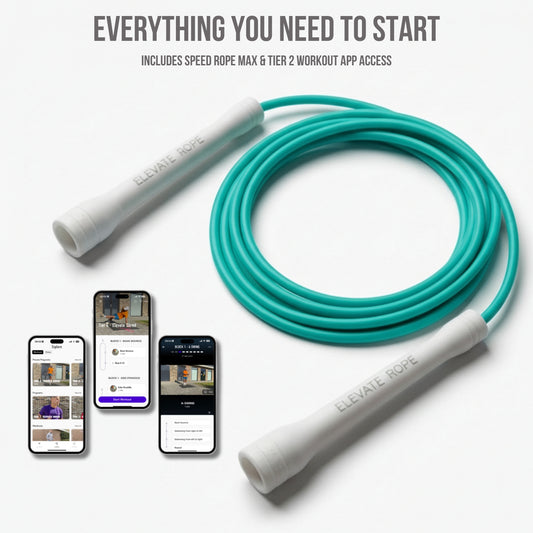
The Elevate Speed Rope uses a flexible 5 mm PVC cable with a nylon core. It works for controlled basic jumps and faster sessions.
If you are still learning jump rope timing, a beaded rope may feel easier to track.
Heavy Rope: More Resistance
A heavy jump rope adds resistance. That also increases the demands on your arms and overall movement.
If your main challenges are balance and basic timing, start with comfortable control. Extra resistance is not automatically better.
Check Your Jump Rope Length
A rope that's too short may catch your shoes. A much longer rope can feel harder to control.
Use the maker's sizing guidance and test the adjustment before trimming. Our jump rope sizing guide shows how to start.
Proper setup can reduce frustration. It does not remove the physical demands of jumping.
6. Five Common Jump Rope Mistakes to Avoid
Mistake 1: Jumping Continuously on Day One
Do not start with a long workout. Practise individual skills first. Short, controlled attempts are a reasonable beginning.
Mistake 2: Jumping Too High
Basic skipping only requires enough height for the rope to clear your feet. Unnecessary height makes every landing more demanding.
Mistake 3: Rotating With Your Whole Arms
Large arm circles can disrupt timing. Keep your elbows relaxed and practise small wrist-led rotations.
Mistake 4: Using an Unsuitable Surface
Avoid uneven, cluttered, or slippery ground. Choose a stable, non-slip surface with enough clear space.
Mistake 5: Ignoring Pain or Instability
New skills can feel challenging. Pain, dizziness, and lost balance are not things to push through.
Stop your jump rope session and choose a safer activity. Seek individual medical guidance when symptoms persist or cause concern.
7. What If You Cannot Jump Yet?
That's okay. And if impact is unsuitable for your health, jumping may never need to be your goal.
Practise Wrist Movements While Seated
Sit comfortably and make small wrist circles. Keep your shoulders relaxed. You can hold the handles without swinging a cord nearby.
Try Gentle Marching
If standing and walking are comfortable, marching offers simple movement practice. Use a safe environment and suitable support when needed.
Explore Timing Without a Rope
Combine slow steps with gentle wrist circles. This is not equivalent to skipping. It simply lets you explore coordination without repeated impact.
Choose Another Activity When Appropriate
Walking, cycling, water exercise, and suitable strength or balance activities may be better choices. The NHS physical activity guidance for older adults offers broader activity advice.
The easiest next step is the one your body can repeat comfortably.

Your movement habit matters more than completing a particular jump rope exercise.
8. How to Practise Jump Rope Without Frustration
Let's talk about something almost every beginner experiences. Tripping.
You turn the rope. You attempt a jump. The rope catches your shoe. Again.
That does not mean you cannot learn. Coordination takes time, and setbacks are normal.
Focus on One Skill
Maybe today is about wrist circles. Maybe your next session is about timing. You can practise jump rope without improving everything together.
Keep Sessions Manageable
Choose a duration that suits your energy and ability. A brief, deliberate practice is better than forcing an uncomfortable session.
Notice Small Improvements
Did the rope move more smoothly? Did your grip feel more comfortable? Could you reset calmly after a mistake?
Those are meaningful signs of progress. You are building control and confidence through small actions.
Stop Comparing Yourself
Experienced jumpers have spent time learning. You see their current rhythm, not their first awkward attempt.
Your jump rope journey can begin somewhere entirely different. That is fine.
9. When Should Seniors Avoid or Stop Jump Rope?
Safety matters more than finishing a workout. Stop if you experience pain, dizziness, unusual breathlessness, or loss of balance.
Seek urgent medical help for chest pain or pressure, fainting, severe breathing difficulty, or other serious symptoms.
If you have osteoporosis, fragility fractures, significant fall risk, or relevant cardiovascular concerns, seek individual guidance before repeated jumps.
Persistent pain after exercise deserves assessment. Do not assume discomfort is simply part of ageing.
Jump rope is one possible activity, not a requirement. If another form of movement suits you better, choose it confidently.
10. The Bigger Benefit of Learning Something New
There is something special about trying a new skill later in life. Not because you must prove anything.
You are giving yourself permission to be a beginner again.
Over time, familiar routines can feel easier than exploring. But new movements can make exercise interesting again.
Maybe that movement is jump rope. Maybe it is dancing, swimming, or a strength exercise.
Give Yourself Permission to Start Small
You do not need instant results. Learning begins with trying an appropriate movement and giving yourself room to improve.
Make Movement Enjoyable
Choose music you like. Practise in a comfortable place. Focus on how the session feels, not your jump count.
Build Confidence Through Manageable Actions
Every suitable practice session is a promise you kept to yourself. It does not need to be dramatic.
Small actions can become meaningful habits when they fit your life. That is the spirit of the Elevate Code.
Start Your Jump Rope Journey With Elevate
Interested in learning basic skipping? A beaded rope provides noticeable rotation feedback while you practise timing and control.
Elevate's beginner training resources can help you explore techniques at your own pace. They cannot replace individual medical advice.
If a rope-based routine suits you, explore the Elevate Ascent Bundle. Start with comfortable movements. Build from there.
Final Thoughts: Every New Skill Starts Somewhere
Maybe you are sixty. Maybe you are seventy. Maybe you have never held a jump rope before.
That does not mean you cannot explore something new. And it does not mean you must jump.
Start with the movement that suits you. Practise the basics. Celebrate small improvements.
A new fitness journey does not need an impressive beginning. Sometimes, it starts with curiosity. Sometimes, with one controlled movement.
Keep learning. Keep moving. Keep showing up.
For another way to build a habit, explore the Elevate26 Challenge. Choose only activities that suit your body.
Frequently Asked Questions
Can seniors learn jump rope even after age 70?
Some older adults can learn jump rope at seventy or later. Your age alone does not decide whether it is appropriate. Balance, joint health, previous injuries, current activity, and impact tolerance matter more. Start with coordination drills. Ask a qualified healthcare professional before jumping if you have relevant conditions or fall concerns.
Is jump rope safe for seniors with knee pain?
Do not push through knee pain to learn jump rope. Repeated hopping can place additional demands on the joints. Stop painful movements and consider lower-impact options. If pain persists, recurs, or affects daily movement, ask a qualified clinician for an assessment. A comfortable seated or standing coordination drill may be a better starting point.
What is the easiest jump rope exercise for beginners?
Gentle wrist circles are an accessible introduction for many beginners. You can practise while seated or standing comfortably. Marching and small weight shifts can introduce foot rhythm separately. Neither drill requires jumping. Choose exercises that match your ability, and stop if you feel unstable, dizzy, or uncomfortable during movement.
Can I practise skipping without jumping?
Yes. You can practise the hand movement, hold the rope, or rotate it slowly beside your body. You can also combine comfortable marching with wrist circles without using a rope. These drills introduce coordination. They do not replicate the impact of real skipping or guarantee that later jumping will be safe.
What type of jump rope works best for an older beginner?
An adjustable beaded rope can provide useful feedback because you can feel its rotation. That may help you understand timing. A speed rope is another option once control improves. However, the best choice depends on comfort, mobility, and goals. You can begin learning wrist movements without buying any rope.
How long should seniors practise jump rope?
There is no single duration that suits everyone. Start with a manageable amount of coordination practice, even if it lasts only a few minutes. If jumping is appropriate, use short attempts with plenty of rest. Stop before technique breaks down. Recovery needs and session frequency depend on your conditioning and health.
About Elevate Rope
Elevate Rope was founded by Geraldo Alken to make movement more approachable and enjoyable. We help beginners turn motivation into lasting habits.
Our community includes more than 50,000 customers. We believe confidence grows when you keep small promises to yourself. Together We Elevate.