







This jump rope buying guide exists because most people buy the wrong rope first — and then quietly decide jumping rope "isn't for them." It almost always is. The problem wasn't you. It was a cheap, badly balanced rope that tangled, whipped your shins and tripped you every fifth rep until you gave up.
The right rope changes everything. It spins predictably, fits your height, matches your goal, and disappears into the background so you can actually train. The wrong one quietly sabotages you before you've had a chance to build a habit.
So in this jump rope buying guide we'll walk through every type of rope, what the differences actually mean for you, how to size one correctly, what to look for in the build, how much you should spend, and which rope fits your specific goal. By the end you'll know exactly what to buy — and why — instead of guessing.
What you'll learn
- The main types of jump ropes and who each one is built for
- The 7-point checklist for spotting a quality rope
- How to size a jump rope to your height correctly
- Why the bearing system matters more than the price tag
- How much you should actually spend (and the subscription trap to avoid)
- A quick decision guide to match a jump rope to your goal
- Whether to buy one rope or a bundle
Why choosing the right jump rope matters more than you think
Here's something nobody tells you: the most common reason beginners quit jumping rope has nothing to do with fitness. It's the jump rope. A rope that's the wrong length, too light to feel, or fitted with a janky spin mechanism will trip you constantly. Every trip is a tiny failure, and after enough of them your brain decides the activity is frustrating and not worth it.
We've watched this play out across a community of more than 50,000 jumpers. The people who stick with it almost always started with a jump rope that fit them and suited their level. The people who quit usually started with whatever was cheapest. That's why this jump rope buying guide spends so much time on fit and build quality — because those are the things that decide whether you'll still be jumping in three months.
The good news: getting it right isn't complicated or expensive. You just need to know what to look for.

The main types of jump ropes (and who each is for)
Not all ropes are built for the same job. Picking the right type is the single most important decision you'll make, so let's break down the main categories and exactly who each one suits. For an even deeper breakdown, see our full guide to the types of jump ropes explained.
Beaded ropes — best for beginners
A beaded rope has plastic segments threaded along a cord. Those beads add a little weight and create a satisfying click on each rotation, which gives you clear rhythm and feedback. That feedback is gold when you're learning — you can literally hear and feel your timing. Beaded ropes are slightly slower and more forgiving, which makes them the easiest place to start. If you're new, begin here with a → beaded rope.
Speed ropes — best for cardio, HIIT and conditioning
Speed ropes use a thin, light cable that spins fast — built for high rotation counts, double-unders and intense interval work. Once your timing is solid, a speed rope lets you crank intensity for serious calorie burn and conditioning. This is the workhorse most people graduate to. Browse the → speed ropes collection when you're ready to pick up the pace.
Weighted ropes — best for breaking plateaus and building strength
A weighted rope adds load to the cable (or handles), forcing your shoulders, arms and core to work harder. The extra resistance recruits more muscle, raises your burn, and is brilliant for pushing past a plateau once basic jumping feels easy. Our → TITAN 7MM weighted rope is the go-to here — heavy enough to challenge you, balanced enough to still flow.
Heavy ropes — best for strength-cardio hybrid training
Heavier than a weighted speed rope, true heavy ropes turn skipping into a full strength-and-cardio session. Each rotation demands real effort from your upper body, so you build muscular endurance while spiking your heart rate. If you want one tool that trains strength and conditioning together, explore the → heavy ropes collection.
Long handle ropes — best for tricks and freestyle
Longer handles give you more leverage and control for crossovers, releases and freestyle skills. If your goal is learning tricks and developing flashy footwork rather than pure conditioning, a → long handle rope is the right tool.
Double dutch ropes — best for group and partner skipping
For the classic two-rope, multi-person game, you need proper long ropes designed for it. If you're training with kids, a class or a group, a dedicated → double dutch rope is the way to go.
Short answer: Beginners should start with a beaded rope; most people then move to a speed rope, while weighted and heavy ropes are for building strength and breaking plateaus.
Why it matters: Matching the jump rope type to your level prevents the trip-and-quit cycle that ends most people's jumping before it begins.
Best next step: Pick the type that matches where you are today, not where you hope to be in a year.
What to look for in a good jump rope: the 7-point checklist
Once you've picked a type, quality decides whether the jump rope lasts and feels good to use. Run any jump rope you're considering through these seven checks.
- 1. The cable or cord. Look for a coated, kink-resistant cable on speed ropes, or sturdy, well-strung beads on beaded ropes. Bare, cheap cable kinks fast and snaps.
- 2. The handles. Comfortable grip, a length that fits your hands, and a secure connection to the cable. Loose or slippery handles ruin your timing.
- 3. The bearing system. This decides how smoothly the jump rope spins. More on this below — it's a big one.
- 4. The weight. Light for speed, heavier for strength. The right weight for your goal is one you can feel without it fatiguing you in 30 seconds.
- 5. Adjustability. A rope you can size to your height is far better than a fixed length that's slightly wrong.
- 6. Build quality. Check reviews for tangling, snapping and durability complaints. A rope is cheap to make badly.
- 7. Brand support. A guarantee, real reviews and help if something breaks tell you the brand stands behind the product.
For reference, every Elevate Rope is backed by 1,200+ verified reviews and a 30-day guarantee — exactly the kind of support point seven is about.
Short answer: A good jump rope has a smooth bearing, a kink-resistant cable, comfortable handles, the right weight for your goal, and adjustable length.
Why it matters: These are the exact features that separate a jump rope you'll love from one that ends up in a drawer.
Best next step: Read our deep dive on jump rope materials compared before you buy.

How to size a jump rope correctly
Length is the most overlooked spec — and the one that causes the most trips. Too long and the jump rope slaps the ground and drags; too short and it clips your head and feet. Here's the quick method.
Stand on the middle of the jump rope with one foot and pull both handles straight up. For most people, the handles should reach roughly to your armpits or just below. Taller jumpers and beginners can leave a touch more length; advanced jumpers doing speed work often run theirs shorter for faster rotations. A rope you can adjust lets you fine-tune as your skill grows.
As a rough starting point by height: under 165 cm (5'5") suits a shorter rope, 165–183 cm (5'5"–6'0") a standard length, and over 183 cm (6'0") a longer one. For the full method with measurements, see our guide on how to size a jump rope correctly.
Bearing-free vs ball-bearing: why the spin system matters
The bearing system is how the cable rotates inside the handle, and it has an outsized effect on how the rope feels. Cheap ropes often spin on a basic pivot that catches and stutters, throwing off your rhythm. Higher-end ropes use ball bearings or a precision bearing-free design for a consistent, predictable spin.
This matters most for beginners, ironically. A jerky spin makes it almost impossible to find a rhythm, which is exactly when you most need one. Our ropes use a bearing-free design engineered for smooth, tangle-free rotation — it spins the same way every time, so the rope does what you expect instead of fighting your wrists. We compare the two systems in detail in bearing-free vs ball-bearing ropes.
How much should you spend on a jump rope?
You don't need to spend a fortune — but the very cheapest ropes are a false economy. A €3 rope from a discount bin will kink, tangle and snap within weeks, and the frustration costs you far more than the few euros you saved. The sweet spot is a well-built rope from a brand that backs it with reviews and a guarantee.
Watch out for the subscription trap
Here's a cost most buyers don't see coming. Some jump rope brands lock their workouts and app behind a yearly subscription — competitors like Crossrope can run around $120 a year, every year, on top of the rope. That's a recurring bill for content that should come free with your gear.
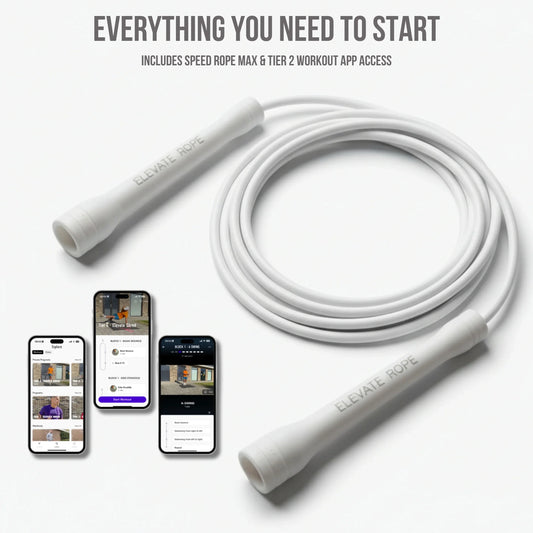
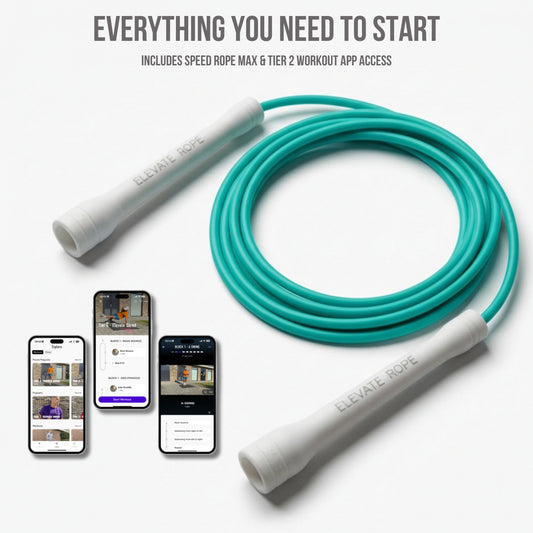
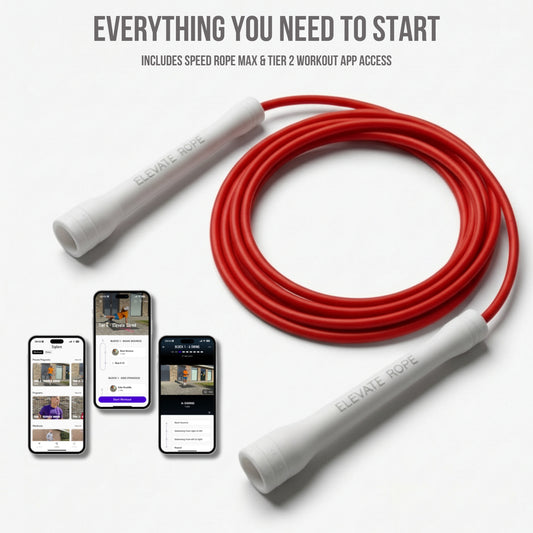
We do the opposite. Every Elevate Rope comes with free access to 100+ app workouts and the structured Elevate 26 Challenge — no subscription, ever. You buy the rope once and you're done. We break the maths down fully in subscription vs one-time buy.
Short answer: Avoid the cheapest ropes and avoid subscription models — buy one well-built rope with free workouts included.
Why it matters: A quality rope lasts for years, and a no-subscription brand saves you a recurring annual bill.
Best next step: Factor in total cost over a year, not just the sticker price.
Which jump rope should you buy? A quick decision guide
Let's make this simple. Match yourself to the description that fits and you'll have your answer.
- Total beginner, never skipped: Start with a → beaded rope for rhythm and feedback.
- Want cardio, fat loss or HIIT: Go with a → speed rope.
- Plateaued and want more challenge: Step up to the → TITAN 7MM weighted rope.
- Want strength and cardio in one: Choose a → heavy rope.
- Learning tricks and freestyle: Pick a → long handle rope.
- Not sure / want to progress over time: Get a bundle and own the whole path.
Still torn between two? Our speed vs beaded rope and weighted vs regular rope comparisons settle the most common dilemmas.
One rope or a bundle?
If you already know your level and goal, a single rope is perfect. But most people's needs change as they improve — the beaded rope that taught you rhythm won't challenge you in three months, and you'll want a speed or weighted rope next. Buying ropes one at a time usually costs more in the long run.
That's why bundles are popular: they give you a progression path in one box at a lower combined price, so you're never stuck waiting on your next order to keep improving. We weigh it up in why a bundle beats buying ropes separately.

Frequently asked questions
What type of jump rope is best for beginners?
A beaded rope is the best choice for beginners. The added weight and rhythmic click give you clear timing feedback, and the slightly slower, more forgiving spin makes learning far less frustrating than starting on a fast, thin speed rope.
How do I know what size jump rope to buy?
Stand on the middle of the rope and pull the handles up — they should reach about armpit height. Choosing an adjustable rope is the safest option, since you can fine-tune the length as your skill improves and shorten it for faster work later.
Are expensive jump ropes worth it?
You don't need the most expensive rope, but the very cheapest ones tangle and break quickly. The real value is in a smooth bearing, a durable cable and brand support — features that keep you jumping rather than quitting. A mid-range quality rope is the smart buy.
What's the difference between a speed rope and a weighted rope?
A speed rope uses a thin, light cable for fast rotations, ideal for cardio and HIIT. A weighted rope adds load to challenge your muscles and raise the burn, making it better for strength and breaking plateaus. Many jumpers eventually own both.
Do I need a special rope for double-unders?
A thin, fast speed rope makes double-unders much easier because it rotates quickly with less effort. You can learn them on a beaded rope, but most people find a speed rope the better tool once they're working on faster skills.
Should I buy a jump rope with a subscription app?
You don't need to. Some brands charge a yearly subscription for their app — often around $120 a year. Look for a jump rope that includes free workouts instead, so you pay once and keep full access without a recurring bill.
How many jump ropes do I actually need?
One good jump rope is enough to start. But as you progress from learning to conditioning to strength, you'll likely want a second or third for different training styles. A bundle covers that progression in one purchase — see our guide on whether you need more than one jump rope.
Your next step
You now know how to read any jump rope on the market — the type, the build, the size, the spin and the true cost. The only thing left is to pick the one that fits you and start.
- Brand new? Begin with a → beaded rope.
- Here for cardio? Grab a → speed rope.
- Ready for more? Step up to the → TITAN 7MM weighted rope.
- Want it all? Choose a bundle and grow into it.
Every rope is backed by 1,200+ verified reviews, a 30-day guarantee, free shipping on orders over €50 (EU, UK, Australia, USA and Canada), and free app workouts with no subscription, ever. Browse the full range at the Elevate Rope store and buy the right rope the first time. Use this jump rope buying guide as your checklist and you'll never waste money on the wrong rope again.
Sources
- American Council on Exercise. Jumping Rope: Technique and Benefits. acefitness.org
- Harvard Health Publishing. Calories burned in 30 minutes of activity. health.harvard.edu
- Ainsworth BE, et al. 2011 Compendium of Physical Activities. pacompendium.com
- Centers for Disease Control and Prevention. Physical Activity Basics. cdc.gov