







The beaded vs speed rope question is the first decision most beginners get wrong. They buy the cheapest speed rope available, struggle for weeks, and conclude that jump rope is simply not for them. It is not a skill problem. It is an equipment problem. This guide explains exactly what each rope type does, who it is built for, and which one to buy if you are starting from zero.
What you'll learn
- Why rope type matters more than most beginners realise
- What a beaded rope is and who it is for
- What a speed rope is and who it is for
- What a weighted rope is and who it is for
- Full comparison table: beaded vs speed vs weighted
- Which jump rope should a beginner actually buy?
- When to switch ropes
- Frequently asked questions
Why Rope Type Matters More Than Most Beginners Realise
Not all jump ropes do the same thing. The differences are not cosmetic. They are physical — cord weight, diameter, air resistance, rotation speed — and those physical differences determine whether a beginner can learn on a rope at all.
A lightweight speed rope rotates fast and gives your brain almost no information about where it is mid-air. For a beginner, that means guessing. You trip. You try again. You trip again. After enough trips, the conclusion most people reach is that they are not coordinated enough for jump rope. They are wrong. The rope was wrong.
Choosing the correct jump rope type before your first session removes the most common reason beginners quit. That is the purpose of this guide.
Short answer: A beaded jump rope is the correct starting point for most beginners. It is slower, provides clear tactile feedback, and shortens the learning curve significantly. A speed rope comes later, once you have built consistent timing and coordination.
Why it matters: The wrong rope type is the primary reason adults struggle to learn jump rope, not coordination or fitness level.
Best next step: Read the sections below for each rope type before making a decision.

What Is a Beaded Jump Rope?
Beaded Jump Rope
Cord: 3.5mm polycord · Beads: 2.5cm PVC · Weight: moderate · Speed: slow-to-medium · Price: €29.95Recommended for Beginners
A beaded jump rope threads a series of plastic beads along a polycord. The beads are typically 2 to 3 cm in diameter. They catch air during rotation, which creates natural drag. That drag slows the rope to a learnable speed and gives the cord weight and shape throughout the arc.
The result is a rope your body can track. You feel the rope's position through your hands and forearms at every point in the rotation. When the beads contact the ground, the sound creates a rhythmic timing signal. Your brain synchronises with that signal before your eyes can even process the visual information.
This is why jump rope coaches use beaded ropes for beginners. Not because they are easier in an abstract sense, but because they provide the feedback that makes learning possible.
Who the beaded rope is built for
The beaded jump rope is the right choice if you have never jumped rope as an adult, you have tried before and tripped repeatedly, you want to learn freestyle tricks like crosses and side swings, or you are under 12 or teaching children.
Beaded ropes are also the default choice in competitive jump rope. Freestyle athletes use them for trick work because the weight and shape of the rope allows precise control at every point in the arc. The "beginner" label does not mean the rope is primitive. It means it is forgiving while you build skill.
What the beaded rope does not do well
Beaded jump ropes are not built for high-speed cardio or double unders. The drag that helps beginners learn eventually becomes a limitation. Once you can string 50 to 100 consecutive jumps with clean technique, the beaded rope has done its job and a speed rope becomes more appropriate.
Beaded ropes are also bulkier to travel with and louder than PVC cables. Neither is a problem for most beginners, but it is worth noting.
→ TheElevate Dignity Beaded Rope uses a 3.5mm polycord — 17% thicker than the industry standard — with 2.5cm PVC beads. Adjustable from child height to tall adults. Includes free app access with 100+ beginner workouts. No subscription fee.
What Is a Speed Rope?
Speed Jump Rope
Cord: 5mm PVC with nylon core · Beads: none · Weight: light · Speed: fast · Price: €29.95For Intermediate Jumpers Onward
A speed rope uses a thin PVC or wire cable with no beads. It is light, fast, and designed for high-rotation training. The cord offers minimal air resistance. It passes under your feet faster than a beaded rope and requires less effort per rotation once you have the timing dialled in.
The tradeoff is feedback. A speed rope tells you almost nothing about where it is mid-air. For someone who already has the timing and rhythm from learning on a beaded rope, that is fine. For a beginner, it is the source of constant tripping.
Who the speed rope is built for
A speed rope fits you if you can already do 30 or more consecutive jumps with good form, you want to build cardio fitness or HIIT endurance, you are training for double unders, or you have used a jump rope before and are returning after a gap.
Speed ropes are the standard tool for jump rope cardio training. The faster rotation means you burn more energy per minute and can maintain higher jump rates. Research published in the Journal of Sports Sciences confirms that jump rope at moderate-to-high intensity produces cardiovascular adaptations comparable to other high-intensity cardio modalities.
What the speed rope does not do well
A speed rope is not a learning tool. It is a performance tool. The feedback gap that makes it efficient for trained jumpers makes it frustrating for beginners. If you are starting from zero, a speed rope will extend your learning timeline by weeks.
Speed ropes with wire cables are even less suitable for beginners. Wire moves faster than PVC and stings on contact. A 5mm PVC speed rope is more forgiving than wire, but still not a beginner rope.
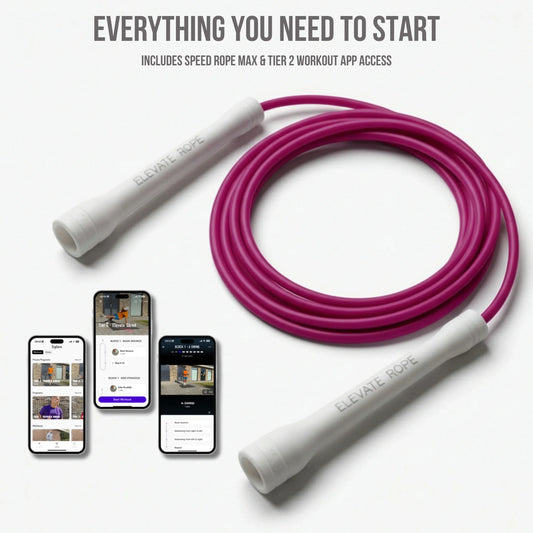
→ When you are ready to move up, theElevate Speed Rope range uses 5mm PVC with a nylon core — bearing-free for natural rotation, adjustable with scissors, no tools required.
What Is a Weighted Jump Rope?
Weighted Jump Rope (TITAN 7MM)
Cord: 7mm PVC · Handles: 15cm ergonomic · Weight: moderate-heavy · Speed: medium · Price: €39.95For Intermediate to Advanced Jumpers
A weighted jump rope uses a heavier cord — typically 7mm to 10mm — to add resistance to every rotation. The extra weight engages your shoulders, arms, and core more than a standard speed rope. It is used by athletes who want to develop upper-body endurance alongside their jump rope cardio.
The TITAN 7MM sits in the middle ground between a standard speed rope and a heavy training rope. It is heavier than a speed rope but lighter than a full conditioning rope. That makes it usable for extended cardio sessions without the shoulder fatigue that a very heavy rope produces.
Who the weighted rope is built for
A weighted jump rope is the right choice if you can already jump for 5 minutes continuously, you are a boxer, CrossFit athlete, or HIIT trainer who wants to add upper-body load to your jump rope sessions, or you have hit a fitness plateau with a standard speed rope and want more resistance.
The NSCA's guidance on jump rope training notes that increasing rope weight recruits additional upper-body musculature and elevates metabolic demand without requiring a faster jump rate. For intermediate athletes, that is a useful training variable.
What the weighted rope does not do well
A weighted jump rope is not a beginner tool. The added resistance helps trained jumpers build strength. For someone still learning timing and coordination, that same resistance makes the learning process harder, not easier. Start with a beaded rope. Move to a speed rope. Add a weighted rope when your technique is consistent and you want a new training stimulus.
→ TheElevate TITAN 7MM is the weighted option built for intermediate to advanced training. 7mm PVC cord, 15cm ergonomic handles, adjustable length.
Full Comparison: Beaded vs Speed vs Weighted Jump Rope
| Feature | Beaded Rope | Speed Rope | Weighted Rope (7MM) |
| Cord diameter | 3.5mm polycord + 2.5cm beads | 5mm PVC + nylon core | 7mm PVC |
| Rotation speed | Slow to medium | Fast | Medium |
| Tactile feedback | ✓✓ High | ✗ Low | ✓ Medium |
| Auditory feedback | ✓✓ Beads on ground | ✗ Minimal | ✗ Minimal |
| Good for learning | ✓✓ Yes — best option | ✗ No | ✗ No |
| Good for cardio / HIIT | ✓ Moderate | ✓✓ Yes — best option | ✓ Yes, with resistance |
| Good for tricks / freestyle | ✓✓ Yes — preferred for learning crosses | ✓ Advanced users only | ✗ Not designed for tricks |
| Upper-body resistance | Low | Low | ✓✓ High — builds shoulder endurance |
| Double unders | ✗ Not suitable | ✓✓ Yes | ✗ Not suitable |
| Suitable for children | ✓✓ Yes | ✗ Too fast | ✗ Too heavy |
| Recommended skill level | Complete beginner onward | Intermediate onward | Intermediate to advanced |
| Elevate product | Dignity Beaded Rope — €29.95 | Speed Rope / Speed Rope MAX — €29.95 | TITAN 7MM — €39.95 |
Which Jump Rope Should a Beginner Actually Buy?
Buy the beaded rope first. That is the honest answer and there are no meaningful caveats to it.
If you are starting from zero, you do not yet have the timing or proprioceptive awareness to use a speed rope effectively. A beaded jump rope gives your nervous system the feedback it needs to build those skills. Most adults who switch from a speed rope to a beaded rope and follow a structured beginner session reach 10 consecutive jumps in their first 15 minutes.
The beaded rope is also the better starting point if you want to learn freestyle tricks. Crosses, side swings, and releases all become easier when you can feel the rope's arc clearly. That clarity comes from the weight of the beads, not from speed.
The only exception is if you are returning to jump rope after years of prior experience and already have the coordination and timing built in. In that case, a speed rope is a reasonable starting point. But if there is any doubt, start with the beaded rope.
Short answer: Beaded rope first, always, for complete beginners. Speed rope once you can do 50 consecutive jumps with clean form. Weighted rope when you want to add resistance to an established jump rope practice.
Why it matters: Using the wrong rope type in the wrong order is the fastest route to quitting. The progression exists for a reason.
Best next step: If you are starting today, the Dignity Beaded Rope plus the step-by-step technique guide covers everything you need for your first month.
What about buying a bundle?
If you want to skip ahead — that is, you want to start with the beaded rope and already have the Speed Rope waiting for when you are ready — the Ascent Bundle includes both at a better total price than buying separately. It is a practical option for anyone who wants to commit to the full progression from day one.
When Should You Switch Ropes?
There is a clear progression and it is worth knowing in advance.
You are ready to move from a beaded rope to a speed rope when you can do 50 or more consecutive single-bounce jumps with consistent form, you are not tripping regularly, and you want to increase your jump rate or start training double unders.
You are ready to add a weighted rope when you have been using a speed rope consistently for at least four to six weeks, your cardio base is solid, and you want to add upper-body resistance or training variety.
There is no fixed timeline. Some people move through the progression in four weeks. Others stay on a beaded jump rope for months because they are building freestyle skills and the beaded rope remains the right tool for that goal. The progression is about readiness, not schedule.
For a full technical breakdown of how to size any of these ropes correctly, see the jump rope sizing guide. Wrong length is the second most common beginner mistake after wrong rope type, and it is just as fixable.
Frequently Asked Questions
Is a beaded rope good for adults or just kids?
Beaded ropes are the standard rope in competitive freestyle jump rope at every age level. They are used by children because they are forgiving to learn on, and they are used by adult competitors because they allow precise control for tricks and combinations. The "kids rope" label is a marketing artifact, not a functional truth. Any adult learning jump rope for the first time will progress faster on a beaded rope than on a speed rope.
Can I do cardio with a beaded rope?
Yes, but it is not the most efficient tool for it. A beaded jump rope provides a solid cardio workout, particularly in the early weeks of learning. Once you are looking to push your heart rate higher or train double unders, a speed rope becomes the better tool. The beaded rope is primarily a learning rope and a trick rope. The speed rope is the cardio tool.
What is the difference between a speed rope and a speed rope MAX?
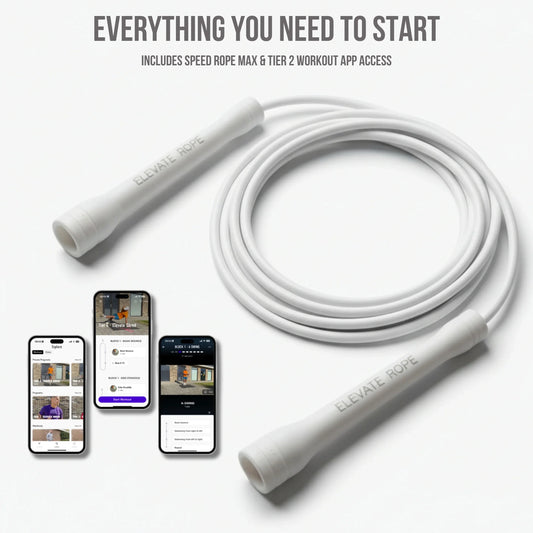
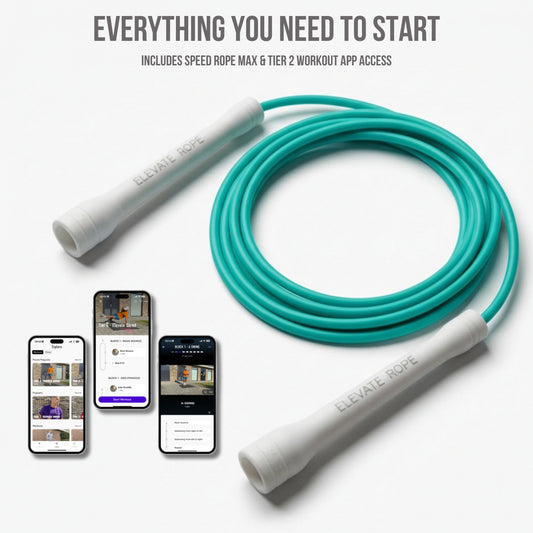
Both use a 5mm PVC cable with a nylon core and bearing-free rotation. The Speed Rope MAX includes the same construction with refined handle ergonomics. For a beginner building toward cardio training, either is appropriate as a second rope after learning on the beaded rope. If you are shopping for a full progression kit, the Ascent Bundle pairs the beaded rope with the speed rope in a single purchase.
Is a weighted rope the same as a heavy rope?
No. These are different rope types with different purposes. A weighted jump rope — like the TITAN 7MM — uses a moderately heavy cord designed for conditioning work while maintaining a reasonable jump rate. A heavy rope, such as a boxing Thai rope, uses a much thicker 10mm+ cord designed for grip strength and shoulder endurance at lower jump rates. The weighted rope is the more versatile option for general fitness. The heavy rope is a specialist tool for combat sports conditioning.
Can I learn double unders on a beaded rope?
No. Double unders require a fast-rotating, lightweight rope. The drag on a beaded jump rope makes the rope speed required for double unders impractical. Learn single bounces on the beaded rope, develop clean timing and consistent form, then switch to a speed rope to begin double under training. Trying to rush this sequence typically results in frustration on both the beaded rope and the speed rope.
Do I need an app to use any of these ropes?
No. The steps in the how to jump rope guide cover everything you need to get started. The free Elevate App — included with every rope, no subscription — adds structured workout programmes and tutorials if you want guided progression. It is a supplement, not a requirement.
Sources
- Trecroci, A. et al. (2015). "Jump Rope Training: Improved 3-m Agility Test Performance in Elementary School-Aged Children." Journal of Sports Sciences. pubmed.ncbi.nlm.nih.gov/26214607
- National Strength and Conditioning Association (NSCA). "Jump Rope Training." NSCA Basics of Strength and Conditioning Manual. nsca.com/education/articles/kinetic-select/jump-rope-training
You May Also Like
- Jump Rope for Beginners: The Complete Guide to Starting (and Sticking With It)
- How to Jump Rope: Step by Step for Complete Beginners
- How to Size a Jump Rope (and Why the Wrong Length Ruins It)
- Best Jump Rope for Beginners in 2026 (No App, No Subscription)
- Your First 30 Days: A Beginner Jump Rope Plan Without the Streak Pressure