





A desk job can make exercise feel harder than it should. Long hours of sitting reduce movement across your entire day.
By evening, many desk workers feel stiff, tired, and mentally drained. That does not mean you need more motivation.
The better solution is reducing friction. Home exercise, movement breaks, and a simple jump rope routine can make activity easier to repeat.
You do not need a perfect schedule. You need a setup that works on busy workdays.
What a Desk Job Does to Your Daily Movement

A desk job often combines commuting, screen time, meetings, and long periods of prolonged sitting.
That creates one obvious problem. You spend fewer hours moving throughout your day.
Higher amounts of sedentary behaviour are associated with poorer health outcomes in adults.
The WHO guidance on sedentary behaviour recommends limiting sedentary time whenever possible.
Replacing sitting with physical activity can help. Even light movement counts when it replaces sedentary time.
A desk worker may also notice stiffness after long periods at a screen.
Hips, calves, shoulders, and the lower back can feel restricted after hours in one position.
That does not mean sitting has permanently damaged those areas.
It means your desk job has included very little movement variety.
Read our guide to sitting eight hours a day for a deeper explanation.
Why a Gym Does Not Solve Every Desk Job Problem
A gym can be useful.
The problem is that a desk job often creates friction before the workout even starts.
You finish work tired. Then you need to change clothes, travel, train, shower, and travel home.
That process can make a short workout feel like a major commitment.
Home exercise removes several of those steps.
You can start moving within minutes of finishing work.
The goal is not proving that home exercise beats a gym.
Both approaches can work.
For a busy desk worker, the best option is often the one used consistently.
If mornings or evenings feel difficult, use our before-work and after-work routine guide.
The Best Desk Job Strategy Starts With Movement Breaks
Your main workout is only one part of the solution.
Movement breaks reduce the time spent in uninterrupted prolonged sitting.
A 2026 systematic review examined regular activity breaks during prolonged sitting.
The researchers found improved post-meal glucose and insulin responses compared with uninterrupted sitting.
Read the systematic review on activity breaks for the research.
You do not need a hard workout every hour.
Short walking breaks can interrupt prolonged sitting.
Stand between meetings when possible.
Walk while taking a phone call.
Refill your water away from your desk.
Take the stairs when that fits your day.
These movement breaks do not replace structured exercise.
They simply make your desk job less sedentary.
For many desk workers, this is the easiest place to start.
Why Home Exercise Works for Busy Desk Workers
Home exercise reduces the gap between deciding to move and actually starting.
That matters after a mentally demanding desk job.
You can keep your equipment visible.
There is no commute before your workout.
A ten-minute session becomes realistic because the setup takes little time.
Home exercise also lets you control the intensity.
Walking, mobility, strength work, and jump rope can fit into the same routine.
Current CDC activity guidance for adults recommends at least 150 minutes of moderate activity weekly.
Adults are also advised to include muscle-strengthening activity.
You do not need to complete all activity in one long workout.
Start smaller if you are currently inactive.
Build your weekly movement gradually.
Why Jump Rope Fits a Desk Job Routine

Jump rope works well at home because it needs little space and minimal setup.
A jump rope session combines cardiovascular work with rhythm and coordination.
That makes it practical after a desk job.
You also control the pace.
Beginners can use short intervals with full rest between rounds.
A beaded jump rope is often practical when you are still learning.
The beads provide clear feedback during each rotation.
That can make your timing easier to understand.
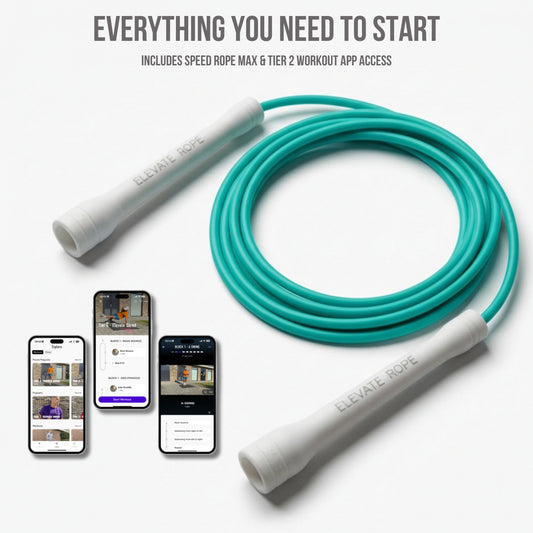
If you are starting from zero, consider the Elevate Beaded Rope.
Do not chase maximum speed during your first sessions.
Build a repeatable home exercise habit first.
Add Mobility Before Jump Rope
Jump rope should not be the only movement in your routine.
A desk job can leave you feeling stiff after hours in one position.
Use a few minutes of mobility before training.
Try gentle hip movements, thoracic rotations, ankle mobility, and controlled squats.
Keep every movement comfortable.
Mobility should prepare you for exercise.
It should not become a pain test.
This short sequence also creates a transition from work into training.
You stop sitting and deliberately start moving.
That simple shift can make home exercise easier to begin.
Add Simple Strength Work
Home exercise becomes more complete when basic strength work is included.
You do not need a large equipment setup.
Squats, glute bridges, push-ups, and controlled hip hinges cover several major movement patterns.
Choose exercises you can perform with good control.
A desk worker does not need a complicated programme on day one.
Two or three exercises after jump rope can be enough.
Strength work also creates variety during the week.
That matters when repeated cardio sessions start feeling monotonous.
Gym Membership vs Home Exercise
The main difference is not which option looks more serious.
The difference is the friction between intention and action.
| Option | Travel | Ongoing Cost | Space | Setup |
| Gym membership | Usually required | Monthly | Gym space | Travel, change, train |
| Home exercise | None | Low or none | Small area | Start at home |
| Jump rope | None | One-time equipment | Small clear area | Rope, shoes, safe surface |
| Movement breaks | None | None | Almost anywhere | Stand up and move |
A gym offers equipment, coaching, and community.
Those benefits matter for many people.
Home exercise offers accessibility.
That matters when a desk job already consumes much of your day.
Neither option wins automatically.
Choose the setup you can repeat during difficult weeks.
A 4-Week Desk Job Exercise Plan
This four-week plan follows one principle.
Build the habit before increasing the workload.
Week 1: Create the Trigger
Choose three to five workdays.
Do ten minutes of home exercise at the same time each day.
Start with 30 seconds of jump rope.
Rest for 30 seconds.
Repeat at an easy pace.
Stop before your technique becomes sloppy.
The goal is not exhaustion.
Connect your desk job to a predictable movement trigger.
Week 2: Add Mobility
Keep your jump rope intervals manageable.
Add five minutes of mobility before training.
Focus on your ankles, hips, and upper-back rotation.
Movement should feel controlled.
Avoid forcing stiff areas.
You are building a routine that makes movement easier after prolonged sitting.
Week 3: Add Strength
Keep the home exercise session short.
Add squats and glute bridges after your jump rope intervals.
Use controlled repetitions.
Stop before your form breaks down.
A desk worker benefits from variety more than random intensity.
Movement breaks during your workday should also feel more automatic by now.
Week 4: Progress One Variable
Increase only one part of the session.
Extend your intervals, add another round, or increase the pace slightly.
Do not change everything simultaneously.
Progress should still fit around your desk job.
Reduce the workload if your routine suddenly becomes difficult to maintain.
Consistency is more useful than one impressive week.
How to Make the Habit Survive Busy Workdays
The hardest workout is often the one requiring too many decisions.
Prepare your environment before motivation disappears.
Keep your jump rope visible.
Place your training shoes near your desk.
Choose a fixed time for home exercise.
Link the session to an existing workday habit.
You might train directly after closing your laptop.
Another desk worker may prefer moving before the first meeting.
Neither approach is universally better.
The useful option is the one you repeat.
Use the same principle for movement breaks.
Calendar reminders can help until standing and walking feel automatic.
Do not judge every session by performance.
Measure whether you kept the appointment with yourself.
What If You Are Completely Out of Shape?
Start smaller.
A desk job does not mean you need intense cardio immediately.
Begin with walking and movement breaks.
Add mobility and basic strength when those feel comfortable.
Then introduce jump rope through short intervals.
Thirty seconds can be enough for your first round.
Rest fully before repeating.
Pain should not be ignored.
Get appropriate professional guidance for significant joint problems or medical concerns.
Home exercise should meet you where you are today.
What If Jump Rope Feels Too Loud at Home?
Noise matters when you live in an apartment.
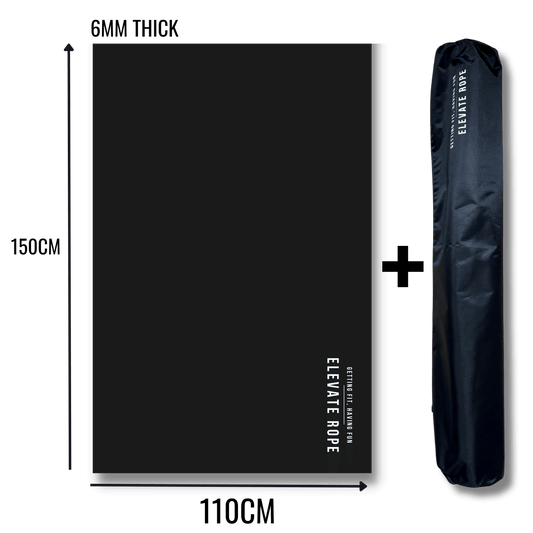
A suitable mat gives your jump rope a more consistent training surface.
It also protects the rope from rough flooring.
Consider the Elevate Jump Rope Mat for a dedicated home setup.
Keep your jumps low.
Land softly and avoid unnecessary height.
Train at reasonable hours when neighbours live nearby.
Your desk job routine must work with your home environment.
A setup that constantly causes problems will not remain convenient.
Your Desk Job Does Not Need a Perfect Fitness Plan
A desk job creates a simple challenge.
Your working day contains too much sitting and too little movement.
The solution does not require a complete lifestyle overhaul.
Start with movement breaks.
Build a short home exercise routine.
Add jump rope when you are ready.
Include mobility and strength.
Then increase the workload gradually.
Your first target is not becoming extremely fit.
Your first target is becoming someone who moves consistently.
That identity survives busy workweeks better than motivation does.
Frequently Asked Questions
Can I Stay Fit With a Desk Job Without Joining a Gym?
Yes. A desk job does not require a gym membership to stay active. Home exercise, walking, movement breaks, strength work, and jump rope can all contribute. Focus on creating regular weekly activity. Reducing long periods of prolonged sitting also matters during the workday.
What Is the Best Exercise for a Desk Worker?
There is no single best exercise for every desk worker. A useful routine combines movement breaks, cardiovascular activity, mobility, and strength. Jump rope works well for home exercise because setup is simple. Walking and bodyweight exercises are also practical choices.
Is Ten Minutes of Home Exercise Enough?
Ten minutes is a useful starting point, especially when your current routine is inconsistent. It is not a complete weekly target. A desk worker can use short sessions to establish the habit. Increase total activity gradually as your fitness and confidence improve.
How Often Should I Take Movement Breaks From a Desk Job?
There is no perfect interval for every person or workplace. Avoid very long periods of uninterrupted prolonged sitting when possible. Stand, walk, or move whenever your work allows. Regular movement breaks can complement your main home exercise sessions.
Is Jump Rope Good After Sitting All Day?
Jump rope can be practical after a desk job when your body tolerates it. Begin with mobility and easy intervals. Keep your jumps low and controlled. Beginners should prioritise rhythm before speed. Stop if pain appears or changes your normal movement.
What Equipment Do I Need for Home Exercise?
You can begin home exercise without equipment. Walking, mobility, squats, and other bodyweight exercises are enough to start. A jump rope adds a compact cardiovascular option. A suitable mat can create a more consistent training area inside your home.
About the Author
Geraldo Alken is the founder and CEO of Elevate Rope. He designs jump ropes and works with jumpers from beginners to advanced athletes.
You May Also Like
- Why You Feel Exhausted After Sitting All Day (And What Actually Fixes It)
- The 10-Minute Rule: How Micro Workouts Are Replacing Hour-Long Gym Sessions
- Jump Rope vs. Walking: Which Is Better for Office Workers Who Sit All Day?
- Why Every Break Room Needs a Jump Rope (The Case for Movement at Work)
- 30-Day Desk Worker Jump Rope Challenge: Transform Your Body Without Changing Your Schedule