





Your gym membership might be the most expensive thing in your life that's actively working against you. That sounds dramatic — but the data backs it up, and the psychology behind it is surprisingly well-documented.
Every January, roughly 12% of all annual sign-ups happen in a single month. The motivation is real. The intentions are good. And yet research consistently shows that 50% of new members quit within the first six months. That's a staggering dropout rate for something people genuinely want to work.
So what's going on? Why does the thing we buy specifically to get healthier so often end up making us less fit, more frustrated, and lighter only in the wallet?
This article isn't about shaming anyone. It's about understanding why the traditional gym membership model fails most people — and what the research says actually works for sustainable fat loss.
What you'll learn:
- Why 67% of gym memberships go completely unused (and the psychology behind it)
- The "moral licensing" trap that makes exercisers eat more
- How commute time and friction silently kill your consistency
- Why shorter workouts outperform long sessions for fat loss
- The research-backed alternative that delivers results in 10 minutes a day
The Numbers Don't Lie: Most Gym Memberships Are Wasted Money
Let's start with the uncomfortable truth that the fitness industry doesn't love talking about. According to data compiled by IHRSA, approximately 67% of gym memberships go completely unused. Not underused — unused. Two-thirds of people paying monthly fees never walk through the door.
The financial cost is staggering. Americans waste an estimated $1.8 billion annually on memberships they never use. The average gym membership costs roughly $58 per month — around $696 per year — on a service most people barely touch. For context, that's nearly €650 every year thrown away on something that's supposed to be improving your life.
And it's not just about the money. There's a psychological cost too. Every month that direct debit leaves your account and you haven't gone, it chips away at your self-trust. You start to believe you're someone who "can't stick with things." You internalise the failure. And that identity erosion is far more damaging to your long-term health than any single missed workout.
Short answer:Most gym memberships go unused. Research shows 67% of members never attend, and 50% of new sign-ups quit within six months.
Why it matters:You're not just wasting money — you're eroding your self-trust every month you don't go, making it harder to start any fitness habit in the future.
Best next step:Read on to understand whythis happens — it's not about willpower, it's about system design.
The Friction Problem: Why Your Gym Membership Demands Too Much Time
Here's something the marketing brochures never mention: the single biggest predictor of whether you'll actually use your gym membership consistently isn't motivation, equipment quality, or even the classes on offer. It's proximity — how far you live from the facility.
Research on exercise adherence consistently shows that every additional minute of commute time decreases the likelihood of going. It sounds obvious when you say it out loud, but most people don't factor this in when they sign up. They choose the place with the best equipment, the nicest changing rooms, or the cheapest deal — not the one they'll actually get to.
Think about what a typical visit actually requires: pack a bag, drive or commute, find parking, change, warm up, work out for 45–60 minutes, cool down, shower, change again, commute home. That "one-hour workout" just became a two-hour commitment. For a busy parent juggling work and school pickups, or someone already exhausted after a long shift, that two-hour block simply doesn't exist most days.
This is the friction problem. It's not that people are lazy. It's that the gym membership model demands a level of time commitment that doesn't fit how most people actually live. And when something doesn't fit your life, you stop doing it — not because you lack discipline, but because you're human.
The research on why shorter workout sessions work better is clear: reducing friction — making exercise faster, simpler, and more accessible — dramatically increases the odds you'll actually do it.
Moral Licensing: Why Your Gym Membership Makes You Eat More
This one is fascinating and counterintuitive. There's a well-documented psychological phenomenon called "moral licensing" — the tendency to reward yourself for doing (or even just planning to do) something virtuous. And it turns out that simply holding a gym membership can trigger it.
Research published in Marketing Letters found that when physical activity is framed as "exercise" rather than "fun," people subsequently consume significantly more food — particularly hedonic snacks. Just the perception of having worked hard made them feel entitled to eat more. Other research has shown that people consistently overestimate how many calories they burn and then overcompensate with food — sometimes eating back more than they burned.
Here's how this plays out in real life: You drag yourself to the gym after work. You spend 45 minutes on the treadmill. You burned maybe 300–400 calories. You feel good — you earned it. So you grab a takeaway on the way home, or you have that extra portion at dinner, or you treat yourself to dessert. After all, you went today. You deserve it.
Except that post-workout meal just erased your entire calorie deficit — and then some. This isn't a failure of willpower. It's a predictable psychological response that the gym membership model inadvertently encourages. The longer and harder you feel you've worked, the stronger the licensing effect.
The "Cardio Compensation" Cycle
This gets worse when your primary activity is steady-state cardio — treadmills, bikes, ellipticals. Research published in the American Journal of Clinical Nutrition documented what scientists call "compensatory behaviour." When people do long, moderate-intensity cardio, their bodies respond not just with increased appetite but with decreased non-exercise activity throughout the rest of the day. You burn 400 calories on the treadmill, then unconsciously move less for the remaining 15 waking hours — taking the lift instead of the stairs, sitting a bit more. Your body quietly claws back a significant chunk of those calories.
The net result? Hours spent at the gym, very little actual progress. Not because the exercise doesn't work — but because the model encourages behaviours that cancel it out.
This is one reason many people looking for alternatives to running for weight loss find better results with shorter, higher-intensity approaches. Less time means less compensation. Less perceived effort means less moral licensing.
Short answer:Having a gym membership can make you eat more through moral licensing — you feel you've "earned" extra food just by exercising (or planning to).
Why it matters:Long sessions amplify this effect. The harder you feel you worked, the more you overcompensate with food — often erasing the calorie deficit entirely.
Best next step:Shorter, more frequent workouts reduce moral licensing because they don't feel like a major sacrifice that deserves a reward.
The Sunk Cost Spiral: Why You Keep Paying and Not Going
If your gym membership isn't delivering results, why don't you just cancel it? Because of the sunk cost fallacy — another well-documented cognitive bias.
Once you've invested money in something, your brain resists admitting it was a bad investment. Cancelling your gym membership feels like admitting defeat. So you keep paying, telling yourself you'll "definitely go next month." Research from Finder.com found that 18% of members who stop attending wait up to a full year before they actually cancel. That's up to $696 spent on something you know you're not using — just to avoid the psychological discomfort of accepting it didn't work.
The fitness industry, to be blunt, is structurally built on this. Gyms oversell memberships because they know most people won't show up. A typical commercial gym would physically overflow if all its members turned up on the same day. The business model relies on non-attendance. Your unused gym membership isn't a bug — it's a feature.

The Intimidation Factor Nobody Talks About
Let's address something the fitness industry loves to minimise: gym anxiety is real, and it's a significant barrier for the very people who would benefit most from exercise.
If you're overweight, out of shape, or a complete beginner, walking into a gym full of confident, experienced people is genuinely intimidating. The unfamiliar equipment. The unspoken rules about etiquette. The feeling of being watched or judged. Research published in the Journal of Health Psychology has shown that exercise environments where people feel observed or compared to others can actually decrease motivation and future exercise behaviour.
This disproportionately affects women, older adults, and people who are significantly overweight — essentially, the demographics who stand to benefit the most from regular exercise. The gym membership, ironically, creates the highest friction for the people who need it most.
For many of these people, working out at home removes this barrier entirely. No audience. No comparison. Just you and your workout.
What Actually Works: The Case for Less (But Better)
So if the gym membership model is broken for most people, what does the research say actually works for sustainable weight loss and fitness?
Three things consistently emerge in the exercise science literature: brevity, accessibility, and enjoyment. The workouts that produce long-term results aren't the longest or the hardest — they're the ones people actually do, consistently, week after week.
Brevity: Why 10 Minutes Beats 60
A landmark study by John A. Baker at Arizona State University compared two groups: one that jogged for 30 minutes daily and another that jumped rope for just 10 minutes daily. After six weeks, both groups showed equal improvements in cardiovascular fitness. Ten minutes delivered the same cardiovascular benefit as thirty minutes of jogging — in one-third of the time.
This isn't an isolated finding. Research consistently shows that short, high-intensity workouts can match or exceed the benefits of longer, moderate-intensity sessions — particularly when the goal is fat loss. The mechanism is EPOC (Excess Post-Exercise Oxygen Consumption), commonly called the "afterburn effect." Short, intense sessions create a larger metabolic disturbance, meaning your body continues burning additional calories for hours after you stop.
Accessibility: Remove the Friction
The best workout programme in the world is useless if you can't do it consistently. This is where home-based exercise crushes the gym membership model. Zero commute. Zero packing a bag. Zero shower queues. You can work out in your living room, your garden, a hotel room, or a park. The friction drops to near zero, which is exactly what the adherence research says you need.
Jump rope is arguably the most efficient intersection of these factors. A rope costs less than a single month of any gym membership, fits in any bag, and delivers a full-body calorie burn that rivals or exceeds running. According to Harvard Health Publishing, a 70 kg (155 lb) person burns approximately 372 calories in 30 minutes of jumping rope at a moderate pace — comparable to running at a 10-minute-mile pace, without leaving your house.
Enjoyment: The Most Underrated Factor in Fat Loss
A growing body of research shows that intrinsic enjoyment of exercise is one of the strongest predictors of long-term adherence. Stronger than goals. Stronger than accountability partners. Stronger than discipline.
When you enjoy the activity itself — not just the results — you don't need willpower to show up. You want to. This is why activities with a skill component, like jump rope, tend to have higher retention than repetitive cardio on gym equipment. Every session you get a little better. You learn a new trick. You notice your coordination improving. That progression loop creates intrinsic motivation that no treadmill can replicate.
Short answer:Research shows that short, enjoyable, accessible workouts produce better long-term results than long sessions — not because they burn more calories per session, but because people actually stick with them.
Why it matters:Consistency trumps intensity. A 10-minute daily workout you actually do beats a 60-minute gym session you skip three times a week.
Best next step:Read our complete guide to jump rope calories burned for a full breakdown by weight and intensity.
| Factor | Typical Gym Session | Jump Rope (Home) |
| Total time commitment | 90–120 minutes (including commute) | 10–20 minutes |
| Monthly cost | $58 average (€54) | One-time purchase from €29.95 |
| Calories burned (30 min, 70 kg person) | ~300–400 (treadmill) | ~370+ (moderate pace) |
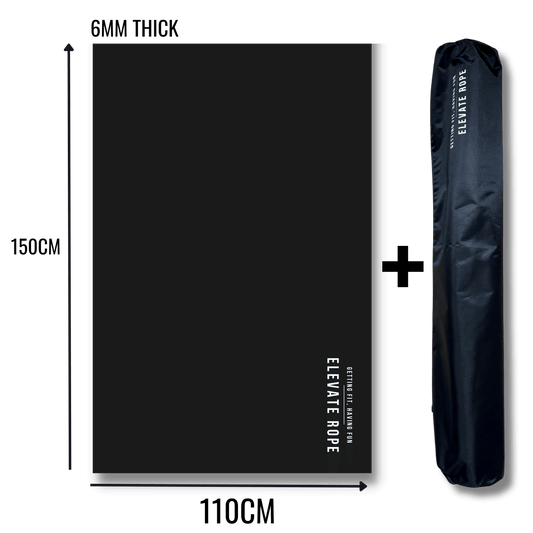
| Equipment needed | Full facility | A rope and a mat |
| Location flexibility | Fixed location | Anywhere |
| Injury risk | Moderate–High (running: 50% annual injury rate) | Low (low-impact when done properly) |

What to Do Instead: A Smarter Approach to Fat Loss
If you're reading this and recognising yourself — paying for a gym membership you barely use, or going consistently but not seeing results — here's the shift that changes everything: stop optimising for the "best" workout and start optimising for the workout you'll actually do.
For most people, that means something short, something you can do at home, and something that has a built-in progression path to keep you engaged. Jump rope ticks every one of those boxes.
If you're a complete beginner, start with a beaded rope. The weight and feedback of the beads make it significantly easier to learn timing and rhythm — it's why every jump rope coach recommends them for new jumpers. As your skills improve, you can progress to a speed rope for faster-paced HIIT sessions, or add a weighted rope like the TITAN 7MM to break through plateaus and build upper-body strength.
This multi-rope progression path — beaded → speed → weighted → heavy — is exactly the kind of built-in variety that prevents the boredom and stagnation that kills traditional routines. And if you want a structured programme to follow, the Elevate 26 Challenge gives you a daily guided plan so you never have to wonder "what should I do today?"
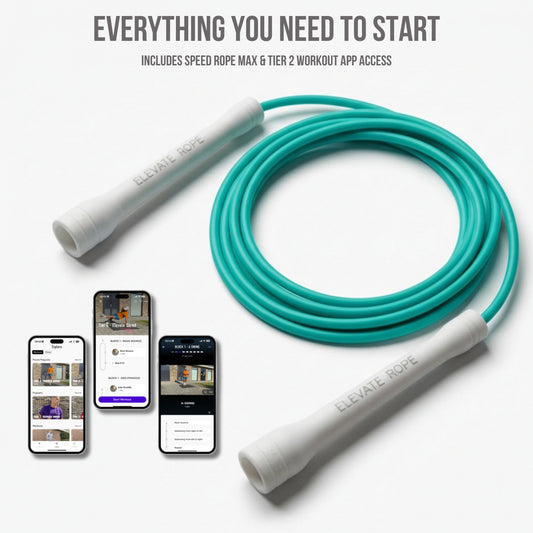
→ Ready to start? Browse our starter bundles — everything you need in one box, for less than one month of most gym memberships.
Frequently Asked Questions
Is a gym membership worth it for weight loss?
For some people, absolutely. If you go consistently 3–4 times per week and enjoy it, a gym membership can be a solid investment. But the data shows that most people don't — 67% of memberships go unused, and 50% of new members quit within six months. If you've struggled with consistency in the past, it may not be a willpower issue. It may be that the model doesn't fit your life. Home-based alternatives like jump rope deliver comparable calorie burn in a fraction of the time.
How much money do people waste on unused gym memberships?
Americans collectively waste an estimated $1.8 billion annually on memberships they don't use. Individually, the average gym membership costs about $58 per month ($696/year). A quality jump rope costs between €29.95 and €89.95 — a one-time investment with no monthly fees.
Why can't I lose weight even though I use my gym membership?
Several factors may be at play. Moral licensing — feeling you've "earned" extra food after a workout — is one of the most common. Compensatory behaviour, where you unconsciously move less throughout the day after exercising, is another. The solution isn't necessarily to exercise more — it's often to exercise smarter. Shorter, higher-intensity sessions like jump rope HIIT workouts can reduce these compensatory effects.
Can jump rope replace a gym membership?
For cardiovascular fitness and fat loss, yes. Baker's 1968 study found that 10 minutes of daily jump rope produced the same cardiovascular improvements as 30 minutes of daily jogging. Jump rope also engages more muscle groups than most cardio equipment, including your shoulders, arms, and core. For heavy strength training, a gym still has advantages — but for fat loss and general fitness, a rope can absolutely replace a gym membership.
What's the best exercise to lose weight at home?
Jump rope consistently ranks among the most efficient home exercises for weight loss. It burns approximately 370+ calories in 30 minutes for a 70 kg person, requires minimal space, and costs a fraction of any gym membership. Our complete guide to jump rope for weight loss breaks down the research in detail.
How many calories does jumping rope burn compared to a gym membership?
According to Harvard Health Publishing, 30 minutes of jump rope at a moderate pace burns roughly 372 calories for a 70 kg (155 lb) person. That's comparable to running at 10 km/h and significantly more than most cardio machines at moderate intensity. Check our jump rope calories burned guide for a full breakdown.
What's the cheapest way to get fit and lose weight?
Home-based bodyweight exercises and jump rope are among the most cost-effective fitness methods available. A quality rope starts from €29.95 — less than one month of a typical gym membership — and lasts for years. Combined with Elevate Rope's free app (100+ guided workouts at no cost), you have a complete training system for less than most people spend on sign-up fees alone.
The Bottom Line
This isn't about gyms being "bad." They're great — for the minority of people who use them consistently. But if you're part of the majority who signs up with good intentions and drifts away within months, the problem isn't you. The problem is friction, time, psychology, and a model that doesn't account for how real life works.
The alternative is simpler than you think. A jump rope. A small space. Ten minutes a day. No commute, no gym membership fees, no audience, no guilt. Just results.
If you're ready to try a different approach, start with our complete guide to jump rope for weight loss — it covers everything from choosing the right rope to building a sustainable routine that actually fits your life.
→ Or skip straight to the gear: browse our jump rope bundles and start for less than the cost of one month of your gym membership.

Sources
- Baker, J.A. (1968). "Comparison of Rope Skipping and Jogging as Methods of Improving Cardiovascular Efficiency of College Men." Research Quarterly, 39(2), 240–243.
- Finder.com. "Americans spend $1.8 billion on unused gym memberships annually."
- Exercise.com. "What percentage of gym memberships go unused?"
- Harvard Health Publishing. "Calories burned in 30 minutes of leisure and routine activities."
- Werle, C.O.C., Wansink, B., & Payne, C.R. (2015). "Is it fun or exercise? The framing of physical activity biases subsequent snacking." Marketing Letters, 26(4), 691–702.
- Martin, C.K., et al. (2019). "Change in food cravings, food preferences, and appetite." American Journal of Clinical Nutrition, 110(3), 583–592.
- Wellness Creatives. "40 Revealing Gym Membership Statistics."
- BarBend. "Gym Membership Statistics."
- Baker, J.A. (1968). Full study — Taylor & Francis Online.
You May Also Like
- The Complete Guide to Jump Rope for Weight Loss
- The Hidden Calorie Trap: Why 30 Minutes of Exercise Might Be Too Much
- 5 Exercises That Burn More Calories Than Running
- The Science of Exercise You Actually Enjoy: Why Fun Beats Discipline
- 10-Minute Workouts: The Science Behind Why Short Sessions Work Better
- Cardio at Home: The Ultimate No-Gym Workout Guide for Weight Loss