





To store a jump rope, coil it in loose loops about the size of your hand-span. Hang it, or lay it flat. Never fold it in half. An Elevate rope has no swivel bearings, so nothing in the handle unwinds a twist for you. Whatever shape you leave it in is the shape you get back.
That's the short version. The longer one explains why a bearing-free rope is stricter about this than the rope you owned before.
Why you store a jump rope without bearings differently
We build our jump ropes without swivel bearings on purpose. Bearings spin the rope faster than your body is actually moving. That pulls the rhythm away from you. Leaving them out is what gives our ropes the feel we want. Reviewers who've come off bearing ropes tend to notice within a session.
There's a trade, though, and this is it. On a bearing rope the handle can rotate independently of the cable. A mild twist works itself out as you jump. Nothing rotates independently on ours. So a twist you put in stays in until you take it out. And a shape the cable sits in for a fortnight becomes the shape the cable has. Engineers call that slow set creep.
So the way you store a jump rope stops being housekeeping. It becomes part of how the rope performs. It's the one place where the design asks something of you in return.
How to store a jump rope in 5 steps
- Hold both handles together in one hand, cable hanging.
- With the other hand, lay loops of cable into your palm. Each should be about the width of your spread hand.
- Let each loop sit naturally. If the cable fights you, the loops are too small.
- Four to six loops is normal for a speed rope. Don't force a seventh.
- Secure it loosely, with the rope's own tie or a velcro strap. Not a knot, and not tight.
Good jump rope storage starts with this coil. Everything else builds on it.
The whole trick is loop size. A tight coil puts a permanent curve into 5mm PVC. Wide loops don't. The cable has a nylon core that wants to come back to straight. It won't win against a shape held for weeks. Get the coil right and you can store a jump rope for months without a kink.
Where to store a jump rope
Hanging is best. A hook, a peg, the back of a door, anywhere the coil hangs without weight on it. Flat in a drawer is second best. The bottom of a gym bag under a pair of shoes is the worst common option. It's also what most ropes get.
Temperature matters more than people expect. Cold makes PVC stiff and less forgiving. A rope left in a car boot over winter comes out worse than it went in. Direct sun does its own damage over months, because UV light breaks plastics down. Indoors and out of the window is the whole requirement for jump rope storage.
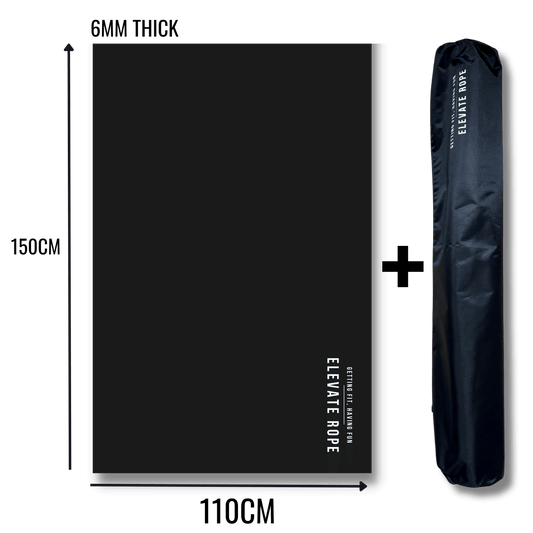
A jump rope travel bag solves most of this by itself. It keeps the coil at its own size and keeps your shoes off it. The rest of the accessories range works the same way. Cheap things that stop wear rather than repair it.
What actually causes a jump rope to tangle
Tangles are twists that have been given somewhere to go. Drop a jump rope in a bag and every movement adds a half turn somewhere along the cable. Those turns don't distribute evenly. They collect. Where they collect, one loop passes through another, and that's a tangle.
Which is why folding is worse than it looks. Folding a rope in half forces the cable into a hairpin at one point. It also leaves the two halves free to twist against each other. You get a kink and a tangle from one habit. Never store a jump rope folded.
Beaded ropes are the exception that proves it. The beaded ropes run 2.5cm PVC beads on a 3.5mm polycord. Beads keep the cord in a wide, even curve. They physically can't sit closer than their own length. That's part of why beaded ropes feel clearer in the hand to learn on. It's also why they tangle less in a bag. Our speed ropes have no such help, so the coil is doing all the work.

How to store a jump rope when you travel
A jump rope is the one piece of training equipment that fits anywhere. 2x2 metres is all the floor you need at the other end. That only holds if the rope arrives usable.
The rules don't change when you store a jump rope in a suitcase. Coil it, bag it, and put it somewhere it isn't compressed. A jump rope travel bag keeps the coil at its own size on the road. Suitcase, not the outside pocket of a rucksack where it bends round a water bottle. If it's been squashed flat for a long flight, lay it out on the floor for an hour. It'll mostly recover on its own.
If it's already kinked
Most kinks come out. Warmth and gentle tension are what do it. Three methods work reliably, set out in how to straighten a PVC jump rope cord.
What doesn't come out is a kink that's thinned the cable at that point. That's no longer a shape problem, it's wear. We set out how to tell the difference in how long does a jump rope last. The mechanics are in why jump rope cables kink, fray and snap.
How you store a jump rope is one of three habits that decide how long it lasts. Cleaning is in how to clean a jump rope. All three sit together in the jump rope care guide. Store a jump rope well and the other two get easier.
New to jumping? Geraldo covers the basics every beginner should know before the first session in this video.
Frequently Asked Questions
How do you store a jump rope so it doesn't tangle?
To store a jump rope, coil it in loose loops about the width of your spread hand. Then hang it or lay it flat. Secure it loosely with the rope's own tie or a velcro strap. Never fold it in half. Folding creates a hairpin kink and lets the two halves twist into a tangle.
Why can't I just fold my jump rope in half?
Folding forces the cable into a hairpin at one point. PVC keeps a shape it is held in, so that fold becomes a kink. The two halves are also free to twist against each other in a bag. One habit gives you a kink and a tangle together.
Where is the best place to store a jump rope?
Hanging is best. Use a hook, a peg or the back of a door, with no weight on the coil. Flat in a drawer is second best. Avoid the bottom of a gym bag, a cold car boot and direct sun. Store a jump rope indoors and away from the window.
Why does a rope without bearings need more careful storage?
On a bearing rope the handle rotates independently, so a mild twist works itself out as you jump. On an Elevate rope nothing rotates independently. A twist stays until you remove it. We leave bearings out because they spin the rope faster than your body moves.
How should I store a jump rope when I travel?
Coil it, put it in a bag, and pack it where it won't be compressed. A suitcase is better than the outside pocket of a rucksack. If it gets squashed on a long flight, lay it flat on the floor for an hour. It will mostly recover on its own.
Geraldo Alken is the founder and CEO of Elevate Rope. He designs jump ropes and works daily with jumpers from beginner to professional.