






If you've been trying to figure out how to get kids to exercise and hitting a wall every time, you are not failing as a parent. You're dealing with a genuine behaviour challenge that even researchers have spent decades trying to crack. The screen pulls harder. The couch is comfortable. And "go outside and run around" stopped working around the time Minecraft was invented.
The good news is that the science on children's physical activity motivation is actually quite clear — and it points away from the tactics most parents instinctively try. Bribing with screen time. Signing up for a sport they hate. Forcing 60-minute workouts that feel like punishment. None of it sticks, and the research explains exactly why.
What does work is simpler, faster, and less exhausting than most parents expect. These five strategies are drawn from peer-reviewed research on children's movement behaviour — and they all have one thing in common: they make exercise feel like something other than exercise.
What you'll learn in this article:
Why nagging and rewarding backfire — and what to do instead
The single most important thing a parent can do to raise an active child
How to use skill progression to create self-sustaining exercise motivation
Why short, frequent movement beats long workouts for kids
The one type of activity that naturally combines play, skill, and cardio
How to build a 10-minute family movement habit that actually holds
Which tool makes it easiest to start from zero — for children and adults alike
Why Kids Resist Exercise (And Why It's Not About Laziness)
Before getting into what works, it helps to understand what's actually happening when a child refuses to move. Self-determination theory — one of the most robust frameworks in motivation research — explains that children are intrinsically motivated when they feel competent, autonomous, and connected. The moment exercise feels imposed, arbitrary, or humiliating, all three conditions collapse.
This is why "just go play sport" can backfire for a child who doesn't feel coordinated. Research confirms that parental support plays a pivotal role in enhancing children's physical activity levels and influencing their choices and behaviours. Encouraging family members to engage in activity alongside children directly promotes their participation. The problem isn't that your child doesn't want to move. It's that they haven't found movement that feels winnable yet.
There's also a structural issue. The WHO recommends an average of 60 minutes of moderate aerobic physical activity per day for children and adolescents. Most children in Europe are nowhere near that number. But the answer isn't longer sessions — it's more consistent short ones. And consistency requires something exercise rarely offers by default: a sense of progress a child can see and feel.
The Competence Problem
A child who trips during PE, gets picked last, or can't keep up with classmates starts associating movement with failure. Every subsequent invitation to exercise carries that history. This is why team sports work brilliantly for naturally coordinated children and create resistance in everyone else. The issue isn't fitness. It's coordination — and specifically the lack of a tool that teaches it at their pace, privately, without judgement from a team.

Strategy 1: Move With Them — Not Just Near Them
The single most evidence-backed thing a parent can do to raise an active child is not buy them equipment, sign them up for classes, or monitor screen time. It's move with them. A meta-analysis of 46 studies found a significant positive correlation between autonomous motivation and engagement in moderate-to-vigorous physical activity, and that parental co-participation is a major driver of that autonomous motivation developing in the first place.
This doesn't mean you need to become an athlete. It means that 10 minutes of movement done together carries more motivational weight than a 45-minute class done alone. You're not a fitness instructor — you're a model. When children see a parent who moves consistently, not occasionally, they absorb movement as a normal part of life rather than a chore imposed on them by someone who isn't doing it themselves.
The practical version of this is simple: build a short daily ritual that you both participate in. Not "exercise time." Movement time. The frame matters. Children who see a parent jumping rope in the living room before breakfast don't see punishment. They see something interesting that looks learnable. That curiosity is where habit begins.
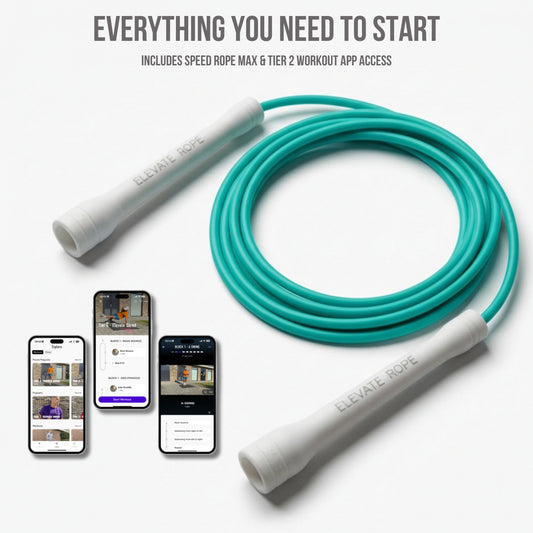
The → Elevate Beaded Rope is designed exactly for this context — one 3-metre adjustable rope covers both children and adults, so the activity is genuinely shared from the first day, not divided into "your version" and "my version."
Short answer: Co-participation is the most powerful driver of children's long-term physical activity motivation. Children model what they observe, not what they're told.
Why it matters: A child who sees movement as something their family does together internalises it as part of their identity — not a task imposed from outside. That identity shift is what creates lasting habit, not rules or rewards.
Best next step: Commit to 10 minutes of shared movement three times a week before asking your child to do anything alone. Start there, build from there.

Strategy 2: Replace "Exercise" With "Games That Happen to Be Exercise"
Children don't resist movement. They resist movement that feels like work. The research on this is consistent across age groups: when physical activity is framed as play, participation rates climb dramatically. When it's framed as exercise, resistance follows.
This isn't a semantic trick — it changes the neurological experience. Play activates reward circuits in a way that structured exercise doesn't, particularly for children under 12. The goal is to find activities where the game is the point and the cardio is a side effect. Jump rope is a near-perfect example of this. The focus is on not tripping, on learning a trick, on beating your previous count. The cardiovascular benefit is invisible to the child — which is exactly why it works.
Games That Build Fitness Without Announcing It
For younger children aged 5 to 8, the most effective approach is challenge-based: "Can you jump ten times without stopping?" "Try to jump to this beat." "Beat me — I can only do seven." The challenge structure creates intrinsic motivation (the drive to beat the challenge) without external reward, which research shows leads to longer-lasting behaviour change than bribery.
For older children aged 9 to 14, learning a new physical skill works better than games. A trick — even something as simple as the first crossover jump — becomes a goal worth working toward. Research shows that physical exercise has a significant positive correlation with children's resilience and self-efficacy, and that visible progress in physical skill directly builds a child's confidence in their ability to handle challenges more broadly. The rope becomes a proxy for proving something to themselves.
The → Elevate Beaded Rope makes this particularly effective for beginners. The auditory tick-tick-tick of the beaded segments gives a child real-time feedback on their rhythm — something a standard speed rope doesn't provide. When a child hears the rope change sound as they trip, they understand exactly what to correct. They're not guessing. That feedback loop is what turns ten frustrated minutes into genuine skill development.
Short answer: Children who are "resistant to exercise" are almost always open to physical challenges framed as games. The framing changes the neurological response.
Why it matters: Intrinsic motivation — doing something because it's inherently engaging — is far more durable than extrinsic motivation like reward charts. Games create intrinsic motivation naturally.
Best next step: Introduce jump rope as a game or challenge rather than a workout. Start with "how many can you do without stopping" rather than "let's exercise."

Strategy 3: Make It Short Enough That There's No Excuse Not to Start
One of the most consistent findings in children's exercise research is that session length is less important than session frequency. A meta-analysis of 30 studies on physical activity and children's mental health found that interventions conducted more than three times per week were the most effective, with increased frequency leading to greater benefits — while very long or infrequent sessions showed much weaker effects.
This matters because it reframes the goal entirely. You're not trying to find 60 minutes of "proper" exercise for your child. You're trying to find 10 minutes, three or four times per week, where they move with enough intensity to matter. That's achievable on a Tuesday evening after school. That's achievable before dinner. It's not achievable if the standard is a full workout.
The practical formula: 10 minutes, no preparation, no equipment setup, no changing into gym clothes. The lower the activation cost, the more likely it happens. A rope that lives in the kitchen drawer costs two seconds to start. A gym bag that needs to be packed does not get packed on tired evenings.
The 10-Minute Benchmark
For context: Elevate Rope's core training philosophy is built on the same evidence. The 10-minute jump rope session was validated by researchers at Arizona State University, who found that 10 minutes of jump rope produces cardiovascular benefits equivalent to 30 minutes of jogging. For children who genuinely don't want to exercise, a 10-minute daily rope session isn't a compromise. It's a complete solution.
The → Elevate App includes structured beginner sessions specifically designed for this window. Short, guided audio workouts that run 8 to 12 minutes — enough to matter, short enough that a child who doesn't want to be there can commit to finishing it.

Strategy 4: Let Them Win Something Early
This one is underused and consistently backed by the science of skill acquisition. Children disengage from physical activities when they feel incompetent. They stay engaged when they experience visible, concrete progress. The solution is to engineer early wins.
In practice, this means choosing an activity where the entry level is genuinely low — where success on day one is achievable, not just theoretically possible. Most team sports fail this test for unathletic children. Jump rope passes it, specifically because the starting benchmark is binary: can you jump over the rope without tripping? Most children manage this within five minutes of trying. That single success is enough to establish that they're capable. Capability creates motivation. Motivation creates repetition. Repetition creates fitness.
Building a Visible Progress Path
Once the baseline is established, the progression ladder keeps children engaged across weeks and months. Level 1: ten consecutive jumps. Level 2: 30 consecutive. Level 3: 60-second continuous jumping. Level 4: first crossover. Each rung is close enough to the previous one to feel achievable, far enough to require genuine effort.
This is the structure used in the → Elevate App — progressive skill challenges that give children (and parents) a clear ladder to climb. There's no guessing what to work on next. The next goal is always visible, which is exactly the condition that keeps children returning to a physical activity voluntarily.
| Strategy | What It Targets | Why It Works | Time Required |
| Move together (co-participation) | Role modelling & social motivation | Children adopt behaviours they observe in trusted adults | 10 min/session |
| Game framing | Intrinsic motivation | Play activates reward circuits that "exercise" doesn't | No extra time |
| Short, frequent sessions | Habit formation | Frequency beats duration for motivation and health outcomes | 10 min, 3–4×/week |
| Engineered early wins | Self-efficacy & competence | Early success establishes capability, which drives motivation | First 5 minutes |
| Visible progress ladder | Long-term engagement | Clear next goals keep children returning voluntarily | Built into activity |

Strategy 5: Stop Separating "Your Exercise" From "Their Exercise"
The final strategy is the one that ties all the others together — and it's the one most parents discover only after they've tried everything else. The activities where children stay most engaged over time are the ones where the parent is also visibly working. Not supervising. Not encouraging. Actually sweating.
This connects back to everything the research says about autonomous motivation. A child who sees that the activity is genuinely challenging for their parent — that the parent also trips sometimes, also has to concentrate, also feels the effort — understands that what they're doing is real. Not a beginner's version of something. The actual thing.
Jump rope is one of very few fitness activities where a six-year-old and a 38-year-old are genuinely doing the same movement, with the same level of challenge appropriate to their stage. The child is trying not to trip. The parent is trying to maintain 90 jumps per minute. Different goals, same rope, same space, same 10 minutes. That shared context — doing the same thing at different levels — is what makes family movement habits stick past the first few weeks.
The → Elevate Beaded Rope adjusts from children up to adults with a quick cord-length change. One rope, the whole household. No separate purchases for separate age groups. That simplicity matters more than it sounds — the fewer the setup decisions, the more often the activity actually happens.
Short answer: Children engage longest with physical activities where the parent is also genuinely participating — not just watching or encouraging.
Why it matters: Shared physical activity creates a movement identity that belongs to the family, not just the child. Identity-based habits are far more resilient than behaviour-based rules.
Best next step: Find one 10-minute activity you can both do without either of you needing to perform. Jump rope with a beaded rope is the easiest place to start.

Closing: Where to Start When Nothing Has Worked Yet
If your child has resisted every sport, activity class, or outdoor suggestion you've tried, the problem isn't your child. It's the format. Most organised physical activities are optimised for children who are already coordinated, already confident, and already motivated. Your child needs something that builds those things first — not something that assumes they already exist.
The pattern that works is consistent across all five strategies above: start small, make it shared, give it a game structure, and choose an activity where early wins are genuinely available. A 10-minute jump rope session before school, done alongside you, with a beaded rope that teaches rhythm through sound, fits all five criteria simultaneously.
For a complete guide to introducing your child to jump rope — including which age to start, how to size a rope correctly, and age-appropriate progressions from first jump to first trick — see the → Jump Rope for Kids: The Complete Parent's Guide. If you're ready to start today, the → Elevate Beaded Rope is the right first rope for a household that has never jumped before — child or adult.
Frequently Asked Questions
How do I get my child to exercise when they refuse to do anything physical?
Start by removing the word "exercise" entirely. Invite them to a challenge, a game, or a skill they can learn — not a workout. Children who resist structured exercise almost always engage with movement framed as something worth achieving. Jump rope works particularly well because the earliest success benchmark (jumping without tripping) is reachable within minutes, which creates the competence foundation that keeps them coming back.
How much physical activity do children actually need per day?
The WHO recommends an average of 60 minutes of moderate aerobic physical activity per day for children and adolescents. This doesn't have to happen in one block. Two 20-minute sessions and one 20-minute movement activity is functionally equivalent — and far more achievable for most families than a single hour-long workout.
Is it better to force my child to exercise or just let them be inactive?
Neither extreme works. Forced exercise builds lasting resistance to physical activity, particularly when it involves activities the child finds humiliating or impossibly hard. Unrestricted inactivity creates sedentary habits that are genuinely difficult to break in adolescence. The third path — structured choice, short duration, game framing, and parental co-participation — produces better outcomes than either approach.
Does it matter what kind of activity they do, or just that they move?
For general health and habit formation, consistent moderate-intensity movement in any form is what matters most. What makes one activity better than another for children specifically is whether it builds competence over time. Activities with a visible progression ladder — where the child can clearly see they're getting better — hold engagement across weeks and months in a way that static-difficulty activities don't.
Can jump rope really be appropriate for children who have never exercised?
Yes — and it's particularly well-suited to them. The entry level is genuinely accessible: all a child needs to begin is the ability to jump. The beaded rope makes it easier still, because the auditory feedback from the rope segments tells the child instantly when their timing is off. There's no coach required, no team pressure, and no comparison to peers. Progress is visible and personal from the first session.
How do I find 10 minutes a day for family exercise when our schedule is already full?
The honest answer is that 10 minutes doesn't need to be found — it needs to be protected. Before school, before dinner, or immediately after school are the three windows with the lowest competing demands. A rope stored visibly in the kitchen or hallway removes the decision overhead. The session doesn't require changing clothes, driving anywhere, or preparation. Activation cost is low enough that "I don't have time" rarely applies honestly.
What age can children start jump rope?
Most children develop the bilateral coordination needed for basic jump rope between ages 4 and 6, though this varies. The beaded rope is the most forgiving starting point for young children because the weight of the beads keeps the arc stable, making the rope easier to control and time. Children who struggle initially often succeed within days simply by switching from a lightweight speed rope to a beaded one. For a full breakdown of age-appropriate progressions, see our → complete parent's guide.
Sources
1. Qi et al. (2024). "Autonomous motivation, social support, and physical activity in school children: moderating effects of school-based rope skipping sports participation."Frontiers in Public Health.https://pmc.ncbi.nlm.nih.gov/articles/PMC10847259/
2. World Health Organization (2020). "WHO Guidelines on Physical Activity and Sedentary Behaviour: at a Glance." https://www.who.int/europe/publications/i/item/9789240014886
3. Liu et al. (2025). "Physical exercise and children's resilience: mediating roles of self-efficacy and emotional intelligence." Frontiers in Psychology.https://doi.org/10.3389/fpsyg.2025.1491262
4. Tremblay et al. (2020). "2020 WHO guidelines on physical activity and sedentary behaviour for children and adolescents aged 5–17 years: summary of the evidence." International Journal of Behavioral Nutrition and Physical Activity.https://doi.org/10.1186/s12966-020-01037-z
5. Deng et al. (2025). "The effects of physical activity on the mental health of typically developing children and adolescents: a systematic review and meta-analysis." Frontiers in Psychology.https://pmc.ncbi.nlm.nih.gov/articles/PMC12016293/
6. Cachón-Zagalaz et al. (2023). "Motivation toward Physical Activity and Healthy Habits of Adolescents: A Systematic Review." Children (Basel).https://doi.org/10.3390/children10040659
7. Hu et al. (2024). "A comparative study of the physical activity guidelines for children and adolescents from five countries and WHO." Frontiers in Public Health.https://doi.org/10.3389/fpubh.2024.1421843