





Speed rope length often becomes shorter as an athlete develops better timing and control.
A shorter setup can reduce unnecessary cable travel around the body. However, that advantage only appears when your technique supports it.
Cutting a jump rope shorter does not automatically make you faster.
Poor timing, raised hands, or inconsistent wrist control can make an aggressive setup harder to use.
Height gives you a useful starting point. Your final setting depends on technique, handle length, cable design, and training goals.
Experienced jumpers usually earn a shorter setup through cleaner mechanics.
They do not improve simply because they copy an elite athlete's rope length.
This guide explains how speed rope sizing changes with experience. You will also learn how to shorten your rope without sacrificing control.
Why Experienced Jumpers Often Use a Shorter Speed Rope
A beginner usually benefits from extra clearance.
More experienced athletes can often remove some of that margin.
Their rope skipping technique becomes more consistent, so less excess cable is required.
A Shorter Cable Reduces Unnecessary Travel
Every rotation sends the cable around your body.
Extra jump rope length creates a larger path for that cable to travel.
Reducing unnecessary length creates a tighter rope path.
That can support faster rotations when your timing remains controlled.
Research on competitive speed rope skipping found an important relationship between turning ability and overall skipping performance.
The researchers found that rope-turning performance strongly related to total skipping performance. Read the PubMed study. PubMed
That finding reinforces an important point.
Your upper-body control matters when you increase speed.
Better Mechanics Create Room to Size Down
Beginners often need more tolerance for inconsistent hand position.
A longer jump rope provides extra clearance when technique changes between repetitions.
As your timing improves, that additional margin may become unnecessary.
Experienced athletes often develop a more repeatable rope path.
Their shoulders stay relaxed and their wrist movement becomes more consistent.
This is when a shorter jump rope may start feeling cleaner.
However, there is no universal advanced measurement.
Two athletes of equal height can still prefer different settings.
Shorter Does Not Automatically Mean Faster
A shorter cable cannot repair poor technique.
In fact, it often exposes mistakes faster.
Raised hands reduce available clearance.
Wide or inconsistent hand positions also change the usable rope length.
Poor wrist timing can create trips even with perfect speed rope sizing.
Treat length as a tuning variable.
The best setting is not the shortest possible rope.
It is the shortest setup you can control consistently.
How Speed Rope Length Changes Your Technique
Speed rope length affects more than cable travel.
It also changes clearance, floor contact, hand position, and your margin for error.
A useful setup should support your technique.
You should never need to reshape your body around the rope.
What Happens When Your Jump Rope Is Too Long?
An overly long jump rope often reaches the floor earlier.
You may hear heavy contact before the rope reaches your feet.
The cable can also feel slow near the bottom of each rotation.
Some athletes respond by moving their hands wider.
That creates an even larger rotation path.
Another common response is jumping higher than necessary.
Both adjustments can make your rope skipping technique less efficient.
However, not every missed repetition is a sizing problem.
Fatigue, timing, posture, and hand position can produce similar symptoms.
What Happens When Your Jump Rope Is Too Short?
A short rope removes your safety margin.
Small changes in hand height can immediately create toe catches.
You may begin raising your hands to create more clearance.
Your shoulders can also become tense.
Those compensations suggest your speed rope length may be too aggressive.
A suitable rope should let you remain relaxed.
Clean movement matters more than an impressively short cable.
Hand Position Matters More as the Rope Gets Shorter
Every change in hand position affects the rope path.
With a longer setup, small changes may not matter much.
A shorter jump rope leaves less room for those inconsistencies.
This explains why copying someone else's measurement often fails.
Body proportions differ.
Handle lengths differ.
Technique differs.
For a strong starting point, use our jump rope length guide.
Start from a setup that already works before experimenting with shorter settings.
How Short Should an Experienced Jumper Go?

There is no single advanced speed rope length.
Your current technique should determine the next adjustment.
Start With a Working Setup
Do not begin from a rope that already causes frequent trips.
First establish a jump rope length you can control comfortably.
Perform basic single unders at your normal training pace.
Watch your hands.
Notice where the cable contacts the floor.
Pay attention to shoulder tension.
Only start reducing length when that baseline feels stable.
Shorten in Small Steps
Small adjustments can feel surprisingly significant.
This becomes especially noticeable once your rope is already short.
Avoid removing a large section immediately.
Adjust both sides evenly when your rope allows it.
Then test basic jumps again.
Do not start with maximum speed.
A gradual approach makes speed rope sizing much easier to evaluate.
Use Movement Quality as Your Stop Signal
Stop shortening when your body starts compensating.
Watch for raised hands.
Notice excessive shoulder tension.
Repeated toe catches are another warning sign.
Your normal jump should still feel relaxed.
If technique deteriorates, return to your previous setting.
| Experience Level | Sizing Priority | What to Watch |
| Beginner | Forgiving clearance | Trips, wide hands, heavy floor contact |
| Intermediate | Gradual reduction | Stable rhythm, hand position, clean singles |
| Experienced | Shortest controllable setup | Relaxed shoulders, consistent clearance, repeatable timing |
Should You Shorten a Speed Rope for Double Unders?
Often, yes.
However, double under rope length should only become shorter after your technique is reliable.
Double unders leave less room for inefficient movement.
Why Double Unders Reward Efficient Rope Travel
A double under requires two rope rotations during one jump.
That makes wasted movement easier to notice.
High-level athletes also use very precise rope clearance.
A 2026 biomechanical study compared world champions with junior national champions during high-speed double unders.
World champions showed smaller rope-to-foot clearance and more compact control at extreme tempos. PubMed
That does not mean every athlete should copy elite measurements.
The study examined advanced competitive jumpers.
It does show how precise high-speed rope control becomes at elite levels.
Do Not Shorten Your Rope Just Because Double Unders Feel Difficult
A difficult double under is not automatically a rope-length problem.
Check your basic technique first.
Can you perform relaxed singles?
Do your hands stay consistent?
Are your wrists controlling the rotation?
Does your jump height remain repeatable?
Fatigue also affects upper-body movement.
Research on trained double-under athletes found technique changes as shoulder fatigue increased. PubMed
Test your speed rope length while fresh.
Do not make permanent adjustments at the end of an exhausting workout.
Use a Double Under Progression First
If you are still learning double unders, develop the skill before chasing a very short setup.
Follow our double under progression guide.
Once your repetitions become consistent, experiment with small length changes.
Your double under rope length should support rhythm.
It should never force a different posture.
Speed Work and Freestyle Need Different Setups

One jump rope length cannot optimize every style.
Pure speed work benefits from efficient cable travel.
Freestyle movements often need more space around the body.
Crossovers and releases can change the ideal geometry.
Long handles also alter how the rope moves around you.
That is why speed-focused athletes may prefer another setup than freestyle jumpers.
Decide which skill matters most before making permanent cuts.
If your goals change regularly, keeping separate ropes may be easier.
How to Shorten a Speed Rope Without Cutting Too Far
The best approach is simple.
Change one variable at a time.
Step 1: Establish Your Current Baseline
Use your normal jump rope setting.
Complete relaxed single unders.
Then add your usual footwork.
Pay attention to floor contact and hand position.
Your current setup becomes the reference point.
Step 2: Make a Small Adjustment
Shorten the rope slightly.
Keep both sides even when possible.
Avoid permanent cuts during the first test.
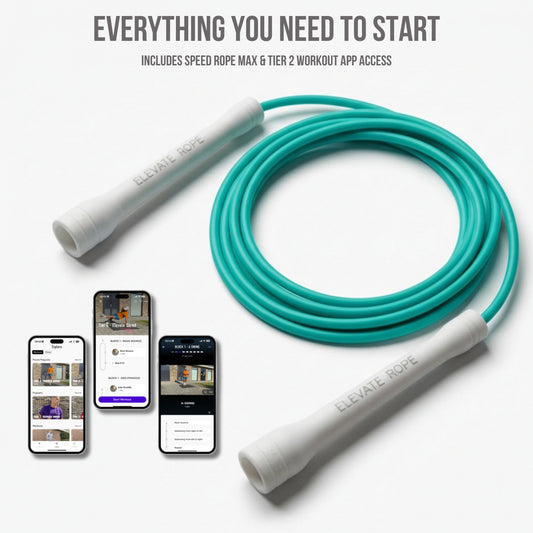
The Elevate Speed Rope MAX uses a cut-to-fit PVC cable.
Its adjustable design lets you refine the setup around your height and technique.
Make changes slowly.
Step 3: Test Basic Movement First
Do not test your new setup with an all-out speed attempt.
Start with relaxed singles.
Next, add faster singles.
Then test normal footwork.
Only add double unders when the jump rope feels predictable.
This progression helps identify whether the new rope length actually works.
Step 4: Stop When Your Technique Changes
A shorter setup has gone too far when your movement starts changing.
Look for:
- raised hands
- tense shoulders
- repeated toe catches
- unusual jumping height
- inconsistent timing
- excessive concentration just to clear the rope
Return to your previous setting when these problems appear.
The goal is efficiency.
It is not winning a contest for the shortest cable.
A Simple Speed Rope Sizing Test

Use this short test whenever you change speed rope length.
Round 1: 30 Seconds of Relaxed Singles
Keep your normal rhythm.
Check whether the cable clears your feet comfortably.
Round 2: 30 Seconds of Faster Singles
Increase rotation speed without changing your posture.
Your hands should remain controlled.
Round 3: 20 Seconds of Footwork
Use boxer steps or alternate-foot jumps.
Watch for unexpected trips.
Round 4: Double Unders
Only perform this round when double unders are already part of your normal training.
Complete several controlled repetitions.
Do not chase maximum speed.
Review the Result
Ask yourself:
Did my hands stay relaxed?
Did my shoulders remain calm?
Was clearance predictable?
Did the rope feel cleaner?
Did trips increase?
Keep the shorter jump rope setting only when movement quality stays equal or improves.
Common Speed Rope Sizing Mistakes
Cutting Too Much at Once
This is the easiest mistake to avoid.
Shorten gradually.
You can always remove more cable later.
Copying Another Athlete
Another athlete's skipping rope length may not suit you.
Their arms, torso, technique, and handles may differ.
Use their setup as inspiration, not a measurement.
Testing Only at Maximum Speed
High-speed attempts make problems harder to diagnose.
Start slowly.
Build speed after the setup feels normal.
Ignoring Hand Position
Rope length and hand position work together.
Changing one without watching the other can create confusing results.
Assuming Shorter Is More Advanced
A short speed rope does not prove better skill.
Control does.
Some experienced athletes intentionally use more length for certain drills.
Choose the setup that supports your goal.
What If You Still Need More Rope Feedback?
A speed rope rewards clean timing.
That can make learning harder when your rope awareness is still developing.
A beaded rope provides more tactile feedback through the hands and arms.
It can make the rope path easier to follow.
Explore the Elevate Beaded Rope collection if feedback matters more than maximum rotation speed.
You can return to speed-focused equipment later.
There is no advantage in rushing that progression.
Watch: Double Under Technique With Geraldo Alken
If double unders are your main reason for changing speed rope length, technique should come first.
Watch Geraldo Alken break down double-under timing and progression before making aggressive sizing changes.
Watch the Double Under Tutorial on YouTube
Frequently Asked Questions
Should an experienced jumper use a shorter jump rope?
Often, yes. Experienced jumpers may need less extra clearance because their timing becomes more consistent. However, the ideal jump rope length still depends on technique and training style. Shorten gradually and keep the new setting only when your posture and timing remain relaxed.
Does a shorter speed rope rotate faster?
A shorter cable travels around a smaller path, which can support faster rotations. Technique still determines the result. Poor timing or unstable hand position can make a shorter speed rope harder to control. Reduce length only after your existing setup feels consistent.
What is the best speed rope length?
There is no universal best speed rope length. Start with a reliable setting based on your height. Shorten the rope gradually as your technique improves. Stop reducing length when your hands rise, shoulders tense, or foot clearance becomes inconsistent.
Should I use a shorter jump rope for double unders?
A shorter jump rope can work well for controlled double unders. It leaves less room for timing and positioning errors. Beginners should establish consistent single unders and double-under technique first. Adjust double under rope length only after your movement becomes repeatable.
How do I know if my jump rope is too long?
Heavy floor contact can indicate excessive jump rope length. Wide hands and a slow feeling near the bottom may provide other clues. These signs can also come from technique. Record several jumps and review your hand position before shortening the cable.
How do I know if my jump rope is too short?
Frequent toe catches may indicate that the rope is too short. Raised hands and tense shoulders are other warning signs. Restore a little length when shortening forces you to change posture. A useful speed rope length should feel controlled.
Does cable thickness change the ideal rope length?
Cable thickness affects how a jump rope feels and moves. Weight, feedback, and handle design also affect the experience. These factors should be considered alongside length. Test the complete setup instead of choosing speed rope sizing from one measurement alone.
Let Your Rope Length Progress With Your Skill
Speed rope length should change with your technique.
Start with enough clearance to build clean repetitions.
Improve timing, wrist control, and hand consistency first.
Then experiment with a shorter jump rope in small steps.
Keep the change only when your movement remains relaxed.
For speed and double unders, the Elevate Speed Rope MAX provides an adjustable speed-focused setup.
If you still need more feedback, stay with a more forgiving rope.
Your ideal jump rope length is not the shortest measurement possible.
It is the shortest setup you can control consistently for the skill you want to perform.