





Should you jump rope barefoot or wear shoes? Neither choice is automatically better. Barefoot skipping gives you more direct contact with the floor, while athletic shoes add protection and may improve comfort. The right approach depends on your experience, foot health, training surface, and how your body handles repeated jumping.
You've probably watched someone skip barefoot on a mat or perform advanced freestyle tricks. It looks natural. And it raises a fair question: should you try it too?
Some jumpers love the ground feel of barefoot skipping. Others prefer the cushioning of athletic shoes. Minimalist shoes offer another option. Before changing your setup, separate personal preference from proven benefits.
The quick answer: If you're a beginner, comfortable athletic shoes are usually a sensible place to start. Already practising regularly? You can explore barefoot skipping cautiously. Treat it as a new training demand, not a shortcut to better technique or injury prevention.
What You'll Learn
- What changes when you jump rope barefoot
- The possible benefits and real limitations of barefoot skipping
- How athletic shoes, mats, and minimalist shoes compare
- Whether barefoot workouts strengthen your feet or improve technique
- How beginners and experienced jumpers can choose a suitable setup
- When barefoot exercise calls for extra caution or medical advice
1. What Happens When You Jump Rope Barefoot?
When you jump rope barefoot, your skin makes direct contact with the floor. There is no protective outsole or foam cushioning. Your feet also move without the structure of athletic shoes.
That changes the experience. Some people appreciate the feeling of the floor beneath their toes. Others find hard flooring uncomfortable, especially after repeated jumps.
Your feet still have work to do
During a basic bounce, your feet, ankles, calves, and other lower-leg muscles help you take off and control each landing. Changing footwear may change how those structures are loaded. But a change in muscle activity is not the same thing as an improvement.
Barefoot doesn't mean impact-free
Taking off your shoes doesn't remove landing forces. Technique, jump height, speed, fatigue, and the surface affect repeated impact. A review of barefoot running biomechanics shows that loading can shift between joints. However, running findings don't prove what happens during skipping workouts.
Bottom line: Jump rope barefoot if it genuinely suits your body and training context, not because someone claims that bare feet automatically make jumping safer.
2. Potential Benefits of Jumping Rope Barefoot
Why do experienced jumpers sometimes prefer training without shoes? There are several possible reasons. However, evidence specific to barefoot jump rope workouts remains limited.
More direct ground sensation
With no outsole between your foot and the floor, you feel the surface more clearly. That feedback may help you notice how your feet make contact. It does not guarantee better balance, better technique, or fewer injuries.
Freedom from restrictive shoes
Without athletic shoes, bare feet aren't constrained by tight toe boxes or stiff soles. If your athletic shoes pinch, that freedom can feel good. Still, better-fitting shoes may solve the problem while keeping their protective benefits.
A different way to train
Some people enjoy barefoot skipping during short, familiar sessions. That experience matters because it may make practice more enjoyable. It doesn't mean everyone should adopt the same preference.
Different foot muscle demands
Foot muscles are involved in support and movement. Removing shoes or wearing minimalist shoes may change their workload. However, this doesn't establish that barefoot skipping builds foot strength more effectively than conventional training.
Simplicity
A rope and a clean, suitable surface are enough for a straightforward workout. But less equipment is only an advantage when the training remains appropriate for you.
3. Risks and Limitations of Barefoot Jump Rope
It's easy to miss the downsides when you watch an experienced athlete performing barefoot freestyle tricks. Before you jump rope barefoot, consider what you're giving up.
Less protection from the ground
Debris, rough flooring, and sharp edges matter more when your feet are uncovered. Check indoor surfaces before jumping without shoes, too.
Rope strikes can hurt
If your timing is off, a rope can hit your feet or toes. Athletic shoes provide a barrier. Bare feet don't, and fast-moving cables can sting.
Your calves and Achilles may face unfamiliar demands
Switching suddenly from cushioned trainers to bare feet or minimalist shoes can alter lower-leg loading. Running research raises concerns about abrupt transitions. That supports caution with any footwear change. It doesn't mean injuries are inevitable.
Less cushioning can mean less comfort
Some jumpers find barefoot skipping comfortable on a stable surface. Others prefer athletic shoes, particularly for longer sessions or firm floors. Neither experience cancels out the other.
Medical conditions change the decision
People with reduced foot sensation, foot wounds, diabetes-related nerve or circulation problems, or existing injuries need particular care. The American Diabetes Association's foot-care guidance advises people at risk of diabetes-related foot problems to avoid going barefoot. Ask a healthcare professional before trying barefoot jumping if any of these concerns apply.
Pain, swelling, a new limp, or difficulty bearing weight are not signs that training is working. Stop and seek appropriate medical assessment.
4. Jump Rope Barefoot vs Shoes: Side-by-Side Comparison
| Feature | Barefoot | Athletic shoes |
| Ground sensation | Direct contact with the surface | Filtered through the sole |
| Cushioning | No shoe cushioning | Varies by model and material |
| Foot protection | Little protection against debris or rope contact | Outsole and upper provide a barrier |
| Fit and movement | No shoe restrictions | Depends on fit and shoe design |
| Surface suitability | Requires especially careful surface selection | Still depends on grip and stability |
| Beginner practicality | Adds an unfamiliar variable | Usually a practical starting choice |
| Transition demands | May require gradual adaptation | Familiar if you already train in them |
The takeaway: There's no universal winner. A comfortable, stable setup that lets you practise consistently is more useful than copying what looks impressive online. Your routine should fit your needs.

5. Does Jumping Rope Barefoot Strengthen Your Feet?
This is one of the biggest claims in the barefoot fitness conversation. It needs nuance.
During skipping workouts, your feet use muscles that help control movement and support. A systematic review of foot exercises and minimalist shoes found some evidence of improved foot strength. However, certainty was low to very low. Much of this research studied running, walking, and targeted exercises, not barefoot workouts.
Stronger feet require appropriate training
Muscles adapt to manageable challenges over time. That depends on load, frequency, recovery, and individual capacity. Simply replacing athletic shoes with bare feet doesn't guarantee useful adaptation.
More effort isn't always better
Your feet and calves may experience different demands without shoes. If the change is too large or too fast, discomfort can outweigh any potential benefit.
Try a targeted approach if strength is your goal
If you want to strengthen your feet specifically, a physiotherapist or qualified exercise professional can help select appropriate exercises. That gives you a clearer progression than assuming every barefoot workout is strengthening work.
Bottom line: You don't need to jump rope barefoot to build capable feet. Choose exercises that match your actual goal.
6. Does Jumping Rope Barefoot Improve Technique?
You may have heard that removing your shoes forces you to land softly and makes your technique better. It sounds logical, but it's not automatic.
Good jump rope technique is a skill you practise. Removing your shoes doesn't automatically improve your movement.
Focus on the basics
- Keep your upper body comfortably upright and your shoulders relaxed.
- Use small wrist movements to turn the rope.
- Jump only as high as needed to clear the cable.
- Land with comfortable, controlled movement rather than excessive stiffness.
- Choose a pace you can repeat without losing form.
- Stop if pain develops or fatigue seriously affects control.
These principles work with comfortable shoes. If you're new, our step-by-step jump rope beginner guide helps you practise timing before adding harder skills.
Don't confuse pain with useful feedback
Pain during a barefoot workout is not necessarily helpful feedback. It may signal an unsuitable surface, footwear choice, or training load. Listen to that signal.
7. Is It Better to Jump Rope Barefoot on a Mat?
A mat may change the floor's feel and help define your training area. However, it doesn't automatically make barefoot skipping safe.
Mats vary widely. A thin, stable rubber exercise mat is different from a thick, squishy foam mat designed for floor exercises. A mat that slides, bunches up, or makes you wobble is a poor choice, whatever you're wearing.
What to check before you start
- Is the mat designed for standing or jumping movements?
- Does it stay flat without slipping or curling?
- Is it clean and clear of debris?
- Can you land and change direction predictably?
- Is there enough room for the rope to rotate safely?
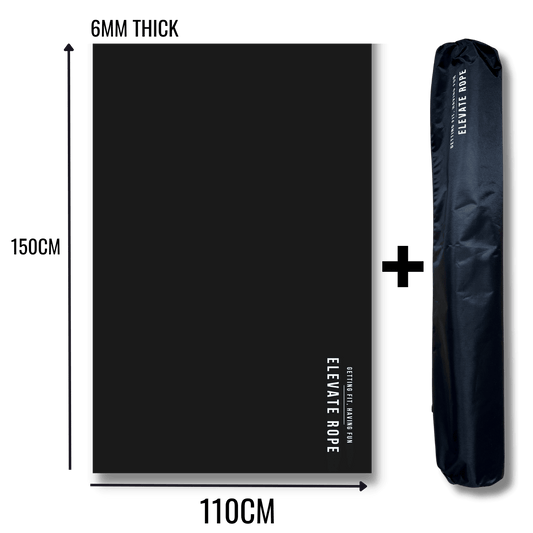
Athletic shoes and a suitable mat can play different roles. If your floor needs protection, the Elevate Jump Rope Mat provides a dedicated area. It isn't medical protection. It also doesn't replace gradual progression or appropriate footwear.
8. What About Minimalist Shoes for Jump Rope?
Minimalist shoes sit between conventional athletic shoes and completely bare feet. Models vary, but many have thinner, more flexible soles, less cushioning, and more room for the toes.

Why people choose them
Some jumpers choose minimalist shoes for their lightweight feel and flexibility. Unlike barefoot skipping, minimalist shoes provide a physical barrier against the floor and rope contact.
Why a transition still matters
Less cushioning and structure may change loading on your feet, calves, and Achilles tendons. Switching every skipping session from athletic shoes to minimalist shoes can introduce too much change at once.
Are minimalist shoes better than barefoot?
Neither barefoot skipping nor minimalist shoes are automatically better. Minimalist shoes offer some protection; bare feet provide direct ground contact. Athletic shoes may feel more comfortable. Choose according to the movement, your experience, and your body's response.
9. How to Start Jump Rope Barefoot Cautiously
Experienced with jump rope and curious about barefoot skipping? First, consider your foot health and injury history. Then treat the change as a gradual experiment, not a challenge to conquer in one day.
This isn't a universal progression plan or guarantee of safety. If you have existing foot problems, persistent lower-leg pain, or an injury history, seek individual advice first.
- Know why you're trying it. Curiosity or personal comfort is a more honest reason than an unsupported promise of better performance.
- Choose the environment. Use a clean, flat, stable surface and check carefully for anything that could hurt an uncovered foot.
- Test basic comfort. Try familiar standing, walking, or gentle weight-shifting movements before jumping. Stop if you feel pain or instability.
- Change one variable at a time. Don't combine your first barefoot session with a new heavy rope, high-speed intervals, or a big volume increase.
- Keep any first exposure very limited. If the movement feels appropriate and comfortable, start with a few familiar basic jumps. There is no universally safe number of jumps.
- Check how you respond. Pay attention to your toes, soles, calves, ankles, and Achilles tendons during and after the session.
- Progress only if appropriate. There is no deadline and no requirement to make barefoot training a permanent habit.
Our guide to jump rope injuries explains broader ways to manage technique, surfaces, and training load.
10. Should Beginners Jump Rope Barefoot?
For most beginners, comfortable athletic shoes are a sensible starting choice. Learning rope timing, wrist control, and landing rhythm already involves new skills. Switching to barefoot skipping adds another variable.
Start with a rope suitable for your experience, a stable surface, and small, manageable sets of basic jumps. Then practise until the movement feels familiar.
You don't need barefoot skipping to become a good jumper. If your athletic shoes feel comfortable and your technique improves, there's no reason to switch.
Short answer: Athletic shoes are usually the more practical starting point. Consistency beats novelty.
11. Does Rope Type Matter When Jumping Barefoot?
Yes. Different jump rope models feel different when they rotate. Contact with bare skin also feels different during barefoot skipping.
Beaded ropes
The Elevate Dignity Beaded Rope gives noticeable rotation feedback, which can help beginners learn timing. Its individual beads can still sting if you mistime a jump and the rope hits an uncovered foot.
Speed ropes
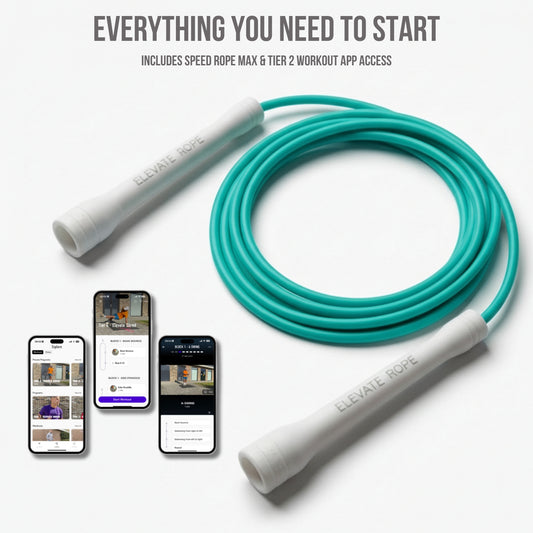
A Speed Rope MAX has a smooth, flexible cable for quicker rotations and cardio-focused sessions. A fast cable can sting uncovered toes. Athletic shoes remain a practical choice for this style.
Heavy ropes
Heavy ropes add resistance to a workout. Avoid combining a new heavy rope with your first attempt at barefoot skipping.
Freestyle and long-handle ropes
Freestyle skills often involve direction changes, crosses, and complex footwork. Select athletic shoes or other suitable footwear for your movements. Don't assume every trick works best barefoot.
12. Five Common Barefoot Jump Rope Mistakes
- Assuming bare feet mean better technique. Skill comes from practice and feedback, not shoe removal.
- Using an unsuitable surface. Barefoot skipping on rough, slippery, dirty, or unstable floors can be uncomfortable or hazardous.
- Doing your usual full workout immediately. A barefoot session can make familiar exercise feel different. Build gradually.
- Pushing through pain. Foot pain, swelling, or persistent calf discomfort deserves attention, not another set.
- Copying someone else's routine. An athlete's experience and physical capacity may be very different from yours.
If you jump rope barefoot, let your comfort, health, and experience—not social media—guide your decision.
13. How to Choose: Barefoot, Minimalist, or Athletic Shoes?
| Your situation | Practical starting choice |
| New to jump rope | Comfortable athletic shoes and a stable surface |
| Training on rough outdoor flooring | Protective footwear |
| Fast or advanced jump rope workouts | Athletic shoes or other footwear offering reliable grip and protection |
| Curious about minimalist shoes | Treat them as a gradual footwear change |
| Existing pain, loss of sensation, or a foot condition | Seek individual healthcare advice before switching |
| Already comfortable in athletic shoes | Keep using what works; no switch required |
The best setup isn't the one that looks the most technical. It's the one that lets you move with control and keep coming back.
14. The Bigger Picture: Your Shoes Aren't the Secret to Progress
It's easy to spend hours comparing equipment: the perfect rope, the perfect shoes, and the perfect mat. Then there's the perfect training method.
And suddenly, you've spent more time planning the workout than doing it.
Your footwear matters for jump rope comfort and suitability, but progress doesn't require you to change your setup constantly. It requires practice that fits your abilities and gives you room to improve.
For many people, that means cushioned athletic shoes. Others prefer firmer cross-trainers. Experienced jumpers sometimes enjoy carefully managed barefoot skipping. You don't have to copy someone else's choice.
Find Your Rhythm With Elevate Rope
Learning to skip starts with timing and control. The Elevate Dignity Beaded Rope provides clear rotation feedback for the basics. As you progress, the Speed Rope MAX supports faster cardio-focused work.
Want both options to progress at your own pace? Explore the Elevate Ascent Bundle.
Start with the basics. Respect your body. Build a habit you want to keep.
Frequently Asked Questions
Is it safe to jump rope barefoot?
Barefoot skipping may be appropriate for some experienced people, but it isn't safe for everyone. Surface conditions, foot health, training load, and experience matter. Reduced foot sensation, an injury, or another relevant medical condition calls for professional guidance before you try barefoot skipping.
Is it better to jump rope barefoot or with shoes?
Neither option is universally better. Barefoot skipping offers ground sensation but less protection and no shoe cushioning. Comfortable athletic shoes provide a barrier and may feel better during repeated jumps. Beginners usually benefit from a simple jump rope setup while learning the basics.
Does jumping rope barefoot strengthen your feet?
Foot muscles participate in every jump. Minimalist shoes and barefoot skipping may change how these muscles work. However, walking and running research doesn't establish barefoot jump rope workouts as the best foot-strengthening method. Targeted exercises and suitable progression may be more appropriate.
Can beginners jump rope barefoot on a mat?
Some beginners may be able to try barefoot skipping. However, a mat doesn't automatically remove the risks. It must be clean, flat, stable, and suitable for exercise. Athletic shoes are usually a simpler starting choice while learning jump rope timing and controlled landings.
Are minimalist shoes good for jump rope workouts?
Minimalist shoes may suit people who enjoy lighter, more flexible footwear. They differ from conventional athletic shoes in cushioning and structure. If you're switching shoes, make the change gradually. Watch for foot, calf, ankle, or Achilles discomfort. There's no universally best shoe for skipping.
Should I jump rope barefoot on concrete?
Concrete can feel uncomfortable during repeated barefoot landings. It may expose uncovered feet to rough patches or debris. For most beginners, athletic shoes and a stable jump rope surface are more practical. Stop if your feet hurt or you cannot move comfortably.
Final Thoughts: Barefoot or Shoes? Choose What Works
So, should you jump rope barefoot? Maybe. But you don't need to.
If you're new, begin with comfortable shoes, a suitable surface, and basic timing. If you're experienced and curious, approach bare feet or minimalist shoes carefully. In every case, pay attention to technique, volume, comfort, and your body's response.
The goal isn't to look like someone else's version of a jumper. It's to find a way to move that works for you.
Find your rhythm. Respect your body. Keep showing up.
About Elevate Rope
Elevate Rope was founded by Geraldo Alken to make jump rope training more approachable, enjoyable, and sustainable. Our ropes, practical instruction, and global community help people turn motivation into lasting habits. This article offers general fitness education, not individual medical advice.