





The best jump ropes for double unders help you complete two rope rotations during a single jump without losing control of your timing. Whether you're learning your first double under or building longer sets for CrossFit, boxing, or conditioning, the right rope should match your current technique.
But buying the fastest rope doesn't automatically make double unders easier.
If your rope repeatedly catches your shoes, your hands move away from your body, or you jump higher every time you attempt a double under, equipment may be only part of the problem.
The real goal is to find a rope you can control while developing the rhythm needed for two clean rotations.
In this guide, you'll learn what to look for in a double under jump rope, five rope options worth considering, and the technique adjustments that can help you progress.
What Are Double Unders?
A double under is a jump rope technique in which the rope passes beneath your feet twice during one jump.
With a regular single under, one jump equals one rope rotation.
With a double under, one jump equals two rope rotations.
That difference requires more precise timing, quicker rope rotation, and enough airtime for the cable to complete both passes.
Double unders are commonly included in CrossFit workouts, boxing conditioning, and jump rope training because they combine cardiovascular effort with a demanding coordination task.
Are Double Unders Harder Than Regular Jumping Rope?
Yes. Double unders require you to coordinate two rotations within one jump, making them more technically demanding than the basic bounce.
Beginners often compensate by jumping excessively high or swinging their arms harder.
However, effective double unders depend on coordinating your jump with faster wrist rotation rather than simply putting more effort into every repetition.
If you're still learning, read our step-by-step double under guide for beginners before attempting longer sets.
What Are the Benefits of Double Unders?
Double unders can add variety and intensity to your jump rope workouts.
The movement challenges several physical qualities simultaneously.
1. Cardiovascular Conditioning
Double unders can quickly elevate your heart rate, especially when performed repeatedly with limited rest.
They can be incorporated into short conditioning intervals or longer workouts, depending on your experience.
2. Coordination and Timing
Completing two rotations during one jump requires precise coordination between your hands, feet, and rope.
Practising this relationship can help you become more consistent with advanced jump rope techniques.
3. Muscular Endurance
Your calves, shoulders, forearms, and core all contribute to maintaining the movement.
As you develop the ability to perform repeated double unders, these areas must continue working while you maintain your technique.
4. Rhythm Under Fatigue
Completing a double under when you're fresh is different from maintaining the same technique during a demanding workout.
Learning to preserve your rhythm as you become tired can be a useful training challenge.
However, double unders are not necessary for everyone. If you're new to jumping rope, developing a comfortable basic bounce is a more appropriate starting point.
5 Factors to Consider When Choosing a Jump Rope for Double Unders

Before choosing a rope, look at the features that affect how it feels during training.
1. Jump Rope Length
Rope length affects the size of the arc and the timing required to complete each rotation.
A rope that's too long may drag against the ground or feel difficult to accelerate.
A rope that's too short may repeatedly catch your feet, especially while you're developing your technique.
A practical starting point: Stand on the middle of the rope and pull the handles upward. Around armpit height is a common initial sizing reference.
As your technique improves, you may prefer a slightly shorter setting for faster rotations.
Avoid cutting your rope immediately. Test different lengths before making permanent adjustments.
For more detailed instructions, follow our complete jump rope sizing guide.
2. Cable Weight and Thickness
Different cable constructions produce different rotation sensations.
A heavier cable generally provides more noticeable feedback, while a lighter cable may feel easier to accelerate.
For beginners, some rope feedback can make it easier to recognise the cable's position.
Experienced jumpers may prefer a lighter-feeling cable when practising repeated double unders.
Neither option guarantees better performance. Your technique and preferences should guide the decision.
3. Handle Design
Handles should feel secure without requiring excessive grip pressure.
A comfortable handle allows you to focus on wrist movement rather than constantly adjusting your hands.
Consider handle length, grip texture, and how the rope connects to the handle.
Longer handles can provide a different feel for freestyle movements, but they aren't essential for regular double unders.
4. Durability
Repeated jumping gradually wears down ropes, particularly when they're used on abrasive outdoor surfaces.
Check the cable material and attachment points before purchasing.
A rope that is suitable for your training environment may offer a more practical long-term choice than one selected only for rotation speed.
5. Adjustability
An adjustable rope allows you to refine its length as your technique improves.
This is especially useful when you're learning double unders because your preferred rope length may change as your timing becomes more consistent.
5 Jump Rope Options for Double Unders
Different rope designs suit different stages of learning.
The following five options cover rhythm development, controlled speed work, freestyle training, and advanced rotations.
1. Elevate Speed Rope MAX — For Controlled Double Under Practice
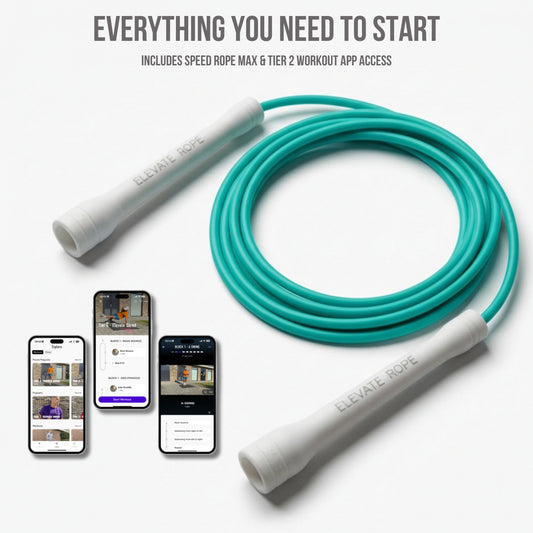
The Elevate Speed Rope MAX is designed for jumpers who want to combine cardio training with faster rope rotations.
Its 5mm PVC cable has a nylon core, giving it a noticeable turning feel while allowing you to work towards quicker movements.
That balance can be useful when practising the transition from single unders to double unders.
Key features:
- 5mm PVC cable with nylon core.
- Adjustable rope length.
- Lightweight handles.
- Suitable for general jump rope conditioning.
- Designed for controlled speed-focused practice.
If you're learning double unders, begin with short sets rather than immediately attempting a high-repetition workout.
Explore the Elevate Speed Rope MAX.
2. Elevation MAX Long Handle Jump Rope — For Freestyle-Focused Jumpers
The Elevation MAX Long Handle Jump Rope offers a different handle configuration from a conventional short-handle speed rope.
Extended handles can be useful for jumpers who also enjoy freestyle patterns, crosses, and other technical rope movements.
However, longer handles are not required for completing double unders.
If your main training goal is CrossFit-style conditioning, choose based on the rotation feel and handling you prefer rather than assuming longer handles will automatically improve performance.
3. Elevate Speed Rope MAX POWER — For Repeatable Conditioning
The POWER variation of the Speed Rope MAX is another option within Elevate's speed rope range.
It is suited to jumpers who want to practise double unders alongside basic bounce, alternate-foot steps, and other conditioning movements.
You can use the same rope for a warm-up, short technique sessions, and longer workouts once your rhythm becomes reliable.
The important consideration is whether the cable gives you enough feedback to maintain consistent rotations.
View the Speed Rope MAX POWER.
4. Steel Cable Speed Rope — For Experienced Jumpers Seeking a Different Feel
Some experienced jumpers prefer a thin steel cable speed rope for high-speed rotations.
These ropes typically provide less noticeable cable feedback than thicker PVC ropes.
That can suit someone who already has reliable timing but may make the learning process less intuitive for a complete beginner.
If you're considering a steel cable rope, pay particular attention to sizing, cable wear, and the manufacturer's surface recommendations.
A wire cable isn't automatically necessary for double unders. Many jumpers can practise the movement using a conventional PVC speed rope.
5. Elevate Speed Rope MAX AQUA — For Cardio and Double Under Sessions
The AQUA variation offers another option for jumpers who prefer the familiar handling of Elevate's Speed Rope MAX range.
It can be used for basic skipping, controlled double under progressions, and conditioning intervals.
Choose the colour and rope configuration that suit your preferences, but don't expect a colour variation to change the fundamentals of your double under technique.
Explore Elevate's Speed Rope Collection.
How to Learn Double Unders: 5 Practical Steps
Once you have a suitable rope, technique becomes the main priority.
Step 1: Master Single Unders
Begin with regular jump rope repetitions.
Aim for a steady rhythm, relaxed shoulders, and one small jump per rotation.
You should feel comfortable controlling the rope before trying to rotate it twice during one jump.
Step 2: Practise the Jump Without a Rope
Stand upright and practise slightly higher, controlled vertical jumps.
Keep your body aligned and avoid pulling your knees excessively towards your chest.
The goal is to create enough airtime for two rotations while maintaining a predictable landing position.
Step 3: Practise Faster Wrist Rotation
Hold both handles and practise controlled wrist movements.
Avoid using your shoulders to create the entire rotation.
Your hands should remain relatively close to your body instead of spreading outward as you accelerate.
Step 4: Combine Single Unders With One Double Under
Try the following progression:
- Complete three comfortable single unders.
- Attempt one double under.
- Stop and reset if necessary.
- Repeat the sequence.
Once you can consistently complete one double under, attempt two consecutive repetitions.
Progress gradually rather than immediately chasing a large total.
Step 5: Build Consistency Before Increasing Volume
After landing several consecutive double unders, practise repeating the skill across short sets.
Record how many controlled repetitions you can complete before losing your technique.
The objective is consistent movement, not simply reaching the highest possible number of repetitions.
For a more detailed progression, explore our double unders for CrossFit training guide.
Common Double Under Mistakes

Jumping Higher Every Time You Trip
A double under requires more airtime than a basic bounce, but unnecessarily high jumps can disrupt your rhythm and increase fatigue.
Practise finding a repeatable jump height rather than increasing it after every mistake.
Moving Your Hands Too Far Apart
When your hands drift outward, the rope's effective arc changes.
This may reduce clearance beneath your feet.
Keep your elbows near your sides and maintain a consistent hand position.
Rotating From Your Shoulders
Large arm movements make it harder to maintain fast, repeatable rotations.
Practise producing the additional rope speed through controlled wrist movement.
Using an Incorrect Rope Length
If the cable keeps catching, review your sizing before assuming your technique is the only problem.
Adjust gradually and retest.
Increasing Training Volume Too Quickly
Double unders involve repeated impact, especially when you're attempting long sets.
Give yourself time to develop the movement and build tolerance.
The CDC recommends starting physical activity slowly and progressing towards longer or more challenging activities over time. CDC
How to Maintain Your Double Under Jump Rope
Regular maintenance can help keep your rope ready for training.
Clean the cable: Wipe away dirt and moisture after workouts, following the manufacturer's care instructions.
Check the handles: Inspect the attachment points and make sure the cable remains securely connected.
Avoid unnecessary tangling: Store the rope without tightly twisting or kinking the cable.
Inspect for wear: Replace damaged components when necessary.
Check your training surface: Abrasive flooring may accelerate cable wear. Choose a stable, level surface with enough space for the full rope rotation.
Frequently Asked Questions About Double Under Jump Ropes
What Is the Best Jump Rope for Double Unders?
A suitable double under rope should have an appropriate length, comfortable handles, and a cable you can rotate consistently.
A PVC speed rope can be a practical option for learning and general conditioning. Experienced jumpers may prefer a thinner cable, depending on their technique and training goals.
Are Double Unders Good for Beginners?
Double unders are an advanced variation of regular skipping.
Beginners should first develop consistent single unders before attempting the movement.
Can You Do Double Unders With a Beaded Rope?
Yes, but the additional bead weight and different rotation feel may make repeated double unders more demanding for some jumpers.
A beaded rope can still be useful when learning basic timing and rope control.
Do You Need a Bearing Speed Rope for Double Unders?
No. Bearings are one design feature, not a requirement for completing double unders.
Wrist coordination, rope length, and consistent timing remain important.
Learn more in our article on whether a speed rope without bearings is fast enough for double unders.
How Long Does It Take to Learn Double Unders?
There is no universal timeline.
Your progress depends on your existing jump rope skills, practice consistency, coordination, and training tolerance.
Focus on repeatable technique rather than expecting to master the movement within a fixed number of days.
Find Your Rhythm Before Chasing Speed
The best jump rope for double unders is one that supports your current technique while giving you room to progress.
Start with a suitable length and a cable you can control.
Practise single unders until your rhythm becomes reliable. Then introduce one double under at a time, focusing on wrist speed, jump timing, and relaxed landings.
As you become more consistent, build towards consecutive repetitions and more demanding conditioning sessions.
Ready to start practising? Explore Elevate Rope's Speed Rope Collection and choose a rope that matches your current skill level and training goals.