






You want to do cardio with arthritis but you're not sure if you should. The joints that ache during daily activities seem like they'd only get worse with exercise. The stiffness that greets you every morning feels like a warning to take it easy. The well-meaning advice from friends and family usually amounts to "rest more, do less."
But resting more hasn't helped. Doing less has made things worse. And deep down, you suspect that movement might be part of the solution rather than the problem.
You're right to suspect that. Research consistently shows that appropriate cardio with arthritis reduces pain, improves function, and slows disease progression. The Arthritis Foundation, American College of Rheumatology, and virtually every major medical organisation recommends exercise as a core component of arthritis management.
The question isn't whether you can do cardio with arthritis. The question is how to do it safely and effectively.
This guide covers everything you need to know about cardio with arthritis: which types work best, how to start without flaring symptoms, what to avoid, and how to build a sustainable routine that supports rather than undermines your joint health.
What you'll learn:
- Why exercise helps arthritis (the science is clear)
- The best cardio options for different types of arthritis
- How to start without triggering flares
- Warning signs to watch for during exercise
- How to modify activities on bad days
- A complete framework for building your cardio routine
Why Exercise Helps Arthritis (Not Hurts It)
The instinct to protect arthritic joints by avoiding movement seems logical. But it's wrong.
The research is unambiguous:
Multiple systematic reviews and meta-analyses confirm that exercise reduces arthritis pain and improves function. A Cochrane review of 54 studies found that land-based exercise significantly reduced pain and improved physical function in people with knee osteoarthritis. The benefits were comparable to or better than many medications.
Why does cardio with arthritis help rather than hurt?
Synovial fluid circulation: Cartilage has no blood supply. It receives nutrients from synovial fluid, which circulates through the joint during movement. Sedentary joints become malnourished joints. Movement literally feeds your cartilage.
Muscle strengthening: Strong muscles absorb force that would otherwise transmit through joints. Weak muscles force joints to handle loads they're not designed for. Cardio that incorporates lower body movement builds the muscular support system your joints need.
Weight management: Every kilogram of excess body weight adds approximately four kilograms of force through your knees during activity. Cardio burns calories. Maintaining healthy weight reduces joint stress during everything you do.
Inflammation modulation: Regular exercise has anti-inflammatory effects throughout the body. People who exercise regularly show lower levels of inflammatory markers than sedentary individuals. Since arthritis is fundamentally an inflammatory condition, this matters.
Pain gate modulation: Exercise releases endorphins and other neurochemicals that reduce pain perception. Many people with arthritis experience immediate pain relief during and after cardio sessions.
The fear that cardio with arthritis causes damage isn't supported by evidence. Appropriate exercise protects joints. Avoiding movement accelerates deterioration.
Answer Block: Is Cardio Safe With Arthritis?
Short answer: Yes, cardio with arthritis is not only safe but recommended by every major medical organisation. Research shows that appropriate exercise reduces pain, improves function, maintains mobility, and may slow disease progression. The key is choosing joint-appropriate activities and progressing gradually.
Key insight: The pain from arthritis and the pain from exercise are different. Arthritic joints hurt whether you move them or not. Exercise-induced pain reflects temporary stress that triggers beneficial adaptation. Learning to distinguish these pain types is essential.
Where to start: Water-based exercise and cycling offer the gentlest entry points. Once tolerance is established, add variety based on how your joints respond.

Understanding Different Types of Arthritis
Cardio with arthritis recommendations vary somewhat based on arthritis type. Understanding your condition helps you make better choices.
Osteoarthritis (OA):
The most common form, affecting over 500 million people worldwide. OA involves cartilage breakdown and bone changes, typically developing gradually with age or following injury. Weight-bearing joints (knees, hips) are most commonly affected.
Cardio considerations: Low-impact activities work best. Impact forces stress already-compromised cartilage. Weight management is particularly important since excess weight accelerates OA progression.
Rheumatoid Arthritis (RA):
An autoimmune condition where the immune system attacks joint tissue, causing inflammation, pain, and potential joint damage. RA often affects smaller joints (hands, feet) and can involve systemic symptoms like fatigue.
Cardio considerations: Exercise timing matters more with RA. Avoid intense activity during active flares. Prioritise activities that don't stress affected joints (if hands are problematic, cycling may be easier than swimming which requires grip). Listen carefully to your body's inflammatory signals.
Psoriatic Arthritis:
Associated with the skin condition psoriasis, this inflammatory arthritis can affect any joint and often involves enthesitis (inflammation where tendons attach to bone).
Cardio considerations: Similar to RA, avoid intense exercise during flares. Be aware that tendon attachment points may be sensitive, affecting which activities feel comfortable.
General principle for all types:
Cardio with arthritis should challenge your cardiovascular system without overwhelming your joints. The specific activities that accomplish this vary based on which joints are affected and how severely.
The Best Cardio Options for Arthritis
These activities provide cardiovascular benefit while respecting arthritic joints.
Water-Based Exercise
Why it works:
Water supports body weight, reducing joint stress by up to 90%. Buoyancy allows movements that would be painful on land. Water provides gentle resistance for strength building. Temperature (warm water pools) can reduce pain and stiffness.
Options:
Swimming laps for those with good technique. Water walking or jogging in the shallow end. Water aerobics classes for structure and social connection. Deep water running with a flotation belt for zero-impact cardio.
Best for: All types of arthritis, particularly during flares or when symptoms are severe. Excellent entry point for those new to cardio with arthritis.
Cycling
Why it works:
No impact forces. Seated position supports body weight. Controlled, predictable motion. Adjustable resistance allows intensity scaling without increasing joint stress.
Options:
Stationary cycling for controlled conditions. Recumbent bikes for those who find upright positions uncomfortable. Outdoor cycling for variety and enjoyment (on flat terrain initially).
Considerations: Proper seat height matters. Too low forces excessive knee flexion; too high causes overextension. Aim for slight bend (25-35 degrees) at the bottom of the pedal stroke.
Best for: Knee and hip arthritis particularly. Hands and wrists less involved than some other activities.
Walking
Why it works:
Low-impact (one foot always on ground). Natural movement pattern. Adjustable intensity. No equipment required.
Options:
Flat terrain walking for gentlest option. Treadmill walking for controlled conditions and cushioned surface. Nordic walking with poles to distribute effort and provide stability.
Considerations: Walking does involve some impact, though far less than running. On bad days, water or cycling may be better choices. Good footwear with cushioning helps.
Best for: Mild to moderate arthritis. Daily baseline activity. Those who prefer outdoor exercise.
Elliptical Training
Why it works:
Mimics walking/running motion without impact. Feet stay on pedals throughout. Smooth, controlled movement pattern.
Considerations: Fixed motion pattern doesn't suit everyone. Some machines feel more natural than others. May require gym access.
Best for: Former runners missing the motion. Those with gym access. Moderate arthritis severity.
Jump Rope (Surprising But True)
Why it works:
Research published in Gait & Posture found that jump rope produces lower peak joint forces than running at comparable intensity. Proper technique involves soft landings on balls of feet with bent knees, creating natural shock absorption.
Considerations: Requires correct technique to be joint-friendly. Cushioned surface (mat) essential. Not appropriate during active flares or with severe arthritis. Best for those with mild to moderate joint issues who've built baseline fitness through gentler activities first.
Best for: Those wanting intense, efficient cardio with arthritis who have established exercise tolerance and proper technique.
Low-Impact Aerobics
Why it works:
Designed specifically to avoid jumping and high-impact movements. Provides variety and music-driven motivation. Often available as classes for structure and social support.
Considerations: Quality varies by instructor. Some "low-impact" classes still include challenging movements. Preview classes or ask about modifications before committing.
Best for: Those who enjoy group fitness. Variety seekers. Those with mild to moderate arthritis.

How to Start Cardio With Arthritis Safely
Beginning cardio with arthritis requires more caution than starting exercise with healthy joints. Here's how to do it right.
Step 1: Consult your healthcare provider
Discuss your exercise plans with whoever manages your arthritis. They can identify specific considerations based on your condition, affected joints, medications, and overall health. This isn't about getting permission. It's about getting guidance.
Step 2: Start gentler than you think necessary
Your first sessions should feel almost too easy. This isn't about building fitness yet. It's about assessing how your joints respond. Ten to fifteen minutes of gentle activity followed by 48 hours of monitoring tells you more than pushing hard immediately.
Step 3: Monitor the 24-48 hour response
Arthritic flares often appear delayed, not during exercise but hours or days later. After each session, notice how your joints feel the next morning and the morning after that. Increased stiffness, swelling, or pain that persists beyond your baseline indicates you did too much.
Step 4: Progress gradually
Once you've established what your joints tolerate, increase very slowly. Add no more than 10% weekly to duration or intensity. Build in easy weeks. Respect the adaptation timeline, which is slower for arthritic joints than healthy ones.
Step 5: Establish a sustainable rhythm
Most people with arthritis do better with shorter, more frequent sessions than longer, infrequent ones. Twenty minutes five times weekly may work better than fifty minutes twice weekly. Consistency matters more than intensity.
The Two-Hour Pain Rule
Healthcare providers often recommend the "two-hour rule" for gauging exercise appropriateness with arthritis.
The rule:
Some discomfort during cardio with arthritis is normal and acceptable. However, if pain increases significantly and persists for more than two hours after exercise ends, you've done too much.
How to apply it:
After each session, note your pain level at the one-hour and two-hour marks. If pain has returned to baseline or improved, your activity level was appropriate. If pain remains elevated or has increased, reduce intensity or duration next session.
Using the rule to progress:
When sessions consistently meet the two-hour standard, you can cautiously increase. When sessions frequently exceed it, scale back. This simple feedback loop guides your progression better than any fixed programme.
Exercising Through Flares
Arthritis fluctuates. Some days are better than others. Cardio with arthritis needs to accommodate this variability.
During active flares:
Don't stop moving entirely. Complete rest during flares leads to stiffness and deconditioning that makes recovery harder. Instead, reduce intensity dramatically. Gentle range-of-motion movement in a warm pool, slow walking, or easy cycling maintains mobility without stressing inflamed joints.
Duration matters too. Five to ten minutes of gentle movement during a flare beats either zero activity or pushing through a full session.
During good periods:
Build fitness when your body allows it. Good days are opportunities to challenge your cardiovascular system more significantly. Don't waste them being overly cautious. The fitness you build during good periods provides reserves for managing bad periods.
Planning for variability:
Having multiple activity options helps. If your knees flare, maybe upper body cycling works. If land-based activities feel impossible, pool exercise might be manageable. Flexibility in your routine accommodates unpredictable symptoms.

Warning Signs to Stop Exercise
While cardio with arthritis is generally beneficial, certain signs indicate you should stop and reassess.
Stop immediately if:
Sharp, sudden pain occurs. Joint gives way or feels unstable. Significant swelling develops rapidly. You notice unusual warmth or redness in a joint. Pain prevents normal movement.
Reduce intensity or stop if:
Pain worsens progressively during the session. You're compensating significantly with altered movement patterns. Fatigue is overwhelming rather than satisfying. Familiar exercises suddenly feel much harder.
Reassess your approach if:
Pain consistently exceeds the two-hour rule. You dread sessions rather than looking forward to them. Your symptoms are generally worse since starting exercise. You're not experiencing any of the expected benefits after several weeks.
These warning signs don't mean exercise is wrong for you. They mean something about your current approach needs adjustment.
Sample Weekly Cardio Routine for Arthritis
Here's how to structure cardio with arthritis into a sustainable weekly routine.
Beginner phase (weeks 1-4):
Three sessions per week, 15-20 minutes each. Choose one activity your joints tolerate well (water exercise or cycling recommended). Focus on consistency and learning your body's response patterns. Keep intensity low enough to hold a conversation easily.
Example: Monday: Pool walking 15 minutes Wednesday: Stationary cycling 15 minutes Friday: Pool walking 15 minutes
Building phase (weeks 5-12):
Four sessions per week, 20-30 minutes each. Introduce a second activity for variety. Gradually increase intensity on some sessions while keeping others easy. Continue monitoring 24-48 hour response.
Example: Monday: Swimming 25 minutes (easy) Tuesday: Rest Wednesday: Cycling 30 minutes (moderate intervals) Thursday: Rest or gentle walking Friday: Water aerobics class 30 minutes Saturday: Cycling 20 minutes (easy) Sunday: Rest
Maintenance phase:
Four to five sessions per week, 30-45 minutes each. Rotate between several activities. Include variety in intensity (some easy, some moderate, occasional harder efforts if tolerated). Adjust week to week based on symptoms.
Key principles:
Always include rest days. Have easier backup activities for bad days. Prioritise consistency over intensity. Monitor and adjust continuously.
Frequently Asked Questions
Will exercise wear out my joints faster?
No. Research shows the opposite. Appropriate exercise maintains cartilage health, strengthens supporting muscles, and slows disease progression. Avoiding activity accelerates joint deterioration.
How do I know if pain is "good" or "bad"?
Good pain: Mild discomfort during activity that fades quickly afterward, muscle soreness the next day, stiffness that improves with movement. Bad pain: Sharp or sudden pain, pain that worsens during activity, pain that persists or increases for hours or days after exercise, pain accompanied by swelling or warmth.
Can I exercise during a flare?
Yes, but modify significantly. Gentle movement maintains mobility without adding stress. Very easy pool exercise or slow walking for brief periods is appropriate. Avoid anything that increases inflammation or pain.
Should I take pain medication before exercising?
Generally no. Pain provides important feedback about what your joints can handle. Masking it with medication may allow you to exceed appropriate limits. If you need medication to exercise, the activity is probably too intense. Exception: If your healthcare provider specifically recommends pre-exercise medication as part of your management plan.
How long before I see benefits from cardio with arthritis?
Many people notice improved stiffness and mood within the first few weeks. Pain reduction and functional improvement typically become apparent within 6-12 weeks of consistent exercise. Long-term benefits continue accumulating over months and years.
What if I have arthritis in my hands? Can I still do cardio?
Absolutely. Many cardio activities don't require grip strength or hand involvement. Cycling, walking, elliptical, and lower body pool exercises work well. Swimming may be challenging if grip is significantly affected, but other water activities accommodate hand arthritis well.
The Bottom Line: Movement Is Medicine
Cardio with arthritis isn't just safe. It's essential.
Every major medical organisation recommends exercise as a cornerstone of arthritis management. The research is overwhelming. People who exercise appropriately experience less pain, better function, and slower disease progression than those who avoid activity.
The challenge isn't whether to exercise. It's how to exercise in ways your body tolerates while building the fitness that supports your joints.
Start with the gentlest options. Progress gradually. Monitor your response carefully. Adjust based on feedback. Build a sustainable routine that accommodates good days and bad days alike.
Your arthritis doesn't have to end your cardiovascular fitness. It just changes how you approach it.
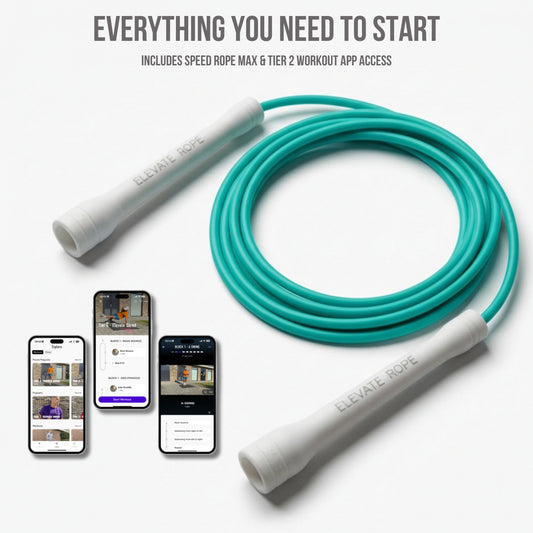
For a complete guide to joint-friendly cardio options, read our low-impact cardio guide for bad knees, hips, and joints. If your arthritis is well-controlled and you want to try jump rope, the Elevate Dignity Beaded Rope provides the feedback for developing proper technique, and our Jump Rope Mat provides the cushioned surface that protects joints during every session.
Your joints need movement. Give them what they need.
Sources
Arthritis and exercise benefits reference Cochrane systematic review data on exercise for knee osteoarthritis. Recommendations align with guidelines from the Arthritis Foundation and American College of Rheumatology. Jump rope joint loading comparison references biomechanical research published in Gait & Posture demonstrating lower peak forces during skipping compared to running. The two-hour pain rule draws from clinical guidance used in rheumatology and physical therapy practice.