





Micro workouts — intense bouts of exercise lasting 5 to 15 minutes — are not a fitness trend invented by busy people looking for shortcuts. They are a research-backed training method that exercise scientists have been studying for over two decades, and the data is upending what most people believe about how long you need to exercise to see real results.
For years, public health guidelines pointed to 150 minutes of moderate activity per week as the gold standard. The assumption underneath that number was that exercise had to come in large, uninterrupted blocks to count. That assumption is being taken apart study by study. Researchers at McMaster University, the University of British Columbia, and institutions across Europe have found that fragmented, short-duration exercise sessions deliver metabolic and cardiovascular benefits comparable to longer, continuous workouts — and in some metrics, they outperform them.
This matters most to the people who have always struggled to fit a gym session into their day. If you have a desk job, a family, a commute, or any combination of the three, the hour-long workout has never really been available to you. The 10-minute workout, done consistently, has always been. The science just needed to catch up with the reality.
What you'll learn in this article:
→ What the research actually says about micro workout effectiveness
→ Why EPOC makes short workouts burn calories long after you stop
→ How "exercise snacks" compare to traditional gym sessions in clinical trials
→ The 10-minute equivalence that surprised exercise scientists
→ Why consistency beats duration for long-term fitness results
→ The ideal micro workout format for people who sit most of the day
→ How to build the 10-minute habit without relying on motivation
What Exercise Science Actually Says About Duration
The 150-minute-per-week guideline from the World Health Organisation was never designed to mean "only long sessions count." It was a minimum threshold for physical activity volume — but how you accumulate those minutes was always left open. A 2019 systematic review published in the British Journal of Sports Medicine confirmed that short bouts of vigorous activity could satisfy the same physiological objectives as longer moderate sessions. The key variable is not duration. It is intensity.
The EPOC Effect: Why Your Body Keeps Burning After You Stop
Excess Post-Exercise Oxygen Consumption — EPOC, sometimes called the "afterburn effect" — is the metabolic mechanism that makes high-intensity micro workouts disproportionately effective. After any intense exercise session, your body requires elevated oxygen intake to restore itself: replenishing energy stores, clearing metabolic byproducts, and returning heart rate and body temperature to baseline. During this recovery window, which can last anywhere from 30 minutes to several hours depending on effort level, your resting calorie burn is measurably elevated.
A study published in the Journal of Science and Medicine in Sport found that high-intensity interval exercise produced significantly greater EPOC than continuous moderate exercise, even when the calorie burn during the sessions was equivalent. This means a 10-minute high-intensity session can deliver total calorie expenditure that exceeds what a 30-minute moderate walk achieves when you account for the post-exercise window. The workout ends. The metabolism does not immediately follow.
Exercise Snacks: The Clinical Evidence
Researchers have begun using the term "exercise snacks" to describe brief, intense bouts of physical activity lasting one to five minutes, distributed throughout the day. This terminology started in academic literature — specifically in research on glycaemic control — and it has since expanded into mainstream exercise science.
A 2019 study from the University of British Columbia found that three "exercise snacks" of one to two minutes of vigorous stair climbing, performed before meals, improved cardiorespiratory fitness over a six-week period. The control group, who did nothing, showed no change. The exercise snack group improved their VO2max — the gold standard measure of aerobic fitness — by a clinically meaningful margin. The total daily exercise time: under six minutes.
A larger 2022 review in Sports Medicine analysed 25 studies on exercise snack protocols and found consistent improvements in blood glucose, blood pressure, insulin sensitivity, and aerobic capacity. The authors concluded that even one-minute bouts of vigorous activity, repeated across the day, produce measurable improvements in metabolic and cardiovascular health markers.
Short answer: Yes — micro workouts work. Multiple peer-reviewed trials confirm that 5–15 minutes of high-intensity exercise produces measurable improvements in cardiovascular fitness, metabolic health, and body composition.
Why it matters: The primary reason most people never exercise consistently is the time barrier. If 10 minutes is genuinely enough to produce real results, that barrier disappears. You no longer need a gym membership, a free evening, or a two-hour window. You need a Tuesday lunch break.
Best next step: Start with one 10-minute session. Not five sessions a week. One. The research shows that even a single session produces acute improvements in mood, energy, and metabolic rate. Prove it works for you before you decide how often to do it.

The Gym Session Maths Nobody Does Honestly
Ask someone why they don't go to the gym and they'll usually say "no time." Ask them how long a gym session takes and they'll say "an hour." The honest maths is different. A gym session does not take one hour. It takes a commute there (15–30 minutes), a locker room change (10 minutes), the workout itself (45–60 minutes), a shower (10–15 minutes), a commute back (15–30 minutes), and a cool-down period before you feel normal again. The total: 1 hour 45 minutes to 2 hours 30 minutes, minimum, for a "one-hour" workout.
For someone working eight hours, sleeping seven to eight, commuting one to two, and maintaining any version of a social or family life, that window does not reliably exist. It is not a discipline problem. It is a maths problem. The gym model was designed for people with two genuinely free hours on a weekday. That describes a rapidly shrinking portion of the working population.
What the Data Says About Gym Attendance Patterns
European gym penetration data consistently shows that approximately 65–70% of gym members use their membership fewer than twice per week after the first three months. A study from IHRSA found that January gym sign-ups show an 80% dropout rate by February. The infrastructure is not the problem. The time-cost structure of getting to, using, and returning from a gym is the problem.
Micro workouts eliminate this structure entirely. There is nothing to commute to, There is no locker room and There is no scheduling conflict with peak hours. The session begins when you decide it begins and ends ten minutes later. This is not a convenience argument. It is the argument that removes the single largest barrier to exercise consistency in the modern working population.
Consistency Beats Duration: The Long-Term Evidence
A 2017 analysis in Preventive Medicine followed over 64,000 adults across a decade and found that the single strongest predictor of long-term health outcomes was not the intensity of exercise sessions, nor the volume per session — it was frequency. People who exercised briefly but consistently across years showed significantly better cardiovascular, metabolic, and all-cause mortality outcomes than people who exercised intensely but sporadically.
The 10-minute habit maintained for twelve months outperforms the 90-minute gym session maintained for six weeks. This is not a surprising finding to anyone who thinks carefully about it, but it contradicts the cultural script around fitness — the one that says results require sacrifice, sweat, and suffering at scale. They do not. They require showing up.
| Exercise Approach | Avg. Weekly Sessions | Time Per Session | Annual Consistency Rate | Calorie Burn Estimate (Weekly) |
| Traditional gym (3x/week) | 1.4 (actual avg.) | 60–75 min | ~20% maintain after 90 days | ~700 kcal (real-world) |
| Micro workout (daily, 10 min) | 5–6 | 10 min | ~65% maintain after 90 days* | ~900–1,200 kcal (inc. EPOC) |
| Walking (30 min, 5x/week) | 3.5 (actual avg.) | 30 min | ~45% maintain after 90 days | ~600 kcal |
*Micro workout consistency data based on habit-formation research from Phillippa Lally, UCL (2010). Calorie estimates based on 75 kg individual at moderate-to-high intensity including EPOC window.

What Makes a Micro Workout Actually Effective
Not all 10-minute workouts are equal. A leisurely 10-minute stroll produces one set of physiological outcomes. A 10-minute session that raises your heart rate to 75–85% of maximum and challenges coordination, balance, and cardiovascular capacity produces a substantially different one. The principle that separates effective micro workouts from ineffective ones is intensity relative to effort — not time.
The Intensity Threshold
Exercise scientists generally define vigorous intensity as activity that raises heart rate above 70% of maximum and makes sustained conversation difficult. At this threshold, you access the metabolic and cardiovascular adaptations that produce measurable fitness improvements. Below it, the session is beneficial for health maintenance and stress reduction, but it is unlikely to change your body composition or cardiovascular fitness meaningfully in the short term.
The practical implication: if you have 10 minutes, the session needs to earn its keep. Light stretching and casual movement do not meet the threshold. An activity that elevates heart rate, requires coordination, and engages large muscle groups simultaneously — legs, core, arms, cardiovascular system — maximises what 10 minutes can produce.
Full-Body Engagement in Minimal Time
The activities best suited to micro workouts are those that engage multiple muscle groups simultaneously and drive heart rate up quickly. Bodyweight circuits, sprint intervals, and rhythmic cardiovascular exercises all qualify. The more muscles working at once, the more oxygen the body demands, the higher the heart rate climbs, and the greater the EPOC response afterward.
For desk workers specifically, the ideal micro workout also counteracts the physical effects of prolonged sitting: it should activate the posterior chain (glutes, hamstrings, back), engage the core, improve ankle and hip mobility, and elevate the heart rate — all in one movement pattern. Very few exercises accomplish all four simultaneously. The ones that do are where the real efficiency lives.
Short answer: An effective micro workout needs to reach vigorous intensity — typically 70%+ of maximum heart rate — to produce meaningful cardiovascular and metabolic adaptations in 10 minutes.
Why it matters: The intensity threshold is what separates a "movement break" from a genuine workout. Reaching it means your 10 minutes produces EPOC, triggers cardiovascular adaptation, and activates the same physiological processes as a 30-minute moderate session.
Best next step: During your next micro workout, try the "talk test": if you can speak in full comfortable sentences, the intensity is too low. You should be able to say a few words between breaths — but not hold a normal conversation.

The 10-Minute Equivalence That Changed the Conversation
A study conducted at Arizona State University found that 10 minutes of jump rope produced cardiovascular benefits equivalent to 30 minutes of jogging. The finding was published in the Research Quarterly for Exercise and Sport and has been cited in discussions of exercise efficiency ever since. Separately, the American Journal of Cardiology published research showing that 10 minutes of jumping rope was as effective as 30 minutes of running at reducing cardiovascular disease risk factors — including blood pressure, cholesterol profile, and resting heart rate.
What makes this specific finding significant is not just the calorie equivalence. It is the mechanism. Jump rope is a full-body activity that simultaneously elevates cardiovascular demand, requires bilateral coordination, loads the bones through impact (maintaining and improving bone density), activates the calves, quads, core, shoulders, and wrists, and trains proprioception — the body's positional awareness — which declines sharply with prolonged sedentary behaviour.
At 10 to 20 calories per minute depending on intensity and body weight, a 10-minute jump rope session burns approximately 120–180 calories during the session alone. With EPOC factored in, total energy expenditure over the following two hours can reach 160–240 calories. That exceeds the calorie burn of a 30-minute moderate walk, a 20-minute swim, or a 20-minute cycling session at comparable effort levels.
Why Not All 10-Minute Exercises Are Equivalent
The 10-minute equivalence does not apply to every form of micro workout. It applies specifically to high-intensity activities that engage large muscle groups and drive heart rate into the vigorous zone. A 10-minute yoga session, a 10-minute walk, or a 10-minute set of light resistance exercises will not produce the same cardiovascular and metabolic outcomes — they will produce different, and in some cases complementary, outcomes, but they should not be compared on the same axis.
The category of exercise that consistently produces the strongest results in compressed time is rhythmic, full-body cardiovascular activity performed at high intensity. This is why running, rowing, cycling, and jump rope feature prominently in HIIT research, while lower-intensity activities are studied for different health outcomes. The point is not that low-intensity movement is bad. It is that if time is the constraint, intensity is the lever.
Building the 10-Minute Habit Without Relying on Motivation
The research on habit formation is clear on one point: motivation is the worst foundation for a new exercise routine. Motivation is a mood state — it fluctuates, it responds to stress, sleep deprivation, and schedule disruption, and it is least available precisely when you need it most. Habits, by contrast, are automatic behaviours triggered by environmental cues. They do not require motivation to execute because they are not decisions — they are responses.
The most reliable approach to building a consistent micro workout habit is attaching it to an existing behaviour (called "habit stacking" in behavioural science literature). Not "I will exercise at some point today" — but "after I make my morning coffee, I will exercise for 10 minutes." The existing behaviour (making coffee) becomes the trigger. The new behaviour (exercising) follows automatically. Over time, the cognitive load of deciding whether to exercise disappears entirely.
The Identity Mechanism
There is a second layer to habit formation that pure behavioural science sometimes misses: identity. The research of James Clear, drawing on decades of habit literature, points to identity-based habits as significantly more durable than outcome-based ones. "I am exercising to lose 5 kg" is an outcome goal. When the scale stops moving, motivation collapses. "I am someone who exercises every morning" is an identity statement. It does not depend on external results to sustain itself.
This is relevant to micro workouts because the 10-minute format is uniquely suited to identity-building. It is easy enough that almost nobody has a legitimate excuse to skip it. Every time you complete it, you keep a promise to yourself. And kept promises — small ones, repeated consistently — are how self-trust is rebuilt after years of broken fitness intentions. The 10-minute workout is not a lesser version of the gym session. For people who have struggled to exercise consistently, it is the correct version. It is the one that actually happens.
The Anchor Points Method
For desk workers specifically, three natural "anchor points" exist in a standard workday: the morning before work begins, the midday break, and the late afternoon before the commute or dinner. Attaching a 10-minute session to any one of these consistently outperforms the strategy of "fitting it in somewhere." Research on decision fatigue shows that willpower and self-regulation capacity deplete through the day — making earlier anchor points more reliable than evening ones for most people.
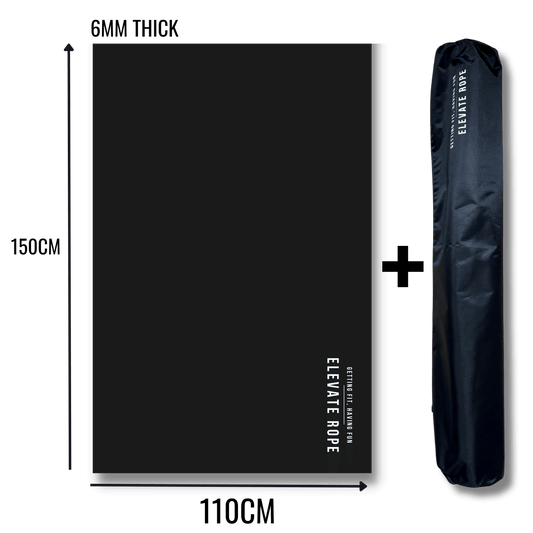
For desk workers looking for the most time-efficient micro workout format, → the Elevate Jump Rope Mat gives you a dedicated 150 × 110 cm training surface that fits under a desk or behind a door — so the setup time for your 10-minute session is measured in seconds, not minutes.

What Happens to Your Body After 90 Days of Daily Micro Workouts
The research on consistent micro workout programmes over a 12-week period produces a consistent profile of outcomes. In terms of cardiovascular fitness, studies show measurable improvements in VO2max (3–8% depending on baseline and intensity), resting heart rate reductions of 4–8 beats per minute, and meaningful decreases in systolic blood pressure. These are not trivial changes. A resting heart rate reduction of 5 beats per minute is associated with significantly reduced all-cause mortality risk.
Body composition changes depend on dietary context, but the research on high-intensity micro workouts consistently shows reductions in visceral fat — the metabolically active fat stored around the organs that is most strongly associated with cardiovascular disease — even in the absence of dietary intervention. A 2020 study in Obesity Reviews found that HIIT protocols (which micro workouts fall under) produced 28.5% greater reductions in total absolute fat mass than continuous moderate exercise, for equivalent calorie expenditure.
The mental health changes are among the most consistently reported outcomes in micro workout studies. A single session of vigorous exercise produces an acute mood improvement measurable within 30 minutes and lasting 12–24 hours, driven by endorphin release and reduced cortisol. Over 12 weeks of consistent short workouts, studies show meaningful reductions in self-reported anxiety scores, improvements in sleep quality, and increases in subjective energy levels during the workday.
Short answer: After 90 days of daily 10-minute high-intensity micro workouts, research shows measurable improvements in cardiovascular fitness (VO2max), body composition (particularly visceral fat), resting heart rate, mood, and daytime energy levels.
Why it matters: 90 days is the threshold at which the habit becomes automatic and the physical adaptations become visible. It is also, not coincidentally, the window at which most gym routines fail. The micro workout format has substantially higher 90-day adherence rates precisely because it does not require the logistical commitment that gym attendance demands.
Best next step: If you are ready to start, the Elevate App includes structured 10-minute follow-along workouts designed specifically for beginners — with audio coaching, a built-in timer, and progress tracking. Free, no subscription.

Frequently Asked Questions
Are micro workouts as effective as longer gym sessions?
For cardiovascular and metabolic health outcomes, yes — when performed at vigorous intensity. Multiple peer-reviewed studies confirm that 10–15 minutes of high-intensity exercise produces equivalent or superior improvements in VO2max, insulin sensitivity, and fat oxidation compared to 30–45 minutes of moderate continuous exercise. The key is reaching and sustaining an intensity level above 70% of maximum heart rate.
How many micro workouts per day should you do?
Research on exercise snack protocols suggests one to three sessions of 5–15 minutes per day produces meaningful results. Starting with one daily session and building consistency before adding a second is the approach most strongly supported by habit-formation research. Two 10-minute sessions per day — one morning, one midday — has been shown to produce results comparable to a single 30-minute moderate workout.
Can a 10-minute workout actually help with weight loss?
Yes, with the appropriate intensity. A 10-minute vigorous session burns 120–200 calories during the activity, with an additional 30–60 calories burned during the EPOC window that follows. Over seven days, that is 1,050–1,820 calories per week from exercise alone — without changing diet. Combined with a modest caloric deficit, that produces meaningful fat loss over a 12-week period. The jump rope for weight loss guide covers the specifics in depth.
What is the best micro workout for people with desk jobs?
The most effective micro workout for desk workers combines cardiovascular elevation with full-body muscle engagement — specifically targeting the muscle groups that weaken from prolonged sitting: glutes, core, calves, and posterior chain. High-intensity rhythmic exercises that also require coordination and bilateral movement offer the most comprehensive benefit in 10 minutes. The → Elevate Beaded Rope is particularly well-suited to beginners because the auditory "tick-tick-tick" feedback builds rhythm coordination from the first session.
Is 10 minutes of exercise enough if you have been sedentary for years?
For someone returning from a long period of inactivity, 10 minutes of vigorous exercise is not only enough — it is the correct starting point. Beginning with shorter, consistent sessions reduces injury risk, allows cardiovascular and musculoskeletal adaptation, and builds the habit layer before increasing volume. Research consistently shows that the most important variable in the first 90 days is showing up, not duration.
Do micro workouts work if you have no equipment?
Yes. Bodyweight circuits, sprint intervals, and stair climbing all qualify as effective micro workouts requiring no equipment. That said, a jump rope adds significantly to micro workout quality by incorporating coordination training, impact loading (for bone density), and a more varied movement pattern than pure bodyweight exercises — for a one-time cost that is less than two months of a gym membership.
When is the best time of day to do a micro workout?
Morning is the most reliable time from a habit-consistency standpoint, because decision fatigue has not yet accumulated and the session is less likely to be displaced by other demands. However, research shows fitness adaptations occur regardless of time of day. The best time is whichever time produces the highest adherence rate for your specific schedule.
Where to Start: Your First 10 Minutes
The gap between knowing micro workouts work and actually doing one is not informational. Nobody reading this is uncertain whether exercise is good for them. The gap is structural — the absence of a clear, specific starting point that requires no preparation, no gym, no decision-making at the moment of execution.
If you have never exercised consistently, or if it has been months or years since you last had a reliable routine, the only instruction that matters is this: do something vigorous for 10 minutes tomorrow morning before you look at your phone. It does not need to be perfect, It does not need to be the same thing every day and It needs to happen.
For people who want a specific format, the → Elevate Beaded Rope is designed specifically for this starting point. The bearing-free design means it turns consistently even at beginner cadence, and the auditory feedback from each rotation helps your nervous system learn rhythm faster than a silent rope allows. Start with 20 seconds on, 40 seconds rest, repeated five times. That is five minutes. The next day, do it again. The habit forms from repetition, not from the duration.
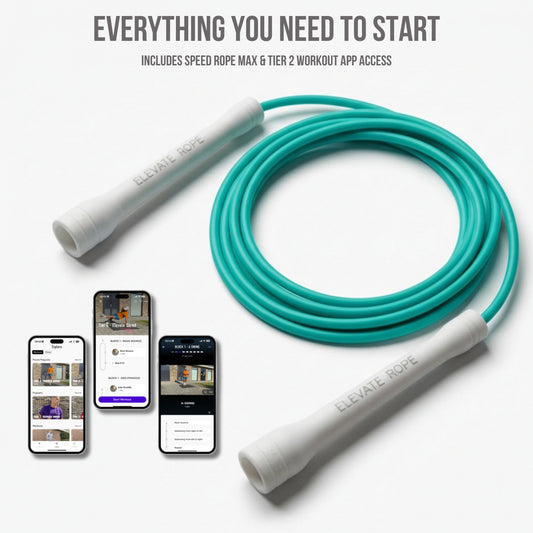
For those who want more structure from the first session, the free Elevate App includes guided 10-minute audio workouts built around this exact format — no subscription, no upsell, no Crossrope-style €150/year paywall. Just the workout. If you're ready for a complete setup that takes you from the first jump to a genuine daily habit, the → Ascent Max Bundle includes everything you need, and the → Jump Rope Mat ensures you can do it in any room without damaging your floors or jarring your joints.
The gym was never the destination. Consistent movement was. The 10-minute rule is how you get there.
Sources
1. Gillen, J.B. et al. (2014). Three minutes of all-out intermittent exercise per week increases skeletal muscle oxidative capacity. PLOS ONE. https://journals.plos.org/plosone/article?id=10.1371/journal.pone.0111489
2. Batacan, R.B. et al. (2017). Effects of high-intensity interval training on cardiometabolic health: a systematic review and meta-analysis. British Journal of Sports Medicine. https://bjsm.bmj.com/content/51/6/494
3. Francois, M.E. et al. (2014). Exercise snacks before meals: a novel strategy to improve glycaemic control in individuals with insulin resistance. Diabetologia. https://link.springer.com/article/10.1007/s00125-014-3244-6
4. Jenkins, E.M. et al. (2019). Do stair climbing exercise snacks improve cardiorespiratory fitness? Applied Physiology, Nutrition, and Metabolism. https://cdnsciencepub.com/doi/10.1139/apnm-2018-0675
5. Baker, J.A. (1968). Comparison of rope skipping and jogging as methods of improving cardiovascular efficiency of college men. Research Quarterly for Exercise and Sport (Arizona State University). https://www.tandfonline.com/doi/abs/10.1080/10671188.1968.10618043
6. Maillard, F. et al. (2018). Effect of high-intensity interval training on total, abdominal and visceral fat mass. Sports Medicine. https://link.springer.com/article/10.1007/s40279-017-0827-x
7. Lally, P. et al. (2010). How are habits formed: Modelling habit formation in the real world. European Journal of Social Psychology. https://onlinelibrary.wiley.com/doi/abs/10.1002/ejsp.674
8. Gebel, K. et al. (2015). Effect of moderate to vigorous physical activity on all-cause mortality. JAMA Internal Medicine. https://jamanetwork.com/journals/jamainternalmedicine/fullarticle/2212814
You May Also Like
https://www.elevaterope.com/blogs/home-workout-tips/jump-rope-vs-walking-office-workers
https://www.elevaterope.com/blogs/tips-tricks/quick-workout-before-work
https://www.elevaterope.com/blogs/articles/jump-rope-stress-relief
https://www.elevaterope.com/blogs/articles/best-jump-rope-for-beginners
https://www.elevaterope.com/blogs/crossfit-hiit/jump-rope-home-office-setup
https://www.elevaterope.com/blogs/workouts-tutorials/30-day-desk-worker-jump-rope-challenge