




To buy jump ropes for a group, order one rope per place in your largest class plus about 10% spares, split the order across two or three rope types rather than one, buy everything long, and set the whole set up before the first session. Buying in one order is cheaper and far less work than topping up three times.
Most group orders go wrong in the same two ways. Too few ropes, so somebody waits. And one single type and length for everyone, so half the group is fighting the equipment. Both are decided at the point of ordering, which is why it is worth ten minutes of thought.
The counts behind this piece are in how many jump ropes a club or gym should stock. The session side is in how to run a jump rope session for a group.
Work out the order in four lines
- Count. Largest class size, plus 10%. Twenty becomes twenty-two.
- Mix. Two thirds speed, one third beaded is a sound default for a mixed adult group. Beginner and youth groups tip further towards beaded. Boxing gyms add two or three heavy ropes.
- Length. Buy long. You can always take cable into the handle, you cannot put it back.
- Spares. Keep them sealed and sized long, so a spare fits whoever needs it.
Bundles or singles
For a group, bundles are usually the sensible route. You are buying several ropes at once, you want more than one type, and you want them to arrive together rather than in three deliveries across a fortnight.
The bundles are built around that, and the buy one get one free range is worth a look when you are stocking a set rather than replacing one rope. Buying singles makes sense for the opposite case: one coach, one specific rope, one specific length.
If you are weighing up what the money buys at different price levels, there is a separate piece on cheap versus quality jump ropes. Short version for a group buyer: the cost that matters is not the rope, it is the session time you lose when the equipment is wrong.
Which types, by what you actually coach
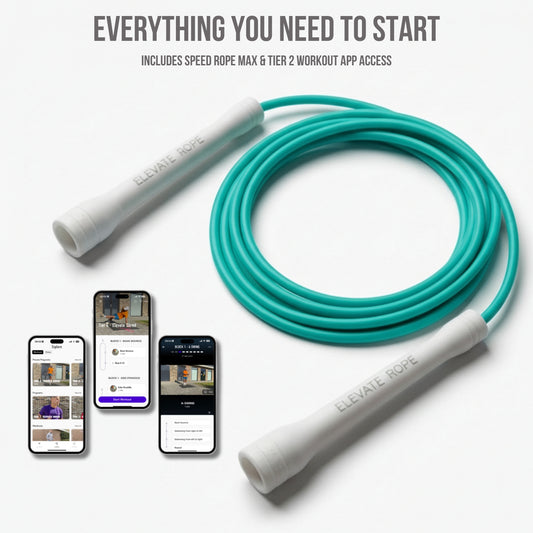
Speed ropes are the default for conditioning rounds, footwork and double unders. Ours run a 5mm PVC cable over a nylon core, with no swivel bearings. We leave bearings out on purpose, because a bearing spins the rope faster than the body behind it is actually moving, and in a group that shows up as people fighting the rope rather than riding it. It also means there is nothing to oil, which matters when the rope belongs to a club rather than a person.
Beaded ropes suit beginners and anyone learning rhythm. The beads catch air and keep their shape through the turn, so the jumper can feel where the rope is. They also click on the floor, which gives a coach an audible read across a whole room. Ours use a 3.5mm polycord where 3mm is the trade standard.
Heavy ropes are strength tools, 10mm cable, with handles shaped to take pressure off the wrist. Two or three in a club is usually enough.
Long handle ropes are for freestyle and crosses, with 20cm handles against the 13cm standard. These are personal rather than shared, so buy them for individuals who ask, not for the set.
For a school or youth club, the kids range is the place to start, and the lesson logistics are in jump rope in PE class.
What to do when the box arrives
Do not hand out a new set cold. An hour of preparation saves you the first session.
- Check the count against the order before anything leaves the box.
- Set every rope to its full length, so nothing in the set is short by accident.
- Mark the handles. Tape, a paint pen, whatever survives a sports hall. Numbered ropes get counted back in.
- Decide which two or three are the spares and keep them separate.
- Set up two or three at the lengths your most regular members need, and tape those settings.
Resist the urge to cut anything on day one. Club ropes get adjusted, not trimmed, for the reasons set out in sharing one jump rope between several people.
Storage and transport
A set that lives in a pile turns into one object. Hang the ropes, or split them into bags of ten. A carry case is worth it the first time you take a class to another venue.
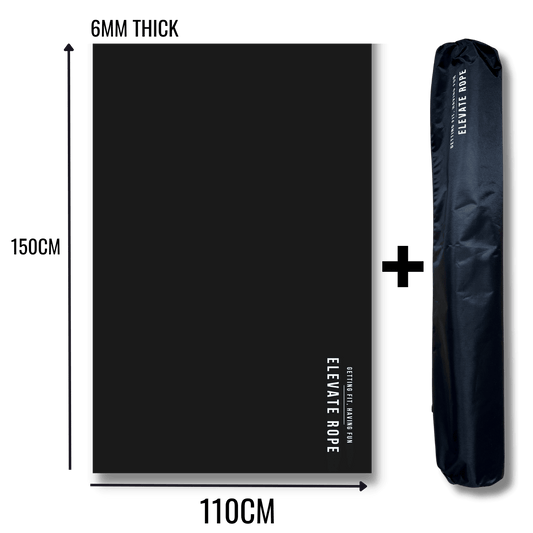
If your sessions run on concrete or tarmac, budget for cable wear and consider a mat for the ropes that take the most abuse. Surface is the single biggest factor in how long a club cable lasts.
What is covered if something goes wrong
Every rope we sell comes with a 90 day product guarantee and a lifetime warranty on the handles. For a group buyer the practical meaning is that your repeat cost is cables rather than complete ropes, since the handle is the part built to survive being dropped and smacked into the floor.
Every rope also includes access to our app, with over a hundred workouts and tutorials, plus the tracker and the nutrition guide. For a club that is worth mentioning to members, because the people who train between sessions are the ones who come back.
Three questions buyers ask
Can we order one length for everyone? You can, and it will not fit everyone. Buy long and adjust instead.
How many spares is enough? About 10% of the set. Fewer than two feels fine until the week two go.
Should we order all one type to keep it simple? Simple for the store cupboard, harder in the hall. A beginner on a thin speed cable has a worse first session than they need to.
The whole range sits in the jump rope collection if you want to build the order yourself.
Geraldo Alken is the founder and CEO of Elevate Rope. He designs jump ropes and works daily with jumpers from beginner to professional.