





A club or gym should stock one jump rope per person in its largest class, plus roughly 10% spares, in at least two lengths and usually two types. For a class of twenty that means twenty ropes and two or three spares. Stocking fewer than one per person is the most common mistake and it costs session time every week.
This is the equipment side of running a jump rope session for a group. If you are putting a first order together, buying jump ropes for a group covers how to do it in one go rather than three.
How many gym jump ropes to buy: start from your largest class"
Clubs tend to buy for a typical evening and then run a busy one. Take the largest class you actually run, buy one rope per place, and add 10% on top. A rope sitting in a bag costs nothing. A session where four people take turns costs you those four people's attention.
Rough numbers:
- Class of 10: 10 ropes, 1 or 2 spares.
- Class of 20: 20 ropes, 2 or 3 spares.
- Class of 30: 30 ropes, 3 or 4 spares, and split the group in the hall.
The mix depends on what you coach
One type for the whole club is tidy and usually wrong. Four rope types exist because they do different jobs.
Boxing and martial arts gyms. Mostly speed ropes for rounds and footwork, with two or three heavy ropes for strength work, which is a common step up for experienced jumpers, as Cleveland Clinic's overview of jump rope training also notes. Our heavy rope is a 10mm cable with handles shaped to take some of the pressure off the wrist, which matters when a fighter is doing three minute rounds with it.
CrossFit boxes. Speed ropes, sized individually if you can. Double unders punish a rope that is the wrong length more than any other movement.
Beginner and general fitness classes. Beaded ropes. The beads catch air and hold shape through the turn, so a new jumper can feel where the rope is instead of guessing. Ours run a 3.5mm polycord against the 3mm that is standard in the trade, which makes them steadier in the hand.
Youth and school clubs. Beaded again, in two lengths. See jump rope in PE class.
A sensible default for a mixed club is two thirds speed ropes and one third beaded, plus two heavy ropes for the people who want them.
Lengths, and why you want at least two
Adult classes hold a 30 to 40cm height range. One length across the whole set means the tall members clip the floor on every turn and the short ones catch their feet.
Buy the set long and adjust. Our speed and heavy ropes use a snaplock inside the handle, so a rope can be shortened for one member and returned to full length for the next. Because the cable is PVC over a nylon core with no metal in it, scissors cut it easily, which is a feature for a private rope and a hazard for a club one. Club ropes should be adjusted, not trimmed. The method is in sharing one jump rope between several people.
What wears out first
Not the handle. The cable, at the point where it strikes the floor, and faster on concrete or tarmac than on a sports floor.
For budgeting, that is good news. Our handles carry a lifetime warranty, so a club's running cost is cable replacement rather than whole ropes. Plan on replacing cables in the hardest-used ropes rather than retiring the set.
Three habits that stretch the interval:
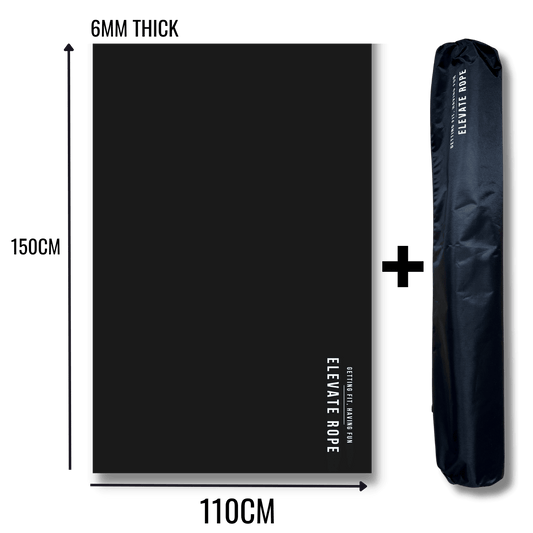
- Jump on a forgiving surface where you can. A mat under the strike point does more for cable life than anything else.
- Coil loosely. Tight winding around the handles sets a kink into the cable.
- Keep grit off. Small stones embed in PVC and then grind at it on every landing.
If you want the detail on what the handle is doing and why it survives being dropped, there is a separate piece on jump rope handles.
Storage and the quiet cost of losing ropes
Count the ropes back in at the end of every session. A club that loses two a month replaces its whole set twice a year without ever deciding to.
Hang them rather than pile them. A hook per rope, or a bag per group of ten, keeps the cables straight and makes the count obvious at a glance. A carry case is also the simplest way to move a set between venues without arriving with a knot the size of a football.
When to add a second set
Two situations justify it. The first is an outdoor class, because tarmac eats cables and you do not want that wear landing on your good set. The second is a club running two venues, where moving the ropes becomes the reason a session starts late.
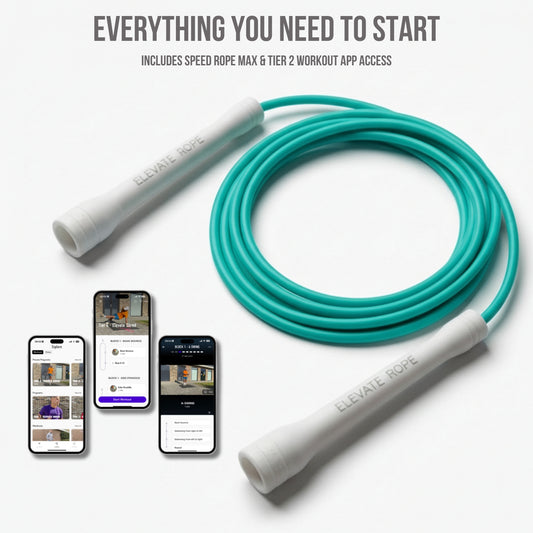
Otherwise, buy once, buy long, and keep spares. The bundles and the full rope range are the places to start, and every rope includes access to our app, which is useful if your members train between sessions as well.
A quarterly check on the set
Put fifteen minutes in the diary every three months and go through the whole set. It is the cheapest maintenance there is.
- Count them, against the number you bought rather than the number you remember.
- Run each cable through your fingers and look at the strike point, roughly a third of the way along from each handle. Wear shows there first, as a flat spot or a scuff that has gone pale.
- Check that every snaplock still holds under a firm pull.
- Pull anything with a flattened cable out of circulation before it lets go mid-session.
- Order the replacement cables in one go rather than one at a time.
Clubs that do this replace cables on their own schedule. Clubs that skip it replace them in the middle of a class, usually on the evening a new member is trying the session out.
Three questions club owners ask
Should members bring their own? Plenty will, and they should be encouraged to, but a club still needs a full set. The member who forgot theirs is the one who stops coming.
Do we need different ropes for beginners and regulars? It helps more than it costs. Beaded for the first weeks, speed once the timing is there.
How long does a club rope last? It depends almost entirely on the surface, so there is no honest single number. Track which ropes come back needing a cable and you will know your own answer within two months.
Geraldo Alken is the founder and CEO of Elevate Rope. He designs jump ropes and works daily with jumpers from beginner to professional.