





Weighted Jump Rope vs Speed Rope: What Fits Your Training?
Weighted jump rope vs speed rope is a choice between added resistance and easier, faster rotations. Neither design guarantees better fitness results. The useful question is which workout you want to repeat.
A speed rope can support steady cardio, quick footwork, and skill practice. A weighted rope changes how each turn feels. However, weighted ropes are not one category with identical training demands. Some carry weight in the handles. Others put it into the rotating cable. A weighted speed rope sits between a conventional speed rope and a heavy rope.
For fitness enthusiasts, that distinction matters more than dramatic claims about calories. A challenging rope may also shorten your session or change your technique. A lighter jump rope may let you maintain a different pace. This guide compares realistic uses, explains the equipment, and offers a practical selection process. You can then choose your next session before choosing your next product.
What you'll learn
- The seven differences between speed, weighted-speed, and heavy-rope training
- What cable weight and handle weight actually change
- How to match a rope to cardio, intervals, and footwork
- A simple way to test an unfamiliar rope
- When one rope is enough, and when a second option helps
1. What Is the Difference Between a Weighted Jump Rope and a Speed Rope?
A speed rope generally uses a comparatively light cable to support efficient rotation. A weighted design adds mass to the cable, handles, or both. Always inspect construction before comparing two products.
A speed rope is built around rotation
A speed rope supports rhythmic singles, quick footwork, and multiple-under practice when your technique allows it. Cable material and diameter influence how it handles. So do length, surface, grip, and your own timing.
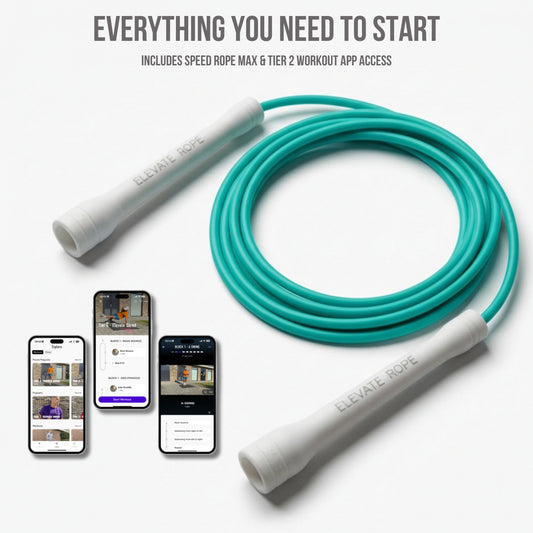
Elevate Speed Rope MAX uses a 5 mm PVC cable with a nylon core. That construction is one specific speed-rope design. Other brands may use thin coated steel, bare cable, or different handle systems. A jump rope label alone cannot explain every handling difference.
→ For a closer look at the category: Elevate Speed Ropes
Weighted means the added mass can sit in different places
Some weighted ropes place additional mass inside the handles. Others increase the mass of the cable itself. These choices distribute resistance differently during a rotation. Total product weight does not explain the whole training experience.
Ask where the weight sits, then check cable thickness and handle design. Also consider whether the product is intended for speed, conditioning, or heavy-resistance intervals. Those are more useful questions than simply asking whether a jump rope feels heavy.
Titan 7MM and heavy ropes are not interchangeable
The Elevate Titan 7MM is a weighted speed rope. Its 7 mm PVC cable carries the extra weight, not the handles. The published specification also lists 15 cm handles and a bearing-free design. It targets a middle ground between speed and heavier resistance.
Elevate Heavy Ropes use a thicker 10 mm rope construction. Treat them as a separate tool for shorter, resistance-focused intervals. Heavy-rope work should not become your default long-duration cardio prescription.
→ Compare the cable-weighted option: Titan 7MM Weighted Speed Ropes
Short answer: Speed ropes prioritise efficient rotation; weighted ropes add resistance. Titan 7MM is a weighted speed rope, not a heavy rope.
Why it matters: Weight location and cable design affect the handling you feel in a workout.
Best next step: Compare construction and intended use before comparing product names.
2. Seven Differences That Matter During a Workout
The most useful comparison concerns what happens during an actual session. Weight, cadence, comfort, and rest interact. No single rope wins every category for every person.
What about calories and fat loss?
A weighted jump rope does not guarantee a higher total calorie burn. Exercise expenditure varies with body size, effort, session length, and rest. You may work harder per rotation but perform fewer rotations or stop sooner.
The CDC describes exercise intensity through the effort required, breathing, and other measures. It does not rank jump rope products by brand or cable thickness. Treat any fixed calorie multiplier as unproven unless the claim cites an appropriate direct comparison.
Weight management involves more than choosing a workout tool. Pick a form of rope skipping you can perform consistently. If you enjoy varied pacing, that may matter more than the heaviest cable available.
Does added resistance replace strength work?
Weighted jumping can make a conditioning session more demanding for your arms and shoulders. It is not automatically equivalent to progressive resistance training. A jump rope session also cannot guarantee a particular strength or muscle-gain outcome.
WHO recommends both aerobic activity and muscle-strengthening work for adults. ACSM guidance likewise considers resistance-training goals, loading, and programming. Use weighted skipping as one possible conditioning component, not a universal replacement for strength sessions.
Short answer: Neither type guarantees greater fat loss or a complete strength workout. Your actual session matters.
Why it matters: A heavier rope may increase resistance while also changing pace, duration, and recovery.
Best next step: Select by the workout you can sustain, then track your real performance.
3. Which Rope Matches Your Fitness Goal?
Start with the reason you jump, not the largest number on a product label. Different workouts ask for different equipment. Your most common session should guide the first jump rope purchase.
Cardio, footwork, and faster rotations
A speed rope is a sensible option for fitness enthusiasts who enjoy rhythmic conditioning. It also fits boxer-style steps, quick changes of direction, and double-under practice. That does not mean every beginner must start with one.
If the cable seems difficult to track, review your sizing and movement first. Extra jumping height rarely fixes poor timing. You may find that a beaded rope gives clearer tactile feedback while you learn.
→ For faster footwork and routine cardio: browse Elevate Speed Ropes
Mixed conditioning with more cable feedback
A weighted speed rope may appeal when a conventional speed cable feels too light. Titan 7MM adds mass in the rotating cable while keeping a speed-oriented design. It is an option to compare, not a guaranteed upgrade for everyone.
Consider the training question carefully. Do you want more cable presence without moving to a heavy rope? If so, a weighted speed rope belongs on your shortlist. If pure speed is your priority, keep comparing lighter options.
→ For the middle-ground design: explore Titan 7MM
Brief resistance-focused intervals
A heavy rope makes more sense when resistance itself is the planned challenge. Start with short, controlled bouts and adequate rest. Keep the movement tidy rather than chasing an arbitrary uninterrupted session length.
If your shoulders or wrists become uncomfortable, stop and reassess. A workout that degrades technique is not more productive merely because the equipment feels harder. Existing pain or medical concerns warrant individual professional guidance.
→ For a dedicated resistance tool: view Elevate Heavy Ropes
Still learning? Feedback can matter more than load
A beaded rope has segmented beads threaded over a cord. Their weight creates tactile feedback through the hands and arms. That feedback helps you sense the rope position while practising basic timing.
Choose a beginner-oriented jump rope if trips still dominate your sessions. You do not need to prove anything with a heavy cable. Learn a controlled bounce, then choose the next training demand.
→ For timing and first-skill practice: see Elevate Beaded Ropes
Short answer: Match the rope to your most frequent workout and current skill level.
Why it matters: The equipment should support your planned movement, not dictate an unsuitable session.
Best next step: Name your main goal and shortlist one relevant rope category

4. How to Choose and Test a New Jump Rope
The goal is to find equipment you can use with controlled movement. Specifications narrow the field. A short practical check can reveal sizing issues and unrealistic workout expectations.
Step 1: Define two sessions you actually perform
Write down your regular cardio workout and your occasional variation. Maybe the first involves steady footwork. The second might involve brief resistance intervals. This separates real training needs from interesting product descriptions.
If both sessions favour quick rotation, one speed rope may be enough. If their objectives differ, comparing two rope types becomes more useful. That decision does not require buying a whole collection.
Step 2: Check fit and construction
Check cable material, diameter, handle length, adjustment system, and the location of added weight. Start with a suitable length before judging how the jump rope rotates. A cable that is too long can drag. A short cable can catch your feet.
Use the established sizing guide for a starting method. Fine-tune based on your height, technique, and the rope itself. Do not copy an advanced jumper’s exact setup without considering your own movements.
For a deeper explanation, read how to size a jump rope.
Step 3: Try controlled rounds and notice the trade-offs
For an informal equipment test, use comfortable short rounds and rest between them. Begin at a pace you can control. Notice trips, cadence, breathing, and whether your wrists or shoulders change your movement.
Avoid treating a single comparison as a laboratory test. A new jump rope often requires adjustment and practice. Compare the actual training experience across several suitable sessions, not just the first minute.
Step 4: Keep, switch, or add a second rope
Keep your existing option if it already serves your main goal. Switch categories when your planned workouts genuinely need a different design. Add a second rope only when it provides a distinct training role.
Elevate bundles can be useful for people who want different rope types. Check the current contents before purchasing. Do not assume a bundle includes Titan 7MM or any other specific model.
→ If two distinct rope types fit your routine: compare the current Elevate Bundles
5. Common Buying and Training Mistakes
Most mistakes come from comparing promises instead of training needs. A heavier product is not always more suitable. A faster product is not always easier to use.
Mistake: assuming weighted means better for fat loss
Do not use cable weight as a shortcut for estimated results. Session length, cadence, effort, and consistency still matter. Avoid advertising claims that promise a fixed calorie advantage without directly applicable evidence.
Mistake: treating all weighted designs alike
A handle-weighted design differs from a cable-weighted jump rope. Titan 7MM differs from a 10 mm heavy rope. Compare the actual construction and the intended workout, not just a category label.
Mistake: copying speed-rope sessions with heavy equipment
Changing equipment may require changing your work and rest periods. Keep heavy-rope rounds short enough to preserve control. Stop when technique breaks down or discomfort appears.
Mistake: buying a new rope to fix a sizing problem
Sometimes the jump rope you own is suitable but poorly adjusted. Check length and basic mechanics before buying another product. Your first upgrade may be a better-fitting setup, not a heavier cable.
Frequently Asked Questions
Is a weighted jump rope better than a speed rope?
Neither is universally better. A weighted jump rope introduces resistance, while a speed rope prioritises easier, faster rotation. Your goal, skill level, and workout structure should decide.
Does a weighted rope burn more calories?
Not automatically across an entire session. A heavier cable can change effort, but it may also change pace and workout duration. Avoid treating product weight as a guaranteed calorie multiplier.
Can a speed rope still provide cardio?
Yes. Speed-rope sessions can support aerobic or vigorous conditioning, depending on how you train. Exercise intensity reflects your actual effort, not the product name.
What is a weighted speed rope?
A weighted speed rope adds cable mass while retaining a speed-oriented training purpose. Titan 7MM is Elevate’s example, with weight in its 7 mm cable rather than its handles.
Is Titan 7MM the same as a heavy rope?
No. Titan is positioned between conventional speed and heavy-rope options. Elevate’s 10 mm heavy rope serves a different resistance-focused training role.
Can beginners use a weighted rope?
Some can, but extra resistance is not required to learn basic timing. If you keep tripping, a beaded rope can provide clearer tactile feedback. Build control before making weight the training challenge.
Can I do double unders with a weighted speed rope?
Possibly, depending on the model and your skill. A weighted speed rope does not guarantee easier double unders. Compare how your technique holds up with each cable.
Do I need both speed and weighted ropes?
No. Start with the design that suits your main workout. Add a second only when it supports a genuinely different purpose. One suitable jump rope and a repeatable plan are enough to begin.
Next Steps: Choose Your Rope by Purpose
A speed rope fits workouts where cadence and footwork are central. A weighted speed rope offers another cable feel for mixed conditioning. A heavy rope has a distinct place in shorter, resistance-focused bouts.
Choose the training you want to repeat, then find the jump rope that supports it. If you still struggle with timing, address that first. You do not need every model to build a satisfying routine.
You May Also Like
- How to Choose the Right Jump Rope: The Complete Buying Guide
- Speed Rope vs Beaded Rope: Which Should You Buy?
- How to Size a Jump Rope
- Jump Rope Workout Plans and Challenges
- Best Jump Rope for Beginners
DO NOT PUBLISH — PRE-DELIVERY CHECKLIST