





Best Jump Rope for Basketball Players: Choose for Your Training
The best jump rope for basketball players fits the sessions they actually plan to do. A beaded rope may help when timing feels unfamiliar. A PVC speed rope suits players who enjoy repeatable basic turns and conditioning intervals. A weighted rope adds resistance, but it is not the first purchase every player needs.
Basketball already asks plenty from your legs. A new jump rope should fit around practice, lifting, games, and recovery. It should not turn a short extra session into another demanding workout by accident. Your basketball level also tells us little about your skipping skill. You might read the court brilliantly and still trip after three rope turns.
This guide is about choosing equipment, not promising that buying it will improve your game. We'll compare useful rope types, check fit and surfaces, and explain when one rope is enough. If you want the workout itself, use our basketball jump rope routine alongside this buying guide.
What you'll learn
- Which jump rope type matches your current skipping skill.
- How to compare beaded, speed, and weighted designs for basketball training.
- Five buying checks that matter more than a “pro” label.
- How to choose one rope without buying equipment you will rarely use.
- What the research says, and does not say, about rope training and basketball.
What Does a Basketball Player Actually Need From a Jump Rope?
A useful jump rope supports a clear task: practise timing, add manageable conditioning, or vary a warm-up. Start with the task before comparing technical specifications. No single rope type is required for basketball training.
Separate basketball skill from rope skill
Basketball footwork includes starts, stops, pivots, changes of direction, and reactions to other players. Skipping rope involves a repeating turn-and-jump rhythm. These activities share some movement demands, but they are not interchangeable. A jump rope session does not rehearse reading a defender or making decisions with the ball.
That distinction helps you buy more carefully. The best player on your team may still need time to learn rope timing. An intermediate skipper may already know which cable feel works for them. Compare what you can do today, not the level you play at.
Decide whether you need control, conditioning, or variety
Control means making clean turns without constant resets. Conditioning means working at a manageable effort for planned sets. Variety means changing the feel of a session without pretending one tool covers every training quality. These goals can overlap, but naming one primary goal clarifies the purchase.
If every attempt ends after two jumps, feedback may matter more than cable speed. If you already skip easily, repeatable intervals may be your priority. Neither situation demands a heavy rope, complicated handles, or a large equipment collection.
Keep the training claim separate from the equipment claim
A 2022 systematic review analysed 21 jump rope training studies involving 1,021 participants. It found improvements across several fitness measures compared with controls. Most included studies involved young people, and none establishes that Elevate's rope types produce different basketball outcomes. Read the study summary.
That evidence supports discussing rope skipping as a training option. It does not support claiming one jump rope makes you faster on court. Buying advice should focus on fit, feel, and intended use.
Short answer: Basketball players need a controllable rope that suits a specific training task.
Why it matters: Basketball skill does not automatically create rope timing. A poor match can interrupt training before it begins.
Best next step: Choose one main goal: timing, conditioning, or a different training feel.
Beaded, Speed, or Weighted: Which Jump Rope Fits Basketball Training?

Beaded, speed, and weighted ropes offer different sensations. The useful comparison is how each design feels during your intended session. The rope name alone cannot predict a basketball result.
Beaded rope: noticeable feedback for timing practice
Elevate's beaded design uses 2.5 cm PVC beads over a 3.5 mm polycord. The moving beads make the rope's position more noticeable through your hands and arms. That tactile feedback may suit a basketball player learning one turn per jump. Experienced skippers also use beaded designs for complex skills.
A beaded jump rope works for conditioning too. You do not need to abandon it once you can skip consistently. Its segmented construction simply offers a different feel from a smooth cable. It also makes floor contact audible, though sound is not its only feedback mechanism.
→ Compare Elevate Beaded Ropes if sensing the rope arc is your biggest challenge.
Speed rope: a flexible cable for familiar turns
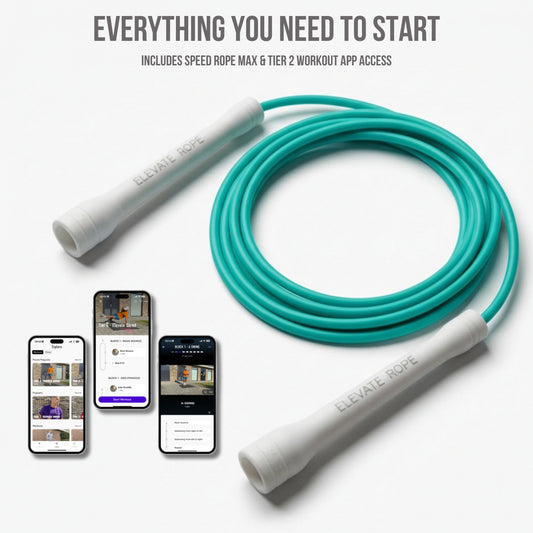
Elevate's standard Speed Rope MAX uses a flexible 5 mm PVC cable with a nylon core. It is different from a thin, uncoated steel competition cable. Its lightweight handles and adjustable construction offer an everyday setup for repeated basic turns.
Players who already skip comfortably may prefer this feel for short conditioning intervals. Beginners can learn on a speed rope too. A name like “speed” describes the equipment category, not a requirement to jump as fast as possible. Start at a pace you can control.
→ Compare Elevate Speed Ropes if you prefer a flexible PVC cable for regular sets.
Weighted and heavy ropes: a different load, not a shortcut
The TITAN 7MM weighted rope and 10 mm Heavy Rope change the effort needed to turn the rope. The heavy model uses a thicker cable and suits shorter, deliberate intervals. Neither is necessary to learn the basic bounce. Extra resistance is not a direct way to improve your vertical jump.
For a basketball player with a full practice schedule, added load needs a reason. You may enjoy it during separate conditioning work. But first decide whether you can already use a regular jump rope comfortably. A heavier product should solve a real need, not create one.
→ Explore TITAN 7MM or compare Heavy Ropes only if resistance is part of your plan.
Quick comparison for basketball players
| Your current need | Rope to compare first | Why consider it | What it does not promise |
| You keep losing the rhythm | Beaded rope | More noticeable arc and timing feel | Automatic footwork improvement |
| You can skip and want basic intervals | Speed rope | Flexible cable for familiar turns | Faster sprinting on court |
| You want different resistance | TITAN 7MM or Heavy Rope | Adds effort to rope rotation | Increased vertical jump |
| You want one practical starting tool | Beaded or Speed Rope | Choose the feel you can repeat | A complete basketball programme |
Short answer: Consider beaded for clearer timing feedback, speed for familiar conditioning turns, and weighted only for a deliberate resistance goal.
Why it matters: Each rope changes the session's feel. None guarantees an on-court performance gain.
Best next step: Compare the construction and intended use before selecting a colour or bundle.
Five Checks Before You Buy a Basketball Jump Rope
The right choice comes from five practical checks. You do not need a complex equipment test or perfect technique. You need a rope that fits your body, space, schedule, and current level.
1. Test whether you can repeat controlled jumps
Ask yourself whether you can make several relaxed turns without chasing the rope. If you cannot, start with control and a comfortable arc. A jump rope that gives clearer feedback may be useful. If you already have clean rhythm, choose by the session you want to repeat.
2. Check length before judging rope type

Stand on the rope's midpoint and lift the handles as an initial fitting check. Use the brand's sizing instructions rather than treating one measurement as universal. Then make small adjustments and try easy jumps. A poorly sized jump rope can make either design frustrating.
Do not cut away extra cable or cord until you have tested the setting. You cannot restore material after trimming. Our jump rope sizing guide explains the adjustment options.
3. Check where you will actually train
A smooth gym floor, rubber training mat, and rough outdoor pavement create different contact conditions. Beads and cables can both wear over time. Inspect the surface and the manufacturer's care instructions. Do not assume every basketball court permits skipping rope during shared practice.
4. Match your rope to the weekly schedule
Basketball already includes repeated starts, cuts, and jumps. Adding rope skipping increases the total work on your lower legs. Begin with a small amount and adjust around demanding practices or games. If a coach controls your programme, ask where extra conditioning fits.
You do not need to skip daily to justify buying a jump rope. The right tool is one you can use without compromising the sessions that matter most.
5. Buy the simplest setup that covers your goal
Compare handle comfort, adjustment method, construction, and availability. A premium-looking label cannot replace those details. One jump rope may be sufficient for months. A second jump rope becomes useful when you can explain exactly why you want another feel.
→ Read the complete jump rope buying guide if you want a broader overview of rope categories.
How to Match Your Rope to Three Basketball Training Situations
Your situation often decides the purchase more clearly than your playing position. A guard and a centre can both be rope beginners. A junior player and an adult can both prefer a flexible cable.
Situation one: You have never skipped consistently
Start with basic timing. A beaded rope is worth comparing because the moving arc feels more noticeable. But use a speed rope if its feel suits you and the length is correct. Aim for controlled practice rather than long rounds immediately.
A short introductory session might involve a few relaxed jumps, a pause, and another attempt. This is a technique example, not a prescription for every athlete. Progress by comfort and your existing training load.
Situation two: You already skip and want conditioning variety
A standard PVC speed rope is a reasonable candidate. Its flexible cable suits repeating familiar turns. You can also keep using your beaded rope if it feels comfortable. Intensity comes from the work, rest, technique, and individual fitness level.
For actual drills and session structure, see the basketball jump rope workout. This buying article answers the equipment question. The workout page answers what to do after you choose.
Situation three: You want more footwork practice, not just sweat
Choose a jump rope you can control during alternating-foot and small lateral patterns. A beaded design may help if you lose the arc when changing steps. A speed rope can also work once the movement feels familiar. Neither tool replaces court-specific footwork with a defender or ball.
Our basketball footwork drills guide shows movement ideas and a progression. Use the guide to decide what you want to practise before buying another type.
Short answer: Match the rope to your skipping experience and the basketball session you want to supplement.
Why it matters: Playing position does not tell you which cable feel works. Practice demands and current technique matter more.
Best next step: Pick your closest situation, then check fit and construction.
Common Buying Mistakes Basketball Players Can Avoid
Most rope buying mistakes are decision mistakes, not personal failures. Buyers focus on an exciting feature and overlook the session they will actually do. Keep these checks in mind before ordering.
Mistaking faster rope rotation for faster basketball movement
The word “speed” can be misleading in a basketball context. It describes a rope style. It does not demonstrate better acceleration, defensive reactions, or game decisions. Court performance needs basketball-specific practice alongside appropriate athletic training.
Buying heavy resistance before building basic timing
A heavier jump rope is not automatically an upgrade. If you trip during basic turns, extra load may not address the cause. Learn the movement with a jump rope you can control. Choose resistance later if you have a clear reason.
Buying a bundle because you assume more is better
Bundles can be convenient when you already want different rope styles. They are not essential for a player with one simple goal. Compare the contents against the sessions you will actually repeat. Do not assume a package is always cheaper without checking current pricing.
→ Compare Elevate Rope Bundles if you want both beaded and speed options for distinct uses.
Frequently Asked Questions
What is the best jump rope for basketball players who are beginners?
A beaded jump rope is worth considering when you want to feel the moving arc more clearly. A correctly sized PVC speed rope can also work for a beginner. Choose the rope that lets you practise relaxed, repeatable turns.
Should a basketball player buy a speed rope or a beaded rope?
Compare by goal. Beaded offers noticeable feedback during timing practice, while a speed rope offers a flexible cable for familiar intervals. Basketball experience alone does not settle the choice.
Can jump rope training improve basketball footwork?
Rope skipping gives you a way to practise repetitive timing and some movement patterns. It does not replace defensive slides, pivots, cutting, or decisions on court. The evidence for general training benefits is not proof that one rope type improves game performance.
Will a weighted jump rope increase vertical jump height?
There is no sound basis for promising that result from the product alone. Jump performance depends on broader training, technique, and individual factors. Select weighted equipment for its intended resistance, not a guaranteed increase in jump height.
Is a beaded rope only for new skippers?
No. Experienced rope skippers also choose beaded designs for freestyle and controlled movement. Beginner-friendly feedback does not create a ceiling on skill.
Is one jump rope enough for basketball conditioning?
Yes. One suitable jump rope can support timing practice and conditioning. Buy a second only when you want a different feel or clearly different training use.
How long should a basketball player jump rope?
There is no universal session length for every basketball player. Consider your current experience, planned intensity, games, and other training. Start conservatively and adjust the session with your coach when relevant.
Should I use a jump rope on an outdoor basketball court?
Check the surface and local rules first. Rough pavement may increase wear on beads or cables. Choose a clear space away from other players, and inspect your rope regularly.
The Bottom Line: Choose a Rope That Fits the Work
The best purchase is the jump rope you can use comfortably for your actual plan. If you need more noticeable arc feedback, compare beaded designs. If you prefer familiar basic-turn intervals, compare PVC speed designs. Weighted models offer another training feel, but they are optional.
Jump rope training can complement basketball. It does not replace ball work, strength training, or recovery. Choose a simple tool, set a realistic purpose, and let your practice shape the next purchase.
→ Choose a Beaded Rope for tactile feedback. → Choose a Speed Rope for flexible-cable sessions. → Compare Bundles only if you want both.