





Jump Rope Footwork Drills for Basketball Players: Seven Skills to Practise
Jump rope footwork drills help basketball players practise rhythm, coordination, and controlled foot movement. They complement basketball training without replacing court-specific drills.
Basketball demands quick reactions, balance, and frequent changes of direction. These skills require consistent practice. A jump rope gives you another way to work on timing and movement control.
You do not need complicated tricks to get started. Simple movements can make a useful addition to your training routine.
This guide covers seven practical drills. You will also learn how to structure a short workout and avoid common mistakes.
What You'll Learn
- Seven jump rope footwork drills for basketball players
- How skipping relates to basketball movement
- A practical ten-minute training routine
- Common footwork mistakes and how to fix them
- How to choose suitable jump rope equipment
Why Jump Rope Footwork Matters for Basketball
Jump rope training gives basketball players a structured way to practise movement patterns. It challenges timing, coordination, and repeated foot contacts. However, it does not replace reactive basketball drills.
Coordination and Rhythm
Every jump rope rotation requires your hands and feet to work together. Your feet must clear the cord at the correct moment.
This creates a repeatable coordination task. You can practise different stepping patterns while maintaining a steady rhythm.
Start slowly. Increase complexity when your movements become consistent.
Foot Placement and Balance
Basketball players regularly move between different positions. Controlled foot placement matters during those movements.
Jump rope drills introduce simple variations in landing position. You can practise moving forward, backward, and sideways.
These patterns are not identical to basketball footwork. Use them alongside defensive slides, acceleration drills, and court practice.
Short answer: Jump rope drills help players practise rhythm, coordination, and controlled foot movement.
Why it matters: Basketball requires coordinated movement under changing conditions. Skipping provides additional movement practice.
Best next step: Learn the basic bounce before attempting more advanced patterns.
Seven Jump Rope Footwork Drills for Basketball Players
Start with basic movements before progressing to more challenging patterns. Each drill introduces a different coordination task. Focus on technique rather than maximum speed.
1. Basic Bounce
The basic bounce is the foundation of jump rope training. Jump with both feet together while maintaining a steady rhythm.
Keep your knees relaxed. Jump only high enough for the cord to pass underneath.
Use small wrist movements to rotate the jump rope. Avoid swinging your entire arms.
Practise for twenty seconds. Rest briefly and repeat.
2. Alternating-Foot Step
The alternating-foot step resembles jogging in place. Switch feet with each jump rope rotation.
Keep the movement controlled. Avoid lifting your knees unnecessarily high.
This drill introduces repeated weight transfers between your feet. Begin with short intervals until the pattern feels comfortable.
3. Side-to-Side Hops
Imagine a straight line underneath your feet. Jump slightly left and right across that line.
Keep both feet together. Maintain a consistent jump rope rotation.
Begin with small lateral movements. Wider jumps make the drill more demanding.
This movement introduces directional changes. It does not replace basketball defensive slides.
4. Lateral Alternating Steps

Shift your weight sideways while alternating your feet. Keep the jump rope moving at a comfortable pace.
Concentrate on balanced landings. Avoid rushing between positions.
If your timing breaks down, return to the basic bounce. Restart when your rhythm feels controlled.
5. Boxer Step
The boxer step uses gentle weight shifts between your feet. One foot carries slightly more weight during each movement.
Keep the bounce small. Maintain a relaxed upper body.
This jump rope variation creates a different rhythm. It can also make longer practice sessions feel less repetitive.
6. Forward-and-Backward Hops
Choose a small mark on the floor. Jump forward and backward across it.
Maintain steady jump rope rotations. Keep your movement range small.
Focus on controlled landings. Avoid leaning too far forward or backward.
7. High-Knee Alternating Skips
High-knee skipping introduces a more demanding coordination pattern. Alternate your feet while lifting each knee higher.
Maintain control of the jump rope. Avoid sacrificing technique for speed.
Start with ten to twenty seconds. Return to simpler movements when your timing becomes inconsistent.
Short answer: Beginners should start with the basic bounce and alternating-foot step.
Why it matters: These movements establish timing before adding directional changes.
Best next step: Practise two drills consistently before introducing another variation.
A Ten-Minute Basketball Jump Rope Routine
You can combine these drills into a short training session. Ten minutes provides a manageable starting format.
This routine is a practical example, not a proven optimal training duration. Adjust the intensity to your experience.
The Workout
| Time | Exercise | Focus |
| 0:00–1:00 | Easy movement | Warm-up |
| 1:00–2:00 | Basic bounce | Timing |
| 2:00–3:00 | Alternating-foot step | Coordination |
| 3:00–4:00 | Side-to-side hops | Lateral movement |
| 4:00–5:00 | Recovery | Rest |
| 5:00–6:00 | Boxer step | Rhythm |
| 6:00–7:00 | Forward-back hops | Foot placement |
| 7:00–8:00 | Lateral alternating steps | Direction changes |
| 8:00–9:00 | High knees or basic bounce | Optional progression |
| 9:00–10:00 | Easy movement | Cooldown |
How to Adjust the Routine
Beginners can alternate thirty seconds of movement with thirty seconds of rest. More experienced players can gradually increase their working periods.
Keep technique consistent. Reduce intensity when fatigue changes your movement.
Your jump rope session should fit your basketball training schedule. Avoid unnecessary extra jumping during demanding practice weeks.
Short answer: A ten-minute routine can introduce several footwork patterns.
Why it matters: Short sessions make technique practice manageable.
Best next step: Begin with comfortable intervals and progress gradually.
Choosing the Right Jump Rope for Basketball Training
Your ideal jump rope depends on your experience and training goals. Different designs provide different levels of feedback and resistance.
Beaded Ropes for Beginners
Beaded ropes provide noticeable tactile feedback through the hands and arms. This can help beginners follow the rotation.
A beaded jump rope is a practical option for learning basic timing. It also works well for controlled footwork practice.
Explore Elevate Rope Beaded Ropes
Speed Ropes for Conditioning
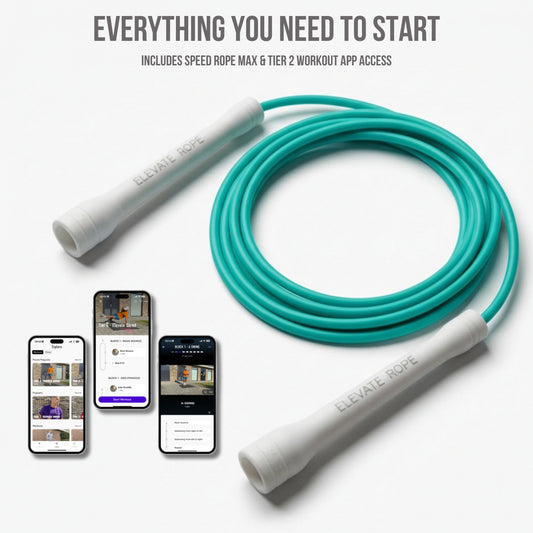
Speed ropes generally provide a lighter turning feel. They can suit experienced skippers practising quicker rotations.
A speed rope is not automatically better for basketball. Choose equipment that matches your skipping ability.
Explore Elevate Rope Speed Ropes
What About Heavy Ropes?
Heavier jump rope designs introduce additional resistance. They can support specific conditioning goals.
They are not necessary for learning basic footwork. Beginners should prioritise timing and control.
Common Jump Rope Footwork Mistakes
Most beginners encounter timing and technique problems. Correcting these habits can make skipping easier.
Jumping Too High
Excessive jumping requires unnecessary effort. Keep your movements small.
Jump only high enough for the jump rope to pass. Maintain relaxed, controlled landings.
Using Too Much Arm Movement
Large arm movements can disrupt rope control. Keep your elbows comfortably near your body.
Rotate the jump rope using controlled wrist movements. Avoid exaggerated swings.
Progressing Too Quickly
Advanced drills require reliable timing. Learning too many movements at once can create frustration.
Practise basic jump rope patterns first. Add complexity when the movement becomes consistent.
Ignoring Fatigue
Fatigue can affect coordination and landing control. Rest when your technique begins to deteriorate.
Avoid pushing through pain. Seek professional guidance if discomfort persists.
Frequently Asked Questions
Does Jump Rope Improve Basketball Footwork?
Jump rope can provide practice in rhythm, coordination, and foot placement. Basketball-specific improvement also requires court drills. Use skipping as supplementary training.
What Is the Best Jump Rope Drill for Beginners?
The basic bounce is a useful starting point. It allows beginners to concentrate on timing. Progress to alternating-foot steps when comfortable.
How Long Should Basketball Players Jump Rope?
Five to ten minutes can be a manageable starting session. The appropriate duration depends on experience and recovery. Increase gradually when your technique remains controlled.
Can Jump Rope Make Basketball Players Faster?
Skipping does not guarantee faster sprinting. Basketball speed also requires acceleration, strength, and sport-specific practice. Jump rope can complement that training.
Can Jump Rope Replace Agility Drills?
No. Basketball agility includes reacting to opponents and changing direction. Skipping does not fully reproduce these demands.
Should Basketball Players Use Beaded or Speed Ropes?
Beaded ropes provide tactile feedback that can help beginners. Speed ropes may suit more experienced skippers. Choose based on your skill and goals.
Can Basketball Players Jump Rope Every Day?
Daily skipping is not necessary. Training frequency depends on recovery and overall workload. Begin with manageable sessions.
Final Thoughts: Start With the Basics
Better training starts with movements you can control. You do not need complicated tricks to practise footwork.
Begin with two jump rope drills. Repeat them consistently. Add more challenging patterns when your timing improves.
Keep practising basketball-specific skills on the court. Use skipping as another enjoyable way to train.
If you are learning, a beaded jump rope offers helpful tactile feedback. Experienced skippers may prefer a lighter speed rope.
Sources
- World Health Organization — Physical Activity
- Centers for Disease Control and Prevention — Physical Activity Basics