


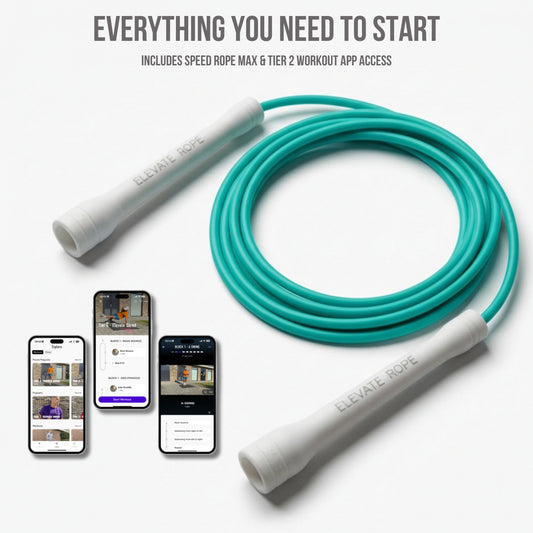




Jump rope for athletes offers a simple way to practise conditioning, coordination, and controlled footwork. It fits into many training routines without requiring expensive equipment.
Athletes already spend time running, lifting, sprinting, and practising their sports. Adding another exercise should serve a clear purpose.
Skipping can provide that extra training option. You can practise gentle movements or complete demanding conditioning intervals.
However, better skipping skills do not automatically improve sprint speed, jumping power, or sports performance. Those results still require targeted training.
This guide explains seven practical benefits of jump rope training. You'll also learn how to choose equipment and structure your sessions.
What You'll Learn
- Seven benefits of jump rope training
- How skipping supports conditioning and coordination
- Which sports can benefit from jump rope
- Differences between beaded, speed, and heavy ropes
- A practical four-week training plan
- Common mistakes athletes should avoid
- How to track meaningful progress
What Can Jump Rope Improve for Athletes?
Jump rope training combines cardiovascular effort with repeated, coordinated movement.

Every rotation requires precise timing between your hands and feet. Your training pace determines how demanding the exercise becomes.
Here are seven practical ways skipping can support athletic preparation.
1. Support Cardiovascular Conditioning
Skipping challenges your cardiovascular system through continuous movement.
You control the intensity by adjusting your speed, interval length, and rest periods. Gentle rotations work well during warm-ups.
Faster intervals can create a more demanding conditioning session.
This flexibility makes jump rope useful when training time is limited. You can also practise without complicated gym equipment.
Still, conditioning improvements depend on consistent training and appropriate intensity.
Practical tip: Start with 20 seconds of comfortable skipping. Rest for 40 seconds before repeating.
2. Practise Coordination and Rhythm
Successful skipping requires your hands and feet to work together.
Your wrists rotate the rope while your feet clear its path. Poor timing often causes the rope to catch your shoes.
Regular practice helps develop a more consistent skipping rhythm.
These coordination skills can complement athletic training. However, improved rope control does not guarantee better performance in every sport.
Practical tip: Focus on smooth rotations before increasing your skipping speed.
3. Develop Controlled Footwork
Footwork exercises introduce different movement patterns into your training.
Start with the basic bounce. Once comfortable, practise alternating steps and simple lateral movements.
More experienced athletes can explore boxer steps and side swings.
Each variation creates a different coordination challenge. Repeating these movements helps develop better control during skipping.
Sport-specific footwork still requires separate practice.
Practical tip: Master one movement before combining several footwork patterns.
4. Add Variety to Your Warm-Up
A good warm-up prepares your body for the workout ahead.
Easy skipping can gradually increase movement intensity. It also provides an opportunity to practise coordination.
Begin with slow, controlled rotations. Increase your pace only when the movement feels comfortable.
Avoid exhausting yourself before your main training session.
Practical tip: Include short skipping intervals within your regular warm-up routine.
5. Make Conditioning More Accessible
Athletes cannot always access their usual training facilities.
Fortunately, a jump rope is portable and easy to store. You can train in many suitable locations.
Choose a stable surface with enough clearance. Appropriate footwear also helps support comfortable movement.
This convenience makes skipping useful during travel or busy training weeks.
Practical tip: Keep a jump rope in your training bag for shorter conditioning sessions.
6. Build Consistent Training Habits
Progress requires regular practice rather than occasional maximum-effort workouts.
Short jump rope sessions can fit around other training activities. This makes consistency easier to maintain.
You don't need advanced tricks to benefit from practice. Simple movements provide enough challenge when performed with control.
Gradually increase the workload as your technique improves.
Practical tip: Begin with two manageable sessions each week.
7. Practise Movement Under Controlled Fatigue
Longer intervals make maintaining your skipping rhythm more challenging.
As fatigue increases, your timing may become less consistent. This creates an opportunity to practise controlled movement during conditioning.
However, poor technique should not become the goal.
Reduce your pace when mistakes become frequent. Take additional rest whenever needed.
Practical tip: Prioritise clean repetitions instead of chasing maximum speed.
Short answer: Jump rope supports conditioning, coordination, footwork, and consistent training habits.
Why it matters: These qualities contribute to general athletic preparation. Their transfer to competition depends on your sport.
Best next step: Choose one training quality before selecting your exercises.
Which Athletes Benefit Most From Jump Rope?
Different sports require different physical qualities.
Jump rope for athletes works best when it supports existing training demands. It should not replace essential sport-specific practice.
Boxing and Combat Sports
Boxers commonly use skipping for conditioning and warm-ups.
Alternating steps and boxer-step patterns complement controlled movement practice. Continuous skipping also challenges cardiovascular endurance.
These activities fit naturally into boxing training.
However, jump rope cannot replace sparring, defensive drills, or punching technique.
Use skipping alongside your regular combat-sport sessions.
Football, Running, and Court Sports
Football players, runners, and court athletes can use skipping as supplemental conditioning.
Basic hops and alternating steps introduce movement variety. Controlled rotations also challenge timing.
Still, faster sprinting requires specific sprint training.
Likewise, reactive agility depends on acceleration, deceleration, and decision-making. Those abilities require targeted exercises.
Treat skipping as an additional training tool.
Strength and Functional Fitness
Strength athletes may use jump rope for short conditioning intervals.
These sessions require relatively little equipment. They can also fit into general fitness circuits.
Recovery remains important.
Repeated jumping places additional demands on your calves and lower legs. Excessive volume may interfere with demanding leg workouts.
Start with short sessions and monitor fatigue.
Short answer: Athletes benefit most when skipping supports a specific training need.
Why it matters: Training demands vary across sports, experience levels, and recovery capacity.
Best next step: Decide whether your session focuses on warming up, coordination, or conditioning.
Beaded, Speed, or Heavy: Which Jump Rope Should Athletes Choose?
Choosing suitable equipment makes jump rope training more practical.
Each rope type offers different characteristics. The best option depends on your experience and training goals.
| Rope Type | Best Use | Main Consideration |
| Beaded rope | Timing and coordination | Noticeable rotational feedback |
| Speed rope | Faster rotations and conditioning | Requires reliable timing |
| Heavy rope | Short resistance-focused intervals | Greater upper-body fatigue |
Beaded Rope for Timing and Coordination
A beaded jump rope contains individual plastic beads along a flexible cord.
These beads create noticeable rotational feedback. You can feel the rope moving through each rotation.
That feedback helps beginners practise consistent timing.
Beaded ropes also suit controlled footwork and freestyle training. They provide a practical starting point for learning new movements.
Best for: Beginners, coordination practice, and footwork sessions.
Explore Elevate Rope Beaded Jump Ropes
Speed Rope for Conditioning
Speed ropes typically use lighter cables designed for quicker rotations.
They suit athletes with reliable skipping technique. Faster movements can support structured conditioning intervals.
You can also use a speed rope for steady cardio sessions.
Remember that quicker rope rotations do not automatically improve sprint speed.
Best for: Athletes focusing on faster rotations and conditioning.
Heavy Rope for Short Intervals
Heavy ropes introduce additional resistance during rotation.
Your grip, shoulders, and arms must work against that resistance. This creates a different challenge from lighter ropes.
Short intervals are often more practical than long beginner sessions.
Start with manageable workloads. Increase the duration only when your technique remains controlled.
Best for: Short resistance-focused conditioning sessions.
When Does a Jump Rope Bundle Make Sense?
Many athletes only need one rope.
Additional rope types become useful when training goals differ.
For example, use a beaded rope for timing practice. Choose a speed rope for quicker conditioning intervals.
A heavy rope may provide another option for short resistance sessions.
Avoid buying equipment without a clear purpose.
Short answer: Beaded ropes suit timing, speed ropes support quick rotations, and heavy ropes add resistance.
Why it matters: Matching equipment to your goals makes training more manageable.
Best next step: Identify your main priority before choosing a rope.
How to Add Jump Rope to Your Training Week
A useful jump rope for athletes routine should fit around existing workouts.
Short sessions are often easier to manage than random maximum-effort challenges.
Your experience, technique, and recovery should guide progression.
Start With a Technique Baseline
Begin with a comfortable skipping rhythm.
Stand upright and keep your shoulders relaxed. Position your elbows relatively close to your sides.
Use your wrists to guide the rope.
Make small jumps with enough clearance. Avoid lifting your feet unnecessarily high.
Check your rope length if mistakes occur frequently.
Focus on consistent movement before increasing speed.
Choose the Right Session
Different training days require different approaches.
Warm-up days: Use gentle skipping before your main workout.
Coordination days: Practise controlled footwork patterns with regular breaks.
Conditioning days: Complete structured intervals at a manageable intensity.
Avoid demanding skipping sessions immediately before important competitions.
Consider your existing lower-body workload before adding extra jumping volume.
Follow This Four-Week Jump Rope Training Plan
This example suits athletes who are new to regular skipping.
Adjust each session according to your experience. Take additional rest whenever necessary.
| Week | Suggested Practice | Main Priority |
| 1 | 6 × 20 seconds, 40 seconds rest | Comfortable basic jumps |
| 2 | 6 × 30 seconds, generous rest | Consistent timing |
| 3 | 8 × 30 seconds, generous rest | Simple footwork changes |
| 4 | 6 × 45 seconds, adequate rest | Controlled conditioning |
Begin with gentle movement before each session.
Finish with an easy cool-down.
This progression is only an example. Repeat a week if your technique needs more practice.
Reducing the workload is appropriate when recovery becomes difficult.
Measure Meaningful Progress
Tracking progress helps you evaluate your training.
Useful measures include:
- Number of clean skipping intervals
- Frequency of missed rotations
- Ability to maintain a steady rhythm
- Perceived effort during workouts
- Recovery between sessions
Record your results over several weeks.
If your goal involves sport performance, measure that outcome separately.
For example, improved skipping technique does not prove faster sprinting.
Short answer: Start with short sessions and progress when technique remains consistent.
Why it matters: Repeated jumping creates additional demands on your feet, calves, and Achilles tendons.
Best next step: Add two manageable sessions to suitable training days.
Common Jump Rope Mistakes That Limit Athletic Results
Jump rope for athletes should support training quality.
Poor technique and excessive intensity can create unnecessary fatigue.
Avoid these common mistakes.
Turning Every Session Into a Maximum-Effort Test
Maximum speed is not always productive.
Moving too quickly can disrupt your timing. Frequent mistakes also reduce the quality of your practice.
Develop controlled rotations first.
Increase intensity only when your technique remains consistent.
Jumping Too High
Basic skipping requires only enough height to clear the rope.
Exaggerated jumps use additional effort. They can also make your rhythm harder to maintain.
Keep your bounce small and controlled.
Focus on smooth landings rather than maximum height.
Ignoring Footwear and Training Surfaces
Repeated landings place demands on your feet and lower legs.
Choose appropriate athletic footwear. Use a stable surface with enough clearance.
Avoid slippery or uneven areas.
Reduce your workload if discomfort develops. Persistent pain should be assessed by a qualified healthcare professional.
Adding Too Much Volume Too Quickly
Athletes already manage demanding training schedules.
Additional jumping increases total workload. Introducing too much volume can affect recovery.

Begin with short sessions.
Increase the challenge gradually when your body adapts.
Expecting Automatic Sport-Specific Improvements
Better skipping rhythm is a useful skill.
However, it does not guarantee faster sprinting or higher jumps.
Those outcomes require targeted training.
Continue practising the movements that matter most in your sport.
Frequently Asked Questions
Can Jump Rope for Athletes Improve Sports Performance?
Jump rope for athletes can support conditioning, coordination, and movement practice. Results depend on your sport and training structure.
Sport-specific improvements still require targeted exercises.
Does Jump Rope for Athletes Make You Faster?
Jump rope for athletes can improve skipping cadence. However, faster rope rotations do not automatically increase sprint speed.
Sprinting requires specific training.
Can Jump Rope for Athletes Improve Agility?
Jump rope for athletes challenges timing and controlled footwork. Reactive agility also requires decision-making and rapid changes of direction.
Practise those skills separately.
Is Jump Rope Better Than Running for Athletes?
Neither exercise is universally better.
Running is more specific to many sports. Jump rope offers portable conditioning and coordination practice.
Choose according to your training goals.
How Often Should Athletes Jump Rope?
Beginners can start with two short sessions each week.
Adjust the frequency based on your sport, experience, and recovery.
Consistent technique matters more than daily workouts.
Which Jump Rope Should an Athlete Buy?
Choose a beaded rope for timing and controlled footwork.
Speed ropes suit quicker rotations. Heavy ropes add resistance during short intervals.
Select equipment that matches your primary goal.
Can Jump Rope Replace Plyometric Training?
Not completely.
Both activities involve jumping. However, structured plyometric exercises can target different power and landing qualities.
Use the appropriate training method for your goals.
Next Steps: Choose the Right Tool for Your Sport
Jump rope for athletes works best when every session has a purpose.
Start with controlled movements if timing is your priority.
Choose manageable intervals when conditioning matters most.
Continue practising sport-specific skills alongside skipping.
You don't need complicated equipment to begin. One suitable rope can support many training sessions.
Build consistency before increasing intensity.
Ready to start? Explore the Elevate Rope collection and find equipment that matches your goals.
Sources and Further Reading
- World Health Organization — Guidelines on Physical Activity and Sedentary Behaviour (2020).
- American College of Sports Medicine — Quantity and Quality of Exercise for Developing and Maintaining Fitness (2011).
These references support general exercise guidance. They do not establish automatic improvements in sport-specific performance.
About Elevate Rope
Elevate Rope helps people build consistent movement habits through jump rope training.
Our approach combines practical equipment, accessible guidance, and a community focused on progress.
The goal is simple: make movement enjoyable enough to practise consistently.