





The fitness world has a time problem — and 10-minute workouts are the science-backed solution most people overlook. For decades, the message was clear: if your workout lasts less than 30 minutes, it does not count. Show up for an hour or go home. The result? Millions of people did exactly that. They went home. Not because they lacked motivation — but because an hour-long commitment simply does not fit inside a real life. 10-minute workouts are the evidence-based answer to that problem, and the research behind them is more compelling than most people realise.
This is not about hacking the system or finding shortcuts. It is about understanding what exercise actually does to your body — and why, when it comes to 10-minute workouts, duration is far less important than consistency and intensity.
The 30-Minute Myth (And Where It Came From)
The idea that workouts must be at least 30 minutes long did not come from a single study. It came from guidelines designed for sedentary populations who needed a baseline target. The goal was to get people moving, not to define the minimum effective dose for everyone.
Research has since moved far beyond that baseline. A 2019 review published in exercise physiology literature compared one 30-minute workout to three 10-minute workouts of equal intensity. The result: no significant difference in cardiorespiratory fitness, blood pressure, or blood sugar outcomes. The body adapted equally to both. What mattered was not how long the session lasted — it was that the session happened at all, and that it happened consistently.
The American Heart Association and CDC have updated their guidelines accordingly. Accumulated activity throughout the day now counts toward recommended weekly totals. Three 10-minute sessions equal one 30-minute session in terms of health outcomes. That is not a compromise. That is the science.

What Happens Inside Your Body During a 10-Minute Workout
Understanding why 10-minute workouts produce real results starts with understanding what exercise triggers at a physiological level. The good news: the mechanisms behind 10-minute workouts are well-documented.
Your cardiovascular system responds immediately
Within the first 60 to 90 seconds of moderate-to-vigorous exercise, your heart rate climbs, your blood vessels dilate, and your body starts delivering more oxygen to working muscles. This cardiovascular response does not require 30 minutes to begin. It begins almost instantly. The key is intensity — low-intensity movement produces a low-intensity response. Push the effort up and your cardiovascular system responds accordingly, regardless of how long the session lasts.
EPOC: the afterburn effect
One of the most important findings in short-session research — and one that makes short sessions especially valuable — is EPOC: Excess Post-exercise Oxygen Consumption. After high-intensity exercise, your body continues burning calories at an elevated rate for hours as it restores oxygen levels, repairs muscle tissue, and clears metabolic byproducts. A 10-minute jump rope session at high intensity triggers meaningful EPOC. This means the calorie burn does not stop when you put the rope down. It continues long after the workout ends, making 10-minute workouts more efficient than their duration suggests.
Hormonal and metabolic shifts
Even brief bouts of vigorous exercise trigger the release of endorphins, adrenaline, and growth hormone. Research in the Journal of Musculoskeletal and Neuronal Interactions found that 10 minutes of high-intensity interval training improved insulin sensitivity and reduced body fat in overweight individuals. These are not marginal effects. These are the same metabolic outcomes targeted by much longer training protocols.
Short answer: Do 10-minute workouts actually burn fat?
Why it matters: Yes — particularly when the session includes high-intensity intervals. Short, intense sessions trigger EPOC, which elevates calorie burn for hours after the workout. A 2016 study found that 1 minute of intense effort within a 10-minute session produced similar fitness improvements to 45 minutes of moderate cycling over 12 weeks. Intensity matters far more than duration.
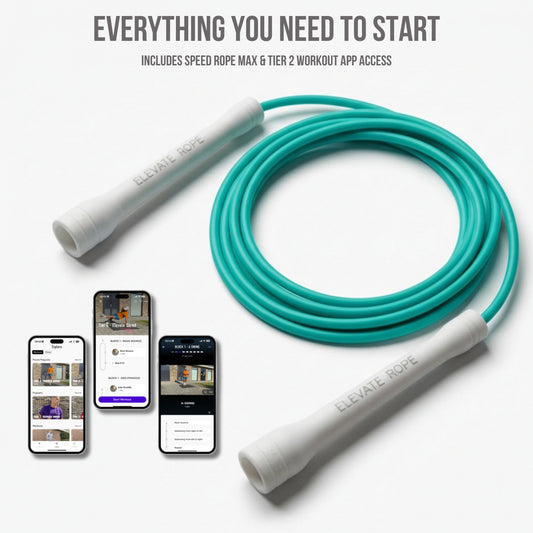
Best next step: → Try the Elevate Rope Beaded Rope for a beginner-friendly 10-minute session that builds rhythm and raises your heart rate fast.
Jump Rope: The Ideal 10-Minute Workout Tool
Not all short sessions are created equal. The format matters. And jump rope sits at the top of the list for short-session training for several reasons that go beyond simple calorie counts.
High calorie output in minimal time
Jump rope burns roughly 10 to 16 calories per minute depending on intensity and body weight. A focused 10-minute session can burn 100 to 160 calories — comparable to 30 minutes of walking. The jump rope does not ease you in gently. It demands full-body engagement from the first rotation: calves, core, shoulders, coordination, and cardiovascular system all working simultaneously.
Zero equipment, zero commute
10-minute workouts only work if you actually do them. Removing friction is the single most effective way to build consistency. Jump rope requires no gym, no machine, no setup. You pick it up and you go. That reduction in friction is what turns a 10-minute intention into a 10-minute habit.
Skill and rhythm keep the brain engaged
One underrated advantage of jump rope as a short-session tool is that it demands mental focus. You cannot daydream through it. The coordination required keeps your brain engaged, and that engagement is part of what makes sessions feel shorter and more satisfying. This matters for long-term consistency more than most people realise.
| Exercise | Calories / 10 min | Equipment needed | Skill requirement |
| Jump rope (moderate) | 100–130 | Rope only | Low to medium |
| Running (8 km/h) | 80–110 | Shoes, space | Low |
| Cycling (moderate) | 60–90 | Bike or machine | Low |
| Bodyweight HIIT | 80–120 | None | Low to medium |
| Walking (brisk) | 40–60 | Shoes, space | None |
The Consistency Advantage of Short Sessions
Here is the aspect of 10-minute workouts that research consistently highlights and that ties directly into why these sessions outperform longer programmes and that most fitness content ignores: short sessions dramatically improve adherence. A study comparing exercise adherence found that multiple short bouts of activity were at least as effective as single long sessions — not just for fitness outcomes, but for the likelihood that people actually kept doing them.
The psychology is straightforward. Most people can commit to 10 minutes. And that is exactly what makes these sessions so powerful as a long-term habit. The activation energy required to start is low enough that the internal negotiation — the "do I really feel like it tonight?" debate — rarely wins. Once you start a 10-minute session, you finish it. That is 365 sessions per year if done daily. No long workout programme delivers 365 sessions per year. Consistency at lower dose outperforms intensity at low frequency, every time.
This is the core principle behind the Elevate approach: structure over motivation. A 10-minute daily habit built on the right tool is worth more than a 60-minute programme that gets abandoned by week three.
Short answer: How many 10-minute workouts per week do I need to see results?
Why it matters: Research suggests that five or more 10-minute sessions per week — particularly at moderate to vigorous intensity — can produce measurable improvements in cardiovascular fitness, body composition, and metabolic health within 8 to 12 weeks. Daily short sessions at manageable intensity outperform three weekly sessions at high intensity for most beginners.
Best next step: → Start with the Elevate Beginner Bundle and build your first 10-minute daily streak with a structured 30-day plan included.

How to Structure a 10-Minute Jump Rope Session
A 10-minute session works best when it has structure. Here is how to get the most out of these sessions using a simple, repeatable format: Here is a simple framework that works for beginners and intermediate jumpers alike:
Minutes 1–2: Warm-up jumps. Basic two-foot jumps at comfortable pace. Let your body adapt to the rhythm. Do not rush this phase.
Minutes 2–6: Work intervals. Alternate 30 seconds of faster or more intense jumping with 30 seconds of slow, recovery-pace jumping. This interval structure is what triggers the metabolic and cardiovascular adaptations that make short sessions effective.
Minutes 6–9: Sustained effort. Maintain a steady, moderate pace. This builds aerobic capacity and teaches your body to sustain effort rather than just peak and crash.
Minutes 9–10: Cool-down. Slow the pace right down. Let your heart rate begin to drop. Finish with 30 seconds of light stretching if time allows.
This structure takes the guesswork out. You do not need to think. You just follow the timer. And that simplicity is what makes it repeatable.

What to Expect in the First 30 Days
Most people notice the first changes within two weeks. Your coordination improves faster than you expect — the rope that caught your ankles on day one feels manageable by day ten. Your resting heart rate begins to drop. You sleep more soundly. These are not anecdotal observations. These are the documented early-stage adaptations to consistent aerobic exercise, occurring on a compressed timeline because the intensity of jump rope accelerates the process.
By day 30, most consistent practitioners report improved energy levels, better mood, and visible changes in body composition — particularly around the waist. Not dramatic transformation. But real, measurable progress built on a 10-minute daily commitment. That is the return on investment that the fitness industry rarely talks about: what happens when consistency replaces ambition.
Short answer: Is a 10-minute jump rope workout enough for weight loss?
Why it matters: For most beginners, yes — particularly when combined with a stable diet. Jump rope at moderate intensity burns 100 to 160 calories per 10-minute session, and the EPOC effect extends that burn for hours. Daily 10-minute sessions create a weekly caloric deficit that compounds over months. The key is consistency, not duration.
Best next step: → Explore the full Elevate Rope range and find the rope that matches your current skill level and training goals.
Frequently Asked Questions
Are 10-minute workouts enough to get fit?
For general health and fitness, yes. Research consistently shows that 10-minute workouts — when performed at moderate-to-vigorous intensity — accumulate into meaningful health improvements. For specific goals like building significant muscle mass, longer sessions are also needed — but for cardiovascular fitness, fat loss, and metabolic health, 10-minute workouts are a fully legitimate training approach.
What is the best exercise for a 10-minute workout?
Jump rope ranks at the top for short sessions. Among all formats, jump rope delivers the highest calorie output per minute with the lowest equipment barrier. It combines high calorie output, full-body engagement, zero equipment, and a skill component that keeps the session mentally engaging. HIIT-style bodyweight circuits are also effective. The best choice is whichever one you will actually do consistently.
Can I do 10-minute workouts every day?
Yes. Yes, daily sessions at moderate intensity are generally safe for healthy adults. The low duration limits cumulative fatigue, and the consistency builds the habit loop that makes training sustainable long-term. If sessions are high intensity, consider alternating days or mixing intensities.
How many calories does a 10-minute jump rope session burn?
Between 100 and 160 calories, depending on your body weight and the intensity of the session. Higher-intensity intervals and heavier ropes increase the caloric output. The EPOC effect means additional calories continue burning for 1 to 3 hours after the session ends.
Do I need equipment for 10-minute workouts?
Not for bodyweight options. For jump rope, you need a rope suited to your height — and that is it. No gym, no machine, no dedicated space beyond a couple of square metres. This is one of the primary reasons jump rope performs so well as a short-session tool: the barrier to starting is almost zero.
How long before I see results from 10-minute daily workouts?
Most people notice improvements in energy and endurance within 10 to 14 days. Visible body composition changes typically appear within 4 to 8 weeks of consistent daily sessions. The timeline accelerates when sessions are higher intensity and diet is aligned with the training goal.
Sources
Short Bouts of Accumulated Exercise: Review and Consensus Statement — ScienceDirect, 2025
Are 10-Minute Mini-Workouts Effective? — GoodRx, 2024
Can a 10 or 15-Minute Workout Really Help You Get Fit? — University of Portsmouth, 2025
Do 10-Minute Workouts Count? An Expert Breaks It Down — obé Fitness, 2024
Mini Workouts Can Be Just as Effective — Texas Health Resources
Super Short Workouts Can Be Surprisingly Effective — The Washington Post, 2022
You May Also Like
- The Science of Exercise You Actually Enjoy: Why Fun Beats Discipline
- Jump Rope Calories Burned: The Complete Guide
- Jump Rope vs Running for Weight Loss: Which Burns More Fat?
- Jump Rope HIIT Workouts for Fat Loss: 5 Routines That Actually Work
- The Hidden Calorie Trap: Why 30 Minutes of Exercise Might Be Too Much