





Sitting 8 hours a day effects every system in your body — from your heart down to your bones — and the damage starts faster than you think. A landmark 2024 study published in JAMA Network Open tracked over 481,000 people for nearly 13 years and found that individuals who primarily sat at work had a 16% higher risk of dying from all causes and a 34% higher risk of dying from cardiovascular disease, compared to those who didn't. That's not a typo. Sitting at a desk — the thing most of us do for a living — carries a measurable mortality risk that rivals some well-known health hazards.
The uncomfortable truth is that your body was never designed for chairs. It was designed to walk, squat, climb, and carry. And when you park it in a desk chair for 40+ hours a week, your muscles shorten, your metabolism stalls, your circulation slows, and your skeleton gradually weakens. The worst part? A gym session after work may not be enough to undo the damage. Research from the Journal of the American College of Cardiology found that even people who met the recommended 150 minutes of weekly exercise still faced elevated heart failure and cardiovascular death risk if they sat for more than 10.6 hours per day.
But here's where it gets interesting. The same research that quantifies the problem also points to a surprisingly simple fix: short bursts of structured movement — as little as 15 to 30 minutes of additional daily physical activity — can significantly reduce the mortality risk associated with prolonged desk work. And one form of movement, in particular, reverses the specific types of damage that sitting causes. More on that shortly.
What you'll learn in this article:The 7 measurable ways sitting 8 hours a day damages your body — with research to back every claim Why your metabolism drops to near-sleep levels within 20 minutes of sitting down What "gluteal amnesia" actually is and why it causes the back pain you blame on your mattress The cardiovascular risk numbers that made researchers compare prolonged sitting to smoking How bone density declines when you remove impact from your daily life The specific type of exercise that reverses sitting damage more efficiently than walking, cycling, or the gym A realistic reversal plan that works even if you have zero free time

The 7 Ways Sitting 8 Hours a Day Damages Your Body
When researchers describe the effects of sitting 8 hours a day , they're not talking about vague "it's probably bad for you" generalities. They're documenting specific, measurable physiological changes that begin within minutes of sitting down and compound over months and years. Here's exactly what the science shows.
1. Your Metabolism Drops to Near-Resting Levels
Within 20 minutes of sitting, your calorie burn drops to roughly 1 calorie per minute — barely above sleeping levels. Standing and moving at a moderate pace burns 3 to 5 calories per minute. Over an 8-hour workday, that difference adds up to hundreds of unburned calories. But the issue goes beyond simple calorie maths. When large muscle groups like your quadriceps, glutes, and core disengage, your body reduces its production of lipoprotein lipase — an enzyme essential for processing fats and regulating blood sugar. This is why people who sit for long periods show impaired metabolic markers even when their diet hasn't changed.
2. Your Cardiovascular System Weakens
The JAMA Network Open study (2024) involving 481,688 participants found that predominantly sitting workers had a 34% higher cardiovascular mortality risk — even after adjusting for age, sex, education, smoking, drinking, and BMI. A separate 2024 study from Massachusetts General Hospital, published in the Journal of the American College of Cardiology, found that exceeding 10.6 hours of daily sedentary behaviour was linked to a 40–60% greater risk of heart failure and cardiovascular death. The researchers noted that even meeting the recommended 150 minutes per week of moderate-to-vigorous exercise could not fully offset the risk of excessive sitting. Your blood vessels need regular flow to stay healthy. Sitting compresses the vessels in your legs, reduces blood flow, and over time, contributes to the buildup that leads to atherosclerosis.
3. Your Hip Flexors Shorten and Tighten
When you sit, your hip flexors — the muscles connecting your lower back, pelvis, and thighs — stay in a shortened position for hours on end. Over weeks and months, these muscles adapt to their shortened state, becoming chronically tight. Tight hip flexors pull the pelvis into an anterior tilt, compressing the lumbar vertebrae and creating the lower back pain that millions of desk workers experience daily. Physiotherapists report that hip flexor tightness from prolonged sitting is one of the most common findings in patients presenting with unexplained lower back pain.
4. Your Glutes Forget How to Work
It sounds absurd, but "gluteal amnesia" — clinically known as gluteus medius syndrome — is a real condition. When you sit for hours, your hip flexors contract while your gluteal muscles remain stretched and inactive. Over time, the neural signals that activate your glutes weaken. Your largest and most powerful muscle group literally loses its ability to fire properly. Cleveland Clinic specialists describe it as a cascade: weakened glutes force the hamstrings and lower back muscles to compensate, which leads to strain in the lumbar spine, hips, knees, and ankles. That "bad back" you've been blaming on your mattress? It might be your glutes.
5. Your Posture Degrades Into the "Desk Hunch"
Prolonged sitting — especially combined with screen use — gradually pulls the shoulders forward, rounds the upper back, and pushes the head ahead of the spine. This "desk hunch" places the cervical spine under significantly more load than it was designed to handle. For every 2.5 cm (1 inch) your head moves forward of neutral, the effective weight your neck supports increases by roughly 4.5 kg (10 lbs). After 8 hours of sitting with typical screen posture, the cumulative strain on the neck and upper back muscles contributes to chronic tension headaches, shoulder pain, and reduced lung capacity from the compressed ribcage position.
6. Your Bone Density Declines
Bones respond to mechanical loading. When you load them through impact — walking, running, jumping — they adapt by increasing mineral density. Remove that loading signal by sitting all day, and the reverse happens. Research published in the Journal of Applied Physiology demonstrates that impact exercise directly stimulates osteoblasts (bone-building cells) and improves bone mineral density, particularly at the femoral neck — one of the most fracture-prone areas of the hip. A 2024 meta-analysis of 19 trials with over 666 participants confirmed that jump training significantly improved bone density at the hip. Desk workers who commute by car and exercise by cycling or swimming may be unknowingly removing all meaningful impact loading from their lives.
7. Your Diabetes Risk Increases — Even If You're Slim
A systematic review and meta-analysis examining 448,285 participants found that higher total daily sitting time was associated with a 13% increased risk of type 2 diabetes — and this association remained significant even after adjusting for physical activity levels. The mechanism is straightforward: sedentary muscles are less effective at absorbing glucose from the bloodstream, forcing the pancreas to produce more insulin to compensate. Over time, this increased demand contributes to insulin resistance, regardless of body weight.
| Health Marker | Effect of 8+ Hours Daily Sitting | Key Research Source |
| All-cause mortality | 16% increased risk | JAMA Network Open, 2024 (n=481,688) |
| Cardiovascular death | 34% increased risk | JAMA Network Open, 2024 |
| Heart failure risk | 40–60% higher above 10.6 hrs/day | JACC, 2024 (n=89,530) |
| Type 2 diabetes | 13% increased risk | Meta-analysis, 9 studies (n=448,285) |
| Hip flexors | Chronic shortening, anterior pelvic tilt | Clinical rehabilitation literature |
| Gluteal function | Reduced activation ("dead butt syndrome") | Michigan Medicine / Cleveland Clinic |
| Bone density | Decreased mineral density from lack of impact | Meta-analysis, 19 trials (n=666+) |
Short answer: Sitting 8 hours a day raises your risk of cardiovascular death by 34%, weakens your glutes, tightens your hip flexors, degrades your posture, and reduces your bone density — even if you exercise after work.
Why it matters: These aren't separate problems. They compound. Tight hip flexors cause back pain, which discourages movement, which accelerates bone loss and metabolic decline. It's a cascade, and breaking one link in the chain stops the whole thing.
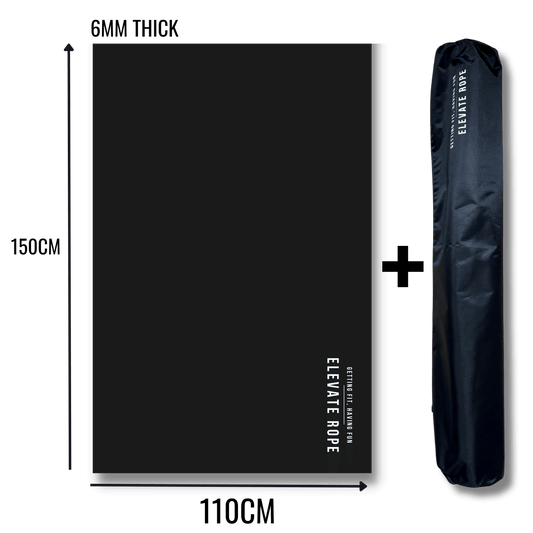
Best next step: Add 15–30 minutes of structured impact movement to your day. A jump rope mat lets you do this indoors in any room with enough ceiling clearance.

Why "Just Stand Up More" Doesn't Fix It
You've probably heard the standard advice. Stand up every 30 minutes. Take the stairs. Park further away. Get a standing desk. While these recommendations aren't wrong — alternating between sitting and non-sitting was associated with no increased mortality risk in the JAMA study — they don't reverse the accumulated damage from years of chronic sitting. Standing at your desk improves your calorie burn marginally (roughly 0.15 extra calories per minute compared to sitting), but it doesn't re-engage your glutes, doesn't extend your hip flexors through their full range of motion, doesn't provide the impact loading your bones need, and doesn't create the cardiovascular challenge your heart requires.
The American Heart Association's science advisory acknowledged that even people who exercise regularly could be at increased risk for heart disease and stroke if they spend large portions of their day sitting. As one researcher put it: 30 minutes of exercise cannot immunise you against what you do the other 23.5 hours. The Massachusetts General Hospital study confirmed this — the risk of heart failure and cardiovascular death from excessive sitting could only be partially offset by meeting exercise guidelines, not fully eliminated.
What the body actually needs to reverse sitting damage is structured impact movement — activity that loads the skeleton, engages the posterior chain (glutes, hamstrings, spinal erectors), extends the hip flexors, and drives cardiovascular challenge in a short time window. And there's one tool specifically built for this.
The 10-Minute Reversal: Why Impact Exercise Is the Antidote
A 2013 study from Arizona State University compared 10 minutes of jump rope with 30 minutes of jogging and found equivalent improvements in cardiovascular fitness. Equal calorie burn in one-third the time. That study used the Compendium of Physical Activities, which assigns jump rope a MET value of 8.8 to 12.3 depending on intensity — placing it among the highest calorie-burning exercises per minute available.
But calorie burn is only part of the picture. The reason impact exercise specifically reverses sitting damage is because it directly addresses each of the 7 effects described above. Jump rope requires an upright posture with shoulders back and core engaged — the exact opposite of the desk hunch. The jumping motion extends the hip flexors through their full range with every repetition, gradually reversing the chronic shortening that causes lower back pain. The repeated landing impact activates the glutes, calves, quads, and core simultaneously — re-establishing the neural pathways that gluteal amnesia disrupts.
For bone density, the evidence is particularly compelling. A study published in the Journal of Applied Physiology found that women who performed high-impact jumps just 10 times, three days per week for six months, significantly increased bone mineral density in the femoral neck and lumbar spine. Research on Olympic athletes showed that adding jump rope training increased bone mineral density at the lumbar spine by 2.1%, total hip by 2.07%, and femoral neck by 2.39%. These are the exact skeletal sites that weaken from prolonged sitting.
And for metabolism? The MET value of moderate-pace jump rope (11.8) means a 75 kg (165 lb) person burns roughly 15 calories per minute — compared to roughly 1 calorie per minute sitting. Ten minutes of jumping creates a metabolic spike that persists for one to two hours post-exercise through a process called EPOC (Excess Post-Exercise Oxygen Consumption). Your body continues burning calories at an elevated rate long after you've sat back down.
Short answer: Ten minutes of jump rope matches 30 minutes of jogging for cardiovascular benefit, while also correcting posture, reactivating dormant glutes, extending tight hip flexors, and building bone density — all of which are the specific damage that prolonged sitting causes.
Why it matters: Most desk workers don't have an hour for the gym. They need something that fits in a lunch break or before the morning shower — and that targets the exact physiological damage their workday creates.
Best next step: Start with just 5 minutes per day. A beaded jump rope provides auditory "tick-tick-tick" feedback that makes learning rhythm intuitive, even if you haven't exercised in years.

What Reversal Actually Looks Like: A Realistic Plan for Desk Workers
The JAMA study found that adding just 15 to 30 minutes of physical activity per day reduced mortality risk for predominantly sitting workers to levels comparable with non-sitting workers. That's an achievable target. The question is what kind of activity gives you the most reversal benefit per minute invested.
The Desk Worker's Impact Exercise Starter Framework
If you've been sedentary for months or years, jumping straight into high-intensity exercise is both unrealistic and unnecessary. The research supports a progressive approach.
Week 1–2: The Foundation. Five minutes per day. Twenty seconds of jumping, forty seconds of rest, repeated five times. The goal here is not fitness — it's rhythm. Your nervous system needs to learn the movement pattern. If you trip, that's not failure. That's neurological adaptation happening in real time. A beaded rope is ideal here because the audible feedback teaches timing without requiring you to watch your feet.
Week 3–4: Building Duration. Seven to ten minutes per day. Thirty seconds of jumping, thirty seconds of rest, repeated seven to ten times. You'll notice your hip flexors feel looser. Your lower back stiffness after a long workday will start to decrease. This is your hip flexors re-learning their full range of motion.
Week 5 onwards: The Habit Lock. Ten minutes per day — the "desk worker sweet spot." One minute jumping, fifteen seconds rest, repeated eight times. At this point, research suggests you're generating enough cardiovascular challenge, skeletal loading, and muscular activation to meaningfully counteract the damage of 8 hours of sitting. For increased intensity, a → Speed Rope MAX allows faster rotation and higher calorie burn per session.
| Week | Daily Time | Work / Rest Ratio | Rounds | Primary Goal |
| 1–2 | 5 minutes | 20 sec on / 40 sec rest | 5 | Learn rhythm, build coordination |
| 3–4 | 7–10 minutes | 30 sec on / 30 sec rest | 7–10 | Extend hip flexors, build endurance |
| 5+ | 10 minutes | 60 sec on / 15 sec rest | 8 | Sustained reversal of sitting damage |
Space requirements are minimal: a 2 × 2 metre (6 × 6 foot) area with ceiling clearance of about 25 cm (10 inches) above your head. That's a home office corner, a balcony, a garden, or a section of a car park. If you're jumping indoors on hard flooring, a → Jump Rope Mat protects the surface, reduces noise for downstairs neighbours, and cushions the impact on your joints.

The Comparison: How Different "Quick Exercises" Stack Up Against Sitting Damage
Desk workers often ask whether walking, resistance bands, bodyweight circuits, or under-desk ellipticals can produce the same reversal effect. The honest answer: they help, but they don't address all seven damage pathways simultaneously.
| Exercise (10 min) | Calories Burned | Reverses Hip Flexor Tightness | Reactivates Glutes | Builds Bone Density | Corrects Posture | Equipment Needed |
| Walking | ~40–50 kcal | Partially | Partially | Minimal impact | Minimal | None |
| Bodyweight squats | ~50–60 kcal | Partially | Yes | No (no impact) | Partially | None |
| Resistance bands | ~40–55 kcal | Depends on exercise | Depends on exercise | No (no impact) | Depends | Bands |
| Under-desk elliptical | ~30–40 kcal | No | Minimal | No (no impact) | No (still sitting) | Elliptical device |
| Jump rope | ~120–170 kcal | Yes (full range) | Yes (every rep) | Yes (high impact) | Yes (upright position) | Rope + small space |
Walking is excellent and everyone should do more of it. But walking doesn't generate the ground reaction forces needed for bone density improvement — researchers from Oregon Health & Science University specifically note that walking is insufficient for building stronger bones because the skeleton adapts to repetitive, low-magnitude loading. Jump rope generates ground reaction forces of 2 to 6 times body weight with every landing, directly stimulating bone formation. It's the only "quick exercise" that simultaneously addresses cardiovascular fitness, metabolic rate, posterior chain activation, hip flexor mobility, posture correction, and skeletal loading in a single movement.
Short answer: Jump rope is the only single exercise that reverses all seven pathways of sitting damage simultaneously — cardiovascular decline, metabolic slowdown, hip flexor tightness, gluteal amnesia, posture degradation, bone density loss, and insulin sensitivity impairment.
Why it matters: Desk workers with limited time need maximum physiological return per minute invested. No other exercise delivers the same breadth of reversal benefit in 10 minutes.
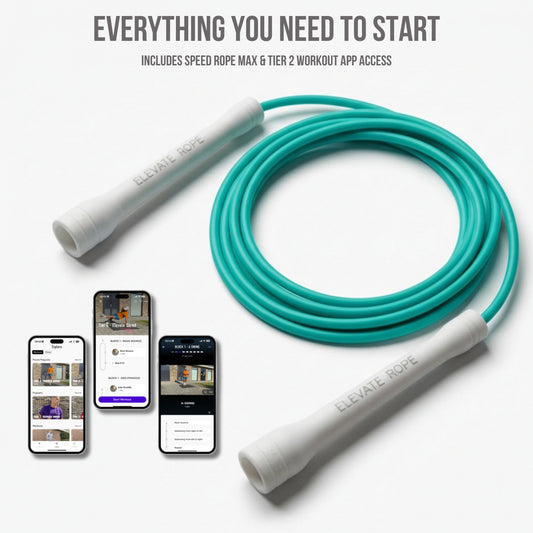
Best next step: If you want a complete setup for home or office, the → Ascent Bundle includes everything you need — and comes with access to the free Elevate App with 100+ guided workouts and a workout timer.
The Cost of Inaction (And the Cost of Action)
Let's put some numbers on this. The average EU gym membership costs €40–60 per month, totalling €480–720 per year. Research consistently shows that most gym members stop attending regularly within 90 days. The average usage after three months drops to roughly 1.5 visits per week — and a significant percentage stop going entirely. The cost-per-actual-use of a gym membership is often €15–20+ per session when you account for real attendance patterns.
A jump rope costs a fraction of one month's gym membership. It requires no commute, no booking a time slot, no changing clothes (a session takes 10 minutes — you won't even need a shower), and no building up the courage to walk into a room full of experienced exercisers. For desk workers who've previously tried — and stopped — gym-based solutions, this distinction matters. The gym model fails desk workers not because of willpower, but because of logistics. The time cost of a gym visit (commute + change + workout + shower + commute) typically runs 90–120 minutes. Most desk workers simply don't have that window available on a workday.
The free Elevate App offers over 100 follow-along workouts with guided audio coaching and a built-in workout timer — no subscription fee. Compare that to competitors charging €120–150 per year for app access. For the cost-conscious desk worker comparing solutions, the maths is straightforward.

Frequently Asked Questions
How many hours of sitting per day is considered dangerous?
Research from the Journal of the American College of Cardiology identified 10.6 hours of daily sedentary behaviour as a critical threshold for elevated heart failure and cardiovascular death risk. However, the JAMA Network Open study found increased mortality risk at any level of predominant occupational sitting. The evidence suggests that any full working day spent sitting carries measurable health consequences, with risk escalating as total daily sedentary time increases.
Can exercise after work cancel out 8 hours of sitting?
Partially, but not completely. The Massachusetts General Hospital study (2024) found that meeting the recommended 150 minutes of weekly exercise reduced but did not eliminate the cardiovascular risk of excessive sitting. The JAMA study estimated that an additional 15–30 minutes of daily physical activity could bring mortality risk down to levels comparable with non-sitting workers. Short, intense movement breaks throughout the day appear to be more effective than a single post-work session.
Is standing at a desk all day better than sitting?
Standing is marginally better for calorie burn and muscle engagement, but it's not a complete solution. Prolonged standing brings its own issues, including leg fatigue and varicose veins. The JAMA study found that alternating between sitting and non-sitting carried no increased mortality risk — suggesting that variation matters more than choosing one static position over another.
What is the fastest way to reverse the damage from sitting all day?
Structured impact exercise that targets the specific damage pathways of sitting — tight hip flexors, inactive glutes, poor posture, weakened bones, and cardiovascular deconditioning. Jump rope addresses all of these simultaneously in as little as 10 minutes. The Arizona State University Compendium of Physical Activities rates jump rope as one of the highest MET-value exercises available, meaning maximum physiological benefit per minute invested.
How many calories does 10 minutes of jump rope burn compared to sitting?
A 75 kg (165 lb) person burns roughly 120–170 calories in 10 minutes of moderate-pace jump rope, compared to roughly 10 calories sitting in the same period. That's a 12–17x increase in metabolic rate. The afterburn effect (EPOC) continues burning calories at an elevated rate for one to two hours post-session, further widening the gap.
Is jump rope safe if I'm overweight and haven't exercised in years?
Yes, with a progressive approach. Start with 20 seconds of jumping and 40 seconds of rest, repeated 5 times — that's just under 2 minutes of actual jumping. A → Beaded Rope is forgiving on mis-turns and provides auditory feedback that teaches rhythm naturally. Use a mat on hard surfaces for joint cushioning. If you can walk comfortably, you can start a progressive jump rope programme.
Can jump rope help fix bad posture from years of desk work?
Yes. Jumping rope requires an upright torso, engaged core, retracted shoulders, and neutral head position — precisely the opposite of the desk hunch. Over weeks of consistent practice, the muscles of the posterior chain (upper back, glutes, calves) that weaken from sitting are progressively strengthened. It's not a magic fix in one session, but the biomechanics of the movement directly counteract the postural adaptations caused by sitting.
Next Steps: Choosing Where to Start
The science is clear: sitting 8 hours a day creates measurable, compounding damage across seven physiological systems. But the science is equally clear that this damage is reversible — and the reversal doesn't require a gym membership, a personal trainer, or an hour of your day.
If you're a complete beginner who hasn't exercised in months (or years), start with a → Beaded Jump Rope. The auditory feedback teaches rhythm intuitively, and the slower rotation speed is forgiving while you build coordination. Give yourself the 4-week starter framework above, and you'll reach the 10-minute daily habit that the research supports.
If you've done some exercise recently and want to maximise calorie burn and intensity in minimal time, a → Speed Rope MAX delivers faster rotation and higher workout density. Pair it with the free Elevate App for structured 10–15 minute follow-along routines designed specifically for time-pressed adults.
And if you want the complete setup — rope, mat, and app access to build a daily 10-minute reset into your routine — the → Ascent Bundle gives you everything in one package. It costs less than a single month at most gyms. And unlike a gym membership, it fits in your desk drawer.
The smallest promise you can keep to yourself is 10 minutes. That's the starting point. Not motivation. Not a complete lifestyle overhaul. Just 10 minutes of structured movement that directly reverses what 8 hours of sitting does to your body. Start there.
Sources
- Gao W, Sanna M, Chen YH, et al. Occupational Sitting Time, Leisure Physical Activity, and All-Cause and Cardiovascular Disease Mortality. JAMA Network Open. 2024;7(1):e2350680. https://jamanetwork.com/journals/jamanetworkopen/fullarticle/2814094
- Khurshid S, et al. Sedentary Behavior and Cardiovascular Disease Risk. Journal of the American College of Cardiology. 2024. Presented at AHA Scientific Sessions 2024. https://www.acc.org/About-ACC/Press-Releases/2024/11/
- Patterson R, et al. Sitting Time and Risk of Cardiovascular Disease and Diabetes: A Systematic Review and Meta-Analysis. American Journal of Preventive Medicine. 2019. https://pubmed.ncbi.nlm.nih.gov/31377090/
- Kemmler W, et al. Skeletal site-specific effects of jump training on bone mineral density in adults: a systematic review and meta-analysis. 2024. https://melioguide.com/weight-bearing/jump-training-osteoporosis/
- Kato T, et al. Effect of low-repetition jump training on bone mineral density in young women. Journal of Applied Physiology. 2006. https://journals.physiology.org/doi/full/10.1152/japplphysiol.00666.2005
- Ainsworth BE, et al. Compendium of Physical Activities. Arizona State University Healthy Lifestyles Research Center. https://pacompendium.com/
- Dunstan DW, et al. Sit less and move more for cardiovascular health. Nature Reviews Cardiology. 2021. https://www.nature.com/articles
You May Also Like
https://www.elevaterope.com/blogs/tips-tricks/tired-after-sitting-all-day
https://www.elevaterope.com/blogs/crossfit-hiit/10-minute-rule-micro-workouts
https://www.elevaterope.com/blogs/home-workout-tips/undo-desk-job-damage-without-gym
https://www.elevaterope.com/blogs/injuries-solutions/sedentary-lifestyle-health-risks
https://www.elevaterope.com/blogs/injuries-solutions/desk-job-back-pain-exercise