





Desk job back pain is one of the most common complaints among working adults in Europe — and one of the most consistently misunderstood. The standard advice has not changed in thirty years: stretch more, sit up straighter, get an ergonomic chair. That advice is not wrong exactly. It is just aimed at the wrong problem. Because what most people think of as a posture problem is actually a movement problem. And until you address the movement, the pain keeps coming back.
Research published in the European Spine Journal found that lower back pain is the single leading cause of disability among working-age adults globally, accounting for more lost workdays than any other musculoskeletal condition. In desk-based professions specifically, the prevalence rate sits between 40% and 60% — meaning roughly half of everyone reading this article is dealing with some version of this right now. The fact that it has become so common has paradoxically made it seem normal. It is not normal. It is a predictable consequence of a specific pattern, and it has a specific set of solutions.
This article covers the 7 exercises that target the actual root causes of desk-related back pain — not the symptoms. Some will be familiar. Some will surprise you. And one, backed by a growing body of sports medicine research, is almost certainly not what you would expect from a back pain article.
What you'll learn in this article:
Why "sit up straighter" does not fix desk job back pain
The three muscle groups that stop working properly after prolonged sitting
Why most back pain exercises only treat symptoms rather than causes
7 specific exercises, with progressions, that address the root mechanisms
How cardiovascular movement fits into back pain recovery
What the research says about jump rope and spinal loading
How to build a sustainable daily routine around these exercises
Why Your Back Hurts: The Real Mechanism
Most desk workers attribute their back pain to poor posture. That explanation is not inaccurate, but it is incomplete — and the incompleteness is why posture correction alone rarely works. The deeper issue is what prolonged sitting does to the muscular and neurological systems that are supposed to protect the spine.
When you sit for extended periods, three things happen in combination. First, the hip flexors — the iliopsoas complex running from your lower lumbar vertebrae through the pelvis to the front of your femur — adaptively shorten. This is not metaphorical tightening. The muscle fibres literally remodel to a shorter resting length when held in a shortened position for hours every day. When shortened hip flexors pull on the lumbar spine during standing and movement, they increase the anterior pelvic tilt and lumbar lordosis that drive lower back compression and pain.
Second, and simultaneously, the gluteal muscles enter a state of reciprocal inhibition. When hip flexors are chronically shortened and activated, the glutes — which are supposed to be the primary movers of the hip during walking, running, and lifting — are neurologically suppressed. This is sometimes called "gluteal amnesia." The glutes are the largest and most powerful muscles in the body. When they stop doing their job, the lower back compensates. It was not designed to.
Third, the deep spinal stabilisers — the multifidus and transverse abdominis — atrophy with disuse. These muscles fire before movement to pre-protect the spine. When they weaken, the larger, more superficial muscles like the erector spinae have to take over stabilisation, a role they perform inefficiently and at metabolic cost. The result is the combination of fatigue and stiffness that most desk workers feel by mid-afternoon.
The exercises below target all three mechanisms directly. They are not generic back stretches. Each one is aimed at a specific dysfunction in the sitting-damage chain. For more context on how prolonged sitting creates these conditions in the first place, the hidden health crisis affecting 80% of European workers covers the full physiological picture — and is worth reading alongside this.
Short answer: Desk job back pain is primarily caused by three compounding dysfunctions: shortened hip flexors pulling on the lumbar spine, inhibited glutes failing to share the movement load, and weakened deep spinal stabilisers leaving the lower back over-exposed. Posture correction alone addresses none of these.
Why it matters: Treating back pain as a posture problem leads to ergonomic investments that reduce discomfort temporarily without resolving the muscular dysfunction driving it. The pain returns because the root cause — a movement-deprived musculoskeletal system — remains unchanged.
Best next step: Before adding any new exercise, spend one week deliberately breaking your sitting time every 30 minutes with a brief stand or walk. This alone begins to interrupt the hip flexor shortening and gluteal inhibition cycle before targeted exercises can build on it.

The 7 Exercises — And Why Each One Works
These exercises are sequenced deliberately. The first three address the passive dysfunction created by sitting — the tightness, inhibition, and postural compensation. The middle three rebuild the active strength needed to protect the spine during movement. The seventh is the one most people skip, and the one that arguably has the greatest long-term impact on back pain prevention for desk workers.
EXERCISE 1
The 90/90 Hip Flexor Stretch
The standard lunge stretch for hip flexors is better than nothing, but it does not isolate the iliopsoas effectively. The 90/90 position — one knee on the floor, front leg bent at 90 degrees, pelvis posteriorly tilted — puts the iliopsoas under genuine lengthening tension rather than just stretching the hip capsule and rectus femoris.
How to do it: Kneel on your left knee with your right foot forward, both legs at 90-degree angles. Squeeze your left glute hard — this is critical, as the glute contraction drives the posterior pelvic tilt that creates the actual iliopsoas stretch. Shift your hips forward slowly until you feel the stretch deep in the front of the left hip, not in the thigh. Hold for 45 seconds per side, twice daily. Progress by adding a light overhead reach away from the kneeling leg, which increases the stretch through the thoracolumbar fascia.
Why it fixes back pain: Directly addresses the shortened iliopsoas pulling on the lumbar vertebrae. Two weeks of consistent practice measurably reduces anterior pelvic tilt in desk workers according to research from the Journal of Physical Therapy Science.
EXERCISE 2
Glute Bridges with a 3-Second Hold
The glute bridge is common, but most people perform it incorrectly — they squeeze at the top briefly rather than holding long enough to override the gluteal amnesia pattern. A 3-second isometric hold at full hip extension forces the nervous system to genuinely re-recruit the glutes as primary movers, which is the specific adaptation needed for desk workers.
How to do it: Lie on your back with knees bent and feet flat on the floor, hip-width apart. Drive through your heels to lift the hips until your body forms a straight line from knees to shoulders. Squeeze the glutes as hard as possible at the top — not the lower back, the glutes. Hold for 3 full seconds. Lower slowly. Do 3 sets of 10 repetitions. Progress to single-leg variations once both glutes are firing symmetrically. The key marker: if you feel this primarily in your hamstrings rather than your glutes, your glutes are still inhibited and the hold duration needs to increase before you progress.
Why it fixes back pain: Re-establishes gluteal dominance in hip extension, directly reducing the compensatory load placed on the lumbar extensors during standing and walking.
EXERCISE 3
Cat-Cow Spinal Mobilisation
This looks deceptively simple, which is why desk workers often skip it. But the combination of spinal flexion and extension performed slowly and deliberately does something that no stretch can replicate: it pumps synovial fluid through the intervertebral discs, which are avascular structures that rely on movement-driven fluid exchange for nutrient delivery and waste removal. After eight hours of compressive sitting load, those discs are dehydrated and under-nourished. Cat-cow directly addresses this.
How to do it: On hands and knees, hands under shoulders, knees under hips. For cat: exhale fully and round the entire spine toward the ceiling, tucking the pelvis and dropping the head. For cow: inhale and let the belly drop toward the floor, lifting the tailbone and gaze gently upward. Move through the full available range slowly — this is not about speed. 10 complete cycles, twice daily, with particular attention to the lumbar segment. Feel for any areas of restricted mobility and breathe into them.
Why it fixes back pain: Restores disc hydration, reduces stiffness from sustained compressive loading, and maintains the segmental mobility of the lumbar spine that sitting progressively degrades.
EXERCISE 4
Dead Bug Core Activation
Most people think of core work as sit-ups or planks. Neither targets the deep stabilisers — the transverse abdominis and multifidus — that are specifically weakened by prolonged sitting. The dead bug does. It trains the deep core to maintain lumbar stability while the limbs move, which is exactly the pattern the spine needs during walking, lifting, and exercise.
How to do it: Lie on your back with arms pointing straight up toward the ceiling and knees bent at 90 degrees, shins parallel to the floor. Press your lower back firmly into the floor — this activates the transverse abdominis. Slowly lower your right arm overhead and straighten your left leg simultaneously, stopping just above the floor. Return and repeat on the opposite side. The lower back must stay pressed into the floor throughout. If it lifts, you have gone too far. 3 sets of 6 repetitions per side. Progress by slowing the movement to a 4-second count each way.
Why it fixes back pain: Directly trains the deep stabilisers that protect the spine during movement — the ones that atrophy fastest with sedentary work and are absent from most conventional back pain programmes.
EXERCISE 5
Thoracic Rotation Stretch
Lower back pain in desk workers is frequently driven not by a lower back problem but by a thoracic spine immobility problem. When the mid-back loses its natural rotational range from hours of fixed forward-facing posture, the lumbar spine compensates by taking on rotation it was not designed to handle. This compensation is a primary driver of the asymmetrical lower back pain that many desk workers experience on one side.
How to do it: Lie on your side with hips stacked and knees bent at 90 degrees. Place both hands together in front of you at shoulder height. Keeping the hips and knees stacked (do not let them roll), slowly rotate the top arm open toward the floor on the opposite side, following it with your eyes and letting your thoracic spine rotate. The lower back and hips stay anchored. Hold for 3 seconds at end range. Return slowly. 8 repetitions per side. The range of motion will be limited initially — prioritise control and rotation through the mid-back rather than forcing range.
Why it fixes back pain: Restores thoracic rotation that the lumbar spine has been compensating for, directly reducing the asymmetric loading that causes unilateral lower back pain in desk workers.
EXERCISE 6
Romanian Deadlift (Bodyweight or Light Load)
This is the exercise most people with back pain avoid out of fear — and the avoidance makes the problem worse. The posterior chain (glutes, hamstrings, erector spinae working cooperatively) needs to be loaded in a hip-hinge pattern to rebuild the coordinated strength that sitting degrades. A bodyweight Romanian deadlift, performed correctly, achieves this without compressive spinal load.
How to do it: Stand with feet hip-width apart. Soften the knees slightly — not squatting, just unlocked. Hinge forward at the hips, pushing the hips back and keeping the spine in neutral (not flexed), lowering your hands toward your shins until you feel the hamstrings loaded. The back stays flat throughout. Drive the hips forward to return to standing, squeezing the glutes at the top. 3 sets of 8 repetitions. Progress to holding light dumbbells (2–5 kg) once the movement pattern is established. This is not a lower back exercise — the lower back should be neutral and relatively inactive. If it is working hard, the hinge pattern is not established yet.
Why it fixes back pain: Rebuilds coordinated posterior chain strength that protects the lumbar spine during the lifting, carrying, and movement patterns of daily life. Strong glutes and hamstrings take load off the lower back permanently, not just during exercise.
EXERCISE 7
Jump Rope (Low-Impact Cardiovascular Loading)
This one surprises people. Jump rope is not conventionally listed in back pain programmes, but the sports medicine research makes a compelling case for it — particularly for desk workers. Here is why it belongs here, not in a general fitness article.
The spine requires rhythmic, low-level compressive loading to maintain disc health. Walking does this. Running does this. Most desk workers do neither in sufficient volume. Jump rope provides something that exercises 1 through 6 do not: cardiovascular-level movement that loads the posterior chain dynamically, activates the deep stabilisers under real conditions, and drives the circulation and metabolic activity that spinal tissue relies on for recovery.
A 2019 study published in Gait and Posture found that rope jumping puts less compressive and shear stress on the hip and knee joints than running — the NIH described it as "hip and knee protective." For the lumbar spine specifically, the low-amplitude, high-frequency loading pattern of correct rope jumping — staying on the balls of the feet, jumping 2–3 cm off the ground — provides the intervertebral disc stimulation that hours of static sitting denies.
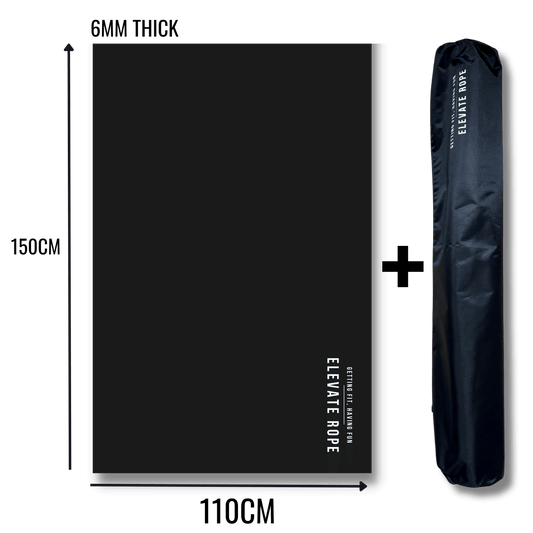
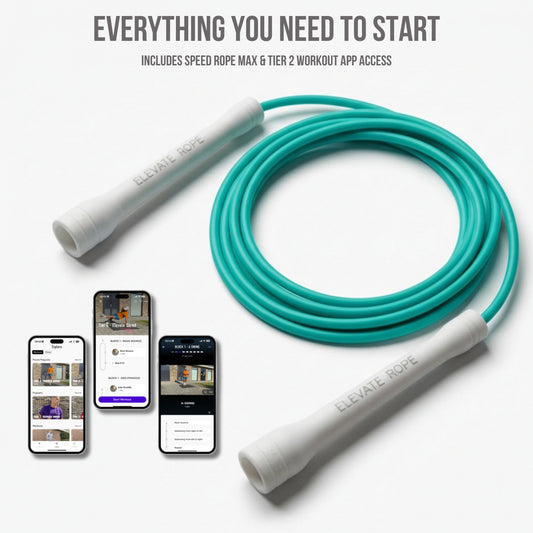
How to do it for back pain specifically: Start with 3 sets of 60 seconds, with 90 seconds rest between sets. Prioritise landing mechanics — soft knees, balls of the feet, upright posture — over speed or intensity. The → Elevate Beaded Rope is the right starting point for desk workers new to jumping, as its auditory tick-tick-tick feedback helps establish consistent rhythm without the frustration of a silent rope that trips you before technique is established. Progress to 5 sets of 2 minutes over 3–4 weeks. The → Elevate Jump Rope Mat matters here too — the 8mm density absorbs impact correctly and allows the low-amplitude jumping pattern that protects rather than stresses spinal structures.
Why it fixes back pain: Provides the dynamic spinal loading and posterior chain activation that static exercises cannot. Cardiovascular movement drives disc nutrition, systemic inflammation reduction, and the endorphin-mediated pain modulation that makes the difference between back pain as a crisis and back pain as a managed condition. It is the only exercise on this list that addresses both the structural dysfunction and the systemic inflammatory environment in which chronic back pain lives.
How These Exercises Compare to Common Alternatives
| Approach | Addresses Root Cause? | Time Required | Equipment Needed | Long-Term Effectiveness |
| Ergonomic chair / sit-stand desk | Partially | Passive | €200–€800 | Low without movement added |
| Painkillers / anti-inflammatories | No | Passive | Medication cost | Very low — symptom masking only |
| Generic stretching routine | Partially | 10–15 min/day | None | Moderate — misses glute/stability work |
| Pilates / yoga | Mostly yes | 45–60 min/session | Studio or mat | High — but time/cost barrier limits adherence |
| The 7 exercises in this article | Yes | 20–25 min/day | Minimal (mat, optional rope) | High — targets all three root mechanisms |
| Physiotherapy | Yes | 45–60 min/session | Appointment access | High — but requires professional access and ongoing cost |

Building This Into Your Workday
The seven exercises above take approximately 20–25 minutes when performed together. That is the full programme. But the sequencing matters: start with the mobilisation and stretching work (exercises 1, 2, 3) to address the passive dysfunction, move through the stability rebuilding (exercises 4, 5, 6), and finish with the cardiovascular component (exercise 7). This order mirrors the logic of physiotherapy protocols for desk-related back pain and produces better outcomes than performing the same exercises in random sequence.
For integration with a working day: exercises 1 through 3 can be done at your desk during a break with nothing but floor space. They take 8 minutes. Exercises 4 through 7 are best done before work, during lunch, or immediately after work — they require enough space to lie down and, for exercise 7, a small clear area of approximately 2 metres by 2 metres.
The most important variable is not which of these exercises you choose — it is whether you do any of them consistently. Research on desk worker back pain interventions consistently shows that partial programmes performed daily outperform comprehensive programmes performed irregularly. Choose the exercises that feel most accessible and build the habit before adding complexity.
Short answer: The most effective approach to desk job back pain combines hip flexor release, glute reactivation, deep core rebuilding, and dynamic cardiovascular loading — in that order. The full programme takes 20–25 minutes and requires minimal equipment.
Why it matters: Back pain that is treated symptomatically with stretching and ergonomics alone tends to become chronic. Back pain treated at the muscular dysfunction level — addressing what sitting actually does to hip flexors, glutes, and spinal stabilisers — resolves and stays resolved.
Best next step: Start with exercises 1 and 2 only for the first week. Hip flexor release and glute reactivation alone produce measurable pain reduction within 7–14 days for most desk workers. Add the remaining exercises once those two are consistently happening.

When These Exercises Are Not Enough
Most desk-related back pain responds well to targeted exercise. But not all back pain is desk-related, and some presentations require professional evaluation before self-directed exercise is appropriate. See a physiotherapist or sports medicine physician before starting any back pain exercise programme if you have any of the following: pain that radiates down one or both legs (particularly past the knee), numbness or tingling in the lower limbs, pain that wakes you at night, back pain following a fall or impact, or pain that has worsened progressively over several weeks without any mechanical explanation.
These presentations may indicate disc herniation, nerve root involvement, or other structural issues where the exercises above are either contraindicated or need to be modified under professional guidance. The exercises in this article are designed for the most common presentation: the mechanical, movement-deprivation back pain that affects the majority of desk workers. They are not a substitute for clinical assessment when the clinical picture is more complex.
For desk workers whose back pain is in the mechanical category — the ache that builds through the day, eases with movement, and returns with prolonged sitting — the complete desk worker guide covers how to structure daily movement breaks that interrupt the cycle before it reaches the level of clinical pain.
Frequently Asked Questions
Is it safe to exercise with desk job back pain?
For most mechanical desk-related back pain — the type that builds through the workday and eases with movement — targeted exercise is not only safe but is the primary recommended treatment. Extended rest actually worsens this type of back pain by allowing further deconditioning of the stabilising muscles. The exception is back pain with neurological symptoms (leg pain, numbness, tingling), which requires professional assessment before starting an exercise programme.
How long does it take for these exercises to reduce back pain?
Most people with mechanical desk-related back pain notice measurable reduction within 2–4 weeks of consistent daily practice, with the hip flexor and glute work showing the earliest effect. Full resolution — where the pain is no longer a recurring issue — typically takes 8–12 weeks of consistent practice combined with behaviour change around sitting habits. The exercises work; consistency is the variable.
Is jump rope bad for your back?
Done correctly, jump rope is not bad for the back — and the research suggests the opposite. The low-amplitude jumping pattern (2–3 cm off the floor, landing on the balls of the feet) produces the rhythmic spinal loading that disc health depends on, without the high-impact compressive forces associated with running. The key is technique and progression: start with short sets at low intensity and build gradually. A cushioned mat significantly reduces ground reaction forces and makes the loading profile more joint- and spine-friendly.
Why does my back hurt worse in the afternoon?
Afternoon back pain in desk workers typically reflects two compounding mechanisms: disc dehydration from sustained compressive load (intervertebral discs lose fluid volume through the day under sitting pressure) and progressive fatigue of the stabilising muscles that have been compensating since morning. The disc dehydration effect is real and measurable — spinal height can decrease by up to 1–2 cm through a full day of sitting. Both mechanisms respond well to movement breaks distributed through the day rather than a single longer break.
What is the single most effective thing I can do for desk job back pain?
If forced to choose one intervention: reactivate your glutes. Gluteal inhibition from prolonged sitting is present in the majority of desk workers with chronic lower back pain and is the most overlooked driver of the condition. Ten minutes of glute bridges and hip flexor work daily — consistently, for four weeks — produces more lasting relief for most desk workers than any ergonomic product or passive treatment.
Does an ergonomic chair fix desk job back pain?
An ergonomic chair can reduce some of the compressive and postural loading associated with sitting, but it does not address the muscular dysfunctions — shortened hip flexors, inhibited glutes, weakened deep stabilisers — that drive most desk-related back pain. Ergonomic seating is best understood as a harm-reduction tool rather than a fix. It reduces the rate at which dysfunction accumulates; it does not reverse dysfunction that already exists.
Can I do these exercises at my desk?
Exercises 1 (hip flexor stretch), 3 (cat-cow), and 5 (thoracic rotation) can be modified for desk-adjacent floor work during a break. A yoga mat kept under or beside the desk removes the friction of finding a suitable space. Exercises 4 (dead bug), 6 (Romanian deadlift), and 7 (jump rope) require adequate floor space and are better suited to a dedicated session before, during, or after work. Exercise 2 (glute bridges) is floor-based and can also be done beside the desk during a break.
Next Steps
Desk job back pain is not something you have to accept as part of working life. The exercises above address the specific dysfunctions that sitting creates — and when performed consistently, they eliminate the root causes rather than managing the symptoms. The investment is 20–25 minutes per day and requires almost no equipment.
If you want to add jump rope (exercise 7) to your back pain routine, the → Elevate Beaded Rope is the right starting point for desk workers: its weighted, auditory design builds rhythm consistency from the first session without the coordination frustration that lighter ropes create. For home office or indoor use, the → Elevate Jump Rope Mat provides the cushioning and floor protection that makes the low-amplitude jumping pattern sustainable on any surface. And if you want to understand the full picture of what a sedentary working life does to the body beyond the back, this article on the health crisis facing European desk workers is the place to start.
Sources
- Manchikanti L, et al. (2014). Epidemiology of low back pain in adults. Neuromodulation. ncbi.nlm.nih.gov
- Waongenngarm P, et al. (2015). Internal Oblique and Transversus Abdominis Muscle Fatigue Induced by Slumped Sitting Posture after 1 Hour of Sitting in Office Workers. Safety and Health at Work. ncbi.nlm.nih.gov
- Park SM, et al. (2018). Effects of lumbar stabilization exercises on the disc hydration levels of lumbar intervertebral discs. Journal of Physical Therapy Science. ncbi.nlm.nih.gov
- Sueki DG, et al. (2013). A regional interdependence model of musculoskeletal dysfunction: research, mechanisms, and clinical implications. Journal of Manual and Manipulative Therapy. ncbi.nlm.nih.gov
- Gao C, et al. (2019). Bounce rope-skip is hip and knee protective due to lower hip and knee joint loads compared to run. Gait and Posture. pmc.ncbi.nlm.nih.gov
- Baker JA, et al. (1968). Alterations in lactic acid production and cardiorespiratory endurance from rope skipping. Research Quarterly, Arizona State University. tandfonline.com
- Hoy D, et al. (2012). A systematic review of the global prevalence of low back pain. Arthritis and Rheumatism. pubmed.ncbi.nlm.nih.gov
- Hayden JA, et al. (2005). Exercise therapy for treatment of non-specific low back pain. Cochrane Database of Systematic Reviews. cochranelibrary.com