






Cardio training is often treated as a binary choice. You either commit to high-impact workouts that promise fast results, or you scale everything back to avoid joint pain and burnout. In reality, sustainable conditioning rarely lives at either extreme.
Jump rope is one of the most effective tools for building cardiovascular fitness, coordination, and explosive power. It demands rhythm, timing, and full-body engagement. At the same time, relying on any single modality indefinitely can create imbalances, especially when impact forces accumulate faster than the body can recover.
The most resilient training routines recognize that intensity and longevity must coexist. Understanding how high-impact and low-impact cardio complement each other is what allows athletes to train consistently, progress steadily, and avoid unnecessary setbacks.
What Makes Low-Impact Cardio Different From Jump Rope
Impact refers to how much force your joints absorb with each repetition. Jump rope is considered high-impact because it involves repeated ground contact, often hundreds or thousands of times in a single session. That repeated loading is exactly what makes it such a potent conditioning tool.
High-impact cardio strengthens connective tissue and improves bone density when introduced progressively. It also sharpens neuromuscular coordination, which is why jump rope carries over so well into sports and strength training. However, those benefits come with a cost if volume increases too quickly or recovery is overlooked.
Over time, repetitive impact can tax the ankles, knees, hips, and lower back. This does not mean jump rope is inherently risky, but it does mean that intelligent programming matters. Many experienced athletes eventually realize that maintaining performance requires managing impact rather than simply pushing harder.
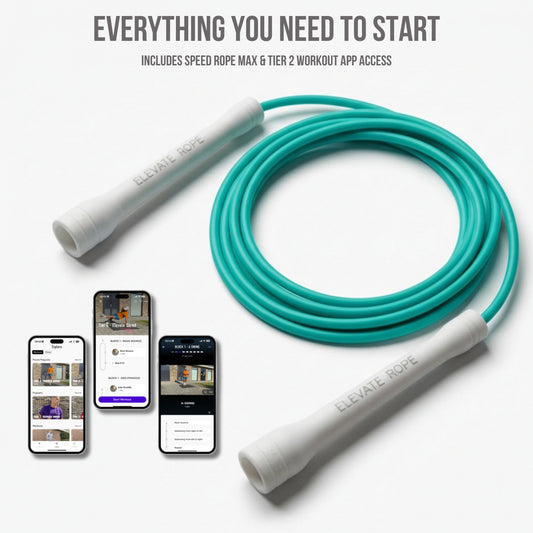
Athletes who follow a structured jump rope workout plan are more likely to build endurance progressively without increasing training volume too aggressively.
Pairing high-impact training with low-impact conditioning helps preserve joints while maintaining cardiovascular demand, which is why many athletes take time to understand the benefits of elliptical cross-trainers when building routines designed for long-term sustainability.
Why Jump Rope Remains a Conditioning Staple
Despite its impact demands, jump rope remains a cornerstone of effective conditioning programs. Few tools deliver such a high cardiovascular return in such a short amount of time. Even brief sessions can elevate heart rate quickly and sustain intensity with minimal equipment.
Beyond conditioning, jump rope reinforces coordination and movement efficiency. The constant feedback loop between timing, foot placement, and posture builds awareness that translates to other athletic skills. This makes it valuable not only for fitness enthusiasts but also for boxers, runners, and field athletes.
Jump rope also encourages discipline. Missed steps provide immediate feedback, reinforcing focus and rhythm. That mental engagement is part of why many athletes prefer it over more passive forms of cardio.
However, effectiveness depends on dosage. High-impact tools reward quality and consistency, not endless volume. When jump rope sessions are stacked too frequently without variation, even strong athletes can experience diminishing returns.
The Role of Low-Impact Cardio in Longevity
Low-impact cardio serves a different but equally important role. Minimizing joint loading while keeping the heart and lungs working, it allows athletes to accumulate training volume without compounding fatigue in vulnerable areas.
These sessions are particularly valuable during recovery phases or between demanding workouts. They maintain aerobic capacity while giving tendons and joints time to adapt. Instead of pushing harder, low-impact cardio supports the training already being done.
For athletes training multiple days per week, this distinction becomes critical. Not every session needs to challenge impact tolerance. Some sessions exist to reinforce endurance, improve circulation, and support recovery.
Rather than replacing jump rope, low-impact conditioning fills the gaps that high-impact work cannot address alone.

Image Credit: Pexels
Comparing Conditioning Goals and Tools
The best cardio tool depends on the goal of the session. Jump rope excels when the objective is intensity, explosiveness, and coordination under fatigue. It works best in short, focused bouts that challenge both the cardiovascular and nervous systems.
Low-impact cardio tools are better suited for longer sessions or moderate intervals where the goal is sustained output. They allow athletes to work at a steady pace without constantly absorbing ground forces.
Problems arise when one tool is used for every purpose. High-impact training applied indiscriminately can overwhelm recovery. Low-impact training used exclusively may limit power development. Balance comes from assigning each method a role rather than expecting one to do everything.
Structuring a Sustainable Weekly Routine
Sustainable conditioning is built on distribution, not restriction. High-impact sessions should be intense but spaced out enough to allow tissue recovery. Low-impact sessions can absorb additional volume without interfering with adaptation.
A well-structured week might include two to three jump rope sessions focused on quality and progression. These sessions emphasize technique, rhythm, and controlled intensity rather than excessive repetition.
Between those sessions, low-impact cardio can maintain aerobic conditioning while reducing cumulative stress. This approach keeps training density high without pushing the body past its ability to recover.
Monitoring early warning signs is also essential. Lingering soreness, stiffness, or reduced spring during jumps often indicates that impact volume needs adjustment, not elimination.
Avoiding the All-or-Nothing Trap
One of the most common mistakes in conditioning is assuming that more of what works now will always work later. Early progress can mask the slow accumulation of joint stress, especially when enthusiasm outpaces adaptation.
Cross-training protects consistency. It allows athletes to stay active even when certain movements need to be scaled back temporarily. More importantly, it reinforces the habit of training without tying success to a single method.
Mental fatigue matters as much as physical fatigue. Varying cardio inputs keeps routines engaging while preserving structure. This combination is what supports long-term adherence.
Choosing What Fits Your Training Reality
There is no universal answer to cardio selection. Bodyweight, training history, surface quality, footwear, and prior injuries all influence how much impact an athlete can tolerate.
Jump rope may remain the foundation of conditioning, but supporting tools extend its usefulness over time. Evaluating impact honestly helps athletes train smarter instead of harder.
Long-term performance depends on balancing workload and recovery. Guidance from CDC physical activity recommendations reinforces the importance of managing intensity to reduce injury risk while maintaining cardiovascular health.
Sustainable conditioning is not about choosing sides. It is about building systems that support progress, protect recovery, and allow training to continue uninterrupted. When impact and intensity are managed intelligently, performance becomes a long-term outcome rather than a short-term spike.