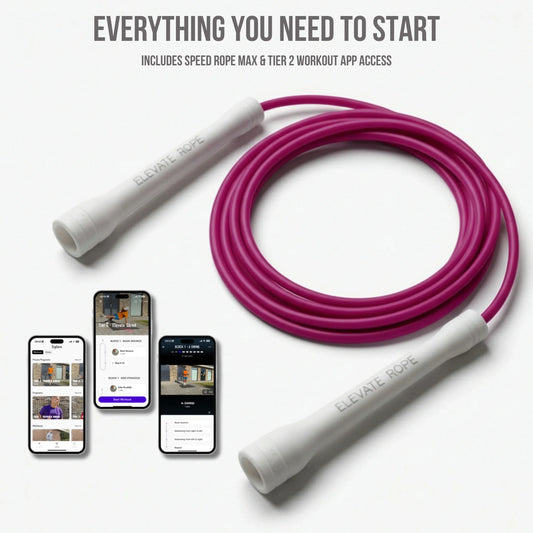

Non ti sarà permesso confrontare più di 4 prodotti alla volta
Visualizza confrontoHai un account?
Accedi per completare il pagamento più velocemente.
If you've ever tripped over a jump rope, felt embarrassed in PE class, or decided fitness just "isn't for you" — this page is for you.
You remember the moment. The rope catching your feet. The heat rising to your face. People laughing — or worse, looking away politely. It could have been PE class, a gym floor, a YouTube workout you tried in your living room.
Those moments leave a mark. They write a story inside you: "I'm not coordinated. I'm not athletic. Fitness isn't for people like me."
That story has been wrong this whole time. You were just handed the wrong tool.
A couple of people laughed. That hurt more than falling down. All these years later, when I think about Mile Run day in PE, my eyes still flood with tears.
That experience isn't rare. It's one of the most common things we hear from new customers. And none of it had anything to do with coordination, willpower, or athletic ability.
It had to do with feedback — or the total absence of it.
That's about to change.
Every January, millions of people decide this is the year. They buy the gear, sign up for the app, commit to the routine. Most of them stop within six weeks. Not because they're weak. Because the tools failed them first.
The problem has never been your commitment. It's been the absence of a signal that tells you: you're doing this right. Keep going.
A beaded jump rope is different from anything you've tried before. Not just in feel — but in what it does to your brain when you're learning a new movement.
Unlike a speed rope or a cheap skipping rope, a weighted beaded rope gives you something no beginner fitness tool has ever offered:
You don't have to guess whether you're in rhythm. The rope tells you. Each bead click is a beat — and your body learns to sync with it automatically. It's not willpower doing that. It's how the brain learns motor skills: through consistent, reliable sound feedback.
Here's what happens when absolute beginners switch to a beaded rope:
The weight of the beads keeps the rope arc steady and predictable throughout the full rotation. You always know where it is. That's the number one reason beginners trip: unpredictability. Beaded ropes solve it by design — not by skill.
Because the rope is teaching them. The tick-tick-tick becomes a metronome your body syncs to. The brain stops fighting the movement and starts following the signal. Within 10–15 minutes, most beginners feel something they've never felt: I can actually do this.
No mirrors. No gym. No audience. You close the door, put on a playlist, and jump. Every session is a private win that belongs entirely to you. That's how confidence actually builds — not in public, but in the quiet, compounding stack of small victories.
Ten clean jumps. Then twenty. Then a full minute without stopping. Each milestone sends a message to your brain: you are someone who does this. That identity shift — from "I'm not athletic" to "I jump rope" — is everything.
When you stop tripping and start flowing, jump rope stops feeling like a workout and starts feeling like a skill you're building. Skills are addictive in a way that punishment never is. The beaded rope is the difference between the two.
I've tried to "get into fitness" probably six times in my adult life. This is the first time I've made it past week two. Something about the rhythm just clicks — I actually look forward to it now.
I bought this after years of gym anxiety. I do it at home, in my living room, in 10-minute bursts. It sounds small but it's changed how I see myself. I feel athletic for the first time in my life.
The tick sound is actually what sold it for me. It sounds weird, but it's like the rope tells you when to jump. I stopped tripping in about 15 minutes. My daughter now wants one too.
One for you. One for someone who needs this as much as you do. Same price. Twice the impact. Limited stock.
🔒 Secure checkout · Easy returns · Ships from EU warehouse