






A jump rope warm-up for boxing should prepare your body for movement without leaving you exhausted. Five focused minutes can help you establish rhythm, practise footwork, and gradually increase your effort.
Boxing demands more than punching power. You need balance, controlled movement, and the ability to change direction.
Your feet establish the foundation for those skills.
Jumping rope gives you a practical way to rehearse coordinated movement before shadowboxing, bag work, or pad drills.
However, a proper boxing warm-up shouldn't become an exhausting cardio challenge.
The goal is preparation, not fatigue.
This five-minute routine begins with simple rotations before introducing alternating steps, boxer rhythm, directional movement, and controlled speed changes.
You'll also learn how to adapt the exercises to your experience and choose suitable equipment.
Why Use a Jump Rope Warm-Up Before Boxing?

A structured jump rope warm-up gradually introduces movement while helping you establish your rhythm.
During boxing training, your ankles, knees, and hips repeatedly coordinate changes in position.
Meanwhile, your shoulders and arms contribute to punching, guarding, and controlled movement.
Preparing these areas before demanding exercise makes practical sense.
The American Heart Association recommends warming up for approximately five to ten minutes. It also recommends increasing activity gradually before harder exercise.
American Heart Association
Similarly, the National Strength and Conditioning Association explains the value of dynamic, sport-specific preparation.
Its guidance emphasizes movements that gradually prepare athletes for their upcoming training demands.
dxpprod.nsca.com
A five-minute skipping routine can provide an initial preparation phase.
For intense sparring or demanding boxing sessions, additional mobility and boxing-specific drills may be appropriate.
Build Rhythm Before Increasing Speed
Beginners sometimes associate boxing rope work with extremely fast rotations.
However, speed isn't necessary during the opening minutes.
Consistent timing matters more.
Start with a comfortable pace and let your breathing increase gradually.
As movement becomes easier, introduce small changes in footwork.
A structured jump rope warm-up should leave you ready for the next exercise.
Practise Boxing Footwork Without Punching
Boxing footwork involves controlling your position while maintaining balance.
Skipping introduces useful movement patterns through repeated weight transfers.
Alternating steps encourage you to coordinate your feet.
The boxer step introduces subtle changes in weight distribution.
Directional drills challenge your ability to move while maintaining rope control.
Although these movements don't replace ring-specific footwork training, they provide another opportunity to practise rhythm.
The 5-Minute Jump Rope Warm-Up for Boxing
This routine follows a simple progression.
Begin with relaxed rotations and finish with moderate, controlled movement.
Avoid maximum-speed sprints, double unders, or exhausting intervals.
The purpose is to prepare for boxing, not complete an entire conditioning workout.
| Minute | Movement | Main Focus | Intensity |
| 1 | Basic bounce | Timing and relaxed movement | Easy |
| 2 | Alternating feet | Weight transfer | Easy |
| 3 | Boxer step | Boxing-style rhythm | Easy to moderate |
| 4 | Directional footwork | Control while moving | Moderate |
| 5 | Rhythm changes | Controlled speed changes | Moderate |
You don't need to complete every minute without interruption.
When your timing breaks down, pause briefly and reset.
Consistency matters more than avoiding every mistake.
Minute 1: Basic Bounce for Relaxed Movement
Begin your jump rope warm-up with the basic bounce.
This movement helps establish timing before introducing more complicated steps.
Stand upright with your shoulders relaxed.
Keep your elbows near your sides and maintain a comfortable hand position.
Use your wrists to guide each rope rotation.
Jump just high enough for the rope to pass beneath your feet.
How to Perform the Basic Bounce
- Stand with your feet relatively close together.
- Hold your rope handles comfortably.
- Keep your elbows near your ribs.
- Rotate the rope using small wrist movements.
- Complete one controlled jump per rotation.
- Maintain an easy pace throughout the minute.
Keep your breathing relaxed.
If you repeatedly catch the rope, reduce your speed.
Check whether your hands have moved too far apart.
Your jumping height may also be excessive.
What to Focus On
Avoid turning this first minute into a sprint.
Instead, look for a consistent relationship between your wrists and feet.
The basic bounce should feel predictable before progressing.
This foundation becomes especially useful when learning more advanced boxing footwork.
Minute 2: Alternating Feet for Weight Transfer
Next, introduce alternating-foot movements.
Rather than landing on both feet together, transfer your weight between your left and right foot.
This creates a light running-style rhythm.
Alternating steps are useful because boxing frequently requires controlled changes in weight distribution.
However, skipping footwork should remain compact during the warm-up.
Large movements aren't necessary.
How to Perform Alternating-Foot Jumps
Begin with several basic jumps.
Once your timing feels comfortable, lift one foot slightly.
Land on the opposite foot as the rope passes beneath you.
Switch feet on the next rotation.
Continue alternating at an easy pace.
Keep your knees relaxed and avoid lifting them excessively.
Common Mistakes to Avoid
Some beginners lift their knees too high.
Others accelerate immediately after changing footwork.
Both adjustments can make timing harder.
Keep the movement small and maintain comfortable rope speed.
Your goal is smooth weight transfer.
If the rhythm becomes inconsistent, return briefly to the basic bounce.
A successful jump rope warm-up allows these adjustments.
Minute 3: Boxer Step for Boxing Rhythm
The boxer step introduces a movement commonly associated with skipping practice in boxing.
Instead of bouncing equally on both feet, shift your weight subtly between your legs.
Your feet remain close to the ground.
The movement should feel relaxed rather than exaggerated.
How to Perform the Boxer Step
Start with a comfortable alternating-foot rhythm.
Shift slightly more weight onto your right foot.
During the next rotation, transfer more weight onto your left.
Keep the movement controlled.
Avoid large side-to-side jumps.
Your shoulders should remain relaxed throughout.
The rope continues rotating at a steady pace while your feet manage the weight transfer.
Why the Boxer Step Matters
The boxer step provides another opportunity to practise balance and rhythm.
It also introduces variation without dramatically increasing intensity.
For beginners, this movement may require several separate practice sessions.
That's normal.
You don't need to master it within one minute.
If your timing becomes unreliable, use alternating steps instead.
Developing consistent control matters more than performing a particular trick.
For a deeper explanation, read our How to Jump Rope Like a Boxer guide.
Minute 4: Directional Footwork for Movement Control
Boxers rarely remain stationary throughout a round.
Movement forward, backward, and sideways helps them manage distance and position.
Directional skipping introduces small changes in location while maintaining rope timing.
However, jumping with a rope isn't identical to moving in a boxing stance.
Treat this exercise as coordination practice rather than a replacement for technical boxing drills.
How to Perform Directional Footwork
Start with the basic bounce.
After several successful rotations, take a small jump forward.
Return to your original position.
Next, move slightly backward.
When those movements feel comfortable, introduce small lateral steps.
Avoid travelling across the entire training area.
Keep each movement controlled and maintain enough clearance for the rope.
Focus on Small Movements
Beginners sometimes make directional jumps unnecessarily large.
That can disrupt timing and increase fatigue.
Instead, use short movements while maintaining your usual rope rhythm.
Try to keep your posture upright.
Your elbows should remain close to your body.
The rope should continue rotating smoothly.
As your coordination improves, these movements can become part of more advanced footwork combinations.
Minute 5: Rhythm Changes Without Exhaustion
The final minute introduces controlled changes in rotation speed.
By now, your body should feel warmer and your timing more consistent.
However, the goal remains preparation.
You shouldn't finish this jump rope warm-up completely out of breath.
How to Perform Rhythm Changes
Start with 20 seconds of comfortable basic bounce.
Slightly increase your rotation speed for the next 10 seconds.
Return to an easy pace for another 20 seconds.
Finish with 10 seconds of controlled, moderately faster jumping.
| Time | Movement | Intensity |
| 0–20 seconds | Basic bounce | Easy |
| 20–30 seconds | Slightly faster rotations | Moderate |
| 30–50 seconds | Comfortable rhythm | Easy |
| 50–60 seconds | Controlled rhythm increase | Moderate |
Avoid maximum-effort sprinting.
Your technique should remain consistent throughout each speed change.
What Should You Feel After Five Minutes?
Ideally, your breathing has increased slightly.
Your movements should feel more comfortable than they did at the beginning.
You should still have energy for shadowboxing, pad work, or additional preparation.
If you're already exhausted, reduce the intensity next time.
A productive jump rope warm-up should prepare you for training rather than compromise it.
What Comes After Your Jump Rope Warm-Up?
Five minutes of skipping can begin your preparation, but boxing involves additional demands.
Punching requires shoulder movement and trunk rotation.
Defensive movements involve changes in posture and direction.
Sparring also places demands on reaction, positioning, and technique.
After completing your rope routine, consider a short progression into boxing-specific movement.
Step 1: Dynamic Shoulder and Hip Mobility
Perform controlled arm circles and gentle trunk rotations.
Add comfortable hip movements if needed.
The goal is to explore the movements you'll use during training.
Avoid forcing extreme ranges of motion.
Step 2: Shadowboxing at a Relaxed Pace
Begin with light punches and controlled footwork.
Focus on positioning rather than punching power.
Gradually introduce combinations as your body becomes ready.
Step 3: Progress Into Your Main Session
Increase intensity according to the workout ahead.
Technical drills may require less preparation than demanding sparring.
Match your warm-up to the session rather than following an inflexible routine.
Our Jump Rope Warm-Up and Mobility Guide explores additional preparation exercises.
Which Jump Rope Should Boxers Use?
Different ropes offer different training experiences.
The appropriate choice depends on your experience, goals, and preferred movement style.
For a jump rope warm-up, control and consistency should take priority over resistance or maximum speed.
Beaded Rope: A Practical Starting Point
A beaded rope uses segmented PVC beads threaded onto a cord.
This construction creates noticeable feedback during rotation.
Some beginners find that feedback helpful when learning timing.
The rope's movement becomes easier to recognize through the hands and arms.
That sensation can support basic bounce and alternating-foot practice.
For athletes developing their fundamentals, the Elevate Beaded Jump Rope provides this type of tactile feedback.
However, equipment doesn't eliminate the need for practice.
Correct rope length and relaxed technique still matter.
Speed Rope: Another Option for Boxing Training
A speed rope offers a different rotation sensation.
Its PVC cable supports smooth, fast rotations and conditioning-focused practice.
Experienced jumpers may prefer using the same rope during warm-ups and faster interval sessions.
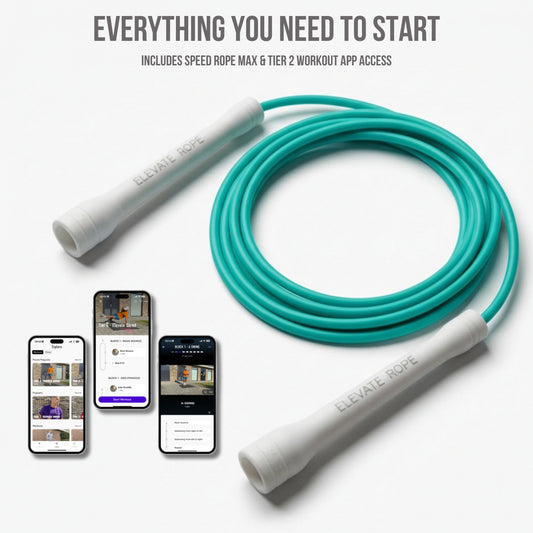
The Elevate Speed Rope MAX provides an option for athletes who already have consistent timing.
Still, faster rotations aren't necessary during every warm-up.
Use a pace that supports relaxed movement.
Building a Broader Boxing Setup
Some fighters prefer different equipment for different training purposes.
A beaded rope can support timing practice.
A speed rope may suit faster conditioning intervals.
Resistance-focused rope work serves another role.
However, weighted intervals shouldn't replace gradual preparation before technical boxing sessions.
You can compare options in the Elevate Boxing & MMA Collection.
The Combat Bundle also provides a combined equipment option for fighters.
Choose according to your actual training requirements.
Common Boxing Jump Rope Warm-Up Mistakes
A short routine can become less effective when technique deteriorates.
These mistakes often appear when athletes prioritize intensity over preparation.
Starting Too Fast
Beginning with maximum-speed rotations increases the challenge before your rhythm settles.
Instead, use relaxed movements during the opening minute.
Gradually increase your pace as your coordination improves.
The first goal is consistency.
Jumping Too High
Higher jumps aren't necessary for ordinary rope rotations.
Excessive height can increase fatigue and disrupt your rhythm.
Keep your movements compact.
Land comfortably with relaxed knees.
Using Too Much Arm Movement
Large shoulder movements can make rotation harder to control.
Focus on small wrist movements instead.
Maintain a comfortable elbow position.
Your upper body should remain relaxed.
Choosing an Incorrect Rope Length
An overly long rope may drag heavily against the floor.
A short rope can repeatedly catch your feet.
Both problems interfere with timing.
Before starting, check your equipment and adjust the length when necessary.
Making the Warm-Up Too Difficult
Double unders, maximum-speed sprints, and demanding weighted intervals can produce substantial fatigue.
Those activities may have a place elsewhere in your training.
However, they aren't necessary during this five-minute preparation sequence.
Keep the focus on controlled movement.
How to Adapt the Routine to Your Experience

Not every athlete starts with the same skipping ability.
A beginner learning the basic bounce has different needs from someone who practises regularly.
Use your experience to adjust the progression.
Complete Beginners
If you're still developing rope timing, spend more time on simple movements.
For example, replace the boxer step with alternating feet.
Directional jumps can also wait until your basic rotations feel predictable.
Short breaks are acceptable.
The priority is controlled movement, not completing every technique immediately.
Intermediate Jumpers
Athletes with established rhythm can follow the full sequence.
Maintain relaxed breathing during the first two minutes.
Gradually introduce more complex footwork afterward.
Avoid unnecessary speed increases.
Your training session hasn't started yet.
Experienced Boxers
More experienced athletes may prefer subtle rhythm changes and controlled directional movement.
However, the warm-up still serves the same purpose.
Prepare your body without creating excessive fatigue.
On demanding training days, extend the preparation when appropriate.
The NSCA's dynamic warm-up guidance emphasizes matching preparation to athletic demands.
nsca.com
Frequently Asked Questions
Is a five-minute jump rope warm-up enough for boxing?
A five-minute jump rope warm-up can provide an initial preparation phase before boxing. However, intense sparring or demanding technical sessions may require additional mobility and sport-specific drills. General warm-up recommendations commonly suggest five to ten minutes. Choose the total preparation time according to your training demands and experience.
What is the best jump rope warm-up for beginners?
A beginner jump rope warm-up should emphasize basic bounce and relaxed alternating-foot movements. Start slowly and focus on consistent timing. Introduce the boxer step only when your technique feels comfortable. Short breaks are acceptable. Developing a repeatable rhythm matters more than performing complicated movements immediately.
Why do boxers jump rope before training?
Boxers use skipping to introduce movement, increase effort gradually, and practise rhythm. Alternating steps and boxer-style movements provide opportunities to work on weight transfer and coordination. However, rope practice doesn't replace technical footwork training. Shadowboxing and boxing-specific drills remain important parts of preparation.
Should boxers use a beaded rope or speed rope?
Both designs can suit boxing training. Beaded ropes provide noticeable movement feedback, which some beginners find helpful. Speed ropes offer a different turning sensation and can support faster rotations. Neither guarantees better technique. Choose equipment based on your skill level, preferred training style, and comfort.
Should you jump rope before sparring?
Jumping rope can form part of your preparation before sparring. Keep the intensity controlled and avoid exhausting intervals. Afterward, include appropriate movement preparation and boxing-specific drills. Sparring demands more than general cardiovascular activity, so your warm-up should reflect those additional requirements.
Can a jump rope warm-up improve boxing footwork?
A jump rope warm-up gives athletes opportunities to practise rhythm, weight transfer, and coordinated movement. These skills are relevant to boxing preparation. However, better skipping technique doesn't automatically produce better ring performance. Continue practising stance control, pivots, defensive movements, and distance management through dedicated boxing drills.
Build Your Rhythm Before the First Round
A useful boxing warm-up doesn't need complicated movements.
Start with the basic bounce.
Progress into alternating feet and the boxer step.
Then introduce controlled directional movements and moderate rhythm changes.
This sequence gives your body time to adjust while keeping technique at the centre of the session.
Remember that five minutes represents a starting routine, not a universal preparation requirement.
For more demanding workouts, add appropriate mobility and sport-specific drills.
The goal is simple: finish your warm-up feeling prepared, focused, and ready to train.