





Jump rope makes cardio feel wonderfully accessible. You need a rope, a clear patch of floor, and a few minutes to get your heart rate climbing. But hundreds of repeated landings also ask your feet, ankles, knees, and surrounding tissues to handle a familiar kind of stress. When that stress increases faster than your body can adapt, jump rope injuries can interrupt a routine that once felt effortless.
The answer is not to assume skipping is bad for your joints. It is to understand the difference between ordinary training soreness and a warning sign, recognize possible jump rope injuries early, adjust the workload before discomfort becomes a pattern, and know when qualified orthopedic care can help. The goal is simple: build fitness without making every workout a test of how much pain you can tolerate.
Key Takeaways
- Jumping rope is a repetitive-impact activity. Rapid increases in training load, fatigue, and poor technique can contribute to discomfort.
- Mild, temporary muscle soreness is not the same as sharp pain, swelling, instability, or worsening joint pain.
- A sports medicine clinician or physical therapist can assess persistent symptoms; an orthopedic surgeon is usually needed only for specific problems.
- Lower jumps, quiet landings, appropriate footwear, and gradual progression help make training more manageable.
- Returning to jumping should follow symptoms, function, and professional advice when an injury has been diagnosed.
Why Jump Rope Injuries Can Develop Quickly
A single jump feels light. String hundreds together, especially after a break from exercise, and the total demand becomes significant. The calves and Achilles tendons help absorb and return energy. The feet, ankles, knees, and hips all contribute to stable landings. Good coordination distributes that work; tired or rushed technique can make each repetition feel heavier.
Repetitive impact is not automatically harmful. Tissues usually adapt when exercise is introduced at a manageable level and recovery keeps pace. Many jump rope injuries involve a mismatch between the demands of training and what the body is ready to handle. The problem begins when a ten-minute workout becomes twenty minutes overnight, a relaxed bounce turns into nonstop high-speed intervals, or someone starts skipping on a hard floor every day without giving their legs time to adjust.
Several factors commonly deserve a closer look:
- Training load: Suddenly increasing frequency, duration, or intensity can exceed your current capacity, even if the new workout feels short.
- Surface: Concrete and other unforgiving floors may make landing control more demanding. A stable sports floor or suitable mat can be more comfortable, although no surface eliminates injury risk.
- Jump height: Leaping much higher than the rope requires increases effort and can make a soft landing harder to repeat.
- Calf endurance: As the lower legs tire, the bounce can become less controlled and your feet may strike the floor more heavily.
- Ankle mobility and strength: Limited movement or poor control may influence how you land, although a single movement limitation rarely explains every painful knee.
- Rope setup: A rope that is too long or short can disrupt rhythm and encourage unnecessary hops or awkward arm positions.
The National Institute of Arthritis and Musculoskeletal and Skin Diseases describes gradual overuse problems as distinct from sudden injuries and identifies rapid training increases, technique, and previous injuries among relevant risks. That is a useful reminder: the same activity can be comfortable at one dose and troublesome at another.
The pattern to notice before it becomes a habit
Imagine your first two sessions feel fine. By the third, your calves stay unusually tight. The following week, your ankle aches halfway through a session; soon it hurts during the warm-up. This is not a reason to label yourself fragile, but it is information. Repeatedly pushing through the same worsening signal is a poor long-term strategy.
Keep a simple training note: minutes skipped, approximate intensity, surface, and how your legs feel later that day and the next morning. Patterns are more informative than guessing from one difficult workout. If pain persists or escalates, get an assessment instead of using the log to justify another hard session.
Warning Signs: When Jump Rope Injuries Need Attention
Muscles can feel sore after a new or harder session. That ordinary exercise soreness tends to be diffuse, appears after activity, and improves over the next few days. Possible jump rope injuries deserve a different response when joint pain is focused, worsening, or changing how you move. You do not need to wait a fixed number of days if the symptoms are concerning.
Pause jumping and arrange a healthcare assessment if you notice any of these patterns:
- Pain keeps returning. It improves briefly with rest, then appears again every time you resume skipping.
- Pain builds during the workout. Each round hurts more, or you begin limping, favoring one side, or changing your technique to cope.
- There is new swelling or warmth. A visibly puffy ankle or knee is different from normal post-workout muscle fatigue.
- A small, specific area hurts sharply. Focal pain over a bone or tendon, especially if it worsens with impact, needs careful evaluation.
- The joint gives way, catches, or locks. Instability and difficulty moving normally are important symptoms to report.
- You notice tingling or numbness. Altered sensation after an injury warrants medical attention rather than another test jump.
- An old injury becomes symptomatic again. A previous sprain, tendon problem, or surgery changes what an appropriate return plan may involve.
Seek urgent medical care for severe pain after an injury, inability to stand or bear weight, obvious deformity, or new numbness after trauma. A hot, swollen joint accompanied by fever or feeling unwell also needs urgent assessment. The NHS guidance on joint pain makes these distinctions clear. Do not try to diagnose an infection, fracture, or nerve problem from a blog article.
If discomfort is mild and improving, reducing or temporarily stopping the aggravating activity may be reasonable. If it does not improve, interferes with everyday activities or sleep, or keeps returning, ask a qualified clinician to evaluate it. Catching a problem early often means having more options than simply waiting until skipping becomes impossible.
What Orthopedic Care Adds Beyond Rest and Ice
Rest can calm an irritated area, but it does not always tell you why pain began. Some people take a week off, feel better, and repeat exactly the same workout until the symptoms return. Evaluating suspected jump rope injuries means looking at both the painful tissue and the way you have been training.
An assessment begins with your symptoms, training history and physical examination—not automatically with an MRI.

Depending on the problem, an orthopedic or sports medicine professional may help with four practical questions:
- What could be causing the symptoms? Knee discomfort, for example, might relate to a tendon, the kneecap joint, surrounding muscles, or another structure. The location alone does not establish a diagnosis.
- Why now? A sudden jump in training load, a change of shoes, a different floor, reduced recovery time, or an earlier injury may all provide clues.
- What activity is still appropriate? A plan can distinguish movements that should pause from low-impact conditioning or strength work you may safely continue.
- How will progress be measured? Clear milestones—such as comfortable daily walking, improved strength, and controlled low-level hopping—are more actionable than an instruction to “rest until better.”
Imaging sometimes helps, but it should answer a clinical question. An X-ray may be useful for certain suspected bone or joint problems; MRI or ultrasound may be considered for selected soft-tissue or other concerns. Not every sore knee requires a scan, and imaging does not replace a skilled examination.
Importantly, orthopedic care does not automatically mean surgery. A primary care clinician, physiotherapist, or sports medicine physician may be the best first contact for an overuse problem. An orthopedic surgeon becomes especially relevant when there is concern about an injury that may require specialist evaluation or a procedure. The right pathway depends on the findings, not the name on the clinic door.
Finding an Orthopedic Specialist Who Understands Your Sport
When discomfort is keeping you from training, you want more than a generic instruction to stop exercising. Look for someone who understands repeated-impact sports and can explain how the diagnosis affects your ability to return to jumping. Strong communication matters just as much as an impressive list of qualifications.
Practical criteria to consider include:
- Experience assessing sports-related knee, ankle, foot, and tendon complaints.
- A clear explanation of the likely diagnosis and any uncertainty.
- A rehabilitation plan with specific progress checks and appropriate strength work.
- Willingness to coordinate with a physical therapist or other rehabilitation professional.
- Respect for your actual goals, whether that means five minutes of daily cardio or a full freestyle session.
Location and access also matter. For someone looking for orthopedic care in Staten Island, Manhattan Orthopedic Care lists a local office. That is one clinic to research, not an independently verified “best” choice. Compare clinicians' experience with your type of complaint, whether they recommend conservative care when appropriate, and practical factors such as insurance and referral requirements.
Five questions worth bringing to an appointment
- What diagnoses fit my symptoms, and which findings make one more likely?
- Which activities should I avoid for now, and which can maintain my fitness?
- What strength, mobility, or balance benchmarks should I reach before impact exercise?
- Would imaging change the treatment plan, or is an exercise-based approach reasonable first?
- What should I do if symptoms recur as I increase training?
Write down where the pain occurs, when it started, and how your training changed in the weeks beforehand. Bring information about your shoes, rope, and workout surface if relevant. These details can make the visit far more productive than simply saying, “My knee hurts when I jump.”
Smarter Jump Rope Habits That Protect Joints
The most sustainable response to the possibility of jump rope injuries is not fear of movement; it is better control of movement. Small changes often make sessions more comfortable and easier to repeat from week to week.
Start with low, quiet jumps on a stable surface and stop before fatigue changes your landing.

1. Keep your bounce low
The rope usually needs only enough space to pass beneath your shoes. Think about lifting lightly rather than jumping toward the ceiling. A lower bounce can reduce wasted effort, though it is not a substitute for proper loading and technique.
2. Use quiet landings as a cue
Listen for a light, controlled contact with the floor. A loud stomp can signal that you are losing rhythm or jumping higher than necessary. Quiet landings are a practical coaching cue, not proof that an injured joint is safe to keep loading.
3. Choose a consistent, non-slip surface
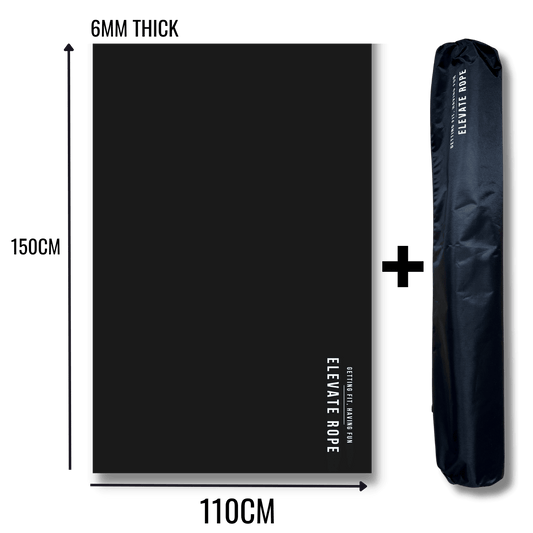
Use flat sports flooring, a suitable rubber surface, or a dedicated jump rope mat that lies securely and does not slide. Avoid loose rugs, uneven ground, and slick tiles. Wear comfortable athletic shoes with adequate grip; whether extra cushioning helps depends on the person and setup.
4. Strengthen the parts that do the work
Calf raises, controlled single-leg balance, and progressive lower-body strength exercises can help prepare the legs for repeated takeoffs and landings. If a tendon or joint is already painful, get guidance on appropriate exercises instead of assuming every strengthening drill is suitable immediately.
5. Change one training variable at a time
Avoid adding more days, faster intervals, and longer sessions in the same week. Keep training load increases manageable and leave room for recovery. The American Academy of Orthopaedic Surgeons' exercise guidance recommends building frequency, intensity, and duration gradually rather than treating pain as a requirement for progress.
6. Train in rounds while technique is fresh
For a healthy beginner, brief sets separated by rest can make coordination easier to maintain. For example, try 20–30 seconds of comfortable bouncing, then take a generous break, repeating only while the landings remain smooth. This is an illustration, not a prescription for someone recovering from an injury.
Remember that the best routine is the one your body can recover from. Consistency built on five manageable minutes beats a heroic session followed by a week of aching ankles. When joint pain appears, adjust the plan rather than forcing a personal record.
Returning to Jumping After Pain Without a Setback
As pain begins to settle, it is tempting to return at full speed. After jump rope injuries, however, feeling better during a quiet week does not necessarily mean the legs are ready for the previous training load. A safer return to jumping is a gradual test of capacity, guided by how you move and how symptoms respond afterward.
If a clinician has diagnosed an injury, follow that individualized plan. For less serious discomfort that has resolved and does not carry red flags, a careful sequence might look like this:
- Restore comfortable daily movement. Walking, stairs, and routine activities should feel reasonably normal before you ask your legs for repeated impact.
- Rebuild strength and control. Use suitable calf, hip, foot, and balance work. The appropriate exercises depend on the symptoms and the diagnosis.
- Reintroduce simple low-level jumps. Try a few easy, well-controlled repetitions or short rounds, with plenty of rest between sets.
- Observe the response. Note whether pain returns during exercise, later that day, or the next morning. Repeated or escalating symptoms mean the progression needs reassessment.
- Increase slowly. Add a little duration or frequency before chasing speed, double unders, or demanding footwork. Retain easier sessions between challenging ones.
Treat this as a framework, not a countdown promising recovery in a set number of days. Tendon, bone, ligament, and joint problems have different timelines. An exercise that is fine after minor soreness may be inappropriate after a suspected stress fracture or an unstable joint. When in doubt, ask your clinician what “ready to return” means for your specific situation.
Rebuilding patience is often the hardest step. You are not starting from zero because you have taken time to address a problem. You are developing a training habit with enough room for the body to keep up.
The Goal: Make Jump Rope a Lasting Habit
Jump rope can be efficient, enjoyable cardio without becoming a weekly argument with your knees or ankles. Pay attention to symptoms, respect the training load, and make technique and recovery part of the skill. When pain persists, appropriate orthopedic care or sports rehabilitation can help you understand the problem and return with a clearer plan.
The real achievement is not how long you can push through discomfort. It is being able to pick up your rope again next week, next month, and next year with confidence.
Frequently Asked Questions
Are jump rope injuries common for beginners?
Beginners may notice calf soreness because skipping introduces a repetitive demand that their legs are not used to. That does not mean jump rope injuries are inevitable. Build short sessions gradually, check your landing technique, and allow recovery. Sharp, worsening, or persistent joint pain should be assessed rather than dismissed as beginner soreness.
Can jump rope injuries cause knee pain?
Repeated landings can aggravate knee symptoms when the training load exceeds a person's current tolerance. However, jump rope injuries and knee pain have several possible causes, so the rope alone cannot tell you what is wrong. Reduce aggravating activity and seek professional assessment if pain persists, swelling appears, or movement becomes difficult.
Should I see an orthopedic surgeon for jump rope injuries?
Not necessarily. Many exercise-related complaints can first be assessed by a primary care professional, sports medicine clinician, or physical therapist. A surgeon may be appropriate if the examination suggests a structural problem requiring specialist management. Severe pain, inability to bear weight, or an obviously unstable joint needs prompt medical attention.
Is a jump rope mat enough to prevent joint pain?
No mat can guarantee injury prevention. A flat, secure mat may make the surface more comfortable and provide a consistent place to train, but footwear, technique, training load, strength, and recovery still matter. If pain keeps returning, a mat alone will not identify or correct the underlying issue.
How long should I wait before returning to jumping?
There is no universal timeline. Your return depends on what caused the symptoms, whether normal activities are comfortable, and how your legs respond to gradually reintroduced impact. Follow a clinician's rehabilitation milestones if you have a diagnosed injury. Avoid using a pain-free rest day as permission for an immediate full workout.
About Elevate Rope
Elevate Rope was founded by Geraldo Alken to help people build confidence, fitness, and creative freedom through jump rope. We believe consistency begins with approachable skills and equipment that fits your routine. Our guides offer practical training ideas, but they do not replace medical assessment when pain or injury is involved.
You May Also Like
- Jump Rope Fundamentals: The 5 Dos and Don'ts of Jump Rope Workouts
- The Weighted Jump Rope Workout: Build Strength and Fitness
- 5 Reasons Jump Rope Training Beats Other Cardio Exercises
- Top 6 Benefits of TPU Jump Ropes
- 10 Workouts for Women of All Fitness Levels
- How to Start Jump Rope After 50: 6 Joint-Safe Steps