





You need low-impact cardio because your joints don't cooperate with traditional exercise. Every run leaves your knees aching. Every aerobics class sends sharp pain through your hips. Every high-intensity workout reminds you that your body doesn't bounce back like it used to.
So you've started searching for low-impact cardio options that deliver results without destroying your joints.
You're not alone. Joint pain affects roughly one in four adults, with prevalence climbing significantly after age 40. Among those who exercise regularly, knee pain is the single most common musculoskeletal complaint. The traditional advice, to simply push through it, has left millions of people either injured or avoiding exercise entirely.
But here's what most people miss: low-impact cardio isn't a compromise. It's often the smarter choice regardless of joint health. Research consistently shows that low-impact options can match or exceed the cardiovascular benefits of high-impact exercise while dramatically reducing injury risk and accumulated joint stress.
This guide covers everything you need to know about low-impact cardio. What it actually means. Which options work best. How to choose based on your specific situation. And how to build a sustainable routine that keeps you fit without breaking you down.
What you'll learn:
- What low-impact cardio actually means (and common misconceptions)
- The 7 best low-impact cardio options ranked by effectiveness
- How to choose the right option for your specific joint issues
- The surprising truth about jump rope and joint impact
- How to progress safely from sedentary to active
- Complete workout templates for different fitness levels
What Low-Impact Cardio Actually Means
The term "low-impact" gets misused constantly. Understanding what it actually means helps you choose exercises that genuinely protect your joints.
The technical definition:
Low-impact cardio refers to exercises where at least one foot remains in contact with the ground (or a surface) at all times, or where body weight is supported by water, a seat, or equipment. This limits the peak force transmitted through joints during each movement.
High-impact exercises, by contrast, involve both feet leaving the ground simultaneously, creating a landing impact of 2-7 times body weight depending on the activity.
The practical difference:
Running transmits approximately 2.5 times your body weight through your knees with each stride. Over a 5K, that's roughly 3,000 impacts per leg. Over a marathon, it's 25,000+ impacts. The cumulative stress is enormous.
Walking, by comparison, transmits only 1-1.5 times body weight because one foot always maintains contact. Swimming transmits virtually zero impact because water supports your weight.
Low-impact cardio isn't about working less hard. It's about reducing peak forces while still challenging your cardiovascular system.
Common misconceptions:
Low-impact doesn't mean low-intensity. You can achieve extremely high heart rates and significant calorie burn through low-impact activities. Swimming intervals, cycling sprints, and rowing can push you to your limits without the joint stress of running or jumping.
Low-impact also doesn't mean ineffective. Research from multiple studies shows no significant difference in cardiovascular adaptation between high-impact and low-impact training when intensity is matched. Your heart doesn't know whether you're running or cycling. It only knows it's working hard.
Answer Block: What Is the Best Low-Impact Cardio for Joint Health?
Short answer: The best low-impact cardio depends on your specific joint issues. Swimming offers zero impact and is ideal for severe joint problems. Cycling provides excellent cardiovascular training with minimal knee stress. Jump rope, performed correctly with proper technique and cushioned surfaces, produces lower peak joint forces than running while requiring minimal equipment and space.
Key insight: "Low-impact" doesn't mean "low-results." These exercises deliver equivalent cardiovascular benefits to high-impact options while dramatically reducing injury risk and joint stress.
Where to start: If you're currently sedentary with joint pain, begin with walking or water-based exercise. If you're active but experiencing joint issues, substitute low-impact options for high-impact activities while maintaining intensity.
Why Your Joints Hurt During Traditional Cardio
Understanding why high-impact exercise causes joint pain helps you appreciate why low-impact cardio offers a genuine solution.
Impact forces accumulate:
Each running stride creates an impact spike. Individually, these spikes aren't harmful to healthy joints. But joints aren't designed for unlimited repetitions. The cartilage, tendons, and supporting structures need recovery time between loading cycles.
When training volume exceeds recovery capacity, inflammation develops. Cartilage wears faster than it regenerates. Tendons develop micro-tears that accumulate into tendinopathy. What started as mild discomfort becomes chronic pain.
Age changes the equation:
Cartilage naturally thins after age 40. Synovial fluid, which lubricates joints, decreases in both quantity and quality. Tendons lose elasticity. Recovery takes longer.
This doesn't mean exercise becomes impossible. It means the margin for error narrows. Activities that your 25-year-old self could absorb without issue may now create problems.
Previous injuries create vulnerabilities:
Old ankle sprains, ACL repairs, meniscus tears, and other joint injuries alter biomechanics permanently. Scar tissue forms. Movement patterns compensate. The "fixed" joint often handles stress differently than before.
Low-impact cardio accommodates these realities. By reducing peak forces and accumulated stress, it allows you to train consistently without constantly fighting your own body.

The 7 Best Low-Impact Cardio Options Ranked
Not all low-impact cardio is created equal. Here's how the major options compare across key factors: cardiovascular benefit, calorie burn, accessibility, joint protection, and practicality.
1. Swimming
Joint protection: Excellent (near-zero impact) Cardiovascular benefit: Excellent Calorie burn: 400-700 calories/hour depending on stroke and intensity Accessibility: Requires pool access
Swimming is the gold standard for joint-friendly cardio. Water supports your body weight, eliminating impact entirely while providing resistance in all directions. You can achieve extremely high heart rates without any joint stress.
The catch is accessibility. You need a pool, which limits when and where you can train. For people with reliable pool access, swimming is often the ideal choice for serious joint issues.
Best for: Severe joint pain, arthritis flares, post-surgical rehabilitation, anyone with pool access
2. Cycling (Outdoor or Stationary)
Joint protection: Excellent (no impact, supported body weight) Cardiovascular benefit: Excellent Calorie burn: 400-800 calories/hour depending on intensity Accessibility: Requires bike or stationary cycle
Cycling eliminates impact by supporting your weight on a saddle while your legs turn circles rather than absorbing landing forces. It's particularly knee-friendly because the motion is controlled and predictable.
Outdoor cycling adds variety and enjoyment but introduces variables like terrain and traffic. Stationary cycling offers controlled conditions and works in any weather. Both provide excellent cardiovascular training.
Best for: Knee pain specifically, people who enjoy outdoor activity, those with space for a stationary bike
3. Jump Rope (With Proper Technique)
Joint protection: Good to excellent (technique-dependent) Cardiovascular benefit: Excellent Calorie burn: 700-1000 calories/hour Accessibility: Excellent (minimal equipment, anywhere with ceiling clearance)
This ranking surprises many people. Isn't jump rope high-impact?
The research says otherwise. A study published in Gait & Posture found that skipping (jump rope) produced lower peak joint forces than running at comparable intensity levels. The researchers described rope jumping as "hip and knee protective" compared to running.
The difference is technique. Running involves heel striking with extended legs, transmitting maximum force through the kinetic chain. Proper jump rope technique involves landing on the balls of the feet with soft, bent knees, naturally absorbing and distributing force.
Jump rope also offers unmatched accessibility. A rope and a small space are all you need. No pool, no bike, no gym membership. This makes low-impact cardio possible anywhere, anytime.
Best for: Home workouts, travel fitness, people who want intense cardio without equipment dependency, those who find other options boring
4. Rowing (Machine or Water)
Joint protection: Very good (no impact, seated) Cardiovascular benefit: Excellent Calorie burn: 500-700 calories/hour Accessibility: Requires rowing machine or water access
Rowing provides full-body cardiovascular training without impact. The seated position supports body weight while legs, back, and arms work together through a smooth, controlled motion.
The technique learning curve is steeper than other options. Poor rowing form can stress the lower back. But once mastered, rowing delivers exceptional conditioning with minimal joint stress.
Best for: Full-body conditioning, people with knee issues who want leg involvement, those with access to a rower
5. Elliptical
Joint protection: Very good (no impact, gliding motion) Cardiovascular benefit: Good to excellent Calorie burn: 400-600 calories/hour Accessibility: Requires elliptical machine
The elliptical mimics running motion without the impact. Your feet never leave the pedals, eliminating the landing forces that stress joints during actual running.
Many runners with knee pain find the elliptical allows them to maintain fitness while recovering from injury. It's not identical to running biomechanically, but it's close enough to feel familiar.
Best for: Injured runners maintaining fitness, gym-based training, people who miss the running motion
6. Walking
Joint protection: Good (low impact, not zero impact) Cardiovascular benefit: Moderate Calorie burn: 200-400 calories/hour depending on pace and terrain Accessibility: Excellent (no equipment required)
Walking is the most accessible form of low-impact cardio. You can do it anywhere, anytime, with no equipment. It's sustainable for virtually any fitness level and joint condition.
The limitation is intensity. Walking doesn't elevate heart rate as significantly as more vigorous options. For cardiovascular improvement, you need duration (45-60+ minutes) or terrain (hills, inclines) to compensate.
Best for: Beginners, severe joint limitations, active recovery, daily movement baseline
7. Water Aerobics
Joint protection: Excellent (water-supported) Cardiovascular benefit: Good to very good Calorie burn: 300-500 calories/hour Accessibility: Requires pool access
Water aerobics combines the joint protection of swimming with upright, dance-like movements. The water provides resistance while supporting body weight, allowing movement that would be painful on land.
Classes add social motivation and structured progression. Solo water walking or jogging in the deep end works for those who prefer independent training.
Best for: Severe arthritis, post-surgical rehabilitation, people who enjoy group fitness, older adults
Jump Rope: The Underrated Low-Impact Option
Jump rope deserves deeper exploration because it contradicts most people's assumptions about low-impact cardio.
The research:
A 2019 study published in Gait & Posture compared biomechanical forces during rope skipping versus running. The findings challenged conventional wisdom: rope skipping at comparable intensity produced lower peak joint forces than running.
Why? Three biomechanical factors:
Landing mechanics: Proper jump rope technique involves landing on the balls of the feet with slightly bent knees. This creates a natural shock-absorption system. Running, especially with heel striking, transmits force through extended legs directly to the knee and hip.
Jump height: Efficient rope jumping requires only 1-2 centimetres of ground clearance. You're not jumping high and crashing down. You're making small, controlled hops that minimise impact.
Rope as feedback: The rope creates immediate feedback for poor technique. Jump too high, land too hard, or time incorrectly, and you trip. This feedback naturally encourages efficient, joint-friendly movement.
Making jump rope joint-friendly:
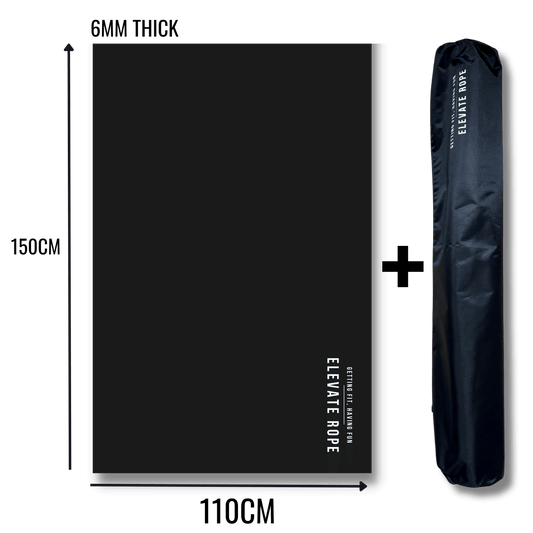
Surface matters enormously. Jumping on concrete without cushioning increases impact dramatically. A dedicated jump rope mat or rubber flooring absorbs force that would otherwise transmit through your joints.
Technique requires learning but isn't difficult. The fundamentals: stay on the balls of your feet, keep jumps small, let wrists drive the rotation rather than arms, maintain soft knees throughout.
Rope choice affects feedback. Beaded ropes provide auditory rhythm cues that help develop consistent timing. Speed ropes work better for experienced jumpers but offer less feedback for beginners.
Comparing ten minutes:
Ten minutes of jump rope delivers cardiovascular benefits equivalent to thirty minutes of jogging according to research from Arizona State University. This isn't marketing copy. It's peer-reviewed exercise science.
For joint health, this efficiency matters. Less time training means less cumulative joint stress while achieving equal or greater cardiovascular benefit.

Choosing the Right Low-Impact Cardio for Your Situation
Different joint issues respond better to different activities. Here's guidance based on specific conditions.
Knee pain:
Best options: Swimming, cycling, elliptical Good option: Jump rope with proper technique and cushioned surface Caution: Rowing (deep knee flexion at catch position)
Knee pain typically responds well to activities that avoid deep flexion under load and eliminate landing impact. Cycling keeps knees in a controlled range of motion. Swimming removes all weight-bearing stress.
Hip pain:
Best options: Swimming, water aerobics Good options: Cycling (adjust seat height to limit flexion), jump rope Caution: Rowing, elliptical (both involve repetitive hip flexion)
Hip pain varies significantly based on cause. Arthritis often responds well to water-based exercise. Bursitis may require trial and error to find comfortable positions.
Back pain:
Best options: Swimming (especially backstroke), walking Good options: Cycling (upright position), elliptical Caution: Rowing (loading the spine under flexion)
Low-impact cardio generally helps back pain by strengthening supporting muscles without jarring impact. Avoid activities that load the spine in flexed positions.
Ankle issues:
Best options: Swimming, cycling, rowing Good option: Elliptical (smooth motion, no lateral stress) Caution: Jump rope (requires ankle stability), walking on uneven terrain
Unstable ankles benefit from activities that don't require balance and lateral stability during cardiovascular training.
General arthritis:
Movement is medicine. Research consistently shows that appropriate exercise reduces arthritis symptoms and slows progression. The key is "appropriate," meaning low-impact options that don't create inflammatory flares.
Start with water-based exercise or cycling if joint inflammation is significant. Progress to land-based low-impact activities as tolerance improves.
Building a Low-Impact Cardio Routine
Knowing your options isn't enough. You need a structured approach that builds fitness progressively without overwhelming your joints.
Beginner routine (weeks 1-4):
If you're currently sedentary or experiencing significant joint pain, start conservatively.
Week 1-2: 15-20 minutes of low-impact cardio, 3 days per week. Focus on learning technique and establishing the habit. Intensity should feel moderate, allowing conversation.
Week 3-4: Increase to 25-30 minutes, still 3 days per week. Introduce brief intervals of higher intensity (30-60 seconds) followed by recovery. Monitor joint response.
Intermediate routine (weeks 5-12):
Once baseline fitness is established and joints are tolerating activity well.
4-5 sessions per week, 30-45 minutes each. Vary activities to reduce repetitive stress. Include one longer, easier session and one shorter, higher-intensity session. Add strength training 2 days per week to support joint stability.
Sample weekly structure:
Monday: Jump rope intervals (20 minutes: 30 seconds work, 30 seconds rest) Tuesday: Strength training (lower body emphasis, glutes and hamstrings) Wednesday: Swimming or cycling (40 minutes steady pace) Thursday: Rest or walking Friday: Strength training (upper body and core) Saturday: Longer low-impact session (45-60 minutes at easy pace) Sunday: Rest
Progression principles:
Never increase duration and intensity simultaneously. Add no more than 10% weekly to either variable. Take a reduction week every 4-6 weeks where volume drops by 30-40%.
Monitor joint response. Mild discomfort during warm-up that disappears is acceptable. Pain that worsens during exercise or persists afterward indicates too much stress.
Low-Impact Cardio Workouts by Level
Here are complete workouts using low-impact cardio principles.
Workout 1: Beginner Jump Rope (15 minutes)
Warm-up: 2 minutes easy bouncing or marching in place Round 1: 30 seconds jumping, 60 seconds rest (repeat 5 times) Recovery: 2 minutes walking Round 2: 30 seconds jumping, 60 seconds rest (repeat 3 times) Cool-down: 2 minutes gentle stretching
Total jumping time: 4 minutes. This is enough for beginners. Add time gradually over weeks.
Workout 2: Intermediate Cycling Intervals (30 minutes)
Warm-up: 5 minutes easy spinning Interval set: 1 minute high resistance/fast pace, 2 minutes recovery (repeat 6 times) Steady state: 5 minutes moderate effort Cool-down: 5 minutes easy spinning
Workout 3: Low-Impact Circuit (25 minutes)
Perform each exercise for 45 seconds with 15 seconds transition.
Round 1: March in place, bodyweight squats, jumping jacks (step out modification), standing knee raises, rest 1 minute
Round 2: Same exercises, repeat
Round 3: Step touches, wall push-ups, standing side leg raises, standing calf raises, rest 1 minute
Round 4: Return to Round 1 exercises
Cool-down: 3 minutes stretching
Workout 4: Swimming Endurance (40 minutes)
Warm-up: 5 minutes easy freestyle Main set: 10 x 50 metres at moderate effort with 20 seconds rest between Active recovery: 5 minutes backstroke easy Main set 2: 10 x 25 metres fast with 30 seconds rest between Cool-down: 5 minutes easy choice stroke

Common Mistakes With Low-Impact Cardio
Even joint-friendly exercise can cause problems when approached incorrectly.
Mistake 1: Too much too soon
Low-impact doesn't mean unlimited. Joints still need progressive adaptation. People often assume that because something is low-impact, they can do unlimited volume immediately. This leads to overuse injuries despite the gentler forces.
Solution: Follow the 10% rule. Increase weekly volume by no more than 10% regardless of how good you feel.
Mistake 2: Ignoring technique
Low-impact activities still have technique requirements. Poor cycling position stresses knees. Incorrect rowing form hurts backs. Sloppy jump rope technique eliminates the joint-protective benefits.
Solution: Learn proper form for your chosen activities. Consider a session with a coach or physical therapist if self-instruction isn't working.
Mistake 3: Neglecting strength training
Low-impact cardio reduces joint stress during exercise. Strength training builds the muscles that protect joints during everything else. Cardio alone creates imbalances and missed protective benefits.
Solution: Include 2-3 strength sessions weekly focusing on muscles that support your problem joints.
Mistake 4: Using pain as the only feedback
By the time you feel pain, you've often exceeded your tissue capacity significantly. Relying on pain alone means you're always reactive rather than proactive.
Solution: Monitor for subtle signs, including stiffness the morning after exercise, warmth in joints, reduced range of motion, and generalised fatigue. Adjust before pain develops.
Frequently Asked Questions
Is low-impact cardio effective for weight loss?
Absolutely. Weight loss depends on calorie deficit, not impact level. Low-impact options like swimming, cycling, and jump rope can burn 400-1000+ calories per hour depending on intensity. Combined with appropriate nutrition, they're fully effective for weight loss goals.
How long does low-impact cardio take to see results?
Cardiovascular improvements begin within 2-3 weeks of consistent training. Noticeable fitness changes typically appear by 6-8 weeks. Joint pain often improves faster, sometimes within days of switching from high-impact to low-impact activities.
Can I build the same fitness with low-impact cardio?
Yes. Research shows no significant difference in cardiovascular adaptation between high-impact and low-impact training when intensity is matched. Your heart, lungs, and metabolic systems respond to effort, not impact.
Should I stop high-impact exercise entirely?
Not necessarily. If your joints tolerate some high-impact activity without pain, variety is beneficial. Many people do well with a mixed approach: primarily low-impact with occasional higher-impact sessions. Listen to your body and adjust accordingly.
What if low-impact cardio still hurts my joints?
Experiment with different options. Pain during cycling doesn't mean pain during swimming. Pain during jump rope on concrete doesn't mean pain on a cushioned mat. If all low-impact options cause pain, see a healthcare provider for evaluation.
How do I maintain intensity with low-impact cardio?
Intervals. Short bursts of maximum effort followed by recovery periods elevate heart rate dramatically without requiring impact. Thirty seconds of all-out cycling or swimming sprints challenges any fitness level.
The Bottom Line: Impact Isn't Required
Low-impact cardio isn't a consolation prize for people with bad joints. It's a legitimate, effective approach to cardiovascular fitness that happens to protect joints as a bonus.
You can achieve every fitness goal available through high-impact training, including weight loss, cardiovascular health, endurance, and even athletic performance, through low-impact alternatives. The only thing you sacrifice is accumulated joint damage.
For many people, that trade-off isn't just acceptable. It's obviously correct.
If joint pain has been limiting your exercise, low-impact cardio offers a path forward. Start with whatever option appeals most and fits your circumstances. Build gradually. Monitor response. Progress as tolerated.
Your joints will thank you. And your cardiovascular system won't know the difference.
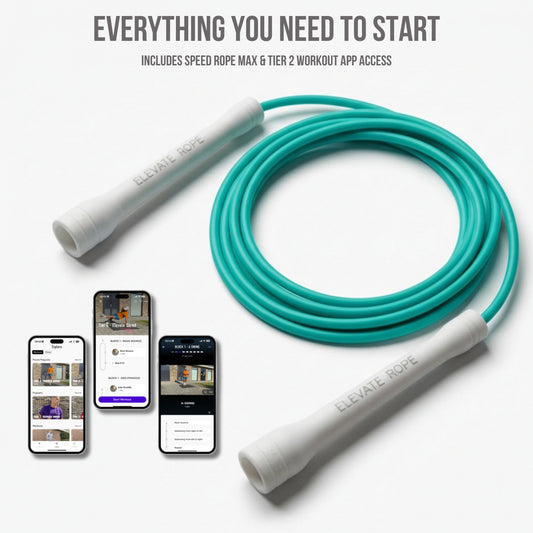
Ready to try low-impact cardio at home? The Elevate Dignity Beaded Rope provides the feedback and control that makes jump rope joint-friendly, especially when paired with our cushioned Jump Rope Mat for impact absorption. For a complete starter setup, the Ascent Bundle includes everything you need to begin low-impact cardio training today.
Sources
Jump rope joint loading comparison references biomechanical research published in Gait & Posture demonstrating lower peak forces during skipping compared to running. Hip and knee protective findings draw from additional Gait & Posture research on joint stress across exercise modalities. Cardiovascular equivalence of jump rope and jogging references research by John A. Baker at Arizona State University. Arthritis and exercise recommendations align with guidelines from the Arthritis Foundation and American College of Sports Medicine. Knee pain prevalence statistics reference epidemiological studies on musculoskeletal complaints among active adults.