





You're ready to start jump rope at home. You search online and find dozens of options at wildly different price points. Beaded ropes. Speed ropes. Weighted ropes. PVC, wire, leather, cotton. Handles made of plastic, aluminium, wood.
How do you know which is the best jump rope for home workouts when you've never jumped before?
This guide eliminates the confusion. Every rope type explained, honest pros and cons for each, and clear recommendations based on your specific situation. No affiliate-driven recommendations pushing whatever pays the highest commission. Just straightforward guidance to help you buy the right rope the first time.
By the end, you'll know exactly which rope matches your goals, skill level, and budget—and why.
What you'll learn:
- The four main rope types and who each serves best
- What features actually matter (and which are marketing fluff)
- Price ranges and what you get at each level
- Specific recommendations for beginners, fitness enthusiasts, and advanced jumpers
- Common buying mistakes and how to avoid them
The Four Main Rope Types
Understanding rope categories is the first step to finding the best jump rope for home workouts. Each type serves different purposes.
Beaded ropes
Beaded ropes feature plastic segments threaded onto a nylon cord. The beads add weight and create audible feedback when they hit the ground—a rhythmic "tick-tick-tick" that helps beginners develop timing.
Best for: Absolute beginners, outdoor use on rough surfaces, learning rhythm and coordination.
The added weight slows rotation slightly, providing more time to react. The sound feedback helps your brain sync jumping timing without watching your feet. Beads are also durable—they handle concrete and asphalt better than PVC or wire ropes.
Drawbacks: Heavier than speed ropes, not ideal for double-unders or fast tricks.
PVC/Vinyl speed ropes
PVC ropes use a solid vinyl cord, typically 4-6mm thick, with lightweight handles. They're the most common type for fitness training.
Best for: General fitness, HIIT workouts, intermediate jumpers, indoor use.
PVC ropes offer good speed potential while remaining forgiving for less-than-perfect timing. They're affordable, widely available, and suitable for most home workout purposes.
Drawbacks: Less durable on rough outdoor surfaces, can kink if stored improperly.
Wire/Cable speed ropes
Wire ropes use thin steel cable (often coated in vinyl) for maximum rotation speed. Competition speed jumpers and CrossFit athletes favour these.
Best for: Advanced jumpers, double-unders, speed competitions, CrossFit training.
The thin profile cuts through air with minimal resistance, enabling very fast rotations. If you're chasing speed records or need multiple rotations per jump, wire ropes are the tool.
Drawbacks: Less forgiving of timing errors (the thin cable whips painfully when it hits skin), requires good technique to use effectively, not ideal for beginners.
Weighted ropes
Weighted ropes add mass to the handles, the rope itself, or both. Weights range from light (100-200g total) to heavy (500g-1kg+).
Best for: Building upper body and grip strength, increasing calorie burn, adding variety to training.
The added resistance transforms jumping into a strength-endurance exercise. Shoulders, forearms, and grip fatigue faster, creating training stimulus beyond pure cardio.
Drawbacks: Not suitable for learning technique, slower rotation limits some movements, excessive weight can strain joints if form is poor.

Answer Block: What's the Best Jump Rope for Home Workouts?
Short answer: For most people starting home workouts, a beaded rope or PVC speed rope is the best choice. Beaded ropes excel for complete beginners due to rhythmic feedback. PVC ropes suit those with basic coordination who want a versatile fitness tool. Wire ropes and weighted ropes serve specific advanced purposes.
Key principle: Match the rope to your current skill level and primary goal. The best jump rope for home workouts is one you'll actually use consistently—not the most expensive or most advanced option.
Quick recommendation: When in doubt, start with a quality beaded rope. You can always add a speed rope later as skills develop.
Features That Actually Matter
Marketing creates confusion about what makes the best jump rope for home workouts. Here's what genuinely affects your experience.
Adjustable length
Essential. Non-negotiable. A rope you can't adjust to your height will cause endless frustration. Every quality rope should offer easy length adjustment. Avoid fixed-length ropes unless you've measured precisely and the length matches your needs exactly.
Handle comfort and grip
You'll hold these handles for hundreds or thousands of rotations per workout. Comfort matters. Look for handles with textured grip surfaces and ergonomic shaping. Avoid handles that are too thin (hand cramping) or too thick (grip fatigue). Foam or rubber grips reduce slipping when hands sweat.
Bearing system (or lack thereof)
Handles contain either bearings (ball bearings or bushings) or no bearing system at all.
Bearings reduce friction and enable faster, smoother rotation. Higher-quality ropes use sealed ball bearings that spin freely and last for years.
Bearing-free designs use a simple loop or swivel connection. These are more durable in some cases and provide a different feel—the rope moves with your natural rhythm rather than spinning independently.
Neither is objectively "better." Bearing-free ropes often suit beginners who benefit from the slightly slower, more controlled rotation. Bearing ropes suit those prioritising speed.
Rope thickness
Thicker ropes (5-6mm) are more visible, slightly slower, and more forgiving. Thinner ropes (2-4mm) are faster but less forgiving of errors. For general home workouts, 4-5mm provides a good balance.
Rope material durability
Consider where you'll jump. Indoor use on wood or rubber flooring? Any rope type works. Outdoor use on concrete or asphalt? Beaded ropes handle rough surfaces best. PVC degrades faster on abrasive surfaces. Wire ropes can fray.

Features That Don't Matter Much
Some marketed features sound impressive but make minimal practical difference when choosing the best jump rope for home workouts.
Handle material (plastic vs. aluminium)
Aluminium handles look premium and feel substantial, but plastic handles work identically for home workout purposes. Don't pay a significant premium for metal handles unless you specifically prefer the feel.
Calorie counters and digital displays
Some ropes include electronic counters in the handles. These add weight, require batteries, and provide information you can get from a simple timer or fitness watch. For most home workouts, they're unnecessary complexity.
"Premium" branding
A rope from a famous fitness brand doesn't automatically outperform a well-designed rope from a smaller company. Evaluate features and reviews rather than brand recognition.
Exotic materials
Leather ropes, cotton ropes, and other specialty materials serve niche purposes (boxing training, aesthetic preferences) but offer no advantage for general home fitness. Standard PVC or beaded ropes perform better for most uses.
Price Ranges and What You Get
The best jump rope for home workouts doesn't require a massive investment. Here's what each price tier typically offers.
Budget (€5-€15)
Basic ropes with minimal features. Often non-adjustable or difficult to adjust. Handles may be uncomfortable for extended use. Rope material may be lower quality.
Verdict: Functional for trying jump rope, but you'll likely want to upgrade quickly if you stick with it.
Mid-range (€15-€40)
Quality ropes with proper adjustment systems, comfortable handles, and durable materials. This is the sweet spot for most home exercisers. You get everything you need without paying for features you won't use.
Verdict: Best value for most people. Spend here for a rope that lasts years and performs well.
Premium (€40-€80)
High-end construction, precision bearings, premium materials. Often includes features like interchangeable cables, carrying cases, and spare parts.
Verdict: Worth it for serious jumpers who train frequently. Overkill for casual fitness use.
Specialty (€80+)
Competition-grade ropes, elaborate weighted systems, or smart ropes with app integration. Designed for specific advanced purposes.
Verdict: Only if you have a specific need these address. Not necessary for finding the best jump rope for home workouts.
Best Jump Rope for Home Workouts: By User Type
Here are specific recommendations based on who you are and what you need.
Complete beginners
Your priority: A rope that helps you learn without constant frustration.
Best choice: Beaded rope with easy length adjustment.
The beaded design provides weight that slows rotation (giving you time to react) and sound that helps develop timing. The Elevate Dignity Beaded Rope exemplifies this category—3-metre adjustable length, bearing-free design that moves with your rhythm, and 2.5cm PVC beads that provide clear auditory feedback.
Avoid: Wire speed ropes (too unforgiving), weighted ropes (add complexity before you have technique).
Fitness enthusiasts (some coordination)
Your priority: A versatile rope for cardio workouts and HIIT training.
Best choice: PVC speed rope in the 4-5mm thickness range.
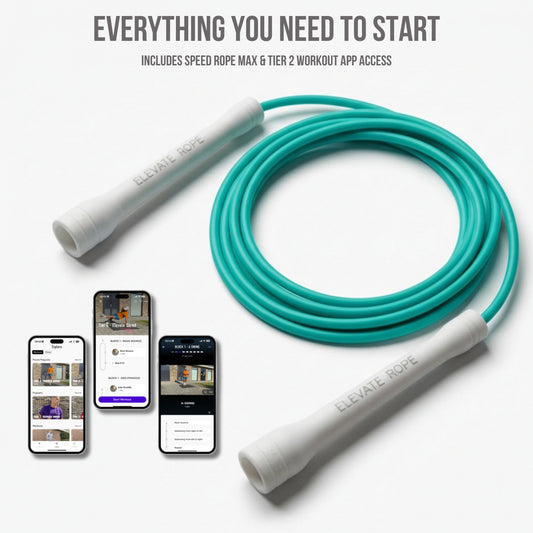
You have enough coordination to handle a faster rope but want something suitable for sustained workouts, not just speed tricks. The Elevate Speed Rope MAX delivers smooth rotation for interval training while remaining forgiving enough for longer sessions.
Avoid: Ultra-thin wire ropes (unless specifically training for speed).
Advanced jumpers and CrossFitters
Your priority: Maximum speed for double-unders and competition.
Best choice: Thin wire/cable rope with quality ball bearings.
You need a rope that rotates as fast as you can spin it, without fighting air resistance or handle drag. Look for coated cable in the 2-3mm range with sealed bearings.
Avoid: Beaded ropes (too slow), weighted ropes (for speed work—though they're fine for separate strength sessions).
Strength-focused trainers
Your priority: Added resistance for upper body and grip development.
Best choice: Weighted rope with load in the handles, rope, or both.
The Elevate Gravity Heavy Rope (10mm) adds significant mass to each rotation, transforming jumping into a strength-endurance challenge. Start lighter if new to weighted jumping—500g total is plenty for most people.
Avoid: Starting too heavy before technique is solid.
Mixed-use trainers
Your priority: One rope that handles multiple purposes reasonably well.
Best choice: Quality PVC rope in the mid-weight range (5mm).
A well-made PVC rope handles fitness cardio, HIIT, learning tricks, and even moderate speed work. It's not optimal for any single purpose but serviceable for all common home workout needs—making it potentially the best jump rope for home workouts if you want just one rope.
Consider: Owning two ropes (beaded for learning/warm-up, speed rope for workouts) rather than compromising with one.

Common Buying Mistakes
Avoid these errors when shopping for the best jump rope for home workouts.
Buying based on price alone
The cheapest rope isn't a deal if it frustrates you into quitting. A €20 quality rope that lasts years and works well is better value than a €5 rope that tangles, can't be adjusted, and gets abandoned.
Buying too advanced too soon
Wire speed ropes look impressive, but they punish beginners mercilessly. Start with appropriate equipment and upgrade as skills justify it.
Ignoring adjustment capability
Fixed-length ropes or ropes with difficult adjustment mechanisms create ongoing problems. Prioritise easy, reliable length adjustment.
Forgetting about surface
If you'll jump outside on concrete, factor durability into your choice. The best jump rope for home workouts inside may not survive outdoor use.
Buying sets with unnecessary accessories
Some packages bundle ropes with carriers, extra cables, and accessories you'll never use. Pay for the rope, not the extras.
How to Test if a Rope Works for You
Once you receive your rope, perform these checks.
Length adjustment test
Adjust the rope to proper length (handles at armpit height when standing on the rope). The process should be simple and secure. If adjustment is frustrating, you'll avoid doing it—which means the rope will never fit properly.
Rotation test
Spin the rope with just wrist motion. It should rotate smoothly without catching, jerking, or feeling "sticky." Inconsistent rotation indicates handle or bearing issues.
Sound test (for beaded ropes)
Jump for 30 seconds on a hard surface. The beads should produce consistent, rhythmic sound. Irregular sound suggests uneven bead distribution or rope issues.
Comfort test
Complete 2-3 minutes of jumping. Handles should feel comfortable without causing hand cramping or blisters. Grip should remain secure even as hands warm up.
Durability check
Inspect the rope-to-handle connection point. This is where most ropes fail. The attachment should be secure with no fraying or stress marks.
Frequently Asked Questions
What's the best jump rope for home workouts if I'm just starting?
A beaded rope. The added weight and auditory feedback accelerate learning. Look for easy length adjustment and comfortable handles. The Elevate Dignity Beaded Rope is designed specifically for beginners learning at home.
Should I buy a weighted jump rope?
Not initially. Master technique with a standard rope first (4-8 weeks minimum). Weighted ropes add training variety and upper body challenge once you have solid fundamentals. Adding weight to poor technique creates joint strain and reinforces bad habits.
How much should I spend on my first rope?
€20-€35 gets you a quality rope with all necessary features. Below €15, quality becomes inconsistent. Above €40, you're paying for features that may not benefit beginners. The best jump rope for home workouts doesn't require premium pricing.
Can one rope work for everything?
A quality PVC rope in the 4-5mm range handles most purposes adequately. However, owning two ropes (beaded + speed) provides better options for different training purposes and costs less combined than one premium "do-everything" rope.
How long should a good rope last?
With indoor use, a quality rope lasts 2-5 years depending on frequency. Outdoor use on rough surfaces shortens lifespan significantly. Beaded ropes generally outlast PVC ropes in outdoor conditions.
Does brand matter?
Quality matters more than brand recognition. Evaluate adjustment mechanism, handle comfort, rope durability, and user reviews rather than brand prestige. Some lesser-known brands produce excellent ropes; some famous brands produce mediocre ones.
The Bottom Line: Match the Rope to Your Reality
The best jump rope for home workouts is the one that matches your current skill level, supports your goals, and feels good in your hands. Fancy features don't compensate for a rope that doesn't fit your needs.
For most people starting out, a quality beaded rope provides the fastest path to competent jumping. For those with basic skills seeking fitness benefits, a PVC speed rope delivers excellent workouts. Advanced jumpers know what they need.
Buy appropriate equipment, adjust it properly, and start jumping. The rope matters—but consistent use matters more.
If you're ready to choose, explore the Elevate Rope collection for options that match every skill level and goal. The Elevate Dignity Beaded Rope is our top recommendation for beginners—rhythmic feedback, easy adjustment, and a design that makes learning faster. For fitness-focused training, the Elevate Speed Rope MAX handles everything from HIIT intervals to skill development.
Your perfect rope is waiting. Now go find it.
Sources
Rope type comparisons draw from materials science regarding PVC, nylon, and steel cable properties. Bearing system explanations reference mechanical engineering principles of friction reduction in rotational systems. Price-to-quality relationships reflect market analysis of available jump rope products across multiple retailers. User-type recommendations align with coaching guidelines from certified jump rope instructors and competitive jump rope organisations.