





If you're searching for cardio without knee pain, you already know the frustration. You start a routine and feel good for a week or two. Then your knees start aching — on the stairs, after sitting, or halfway through a workout. So you stop. And you tell yourself your body just isn't built for this anymore.
Here is what almost nobody tells you. The pain you feel during exercise is usually not a verdict on your knees. It's feedback about how you move, how often, and on what surface. Pain at the front of the knee is the most common type exercisers get. It affects more than one in five young adults. And it's largely an overuse pattern, not a permanent flaw. That's exactly why cardio without knee pain is possible for most people.
That distinction changes everything. If the problem is how you load the joint, not the joint itself, the fix isn't to quit moving. It's to move in a way your knees can tolerate. This article breaks down the five real reasons your knees hurt during exercise. Then it covers the specific changes that make cardio without knee pain realistic.
What you'll learn
Why most exercise knee pain comes from overuse, not damage
The five movement and setup mistakes that quietly wreck your knees
How landing force and impact actually work in your joints
Why the surface under your feet matters as much as the exercise
A simple way to build cardio fitness without high impact
When knee pain means you should see a professional, not push through
It's Usually Overuse, Not Damage
The single most reassuring fact about exercise knee pain is also the most overlooked. The aching at the front of your knee, around or behind the kneecap, usually has a name: patellofemoral pain syndrome. Clinicians often call it runner's knee, and it is described as pain caused by overuse rather than by a single traumatic injury.
Overuse is a specific thing. It means you asked the joint to do the same loaded movement, over and over, faster than your tissues could adapt. Repeated bending and straightening under load stresses the kneecap, and small irritations build up in the tissue that holds it in place. The pain tends to start mild and grow, which is exactly why people miss the warning and keep pushing.
Why This Is Good News
If the cause is a loading pattern, the cause is something you can change. You do not need new knees. You need a different dose. Research on the condition is clear that the most effective treatment is not surgery or gadgets but managing the load and strengthening the muscles around the joint, especially the hips and thighs. In other words, the lever is in your control.
This is why the goal is not to find an exercise that is magically safe for everyone. The goal is to find cardio that doesn't hurt knees because you have made it gentle enough for where you are right now. The exercise is rarely the villain. The unmanaged volume is.
Short answer: Most knee pain during exercise is patellofemoral pain, an overuse pattern, not joint damage.
Why it matters: Overuse is something you control. The fix is adjusting how you load the knee, not abandoning movement altogether.
Best next step: Stop framing the pain as proof you are too far gone. Treat it as a signal to lower the dose and improve your form.

The Five Real Reasons Your Knees Hurt
When people say a workout hurt their knees, they almost always mean one of five things. None of them is your fault. All of them are fixable. Here is what is actually happening, and what to do instead.
1. You did too much, too soon
The most common pattern is a sudden jump in volume. A new runner goes from nothing to five kilometres. A returning exerciser does forty minutes on day one because that is what they used to do. The tissue around the kneecap has not adapted, and the overload shows up as pain a day or two later. The fix is unglamorous and it works: smaller doses, more often, with rest built in.
2. Your hips and thighs are weak
Weak hip and thigh muscles are an important cause of front-of-knee pain. These muscles guide the kneecap through its groove. When they are weak, the kneecap tracks poorly and the joint takes load it was not designed to absorb. This is why strengthening the hips and quads is the most evidence-backed treatment there is.
3. You land hard and flat
How you absorb force matters more than most people realise. Slamming down flat-footed sends a spike of force straight up through the knee. Landing softly, through the ball of the foot with a slight bend in the knee, spreads that force out and lets your muscles do the absorbing instead of your joint. Same movement, very different load.
4. You train on a punishing surface
Concrete and tile give you nothing back. Every footfall returns full force into your legs. A softer, shock-absorbing surface quietly removes a chunk of that load before it ever reaches the knee. This is one of the cheapest changes you can make and one of the most underrated.
5. You picked an exercise with fixed impact
Some cardio gives you no dial. Road running locks you into a high-impact pattern with limited room to soften it. The smarter move is choosing forms of cardio where you control the intensity and the impact separately, so you can keep your heart rate up while keeping the pounding down.
| What hurts the knee | What protects it |
| Big jumps in volume | Short sessions, built up gradually |
| Weak hips and quads | Targeted strength work |
| Hard, flat landings | Soft forefoot landings, bent knee |
| Concrete or tile | A shock-absorbing mat or softer floor |
| Fixed-impact cardio | Cardio you can dial down |

Impact Is a Choice, Not a Fixed Cost
This is the part that reframes everything. People talk about exercises as if each one comes with a set amount of impact stamped on it. High-impact cardio, low-impact cardio, as if it were a fixed property. It is not. With most movement, the force your knees absorb depends on how you do it, not just what you do.
Two people can do the exact same exercise and load their knees completely differently. One leaps high and lands like a brick on a tiled kitchen floor. The other stays low to the ground, lands softly through the forefoot, and works on a cushioned surface. The first is grinding their joints down. The second is building fitness their knees barely notice. Same activity. Different outcome.
The Four Things You Control
Across nearly any cardio that involves your feet leaving the ground, four levers decide how much your knees feel it. How high you rise. How you land. What is under you. And the rhythm of the movement itself. Turn all four toward gentle and you can train hard while keeping impact remarkably low. This is the difference between cardio that wrecks your knees and cardio that doesn't hurt knees at all.
Short answer: Impact is not fixed by the exercise. It is shaped by your height, landing, surface, and rhythm.
Why it matters: It means almost any cardio can be made joint-friendly. You are not stuck choosing between fitness and your knees.
Best next step: Pick a cardio form where you can adjust all four levers, then start at the gentlest setting.
What Actually Helps: Gentle, Controllable Cardio
So what does a knee-friendly routine look like in practice? It is built on the principle that you can separate intensity from impact. You want your heart and lungs working. You do not want your kneecap absorbing repeated spikes of force. The exercises that let you have both are the ones where you stay close to the ground and control the rhythm yourself.
Swimming and cycling are the classic answers, and they are genuinely good. But they require a pool or a bike, and neither builds the kind of springy, coordinated foot contact that keeps you athletic as you age. There is another option that quietly checks every box, and it surprises people: jumping rope, done deliberately gently.
Why Gentle Rope Work Fits the Brief
It sounds backwards, because most people picture skipping as a high-bounce playground activity. But a controlled jump leaves the floor by barely a centimetre. You are not leaping. You are doing small, rhythmic hops, landing soft through the forefoot, on a cushioned surface. The intensity is in the pace and duration. The impact stays low because you keep all four levers turned down.
It also fixes the volume problem on its own. A rope session can be five minutes. It needs less than two square metres. There is no thirty-minute minimum, no commute, no momentum required. That makes it easy to keep the doses small and frequent, which is exactly what an overuse-prone knee needs. Research has shown jump rope can deliver cardiovascular gains in a fraction of the time of jogging, which means you do not have to trade gentleness for results.
The Setup That Makes It Gentle
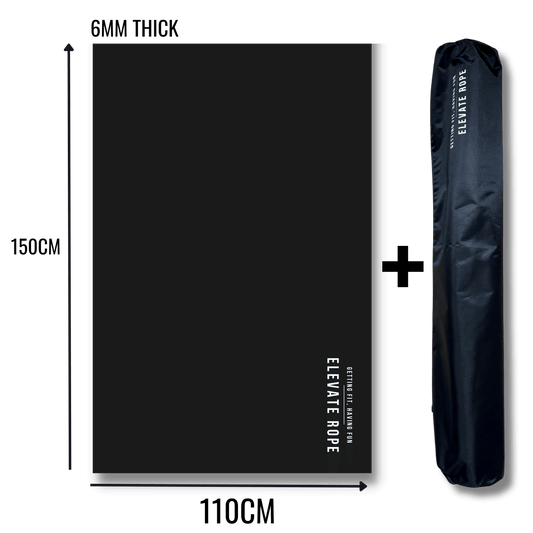
The two things that turn skipping from jarring to joint-friendly are the surface and the rope itself. A shock-absorbing mat removes a real share of the landing force before it reaches your knees, and it cuts the noise if you train indoors. A slower, beaded-style rope naturally lowers your hops and gives your brain an audible rhythm to lock onto, so you stop the panicked high bounces that beginners default to. Together they make the gentle version almost automatic. We pull this whole system together in our complete low-impact jump rope guide if you want the full picture.

When Knee Pain Means Stop, Not Push
Reframing pain as feedback does not mean ignoring it. Honesty matters here, because most fitness content pretends every ache can be trained through. It cannot. There are times when the right move is to rest and get a professional opinion, and knowing the difference protects you.
Pain that is sharp, that comes from a specific injury or fall, that causes swelling, locking, or a feeling that the knee might give way, is not an overuse niggle. Neither is pain that does not settle after a few days of rest. In those cases the standard advice is to stop the activity that hurts and have it looked at, rather than improvising a workaround. The same goes if you have a diagnosed condition or have not had recent medical clearance to start exercising.
For the far more common story, the dull ache that creeps in after you ramp up too fast, the path forward is gentler loading, stronger hips and thighs, soft landings, a forgiving surface, and patience. That is not a downgrade. It is the version of training your knees can actually keep up with.
Short answer: Dull, gradual ache usually means adjust your training. Sharp pain, swelling, or instability means stop and get checked.
Why it matters: Pushing through the wrong kind of pain turns a manageable problem into a lasting one.
Best next step: If rest for a few days does not settle it, see a physiotherapist or doctor before resuming.

Frequently Asked Questions
Why do my knees hurt when I exercise but not when I rest?
Front-of-knee pain often appears only under load, when you bend the joint repeatedly during activity. This is the typical pattern of patellofemoral pain, an overuse issue. The exercise stresses tissue around the kneecap that feels fine at rest but flares when worked.
Is knee pain after cardio normal?
A little muscle soreness is normal. Joint pain in or around the kneecap is a signal, not a badge. It usually means too much volume too soon, weak supporting muscles, or hard landings. Reduce the dose and improve your setup before it becomes persistent.
What is the best low-impact cardio for bad knees?
Swimming, cycling, and gentle jumping rope on a cushioned surface are all strong options. The best one is whatever lets you control intensity and impact separately, so you can raise your heart rate while keeping landing force low. Start short and build gradually.
Can I exercise with knee pain or should I rest?
If the pain is a dull, gradual ache, gentler training and strengthening usually help. If it is sharp, came from an injury, or comes with swelling or instability, stop and see a professional. Pain that does not settle after a few days of rest should be checked.
Does a softer surface really reduce knee strain?
Yes. A shock-absorbing surface absorbs part of the landing force before it travels up into the joint. Training on a mat instead of concrete or tile is one of the simplest and cheapest ways to lower the load on your knees during any foot-impact cardio.
Where to Go From Here
If your knees have been the reason you keep quitting, the takeaway is simple. The exercise was probably never the problem. The dose, the landing, and the surface were. Fix those three and most people find they can build real cardio fitness without the ache that used to send them back to the couch.
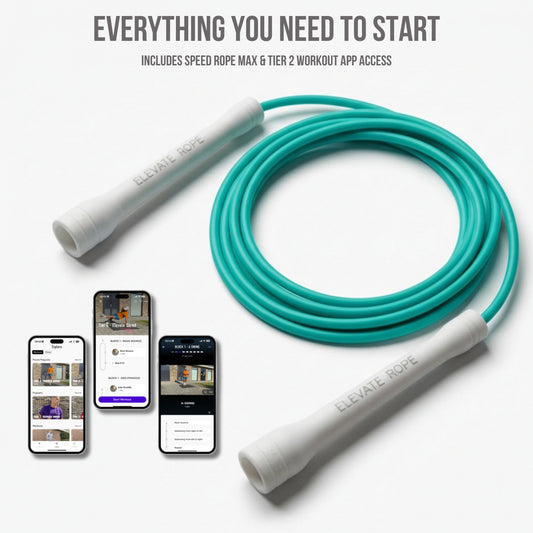
If you want to try the gentlest entry point, a small, controlled rope routine on a cushioned surface is hard to beat. A shock-absorbing mat is the single highest-leverage change, since it removes landing force and keeps your sessions quiet at home → the Elevate Training Mat. Pair it with a slower rope that lowers your hops and teaches rhythm, and the gentle version becomes almost automatic → the Elevate Beaded Rope.
When you're ready for the complete picture, read our [complete guide to low-impact jump rope](https://www.elevaterope.com/blogs/elevate-rope/low-impact-jump-rope). That guide covers the four levers of impact and a gentle four-week starter plan. You'll also learn how to keep training quiet enough for an apartment. Low-impact isn't low-commitment. It's the version of showing up your knees can actually keep.
Sources
- Patellofemoral pain syndrome — overview and prevalence (Wikipedia, citing Ferrari et al. and Dutton et al.)
- Patellofemoral Pain Syndrome (Runner's Knee) — Hospital for Special Surgery
- Overview: Patellofemoral pain syndrome — InformedHealth.org / NCBI Bookshelf
- Patellofemoral Pain Syndrome — OrthoInfo, American Academy of Orthopaedic Surgeons
- Patellofemoral Pain Syndrome — Nemours KidsHealth (overuse mechanism and management)
- Patellofemoral Pain Syndrome — Johns Hopkins MedicineWhen you are ready for the complete picture, including the four levers of impact, a gentle four-week starter plan, and how to keep your training quiet enough for an apartment, read our complete guide to low-impact jump rope. Low-impact is not low-commitment. It is the version of showing up your knees can actually keep.When you're ready for the complete picture, read our [complete guide to low-impact jump rope](https://www.elevaterope.com/blogs/elevate-rope/low-impact-jump-rope). That guide covers the four levers of impact and a gentle four-week starter plan. You'll also learn how to keep training quiet enough for an apartment. Low-impact isn't low-commitment. It's the version of showing up your knees can actually keep.